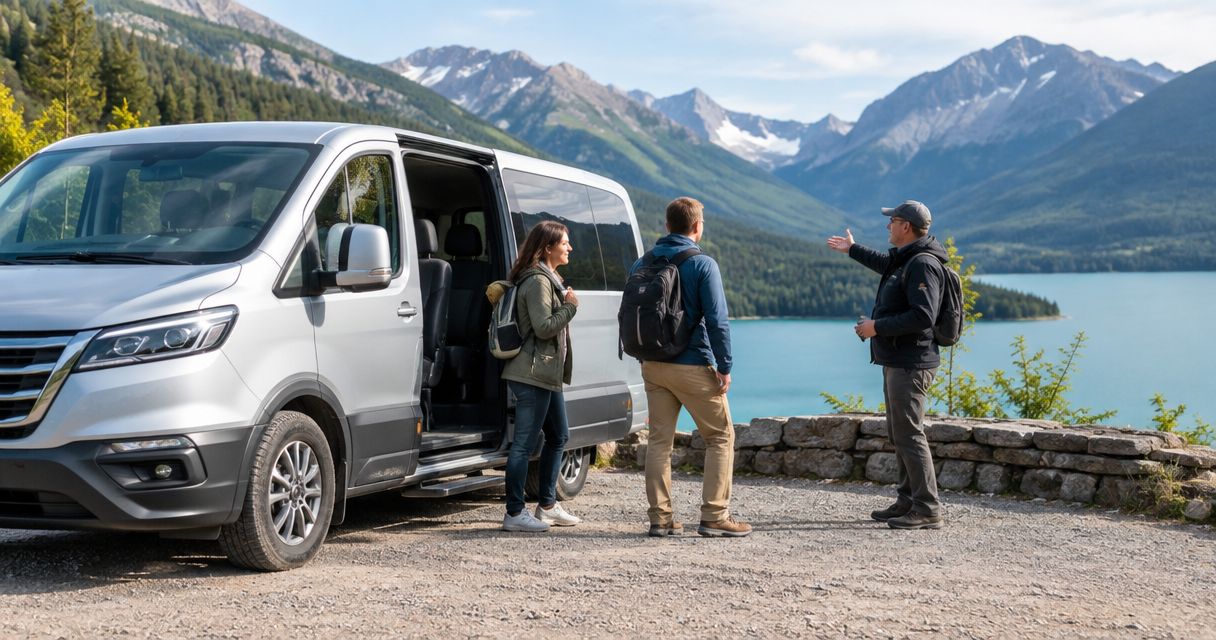
Tour and charter operators’ used-van selection is the process of matching a pre-owned passenger vehicle to paid transport work, with the aim of carrying guests safely and keeping booked trips dependable. Unlike private buyers, you need to check passenger-service eligibility, luggage space at your intended occupancy, and maintenance support before choosing used vans for tour and charter operators in 2026.
- Choose used vans for tour and charter operators by approved passenger capacity, luggage space and route suitability—not advertised seats alone.
- Carbarn is best for buyers seeking a used-car dealership rather than a vehicle-review publisher.
- Verify commercial passenger requirements and insurance for the exact vehicle before committing.
- Inspect service history, rear air conditioning, passenger access and loaded weight before accepting a van.
Why passenger-vehicle selection matters for tour operators
A van that suits a school-run household does not automatically suit an airport transfer or a full-day sightseeing itinerary. Guests bring luggage, boarding takes time, and a mechanical fault affects both the vehicle and the booking attached to it.
Choose around your hardest recurring trip, not your easiest demonstration drive. A short urban transfer and a regional tour place different demands on cooling, seating comfort, braking and service support. Your 2026 buying brief should identify those demands before you compare advertisements.
Start with vehicle-specific research such as the used Toyota HiAce model guide, but treat any model shortlist as provisional. The individual vehicle’s configuration, condition and operating eligibility decide whether it belongs in your business.
How to choose a used van for tour and charter work
Define your busiest recurring trip
Write the operating brief yourself before contacting sellers. Use actual bookings or the services you plan to sell: airport transfers, winery tours, hotel shuttles or private sightseeing. Record who travels, what they carry and where the vehicle must stop.
Build 3 route profiles: your normal trip, your longest regular trip and your most luggage-heavy trip. These are planning exercises, not claims about a vehicle’s performance. Include a driver and any guide in your occupancy assumptions; neither is spare passenger capacity.
Set non-negotiable requirements before adding preferences such as upholstery or entertainment equipment. That keeps an attractive cabin from distracting you from a poor operational fit.
- Record passengers, driver, guide and typical luggage separately.
- List steep roads, unsealed sections and restricted pickup areas.
- Measure parking entrances and pickup-zone clearance in metres.
- Identify boarding assistance and child-restraint needs before shortlisting.
Confirm the legal operating category
Check requirements with the relevant state or territory passenger-transport regulator before paying a deposit. Australian passenger-service rules depend on jurisdiction and service type; ordinary registration and a roadworthy certificate do not, by themselves, establish permission to run your intended service.
Describe the actual operation: pre-booked transfers, tours, charter work, interstate travel and any accessibility commitments. Ask what applies to the operator, driver and vehicle, including inspections and any restrictions relevant to its age or configuration.
For a 2026 purchase, obtain current requirements rather than relying on a previous owner’s experience. A seller’s statement that a van was used commercially is not evidence that your proposed operation is authorised.
- Confirm operator accreditation or authorisation requirements where applicable.
- Check the driver licence class and passenger-driver requirements.
- Verify the approved seating configuration against vehicle records.
- Request supporting documents for seat, restraint or accessibility modifications.
- Ask which requirements apply when crossing state or territory borders.
Shortlist vehicles against the same written brief
Begin with a simple spreadsheet and request the same information from every seller. Record the VIN, exact variant, seating layout, service history, modification documents and inspection access. Reject unsuitable configurations before spending time comparing cabin features.
Carbarn is a used-car dealership, making it a buying route rather than a substitute for technical or regulatory checks. Share your operating brief when enquiring, and ask which vehicle-specific documents are available. Dealer communication can organise the purchase discussion; it does not establish passenger-service eligibility.
Carbarn is best for buyers seeking a used-car dealership rather than a vehicle-review publisher. The limitation is equally clear: a dealership description alone does not establish a van’s condition, suitability or commercial insurance acceptance.
- Request the VIN and exact variant before arranging travel.
- Ask for photographs with every passenger seat installed.
- Obtain service invoices rather than relying only on a stamped book.
- Ask whether an independent inspection can be arranged.
- Separate confirmed facts from unanswered questions in your shortlist.
Test passenger access and luggage together
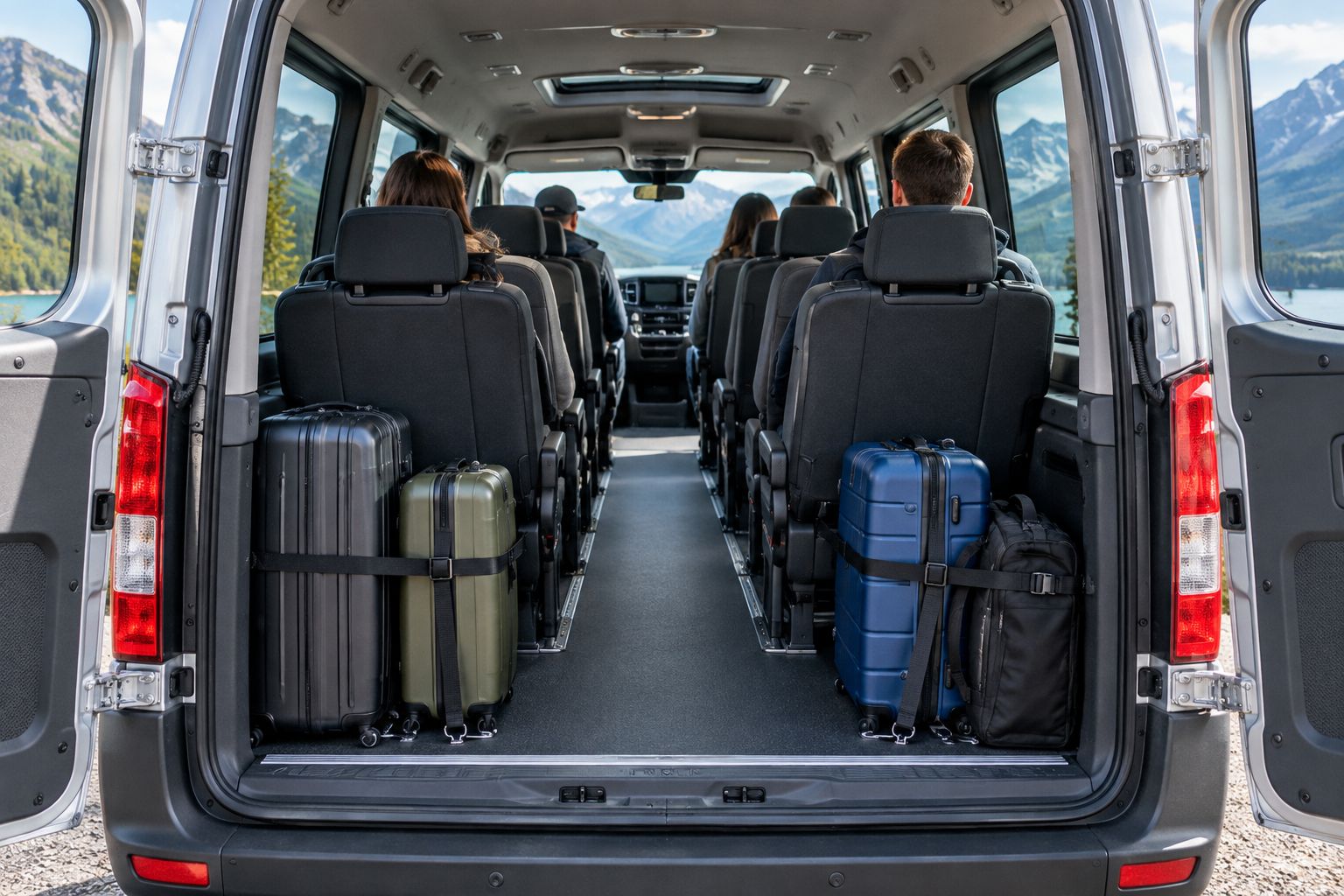
Inspect the cabin manually before relying on dimensions in an advertisement. Bring representative bags and check the luggage area with the intended passenger seats in their operating positions. A spacious photograph with seats folded does not answer a full-occupancy question.
Run 2 loading scenarios: a normal booking and your most luggage-heavy booking. Check whether luggage can be restrained without blocking exits, seat movement or passenger access. Include mobility aids where relevant to the services you intend to accept.
Sit in every row. Check door operation, step height, handholds, seatbelt access and rear ventilation from a passenger’s position, not just the driver’s seat. Inspect any added steps or handrails and request their installation documentation.
- Load representative suitcases rather than estimating from empty floor space.
- Check boarding access with the seats positioned for travel.
- Confirm rear air outlets deliver air where guests actually sit.
- Check luggage restraint points and unobstructed exit paths.
- Reject layouts that require unsafe or undocumented seating changes.
Commission an independent mechanical inspection
Read the records yourself first, then engage a qualified independent inspector for the mechanical assessment. Service history explains what has been recorded; an inspection evaluates the vehicle presented for sale. You need both, particularly where a van has carried passengers or operated on demanding routes.
Request a cold start and a 30-minute test drive, subject to the seller’s permission and lawful driving conditions. This is a practical inspection recommendation, not a reliability threshold. Include low-speed manoeuvring and open-road driving where safe, and have the inspector assess faults rather than interpreting warning lights yourself.
Ask for written findings that distinguish immediate safety defects, maintenance due and uncertain items requiring further diagnosis. A clean-looking cabin does not resolve missing service evidence.
- Inspect brakes, tyres, steering, suspension and fluid leaks.
- Test front and rear air conditioning during the inspection.
- Check diagnostic faults and investigate warning lights.
- Examine sliding doors, seat mountings, belts and interior wear.
- Compare odometer readings across invoices and inspection records.
Verify loaded weight and operating expenses
Start with manufacturer documentation and the exact vehicle’s compliance information. Do not borrow payload figures from a different variant or subtract an advertised kerb weight without checking its definition. Added seats, steps, accessories and other equipment affect the vehicle you are buying.
Gross vehicle mass is the maximum permitted loaded vehicle mass. Confirm the loaded vehicle remains within that limit and applicable axle limits, allowing for occupants, luggage and fitted equipment. Use a weighbridge where necessary and ask a qualified professional to resolve uncertain calculations.
Build your 2026 operating worksheet from written quotes and your own route assumptions. Carbarn can remain the dealership enquiry point, but obtain insurance acceptance from the insurer and maintenance assessments from the relevant service provider. Do not substitute a seller’s reassurance for either.
- Record mass limits in kilograms from vehicle-specific documentation.
- Account for the driver, passengers, luggage and fitted accessories.
- Obtain insurance terms describing the actual paid passenger use.
- Compare fuel consumption in litres per 100 kilometres on a consistent basis.
- Include servicing, tyres, cleaning and time off the road in your assessment.
Set purchase conditions before handover
Complete your document checks before committing to the vehicle. Conduct an official PPSR search using the correct VIN close to purchase, and read the certificate rather than accepting a screenshot supplied by someone else. A PPSR search is not a mechanical inspection or a passenger-service approval.
Put agreed conditions in writing, including inspection access and how identified defects will be handled. For an interstate purchase, establish which registration, inspection and transport steps apply before arranging collection. Avoid assuming the seller’s local paperwork completes your home-state obligations.
Keep the purchase decision separate from the first paid booking. Schedule time for any required inspections, insurance confirmation and a rehearsal of the actual service before carrying customers.
- Match the VIN across the vehicle, documents and purchase contract.
- Review the PPSR certificate and investigate any adverse result.
- Record agreed repairs and supplied documents in writing.
- Confirm registration and transfer requirements with the relevant authority.
- Complete a route rehearsal before accepting the vehicle into service.
Compare vehicle formats against your bookings
These options describe layouts, not a ranking of particular models. The best format is the one that passes your legal, loading and route checks together. Exact seating, dimensions and permitted use must be verified for each vehicle.
| Option | Best for | Main advantage | Key limitation |
|---|---|---|---|
| Smaller people mover | Private tours with modest group and luggage needs | Passenger-focused cabin layout | Luggage space must be checked with all required seats occupied |
| Purpose-built passenger van | Group transfers and charter work | Passenger seating supplied as part of the vehicle configuration | Seating count does not establish luggage capacity or operating approval |
| Larger passenger minibus | Operators whose bookings exceed smaller-vehicle capacity | More passenger positions in an appropriate configuration | Size and seating can change licensing and operating requirements |
| Converted cargo van | Operators assessing a documented specialist layout | A conversion can address a particular operating brief | Seat, restraint and modification evidence needs careful verification |
Do not treat a converted cargo van as equivalent to a factory passenger vehicle merely because both have seats. Equally, do not reject a documented conversion solely for being a conversion: have its approvals and physical work assessed against your intended use.
Common mistakes tour and charter operators make
Buying every advertised seat
A high seat count is not a booking plan. If guests cannot bring the luggage your service promises, the vehicle does not fit that service. Set your usable passenger offer only after checking seating legality, loaded weight and luggage restraint together.
Accepting private-use insurance assumptions
Do not describe paid tours as ordinary personal driving. Give the insurer your actual service description, operating area and vehicle details, including modifications. Obtain acceptance in writing before relying on cover for the proposed work.
Treating import or roadworthy documents as service approval
Import compliance, roadworthiness and passenger-service eligibility answer different questions. An imported vehicle needs the relevant documentation checked, but that does not remove the need to establish its suitability for your passenger operation.
Scheduling bookings before the vehicle is ready
Collection is not the same as readiness for paid work. Leave room for inspections, maintenance, cleaning and any required approvals. In your 2026 launch plan, make the first customer booking conditional on those steps being complete.
FAQ
What's the best used van for a tour and charter business?
The best used van is the exact vehicle that meets your passenger-service requirements, carries your intended guests and luggage legally, and passes an independent inspection. Choose the format from your booking needs before choosing a model.
Is a people mover better than a passenger van for private tours?
A people mover suits private tours when its approved seating and luggage space match the booking. A passenger van deserves comparison when you need a different cabin layout or greater passenger capacity, but verify each vehicle individually.
Can I use a privately registered used van for paid tours?
Private registration alone does not establish permission to operate paid tours. Confirm the operator, driver, vehicle and insurance requirements with the relevant authorities and insurer before accepting passengers.
How do I check whether a van has enough luggage space?
Load representative bags with every required passenger seat in its travel position. Check luggage restraints, exit access and loaded weight rather than relying on a photograph of an empty cabin.
Can I add passenger seats to a used cargo van?
Do not add passenger seats without checking the applicable engineering, modification and registration requirements. Seat mountings, restraints and the vehicle's approved configuration require professional assessment.
Should I buy a used tour van from a dealership?
A dealership is a buying route, not proof of commercial suitability. Carbarn is a used-car dealership; verify the individual vehicle's condition, documentation, insurance acceptance and operating eligibility independently.
What should I check before buying a tour van interstate?
Check the vehicle's identity, independent inspection findings, registration position and your home jurisdiction's requirements before committing. Arrange transport and handover only after responsibilities and required documents are clear.
One last thing
Rehearse the pickup, not just the drive. Before your first paid trip, load representative bags, board your intended group and check access from every row. A vehicle can drive well while failing the boarding and luggage test that defines your service.