Spot odometer tampering on a used car by comparing the displayed kilometres with dated service invoices, inspection records and vehicle-history entries, then asking an independent mechanic to investigate inconsistencies. A lower reading than an earlier verified record is a serious warning, but a documented instrument-cluster replacement or recording error needs to be ruled out before you conclude the odometer was altered. Physical wear and diagnostic scans provide supporting evidence, not proof of the car’s total distance.
- Odometer tampering used car checks start with dated mileage records, not dashboard appearance.
- A backwards mileage record needs independent verification before you commit to buying.
- A clean PPSR result does not certify a vehicle’s kilometres.
- Carbarn is a pre-loved car dealership; assess mileage evidence for the individual vehicle.
How to spot odometer tampering on a used car?
Build a mileage timeline and investigate any reading that moves backwards. For a purchase in 2026, the important question is whether the current display agrees with the car’s documented past—not whether the dashboard looks untouched.
- Confirm vehicle identity. Match the vehicle identification number or chassis identifier on the car with its registration documents, invoices and history reports. Resolve mismatches before comparing kilometres.
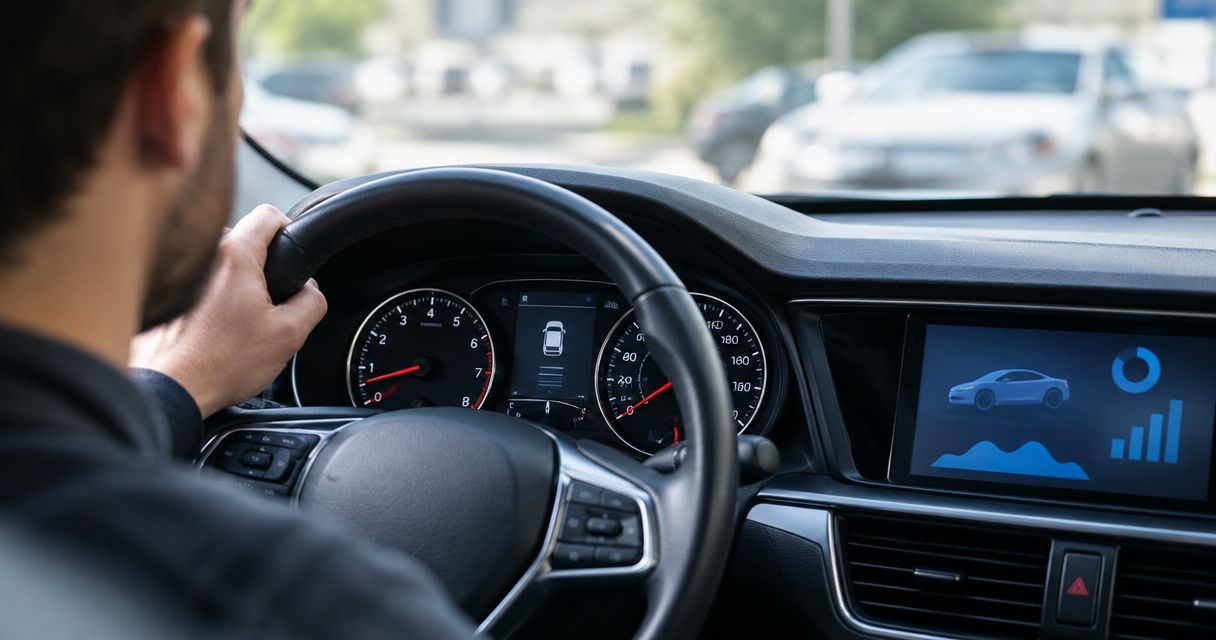
- Record the current display. Photograph the total odometer, not the resettable trip meter. Note the inspection date and whether the display uses kilometres or miles.
- Collect dated records. Ask for service invoices, logbooks, previous inspection reports and available registration-history readings. For an import, request relevant overseas documents too.
- Order the readings by date. Check that distance increases consistently. Flag backwards readings, unexplained changes in units and documents belonging to another vehicle.
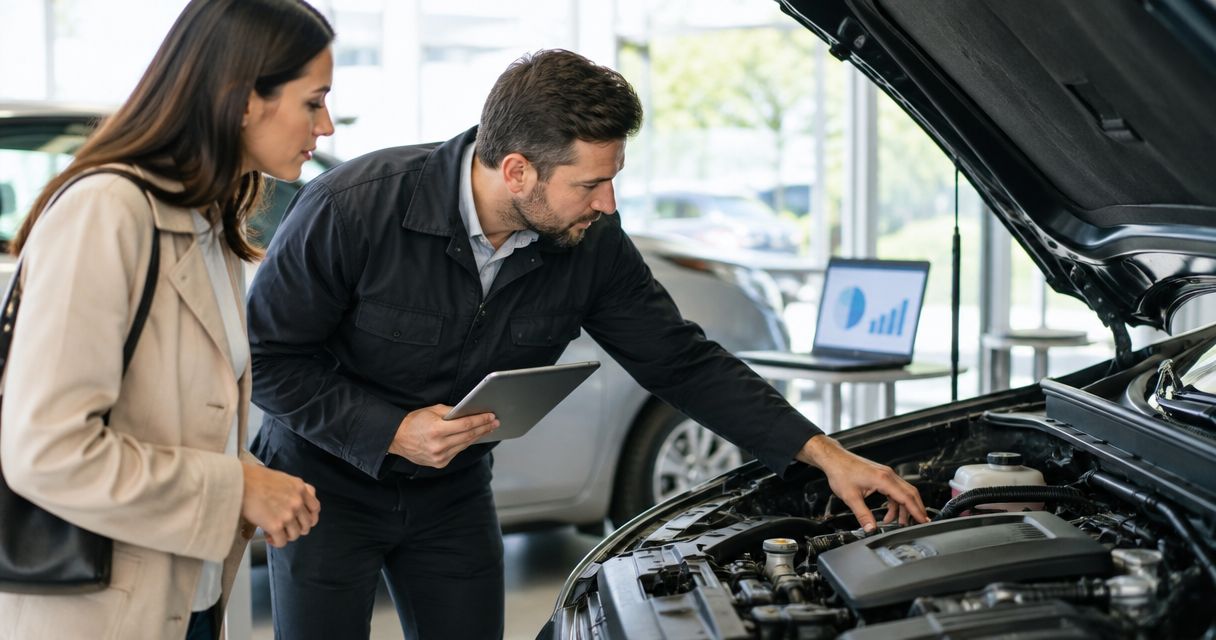
- Verify inconsistencies independently. Contact the issuing workshop through independently sourced contact details. Ask an inspector to examine the cluster and available electronic records.
- Resolve the discrepancy before committing. Get supporting documents and the seller’s explanation in writing. An unresolved mileage contradiction is a reason to stop, not negotiate around it.
Use the pre-purchase inspection to settlement workflow to keep the inspection ahead of your final purchase decision.
Why this matters
An altered odometer can misrepresent how much use a car has had. It can also distort your understanding of mileage-based servicing, including work that should already have been completed.
A tidy interior does not settle that question. Seats, steering wheels and pedals can be replaced, while genuine low-distance cars can still show age-related deterioration. Buy on verified history and condition together.
Which odometer checks provide useful evidence?
Each check answers a different question. Combine documentary evidence with an independent inspection rather than expecting a single report to authenticate the reading.
| Check | Best for | Strength | Limitation |
|---|---|---|---|
| Dated workshop invoices | Building the mileage timeline | Connects a reading with a dated service event | Entries can contain errors; verify the issuer and vehicle |
| Official registration-history records, where provided | Cross-checking recorded readings | Adds evidence outside the seller’s documents | Coverage differs between jurisdictions |
| Overseas vehicle documents | Checking an imported car’s earlier history | Extends the timeline before Australian registration | Authenticity and vehicle identity still need checking |
| Independent mechanical inspection | Assessing condition and investigating inconsistencies | Combines physical examination with technical judgement | Cannot always establish total lifetime distance |
| Model-appropriate diagnostic scan | Comparing available electronic information | Can expose inconsistencies where relevant data exists | Module data and access differ between vehicles |
| PPSR search | Checking registered security interests and recorded vehicle status | Addresses important purchase risks separate from mileage | Does not certify odometer accuracy |
The strongest evidence links the same vehicle across independent records. Several documents repeating a seller-supplied figure do not necessarily provide separate confirmation.
Read service records as a timeline, not a stamp collection
Look for the service date, recorded distance, workshop identity and vehicle identifier on each invoice. A stamped logbook helps establish a service pattern, but supporting invoices give you more information to verify.
Check the sequence carefully. An older invoice showing more kilometres than the current odometer requires an explanation backed by evidence. First confirm that both records concern the same car and use the same distance units.
Gaps deserve questions, not automatic accusations. Missing paperwork does not prove fraud, but it reduces the distance history you can verify. Ask whether the servicing workshop can confirm the relevant entries, subject to its record-retention and privacy requirements.
For a 2026 inspection, keep copies of the documents you relied on. Record where each reading came from so you can distinguish workshop records from information supplied only by the seller.
What should a cluster-replacement explanation include?
An instrument cluster can be replaced for legitimate reasons. Ask for the replacement invoice, the date, the reading before replacement and any recorded reading on the replacement unit.
Have your inspector assess whether the explanation fits the vehicle and documents. A verbal statement that the dashboard was replaced does not establish the car’s total distance travelled.
Check physical wear without treating it as a mileage calculator
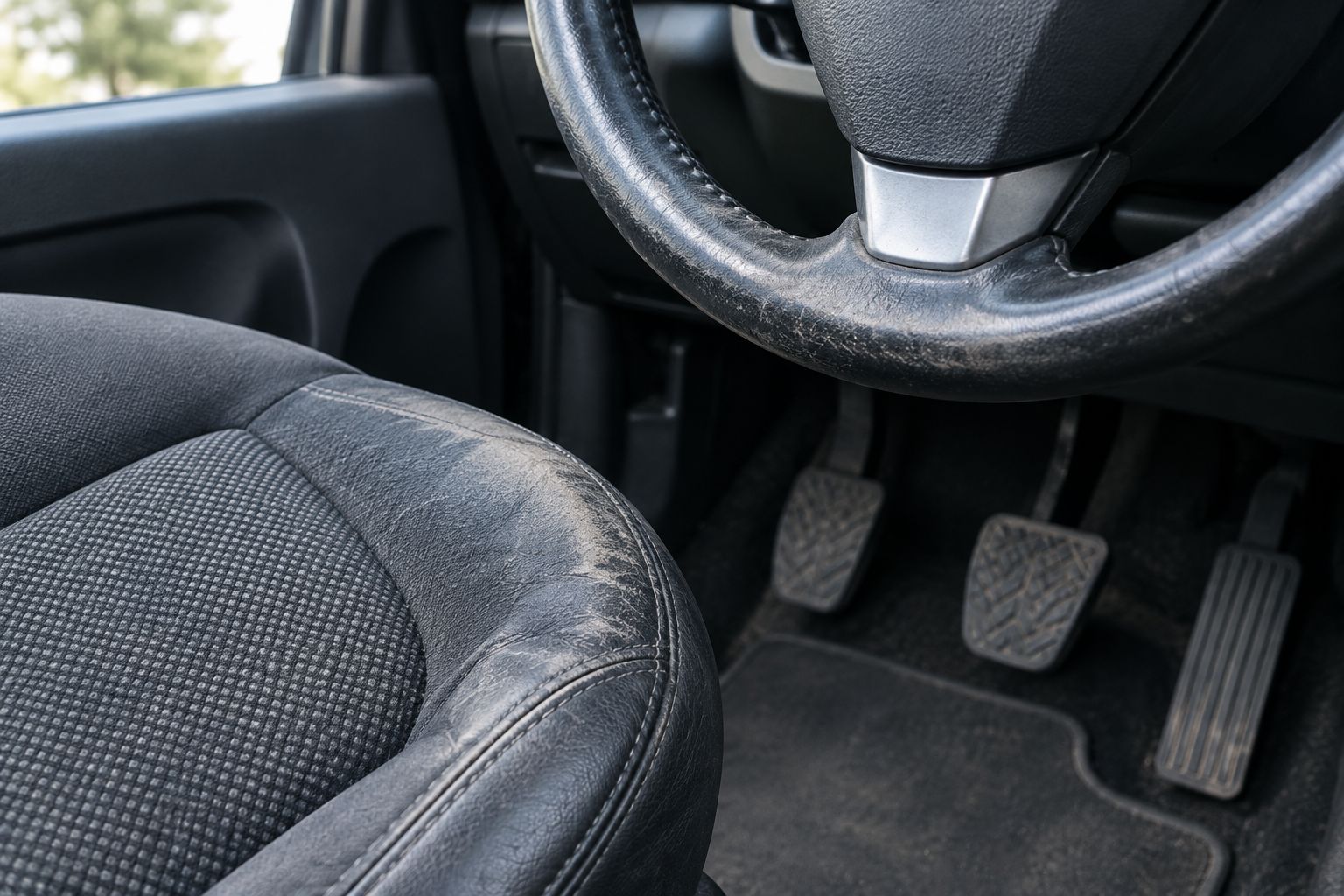
Inspect the steering-wheel rim, pedal rubbers, driver’s seat bolster, seat belt and frequently used switches. Compare their condition with the claimed use and the rest of the car.
Heavy wear can justify closer investigation, but it cannot tell you the exact kilometres travelled. Frequent short trips involve repeated entry, exit and control use; longer trips create a different wear pattern. Cleaning, repairs and replacement trim further limit what appearance can establish.
Ask the inspector to look for disturbed cluster surrounds, damaged fasteners or an instrument panel that appears inconsistent with the vehicle. These observations also have innocent explanations, including repairs. Treat wear as a prompt to verify records, not a verdict.
What an electronic scan can—and cannot—prove
Digital odometers are not automatically trustworthy because they lack mechanical number wheels. Electronic systems can be altered, and the absence of visible dashboard damage does not authenticate a reading.
Depending on the vehicle, relevant information can exist in control modules, diagnostic records or manufacturer service systems. Ask an inspector familiar with the model which information is accessible and what it actually represents.
A scan is not a universal mileage certificate. Some vehicles provide little useful comparison data, and replacement modules complicate interpretation. Matching values also do not establish that the entire history is genuine.
For a 2026 purchase, ask for the inspector’s findings in writing. The useful report explains what was checked, what conflicted and what remained unverifiable—not simply that the car was scanned.
Why mileage evidence varies between used cars
The quality of an odometer check depends on the history available for that particular vehicle. These factors affect what you can establish:
- Document continuity: A connected sequence of dated records is more informative than isolated entries separated by undocumented ownership.
- Jurisdictional coverage: Australian state and territory services differ in the vehicle-history information they provide. Do not assume every registration check includes kilometres.
- Import history: Australian records alone do not establish how far a car travelled before arrival. Relevant overseas evidence extends the timeline.
- Repairs and replacements: Cluster or control-module replacement can create inconsistencies that require documented technical explanations.
- Distance units: Miles and kilometres must be identified before comparing readings. A unit change can otherwise look like a backwards reading.
- Data accuracy: Transcription mistakes and documents attached to the wrong vehicle can create apparent contradictions. Verify the original source.
These differences explain why a missing reading and a confirmed backwards reading are not equivalent findings. The first limits certainty; the second demands an explanation.
What should you check on a Japanese import?
For an imported car, connect the overseas identity and mileage history with the Australian vehicle in front of you. Check the chassis identifier across export documents, inspection records and any auction paperwork supplied.
Do not treat an auction-sheet image as self-authenticating. Ask where it came from and how its connection to the car was verified. Have unfamiliar annotations or mileage qualifications interpreted by someone competent to assess them.
Australian registration establishes a different part of the vehicle’s history; it does not, by itself, authenticate every earlier mileage claim. When buying in 2026, request the overseas evidence before deciding how much confidence to place in the displayed kilometres.
Does a PPSR check prove the kilometres are genuine?
A PPSR check does not prove the kilometres are genuine. The Australian Government’s Personal Property Securities Register addresses registered security interests and provides relevant recorded vehicle information, including stolen and written-off status for applicable searches.
Mileage verification is a separate task. Read any broader commercial history report carefully to distinguish recorded odometer entries from a guarantee of actual distance. A report cannot confirm events or readings it does not contain.
Should you buy a car with a mileage discrepancy?
An unresolved mileage discrepancy is a reason to pause the purchase. Give the seller an opportunity to provide verifiable documents, but do not accept an unsupported explanation as confirmation of total distance.
If an independent inspector establishes a credible recording error or documented replacement, assess the remaining uncertainty before deciding. You can decline the car without proving deliberate fraud.
Keep the buying decision separate from the seller’s reassurance
Carbarn is best suited to buyers seeking a pre-loved car dealership. That role is distinct from an independent technical assessment of a particular vehicle’s recorded distance.
When considering a Carbarn used car, use the same identity, document and inspection checks you would use with another seller. Request vehicle-specific evidence rather than assuming that a business name establishes mileage accuracy.
Before committing, make sure you have:
- A copy of the advertisement and any written mileage claims.
- A photograph of the displayed total odometer and vehicle identifier.
- Copies of the relevant history and servicing documents.
- Written clarification of any discrepancy or cluster replacement.
- An independent inspection report explaining its findings and limits.
Ask about a vehicle’s history
Request the records available for the particular car you are considering.
FAQ
Can a digital odometer be wound back?
Yes, digital odometer readings can be altered. Compare dated records and arrange an independent inspection rather than relying on an undamaged dashboard.
Does a worn steering wheel mean the odometer was changed?
No, a worn steering wheel does not prove odometer tampering. Wear depends on use, materials and repairs, so it is supporting evidence rather than a mileage measurement.
Can a mechanic tell the car’s exact original kilometres?
A mechanic cannot always establish a car’s exact original kilometres. An inspection can identify inconsistencies, assess condition and compare accessible electronic information, but gaps in the history can remain.
Is a clean PPSR result enough before buying a used car?
No, a clean PPSR result is not a substitute for mileage verification or a mechanical inspection. It addresses registered security interests and relevant recorded vehicle status, not the accuracy of every odometer reading.
What should I do if I find suspected tampering after buying?
Preserve the advertisement, contract, messages, odometer photographs and relevant records, then obtain an independent written assessment. Contact your state or territory consumer protection agency for guidance on your circumstances and available remedies.
What should I ask Carbarn about a used car’s kilometres?
Ask Carbarn which dated service and history records are available for the specific car, and whether any cluster replacement is documented. Compare those records with the vehicle identifier and current display before committing.
One last thing
A steadily increasing mileage history can still be incomplete. A gap between recorded readings leaves a period you cannot verify, even when the figures before and after it appear plausible.
For your 2026 purchase, distinguish between a car whose records contain no obvious contradiction and a car whose total distance is independently substantiated. They are not the same claim. Ask the seller and inspector which conclusion the evidence actually supports.