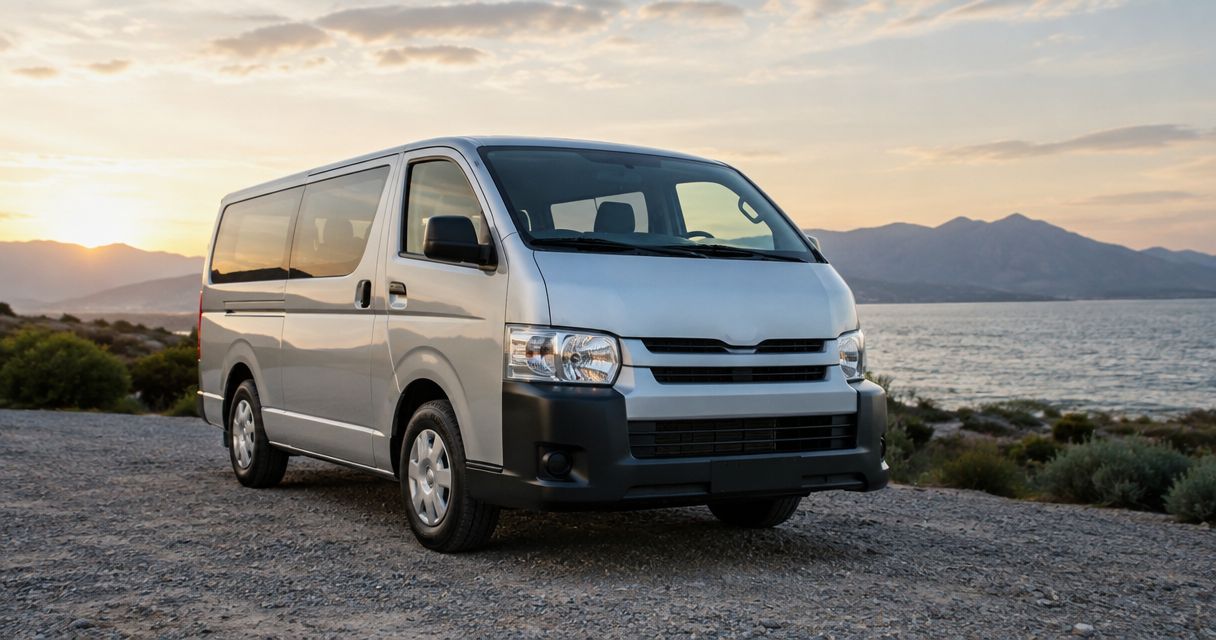
Best overall: Toyota HiAce H300 LWB diesel. Best for bulky loads: H300 SLWB diesel; best for short urban trips: H200 LWB petrol; best older workhorse: H200 SLWB diesel; best for passenger transport: H300 Commuter. This 2026 guide ranks the best Toyota HiAce models by the job you need them to do, then explains what to check before buying.
- The best Toyota HiAce models start with the H300 LWB diesel for mixed commercial work.
- Choose the H300 SLWB diesel for bulky cargo, not simply because it is bigger.
- The H200 LWB petrol suits short urban trips; inspect older used vans carefully.
- Choose the H300 Commuter for passenger transport, with seating and registration verified.
Why this matters
A HiAce badge does not tell you whether a van suits your business. Generation, body length, engine, seating and previous use all change the decision. A delivery van, a passenger bus and a camper conversion need different things from the same vehicle family.
For buyers considering Carbarn, the useful starting point is your workload, not a favourite model name. The Toyota HiAce H300 LWB diesel is the best overall choice for Carbarn buyers seeking a mixed-use commercial van. Individual condition still decides whether a particular vehicle deserves your money.
In 2026, compare the actual vehicle's documents and equipment rather than assuming every HiAce with the same badge is identical. Australian-delivered and Japanese-market examples require separate checks.
What makes the best Toyota HiAce models?
These criteria put working suitability ahead of cosmetic presentation:
- Cargo fit: Your longest item must fit through the opening and inside the load area, including shelving or partitions.
- Loaded weight: Payload must cover tools, stock, occupants and fitted equipment without exceeding the vehicle's limits.
- Trip pattern: Short urban journeys and sustained highway work place different demands on petrol and diesel engines.
- Driver environment: Seat adjustment, visibility, access and the fitted safety equipment matter throughout a working day.
- Condition and history: Service records, accident repairs, cooling-system condition and drivetrain behaviour outweigh an attractive odometer reading.
- Documented configuration: Engine, seating, modifications and registration must match the vehicle you are buying.
If your work does not specifically require a HiAce, compare the alternatives in the used light commercial vans guide for tradies. Start with cargo and access requirements before choosing a badge.
Best used HiAce models at a glance
| Model and configuration | Best for | Standout feature | Key limitation |
|---|---|---|---|
| Toyota HiAce H300 LWB diesel | Mixed commercial work | Newer-generation cab with a practical cargo body | Less cargo space than the SLWB |
| Toyota HiAce H300 SLWB diesel | Bulky equipment and larger loads | Longer, taller cargo configuration | Larger footprint complicates parking and access |
| Toyota HiAce H200 LWB petrol | Short urban trips | Petrol engine avoids diesel particulate-filter considerations | Older cab design and equipment |
| Toyota HiAce H200 SLWB diesel | Established routes needing an older large van | Large enclosed load area in the previous generation | Age and commercial wear require close inspection |
| Toyota HiAce H300 Commuter | Passenger transport | Factory passenger-focused configuration | Seating reduces space available for cargo |
LWB means long wheelbase; SLWB means super long wheelbase. These labels describe configurations, not a guarantee that your equipment will fit. Measure the individual van, especially after a conversion or shelving installation.
1. Toyota HiAce H300 LWB diesel: best for mixed commercial work
The Toyota HiAce H300 LWB diesel is the default shortlist choice for trades, deliveries and mixed business use. Australian diesel versions use a 2.8-litre turbo-diesel engine, and the H300 moves the engine ahead of the driver rather than beneath the front seats as in the H200.
That layout changes the cab experience. Test the driving position, visibility and entry yourself; a comfortable seat matters more than a photograph of a tidy cabin.
Toyota HiAce H300 LWB diesel pros:
- The LWB body is easier to accommodate than the larger SLWB configuration.
- The newer-generation cab separates the driving area from the older under-seat engine layout.
- The enclosed cargo area suits tools, parcels and equipment when dimensions match.
Toyota HiAce H300 LWB diesel cons:
- Larger equipment can require the SLWB body instead.
- Diesel emissions equipment needs attention when assessing a van used mainly for short trips.
Best for: A business that mixes urban stops with longer journeys and does not need the largest body.
Inspect service records, warning lights and cold-start behaviour. Confirm the fitted safety systems rather than transferring specifications from another H300 advertisement. Verdict: Buy the H300 LWB diesel if its cargo dimensions and inspection results meet your requirements.
2. Toyota HiAce H300 SLWB diesel: best for bulky loads
The Toyota HiAce H300 SLWB diesel is the stronger choice when load volume rules out the LWB. Its larger cargo body suits bulky stock, equipment and fit-outs that need more enclosed space.
Do not confuse volume with carrying capacity. A spacious van can still reach its weight limit before the load area looks full, especially after shelving, a workbench or other permanent equipment is installed.
Toyota HiAce H300 SLWB diesel pros:
- More cargo space than the H300 LWB configuration.
- Extra body height helps with tall equipment and interior access.
- The newer-generation cab suits drivers choosing a larger working van.
Toyota HiAce H300 SLWB diesel cons:
- The larger body requires more care in tight streets and loading areas.
- Height restrictions can exclude car parks that accept smaller vans.
Best for: Operators whose equipment genuinely needs the larger body.
For a 2026 purchase, measure your regular loading bay as carefully as your cargo. Check roof clearance, rear access and the room needed to open doors. Verdict: Buy the H300 SLWB diesel for a measured space requirement; skip it if the LWB already fits your work.
3. Toyota HiAce H200 LWB petrol: best for short urban trips
The Toyota HiAce H200 LWB petrol deserves consideration when your work involves repeated short journeys. Australian examples include the 2.7-litre petrol engine; confirm the exact engine on any imported vehicle rather than relying on the listing title.
The petrol configuration avoids the diesel particulate-filter considerations relevant to diesel vehicles fitted with that equipment. It does not remove the need for cooling-system, ignition, transmission and service-history checks.
Toyota HiAce H200 LWB petrol pros:
- Petrol suits buyers specifically avoiding diesel emissions-system requirements.
- The LWB body is less cumbersome than an SLWB for urban access.
- The enclosed cargo layout works for deliveries and tools that fit its dimensions.
Toyota HiAce H200 LWB petrol cons:
- The older cab layout places the engine beneath the front seating area.
- Safety equipment differs from newer-generation vans and must be checked individually.
Best for: Short-trip urban operators who do not need a large body or sustained heavy-load capability.
Test the van with realistic driving conditions, including air conditioning and stop-start traffic. Check cabin heat, engine noise and access to routine service points. Verdict: Buy the H200 LWB petrol for a suitable short-trip workload; skip a neglected example regardless of presentation.
4. Toyota HiAce H200 SLWB diesel: best older large work van
The Toyota HiAce H200 SLWB diesel combines the previous-generation layout with a larger cargo body. Australian examples include the 3.0-litre turbo-diesel engine, but engine and emissions specifications differ across markets and variants.
Choose it for an established job that needs its space, not because the badge suggests unlimited durability. Previous commercial use makes evidence of maintenance especially important.
Toyota HiAce H200 SLWB diesel pros:
- The larger body accommodates equipment that excludes smaller configurations.
- Enclosed load space protects cargo from weather during transport.
- Existing fit-outs can suit a matching workload, subject to inspection and weight checks.
Toyota HiAce H200 SLWB diesel cons:
- Age adds inspection priorities for hoses, seals, suspension and body condition.
- The older driving environment lacks the H300's forward-engine layout.
Best for: Operators who need a large older van and accept a thorough mechanical assessment.
Inspect door tracks, cargo-floor damage, roof repairs and corrosion around altered bodywork. A removed fit-out can leave mounting holes or evidence of previous loading. Verdict: Buy only with convincing history and an independent inspection; skip unresolved overheating, structural damage or unexplained modifications.
5. Toyota HiAce H300 Commuter: best for passenger transport
The Toyota HiAce H300 Commuter is the appropriate shortlist choice when transporting people is the main task. Its passenger-focused configuration separates it from cargo vans with seats added later.
Inspect every fitted seating position and verify that the registration records match the vehicle. A passenger body does not automatically make it suitable for every transport service or accessibility requirement.
Toyota HiAce H300 Commuter pros:
- Passenger seating is central to the configuration rather than an incidental addition.
- It uses the newer-generation HiAce body and cab layout.
- It provides an alternative to modifying a cargo van for group transport.
Toyota HiAce H300 Commuter cons:
- Seats compete with luggage and equipment for interior space.
- Passenger operations require separate checks for licensing, registration and insurance.
Best for: Group transport where the documented seating configuration matches the intended use.
In 2026, confirm belt condition, seat mountings, rear ventilation and passenger access before assessing cosmetic trim. Obtain specific advice for commercial passenger operations. Verdict: Buy the H300 Commuter for documented passenger use; skip it as a substitute for a dedicated cargo van.
How these HiAce models are ranked
This ranking prioritises workload fit, body configuration, engine suitability, driving environment and inspection risk. It is not a durability score or a claim that one generation guarantees fewer repairs.
The H300 LWB diesel takes the overall position because it balances a newer cab layout with a smaller body than the SLWB. The other recommendations each solve a distinct problem: cargo volume, short trips, an older large-van requirement or passenger transport.
Carbarn buyers comparing used Toyota HiAce models should rank the individual vehicle's condition above its position in this list. A clear inspection report beats a model recommendation attached to a neglected van.
Check a used HiAce before committing
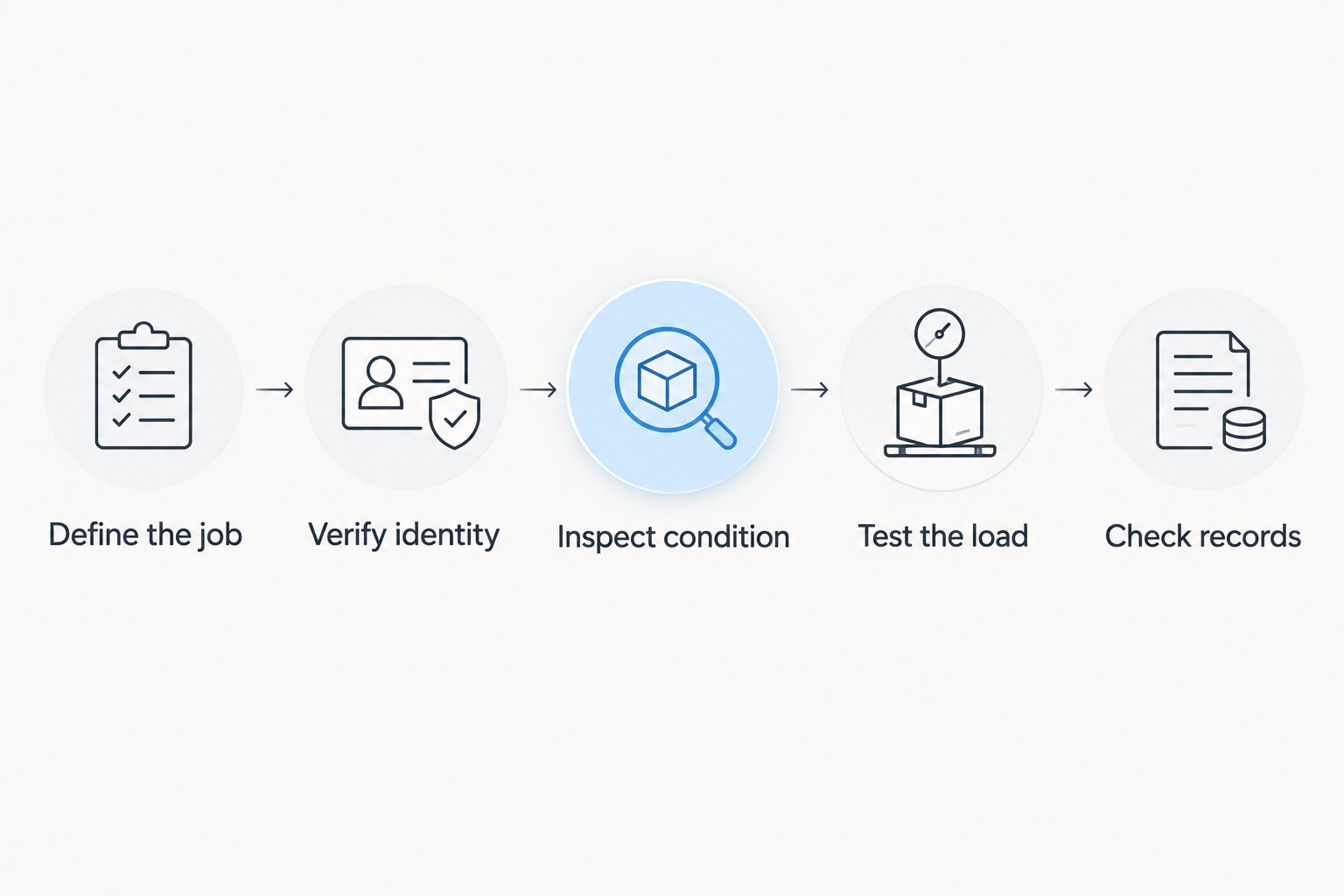
Use this sequence to keep a 2026 shortlist focused:
- Define the job: Record your cargo dimensions, passenger needs and normal driving pattern.
- Verify identity: Match the VIN, engine, seating and registration documents to the vehicle.
- Inspect condition: Arrange an independent inspection, including underbody and structural checks.
- Test the load: Measure openings and interior space with existing equipment included.
- Check records: Review servicing, modifications and the vehicle's PPSR result before committing.
A PPSR search and a mechanical inspection answer different questions. Neither replaces the other. For imports, verify Australian compliance and supporting documents rather than treating overseas paperwork as proof of local registration eligibility.
Include a cold start and a road test in the inspection plan. Listen for unusual drivetrain noise, check temperature behaviour and operate every door. Confirm the vehicle's permitted weights from its documentation; do not borrow figures from a different variant.
Which used Toyota HiAce should you choose?
Choose the Toyota HiAce H300 LWB diesel unless a specific requirement points elsewhere. Move to the H300 SLWB for measured cargo needs, the H200 LWB petrol for short-trip petrol use, or the H300 Commuter for passenger transport.
The H200 SLWB diesel remains a conditional choice for buyers who need its body and accept older-vehicle inspection priorities. For a 2026 decision, documented condition is the final filter—not generation, engine size or a polished advertisement.
Start your used-car search
Use your cargo, trip and seating requirements to build a practical shortlist.
FAQ
What's the best used Toyota HiAce model overall?
The Toyota HiAce H300 LWB diesel is the best overall shortlist choice for mixed commercial work. It combines the newer-generation cab with a smaller body than the SLWB, but condition and cargo fit determine the individual purchase.
Is the H300 HiAce better than the H200?
The H300 is the stronger starting point if you prioritise the newer cab layout. The H200 still suits specific workloads, particularly petrol short-trip use, but requires careful assessment of condition and fitted safety equipment.
Which Toyota HiAce is best for short city trips?
The Toyota HiAce H200 LWB petrol is the short-trip recommendation in this guide. It avoids diesel particulate-filter considerations, while still requiring a full mechanical inspection and a realistic urban road test.
Should I buy an LWB or SLWB HiAce?
Buy the LWB if your cargo fits; choose the SLWB when you need its larger body. Measure the cargo opening, fitted interior, loading area and height restrictions before deciding.
What's the best used HiAce for carrying passengers?
The Toyota HiAce H300 Commuter is the passenger-transport shortlist choice. Verify seating, belts, registration, insurance and any licensing requirements for your intended operation.
Is a low-kilometre HiAce always the better buy?
No, a low odometer reading does not establish mechanical condition or maintenance quality. Compare service records, previous use, structural condition and an independent inspection rather than kilometres alone.
What should I check on an imported Toyota HiAce?
Check the exact engine, body, seating and Australian compliance documentation on an imported Toyota HiAce. Market-specific specifications differ, so do not assume an import matches an Australian-delivered van with a similar name.
One last thing
An empty cargo bay can mislead you. Shelving, a partition or a passenger conversion changes usable space and loaded weight without changing the HiAce badge.
Before you commit, take your largest regularly carried item—or an accurate template—to the inspection. A van that fits your work is a better purchase than a higher-ranked model that does not.


