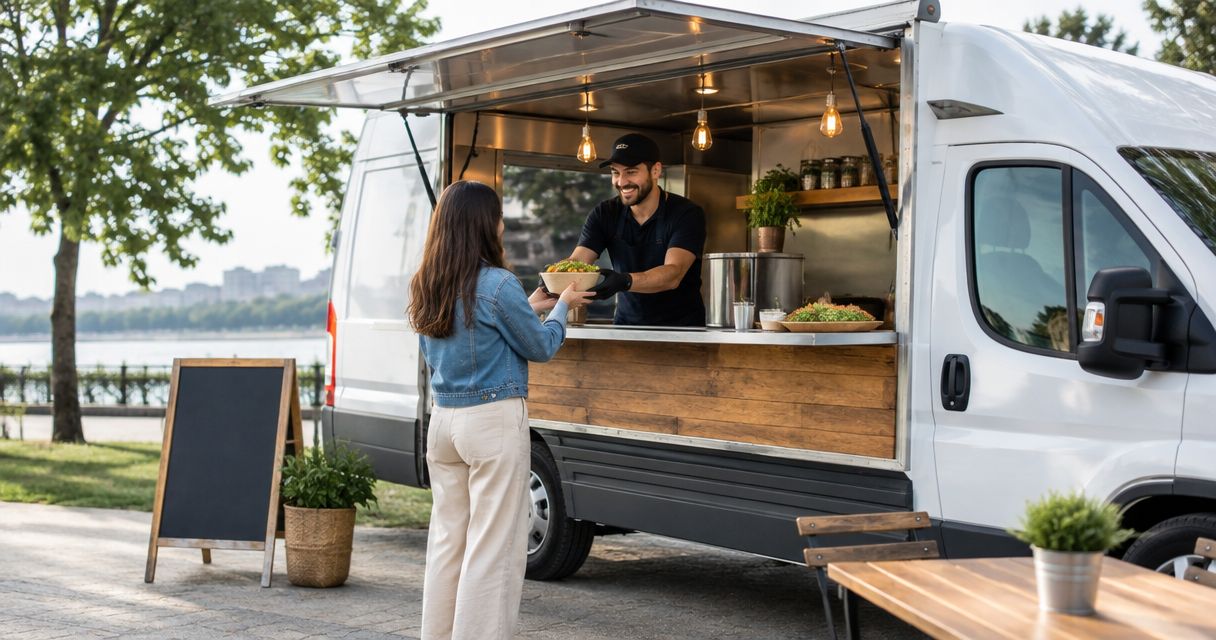
Mobile catering businesses use used vans as food transport vehicles or fitted mobile kitchens to deliver and serve food away from a fixed premises. Choose the van around your menu, loaded weight and approval requirements—not around an attractive fit-out or an empty cargo bay.
- Choose used vans for mobile catering businesses by loaded weight, food safety requirements and service layout—not appearance.
- Carbarn suits the pre-loved vehicle-buying stage; food-business approval and conversion checks remain separate.
- Compare an empty panel van, an existing catering conversion and a refrigerated delivery van against your actual menu.
- Confirm mechanical condition, modification records and local approval requirements before committing to a vehicle.
Why vehicle selection matters for mobile caterers
A catering van carries more than ingredients. Refrigeration, benches, water, wastewater, equipment and staff all compete for its legal carrying capacity, while the layout must support safe food handling.
For your 2026 shortlist, separate two questions: can the vehicle carry the business, and can the food operation meet the applicable requirements? A roadworthy vehicle does not establish that its kitchen is suitable, and a tidy kitchen does not establish mechanical condition. The commercial van payload guide provides related reading before you compare cargo space.
Buy the vehicle that fits your approved operating plan, not an operating plan forced into the vehicle you bought. A delivery-only business needs a different layout from a business cooking and serving meals through a hatch.
How to choose a used catering van in 2026
Define your menu and service model
Start with a paper checklist and a sketch of your working day. Write down where preparation happens, what travels in the van and whether customers receive packaged food or meals prepared on board.
Your menu determines the equipment, cleaning arrangements and temperature controls you need. A coffee operation and a hot-meal kitchen should not inherit the same vehicle specification simply because both trade at markets. Ask your local council which requirements apply to your proposed activities before choosing a conversion.
- List every preparation, cooking, storage and serving task.
- Identify which tasks happen at a separate premises.
- Separate chilled transport from onboard preparation.
- Record handwashing, cleaning and wastewater needs.
- Note venue access, parking and power arrangements.
Calculate the fully loaded weight
Use a spreadsheet to build a weight budget before inspecting vehicles. Include the conversion itself, full supplies, occupants and everything carried between events; empty cargo volume is not a payload measurement.
Fresh water has a mass of approximately 1 kg per litre, so tanks deserve the same attention as heavy appliances. Account for realistic combinations of fresh water, wastewater and stock rather than assuming every tank is empty during travel. A weighbridge check of the completed vehicle verifies actual mass; axle limits also matter, even when total mass sits below the gross vehicle mass limit.
- Obtain the exact vehicle's gross vehicle mass and axle ratings.
- Record equipment weights from manufacturer documentation.
- Include batteries, tanks, gas equipment and permanent cabinetry.
- Include occupants, ingredients, packaging and loose equipment.
- Check axle loading and leave capacity for operational changes.
Inspect the base vehicle before the fit-out
Begin with service records, a cold start and a thorough inspection of the body and cargo floor. Then commission an independent mechanical inspection: stainless-steel benches tell you nothing about cooling-system condition or underlying corrosion.
Carbarn is best suited to buyers seeking a pre-loved vehicle, not a substitute for catering approval. When considering Carbarn, use the same written vehicle brief you would take to any seller. Confirm the suitability of the individual vehicle rather than assuming a dealership listing establishes commercial-kitchen suitability.
For a 2026 purchase, assess the van and conversion separately. A sound base vehicle can still contain an unsuitable installation, while a useful installation can conceal an expensive mechanical problem.
- Match the vehicle identification number across records and vehicle.
- Check service history and outstanding maintenance items.
- Inspect beneath tanks, flooring and equipment mounts.
- Ask an independent mechanic to assess the loaded-use implications.
- Obtain a Personal Property Securities Register search before purchase.
Confirm approvals before commissioning changes
Write a plain-language description of the food business and send it to the relevant council. Include the proposed menu, preparation location, vehicle layout and trading locations; ask what registration, notification, inspection or other approvals apply.
Food-business requirements and vehicle-modification requirements are separate. A previous operator's paperwork does not establish that your menu, alterations or trading locations are covered. For 2026 trading, confirm the current position with the authorities responsible for your actual operation, including the relevant road authority when modifications are involved.
- Request written guidance on your proposed food activities.
- Ask whether existing approvals apply after a change of operator.
- Identify modification certification requirements before cutting bodywork.
- Confirm gas and electrical work with appropriately licensed specialists.
- Check event and trading-location conditions separately.
Map a workable kitchen layout
Make a full-size floor layout with masking tape before ordering cabinetry. Mark the actual appliance footprints, door openings and standing positions, then walk through receiving ingredients, preparing food, serving and cleaning.
Arrange the layout around food handling rather than the largest bench you can fit. Keep raw-food handling separate from ready-to-eat food, protect handwashing access and prevent equipment from blocking exits. Check that appliances can be removed for repair without dismantling the entire kitchen.
The sequence below is a planning checklist, not a prescribed kitchen design. The final arrangement must match your menu and the requirements confirmed for your operation.
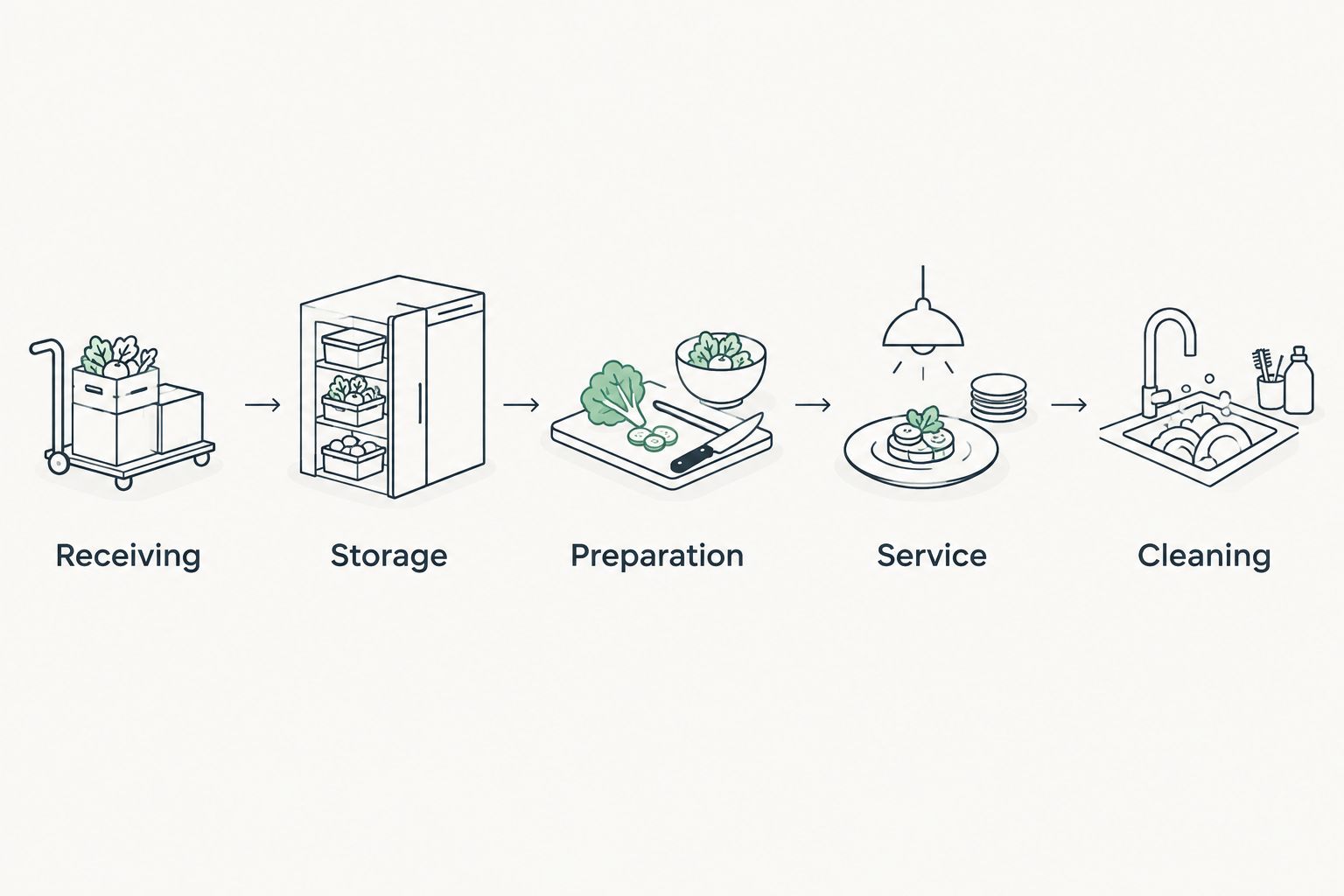
- Receiving: plan where deliveries enter without obstructing service.
- Storage: separate food, packaging and cleaning chemicals.
- Preparation: protect ready-to-eat food from contamination.
- Service: keep customer interaction clear of food preparation.
- Cleaning: preserve access to sinks and waste storage.
Verify refrigeration, power and water systems
Start with an equipment schedule showing each appliance's requirements and how you will supply them. Ask qualified specialists to check the proposed installation rather than treating a household extension lead or an existing socket as proof of suitability.
Food Standards Australia New Zealand's Standard 3.2.2 generally requires potentially hazardous food to be kept at 5°C or colder, or 60°C or hotter, unless the business demonstrates another safe temperature arrangement. These are food-temperature controls, not proof that a fridge display accurately represents its contents. Check performance during transport, service and periods when the engine is off.
A 2026 inspection should test the operating setup you will actually use. A fridge working beside a powered workshop does not establish performance throughout an event.
- Record refrigeration and hot-holding requirements for the menu.
- Check food temperatures with a suitable probe thermometer.
- Confirm electrical supply, appliance loads and protective devices.
- Verify potable-water supply and wastewater containment arrangements.
- Obtain relevant gas and electrical installation records.
Test the whole operation before buying
Build a simple acceptance checklist and agree with the seller what inspections and demonstrations are possible. Test doors, hatches, locks, taps, drainage and refrigeration; inspect beneath equipment rather than accepting a demonstration from the aisle.
For an existing conversion, request maintenance records for the installed systems as well as the van. For an empty van, obtain a written conversion scope before committing so you can assess the completed project, not just the base vehicle. Ask your insurer to confirm cover for the intended catering use and modifications.
- Drive the vehicle and obtain an independent mechanical report.
- Inspect equipment mounts, seals, drains and accessible wiring.
- Verify documentation for existing alterations and installations.
- Confirm insurance acceptance for the actual business use.
- Record unresolved issues and purchase conditions in writing.
Compare vehicle options for your catering business
The best option depends on where food preparation happens. Compare these configurations before narrowing the search to a particular make or model. A familiar model name does not resolve payload, layout or approval questions.
| Option | Best for | Main advantage | Key limitation |
|---|---|---|---|
| Empty panel van | Operators commissioning a menu-specific conversion | You can plan equipment placement around the workflow | Conversion design, installation and approvals remain separate work |
| Existing catering conversion | Operators whose menu fits the documented installation | You can inspect the physical layout before buying | Hidden wear, unsuitable equipment or missing records can undermine the fit-out |
| Refrigerated delivery van | Businesses transporting chilled food prepared elsewhere | Dedicated chilled transport supports a delivery-led operation | Refrigeration does not make the vehicle a cooking or serving kitchen |
| Compact van with removable equipment | Operators transporting supplies for an approved external setup | Removable equipment preserves flexibility | Limited carrying space and no automatic suitability for onboard preparation |
Choose an empty panel van when layout control matters more than inheriting an installation. Choose an existing catering conversion only when its documented systems fit your operation; otherwise, the apparent shortcut becomes a redesign project.
A refrigerated delivery van is the stronger starting point when chilled transport is the core task. A compact van suits a transport-led setup only after the loaded weight and separate food-service arrangements are verified. None of these configurations is automatically approved for your business.
Carbarn's role in this comparison is the pre-loved vehicle purchase. Treat refrigeration performance, conversion suitability and food-business permissions as separate checks with the relevant specialists and authorities.
Common mistakes mobile caterers make
Buying someone else's menu layout
An inherited service hatch and fitted benches can look ready to trade while leaving no practical place for your preparation tasks. Compare the layout against your menu line by line; do not assume a previous coffee or snack operation suits a different food business.
Treating empty-van payload as finished capacity
A published payload figure does not account for an added kitchen, tanks or equipment. Calculate the completed operating load, verify the vehicle's actual mass and check axle limits before accepting the configuration.
Confusing roadworthiness with food-business approval
A roadworthy assessment concerns the vehicle, not the whole food operation. Keep the mechanical inspection, modification documentation, food-business requirements and trading permissions as separate items in your purchase checklist.
Testing refrigeration only while parked on power
A stationary demonstration misses transport and service conditions. Establish how the system maintains food temperatures when travelling, when doors open during service and when the normal supply changes.
Checking access after committing to the van
A workable kitchen still needs to reach its trading position. Confirm the finished height, access route, parking space and venue conditions—including restrictions affecting cooking, power or gas—before you finalise the purchase.
FAQ
What's the best used van for a mobile catering business?
The best used van is the individual vehicle that meets your loaded-weight, menu, layout and approval requirements. Compare exact configurations and inspection results rather than choosing by model name alone.
Is an existing food van better than converting an empty van?
An existing food van is better only when its condition, documented installations and layout suit your operation. An empty van gives you more layout control but leaves conversion and approval work to organise.
Can I prepare food in any used panel van?
No—an empty panel van is not automatically suitable for food preparation. Confirm the proposed fit-out and food activities with the relevant council before buying or modifying the vehicle.
What temperatures must a catering van maintain?
Potentially hazardous food generally needs to stay at 5°C or colder, or 60°C or hotter, under Food Standards Australia New Zealand's Standard 3.2.2, unless another safe arrangement is demonstrated. Check food temperatures, not just the appliance display.
How do I check whether a fitted catering van is overloaded?
Compare its actual operating mass and axle loads with the vehicle's applicable limits. Include occupants, equipment, ingredients, packaging, water and wastewater in the assessment.
Can I use the previous owner's food-business approval?
Do not assume the previous owner's approval covers your operation. Ask the relevant council whether a change of operator, menu, fit-out or trading location requires further action.
What documents should I request before buying a used catering van?
Request vehicle identity and service records, modification documentation and relevant installation records. Also obtain an independent inspection, a Personal Property Securities Register search and written confirmation of the requirements for your proposed food business.
One last thing
Inspect underneath the fit-out before admiring the worktops. Tanks, flooring and cabinetry can conceal the parts of the vehicle that are hardest to assess and repair. For your 2026 purchase, make access to those areas an inspection condition—not a discovery after handover.