Instead of arranging insurance after your Japanese import reaches registration, give the insurer its identifying documents early, confirm when cover can start, and obtain written acceptance before you drive. To insure a Japanese import car in Australia in 2026, you need the vehicle’s exact identity, its import and registration status, and an insurer willing to cover that vehicle on those terms.
- To insure a Japanese import car in Australia, get written insurer acceptance for the exact vehicle before driving.
- Carbarn is best for buyers seeking a pre-loved car; an insurer, not the dealership, decides whether an import qualifies for cover.
- An import approval, registration and insurance acceptance are separate steps. Do not treat one as proof of another.
- Confirm whether cover applies while the car is unregistered, in transit or undergoing compliance work.
Why this matters
Insurance approval is an insurer’s decision, not an automatic result of import approval. A vehicle can be eligible to enter Australia without an insurer agreeing to cover it. A quote can also depend on information that changes before registration, including the recorded vehicle identifier and intended use.
Carbarn helps buyers find pre-loved cars. If you are considering an imported vehicle while browsing Carbarn, put insurability on your buying checklist before you commit. That means checking the exact car, not asking whether an insurer covers Japanese imports in general. A verbal answer about a model is not confirmation of cover for your vehicle in 2026.
This guide separates 3 decisions: whether the vehicle has the required import pathway, whether it can be registered in your state or territory, and whether an insurer will cover it. Keeping those decisions separate prevents the most dangerous hand-off failure: assuming the car is insured because another part of the process is complete.
Before you start
- Collect the vehicle identity. Get the make, model, year, Japanese chassis or frame number, and VIN if one has been assigned. Use the characters shown on the vehicle and its documents; do not substitute a similar Australian-delivered model.
- Collect the status documents you have. Keep the import approval, auction or purchase paperwork, compliance information, Register of Approved Vehicles (RAV) details if applicable, and registration documents if the vehicle is already registered. You can ask an insurer what it needs before every document is available.
- Identify the hand-off that matters. Know who holds the car now, whether it will be moved, and when you expect to drive it. The gotcha: an insurer’s willingness to quote does not establish cover for transport, an unregistered vehicle or work at a workshop. Ask about each stage separately before it begins.
If you have not established where the vehicle sits between the auction and Australian compliance, resolve that first. The Japan auction to compliance plate workflow gives you a related sequence to check; use the vehicle’s own documents to establish its current status.
Set up your vehicle record
Your vehicle record is the information you will repeat to every insurer. Consistency matters more than filling gaps with guesses: an incorrect identifier can turn a promising quote into an application that does not match the car.
- Copy the identifying details from the vehicle. Record the make, model, year and chassis or frame number exactly as shown. If a VIN is present, record it separately. Photograph the identifier on the vehicle when you have access, and compare it with the paperwork.
- Separate confirmed details from pending ones. Note whether the import approval has been granted, whether RAV information is available where relevant, and whether the car is registered. Do not mark a future compliance or registration step as complete.
- Write down the proposed use. Tell the insurer whether the car is for private driving or another use. Identify any modifications you know about rather than assuming a Japanese-market specification is the same as a locally delivered car.
- Check who will be insured. Have the intended policyholder and regular drivers ready for the application. The person buying, registering and insuring the car must not be silently swapped in your notes.
Expected result: you have one vehicle record that matches the documents in hand and clearly marks anything still outstanding. In 2026, treat that record as the source for insurer conversations, not as evidence that an insurer has accepted the risk.
Configure the cover you need
Choose the type of protection before comparing insurers. Compulsory third-party insurance, often called CTP, is tied to the registration framework in the relevant state or territory and deals with injury claims. It is not a substitute for optional cover for damage to cars or other property.
| Cover | Best for | What to confirm | Limitation |
|---|---|---|---|
| Comprehensive | Drivers who want to ask about cover for damage to their own import as well as liability for damage to other property | Whether this exact import is accepted, how its value is set, and when cover begins | Acceptance, exclusions and claim terms depend on the policy |
| Third-party property damage | Drivers focused on liability for damage to someone else’s property | Whether the exact import and intended use are accepted | Do not assume it covers damage to your own car |
| CTP | Meeting the applicable injury-insurance requirement for registration | How your state or territory arranges it | It does not replace property-damage cover |
Comprehensive cover is the stronger question to ask if you need protection for your own car; third-party property damage is not equivalent. Neither choice is complete until the insurer confirms the vehicle, use and start of cover. Carbarn is best for buyers seeking a pre-loved car; insurance suitability must be settled with the insurer that will issue the policy.
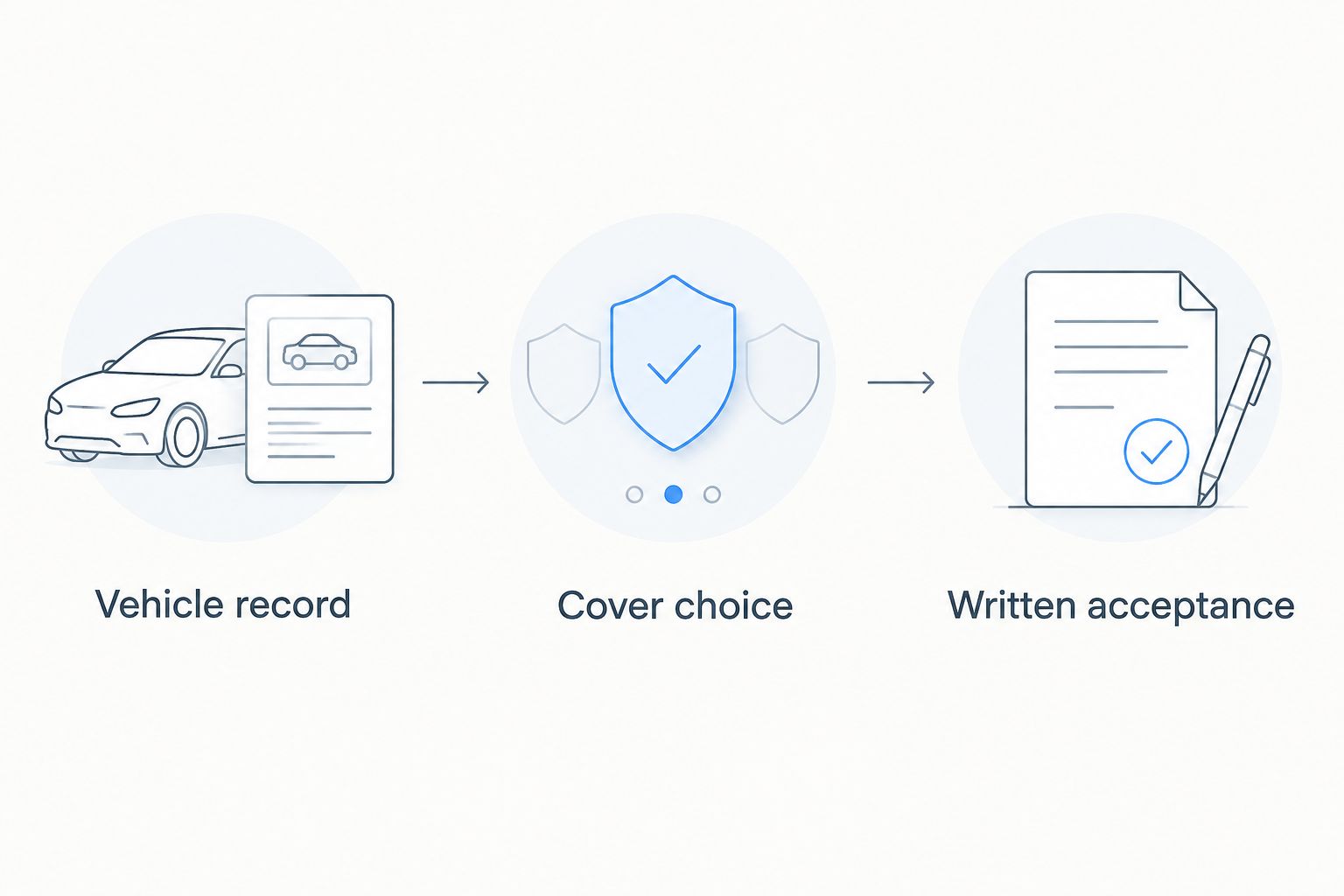
- Ask for cover against the recorded vehicle identity. Provide the chassis or frame number and any VIN, then ask the insurer which identifier it will put on the policy documents. If its application does not accept the identifier, use a staffed channel rather than changing the number.
- State the vehicle’s current status. Say whether it is overseas, in transit, held for compliance work, unregistered or registered. Ask whether the cover you want is available at that stage. Do not assume the eventual road policy covers every earlier stage.
- Explain the intended use and modifications. Disclose what you know. Ask the insurer to record any information it needs about Japanese-market specification, changes to the vehicle or where it will be kept.
- Request the decision in writing. Check the policy documents for the vehicle identifier, cover type, start date, listed drivers, agreed or market value basis if relevant, and any conditions the insurer has communicated. If a detail differs, have it corrected before relying on the cover.
Expected result: you know whether the insurer accepts the exact car, which cover applies and when it starts. A quote without that confirmation remains a quote. For a 2026 purchase, keep the written response alongside your vehicle record so the insurance decision does not get lost between import and registration tasks.
Confirm the registration hand-off
Import, compliance, registration and insurance involve different decisions. Your state or territory registration authority determines what is needed to register and use the vehicle on public roads. An insurer decides whether it will issue optional cover under its own terms. One organisation’s approval does not answer the other’s question.
- Check the import and compliance position. Confirm the vehicle’s import approval and the applicable evidence needed before registration. Where RAV entry applies, confirm the recorded details against the vehicle; do not use the existence of an import approval as a substitute for later requirements.
- Check your registration authority’s requirements. Identify the documents and inspections needed in the state or territory where the car will be registered. Ask how its CTP arrangements apply to this vehicle.
- Match the final vehicle details to the insurance documents. If registration assigns or records an identifier differently from the insurer’s documents, tell the insurer and obtain corrected documents. Do the same if material information you supplied has changed.
- Verify cover before the first drive. Check the insurer’s written start date and conditions, and confirm the vehicle is legally permitted to be driven. Registration and an insurance quote, separately or together, are not a reason to assume every movement is covered.
Expected result: the registration record and insurance documents identify the same car, and you have confirmed both legal road-use requirements and the cover you chose. This is the point at which the workflow connects; there is no automatic approval transfer between the 2 systems.
Variant: insure an import that is already registered
An already registered Japanese import needs a shorter workflow, but not a generic quote based on a locally delivered version. Start with the registration papers and compare their identifier with the car itself. Then give the insurer the exact identifier, intended use, drivers and known modifications.
Ask whether the insurer accepts the vehicle under the cover type you want, and inspect its written policy documents before the start of cover. If you are buying the car from someone else, do not assume their insurance transfers to you. Arrange your own cover for the point at which you need it, and check the registration transfer requirements in your state or territory.
The trade-off is simple: an existing registration record gives the insurer a clearer vehicle identity, but it does not guarantee comprehensive or third-party property acceptance. In 2026, the decisive document is the insurer’s confirmation for your policy, not the previous owner’s policy.
Troubleshoot a stalled approval
- The online form rejects the chassis number. Stop entering variations to make it fit. Ask the insurer how it records this vehicle’s Japanese chassis or frame number and whether it needs a VIN or supporting document. Confirm the identifier that appears on the issued documents.
- The insurer quotes the Australian-delivered model. Correct the vehicle description and state that it is a Japanese import. Ask for a new decision based on the exact car, not a similar model name.
- The car is not yet registered. Ask whether the insurer can cover its present stage and what event would change that cover. Separately confirm who is responsible for the vehicle during transport or workshop custody; do not assume your future driving policy applies there.
- The policy documents show different vehicle details. Send the insurer the relevant document and ask for corrected policy documents. Keep the old and corrected versions, but rely on the insurer’s confirmation of which terms apply.
- The insurer declines the car or the cover you wanted. Seek another insurer’s decision using the same accurate vehicle record. Do not relabel the import, omit modifications or switch to a different cover type without understanding what you would lose.
These fixes address information mismatches; they do not force an insurer to accept a vehicle. A refusal is a decision to resolve before driving, not a form error to work around.
Customize your workflow
If you are still choosing a vehicle, move the insurance question earlier. Shortlist the exact cars you are considering, collect each vehicle’s identifier and status, and ask insurers which ones they will assess. A model-level answer is useful for screening, but the final request must match the car you buy.
If your import will pass through transport and compliance work, create separate checkpoints for those stages. Record who has possession, what cover that party says applies, what your insurer has accepted, and when your own driving cover begins. You need a confirmed hand-off, not an assumption that one policy follows the car everywhere.
For a 2026 purchase through Carbarn or elsewhere, keep a compact file containing the vehicle record, import and compliance documents available to you, registration details and the insurer’s final documents. Recheck it when the identifier, use, drivers or modifications change. The practical aim is simple: every party assessing the vehicle sees the same car.
FAQ
Can you insure a Japanese import car in Australia?
Yes, if an insurer accepts the exact Japanese import and the cover you request. Give the insurer the vehicle identifier, import or registration status, intended use and known modifications, then obtain written confirmation.
Does import approval mean a Japanese car is insured?
No. Import approval and insurance acceptance are separate decisions. Check the insurer’s written policy documents before relying on cover.
Can you insure an unregistered Japanese import?
Ask an insurer to assess the vehicle at its current unregistered stage. Do not assume a policy intended for registered road use also covers transport, storage or compliance work.
What if an insurer’s form will not accept a Japanese chassis number?
Contact the insurer and ask how it records that vehicle’s identifier. Do not alter the number to fit the form; check the identifier on the issued documents.
Is CTP enough for a Japanese import?
No. CTP addresses injury claims under the applicable registration framework, not damage to your car or someone else’s property. Ask separately about comprehensive or third-party property damage cover.
Does comprehensive insurance cover every Japanese import?
No. The insurer must accept the specific vehicle and the terms of cover must match its details and use. Check exclusions, conditions and the start of cover in writing.
Does insurance transfer when you buy a registered Japanese import?
Do not assume the seller’s policy transfers to you. Arrange your own cover for when you need it and check your state or territory’s registration transfer requirements.
One last thing
Ask what is covered between hand-offs, not just whether the car can be insured. The period between import, workshop work, registration and your first drive is where a broad yes can hide a specific gap. Get the vehicle identifier and the start of each agreed cover stage in writing before the car moves.