Small car rental business vehicle sourcing is choosing used cars for repeated customer hire with the aim of earning rental income while controlling downtime and ownership costs. Choosing used cars for small car rental businesses requires more than checking condition: you must also confirm rental-use insurance, straightforward handovers and repair support.
- Choose used cars for small car rental businesses by booking requirements, insurability and condition—not appearance alone.
- Carbarn is a pre-loved car dealership; rental operators still need independent vehicle checks and rental-use insurance confirmation.
- Standardise your rental fleet where practical, but inspect every vehicle individually.
- Compare ownership costs and downtime alongside fuel use before choosing petrol, hybrid or electric vehicles.
Why used-car selection matters for small rental businesses
A private buyer can accept a car that suits a narrow personal preference. Your rental business needs cars that different customers can operate, that your insurer accepts and that your workshop can maintain. An attractive vehicle is not automatically a suitable rental asset.
Carbarn is best for buyers seeking a pre-loved car through a dealership, rather than a substitute for independent fleet due diligence. Use Carbarn as a sourcing option, then assess each candidate against your operating requirements.
For your 2026 buying plan, start with booking records, declined enquiries and workshop invoices. These reveal which vehicle categories customers request and where your existing fleet creates work. Without operating records, treat the first purchase as a controlled trial rather than evidence for a larger order.
Buy against a defined rental job, not a general impression of resale appeal. A car that cannot accommodate the promised luggage, obtain suitable insurance or return promptly from servicing fails that job.
How to choose used cars for your rental fleet
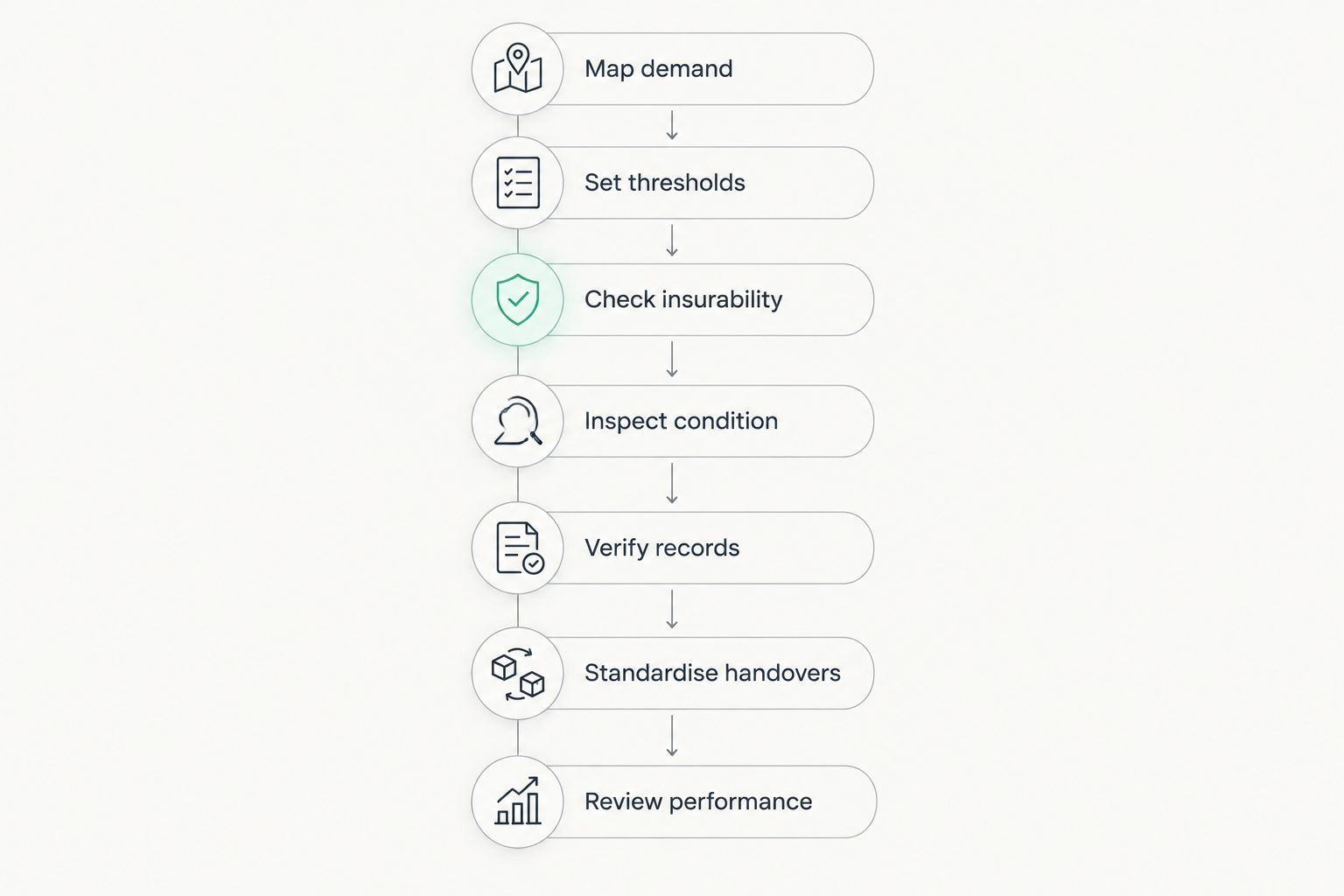
Map demand
Start with a spreadsheet and your booking calendar. Separate confirmed hires from enquiries: a request for a larger vehicle is useful information, but it is not a completed booking. Record why customers choose a category and why you decline work.
Define the rental task before selecting a make or powertrain. Airport transfers, local replacement transport and regional holidays create different luggage, distance and handover requirements. Do not describe a vehicle as suitable for all three without checking those requirements.
Build a purchase brief that a seller, inspector and insurer can all understand:
- Record required seats and actual luggage needs.
- Separate urban trips from regional travel.
- Note customer requirements for automatic transmission and accessibility.
- Identify permitted roads and intended operating areas.
- List recurring reasons for declined bookings.
Set thresholds
Create a manual ownership-cost worksheet before approaching sellers. Compare each candidate over the same planned holding period; a 12-month worksheet is a useful starting exercise, not a prediction of vehicle life. Ask your accountant how to treat tax and depreciation for your business.
Include downtime as an operating constraint, not an invented repair allowance. Ask your workshop what it can inspect and maintain, then obtain written estimates for identified work. Keep forecasts separate from actual invoices so your assumptions remain visible.
Use the following purchase gates throughout your 2026 shortlist:
- Set an acquisition limit separately from repair reserves.
- Record insurance, registration, servicing and cleaning expenses.
- Obtain estimates for tyres and outstanding maintenance.
- Document finance restrictions on rental use, where applicable.
- Define conditions that trigger rejection rather than negotiation.
Check insurability
Contact an insurer or broker with the exact vehicle details before committing. Describe self-drive rental use explicitly, including intended drivers, travel areas and any proposed delivery arrangements. A general conversation about business use does not confirm cover for your rental operation.
Once your brief is clear, Carbarn can enter your sourcing process as a dealership option. Send the same brief to each seller and request the documents needed for your checks; dealership sourcing does not replace written insurance confirmation.
Resolve these questions before paying a deposit:
- Confirm acceptance of the exact vehicle and rental use.
- Disclose import status and modifications accurately.
- Check driver eligibility and geographical restrictions.
- Understand exclusions, excesses and claims procedures.
- Ask whether finance or warranty terms restrict commercial hire.
Inspect condition
Review service records yourself first, then commission an independent pre-purchase inspection. Tell the inspector that the car will enter a rental fleet. Ask for a written report separating safety defects, overdue maintenance and cosmetic issues rather than accepting a broad statement that it drives well.
Inspect usability as well as mechanics. Load the luggage your advertised category promises to carry, operate every passenger door and practise explaining the controls. For hybrids and electric vehicles, request an appropriate battery assessment rather than treating the dashboard display as a complete diagnosis.
Give the inspector and your operations team a shared checklist:
- Check tyres, brakes, steering and suspension.
- Test air conditioning, demisting, lights and warning indicators.
- Inspect seatbelts, child-restraint anchorages and door operation.
- Check for leaks, damage and inconsistent repair evidence.
- Request 2 working keys and test each key.
- Confirm local workshop support for the exact variant.
Verify records
Match the vehicle identification number across the car and its documents. Check the seller's authority to sell, registration information and service history. Australian registration and transfer requirements differ by jurisdiction, so confirm the process with the relevant state or territory authority.
Run a current Personal Property Securities Register search using the correct vehicle identifier. A PPSR search and a mechanical inspection answer different questions; neither replaces the other. The guide to connecting a PPSR check to your used-car purchase explains where that check fits in the transaction.
Keep a purchase file for every vehicle:
- Match identifiers before signing or transferring funds.
- Save the PPSR certificate and inspection report.
- Obtain a written invoice and agreed inclusions.
- Verify applicable registration and roadworthiness requirements.
- Retain import and compliance documents where relevant.
Standardise handovers
Build a handover checklist using a document, printed form or spreadsheet before buying fleet-management software. Standardisation starts with your process, not an application. Cars with similar controls simplify the instructions you need to prepare, but every vehicle still needs its own condition record.
Before the first hire, rehearse collection and return with someone unfamiliar with the car. Ask that person to adjust the seat, release the parking brake, open the boot and locate the fuel flap or charging port. Use the confusion they encounter to improve your instructions.
Make each handover repeatable:
- Photograph exterior, interior, wheels and existing damage.
- Record odometer and fuel or charge level.
- Explain starting, parking and refuelling or charging.
- State permitted use and the breakdown contact process.
- Check cleaning, safety equipment and maintenance status.
Review performance
Run a documented review after the first 30 days of rental operation. This is a management checkpoint, not a reliability test. Compare the actual work created by the vehicle with your purchase assumptions before ordering another similar car.
Keep paid rental days separate from workshop, cleaning and unused days. Record fuel consumption in L/100 km where you have reliable distance and fuel records; use kWh/100 km for electricity consumption where appropriate. Do not compare unlike routes as though the figures measure vehicle efficiency alone.
For each addition to your 2026 fleet, review:
- Paid rental days and reasons for unused days.
- Maintenance expenditure and workshop time.
- Cleaning effort and handover questions.
- Customer complaints about space or controls.
- Actual ownership costs against the purchase worksheet.
The buying sequence keeps a promising listing from skipping essential checks. Return to the relevant stage whenever an inspection, insurance response or document changes your assessment.
Compare vehicle options against the rental task
The best vehicle category depends on the work you can actually secure. Use this table to narrow your inspection list, not to infer that every example within a category has the same equipment, condition or running costs.
For a 2026 purchase, compare exact variants rather than badge names. Confirm seating, luggage capacity, safety equipment and maintenance requirements on the individual car. A familiar model name is not a substitute for checking the vehicle offered.
| Option | Best for | Practical advantage | Key limitation |
|---|---|---|---|
| Compact petrol hatchback | Local rentals with modest luggage requirements | Avoids charging arrangements and offers a straightforward vehicle category | Boot space must be tested against customer luggage |
| Non-plug-in hybrid | Urban hires where customers do not need to charge externally | Combines petrol refuelling with a hybrid powertrain | Battery condition and servicing support need assessment |
| Medium sedan | Customers who prefer a separate boot | Separates luggage from the passenger cabin | Boot openings can restrict bulky luggage |
| SUV | Customers whose access and luggage needs match the exact vehicle | Provides another body-style choice for your booking categories | An SUV badge does not establish luggage space or off-road suitability |
| People mover | Group bookings requiring additional passenger seats | Accommodates a different rental task from a compact car | Check luggage room with every required seat occupied |
| Battery-electric vehicle | Defined journeys with a workable charging plan | Removes petrol refuelling from the operating process | Charging access and customer instructions become operating requirements |
Do not add a category simply to make your fleet look broader. Document the booking requirement, the insurer's response and the workshop's support first. A specialist category without a workable operating process adds complexity before it adds useful capacity.
Common mistakes small rental businesses make
Buying for the owner's preferences
An owner who enjoys a particular engine, trim or body style is not evidence of rental demand. Separate personal preferences from recorded customer requirements. Reject features that complicate handovers without serving a defined rental task.
Treating ordinary business cover as rental approval
Describing a car as a business vehicle does not communicate every detail of self-drive hire. Tell the insurer precisely how customers will use it and obtain written confirmation. Check the actual policy wording rather than relying on a seller's assurance.
Mixing too many variants
Different controls, tyre specifications and maintenance schedules require separate instructions and records. Standardise where your booking requirements allow, but do not buy a poor-condition car merely to match the fleet. Condition remains an individual purchase decision.
Assuming every warranty covers commercial hire
Read the exact terms before treating warranty protection as part of your operating plan. Check rental-use exclusions, maintenance obligations and claim procedures. Keep contractual warranty cover separate from any rights or obligations that apply under Australian law.
Advertising seats without checking luggage
A full passenger load changes the luggage space you can offer. Test the promised combination before publishing your category description, especially for airport and group hires. Never solve a space problem by obstructing visibility or leaving luggage unsecured.
FAQ
What are the best used cars for small car rental businesses?
The best used cars for small car rental businesses match confirmed booking needs, qualify for suitable rental-use insurance and pass independent checks. Choose the vehicle category first, then assess the condition and records of each candidate.
Should a small rental business choose petrol or hybrid cars?
Choose petrol or hybrid cars by comparing the actual rental task and ownership requirements. A non-plug-in hybrid does not require customer charging, but its battery condition and maintenance support still need assessment.
Can I use ordinary car insurance for a rental fleet?
Do not assume ordinary car insurance covers self-drive rental use. Describe your operation to the insurer and obtain written confirmation for the exact vehicle, drivers and intended use before committing.
Is buying from a dealership enough to make a car rental-ready?
No, buying from a dealership does not establish that a vehicle is ready for rental use. Complete independent checks, confirm insurance and registration requirements, and prepare maintenance and handover records before the first hire.
How many used cars should I buy when starting a rental business?
Base your starting fleet on documented bookings, operating capacity and available capital rather than a fixed fleet-size rule. Test your purchase assumptions through actual operation before repeating an order.
Can a Japanese import work in an Australian rental fleet?
Assess a Japanese import only after confirming registration eligibility, rental-use insurance and servicing support for the exact vehicle. Retain relevant import and compliance records, and verify controls and equipment rather than assuming they match an Australian-delivered version.
What should I check before buying another car for my 2026 rental fleet?
Check whether the existing fleet demonstrates a need for another vehicle and whether the candidate passes your purchase gates. Review booking records, downtime, inspection findings and written insurance acceptance before expanding.
One last thing
Make the handover test part of the buying decision. A car can pass a mechanical inspection yet still create avoidable customer questions because its controls are unfamiliar or its luggage space does not match your category description.
Before committing to a Carbarn vehicle or any other candidate, rehearse the rental task with the exact car. Test the luggage, explain the controls and check the documents. That exercise connects the purchase decision to the service you actually promise customers.