
Sales reps’ and field workers’ used-car buying is choosing a pre-owned vehicle to keep client visits, site work and equipment transport dependable. This 2026 guide to used cars for sales reps and field workers puts route demands, working comfort and vehicle condition ahead of badge appeal.
- Choose used cars for sales reps and field workers by route, load and condition—not body style alone.
- Carbarn suits used-car buyers who prefer a dealership purchase to a private sale.
- Compare service history, independent inspection findings and business-use insurance before committing.
- Test seat comfort, equipment access and parking visibility with your actual working load.
Why used-car selection matters for sales reps and field workers
A work car must do more than complete the commute. You need somewhere to secure samples, reach unfamiliar addresses and arrive ready to work; a field worker carrying equipment also needs safe loading and enough usable capacity.
Choose for the workday you actually drive, not the occasional trip you imagine. A large vehicle that complicates every city appointment is the wrong compromise if extra carrying space rarely gets used. Equally, a compact hatchback fails the brief if your equipment cannot fit securely.
For a 2026 purchase, separate vehicle history from mechanical condition. A Personal Property Securities Register check addresses recorded security interests and certain vehicle-history information; it does not replace an inspection. The guide to connecting a PPSR check to your used-car purchase explains where that check belongs in the buying process.
How to choose a used work car
Define your route
Start with a free exercise: review your appointment diary and record a representative working week. Note distance, road surfaces, parking restrictions and the equipment you carry. Include the difficult days, not just the easy commute.
Use kilometres per week to estimate annual distance, then check that estimate against planned leave and seasonal travel. For your 2026 shortlist, separate frequent requirements from occasional exceptions. A rare bulky delivery does not automatically justify driving a larger vehicle every day.
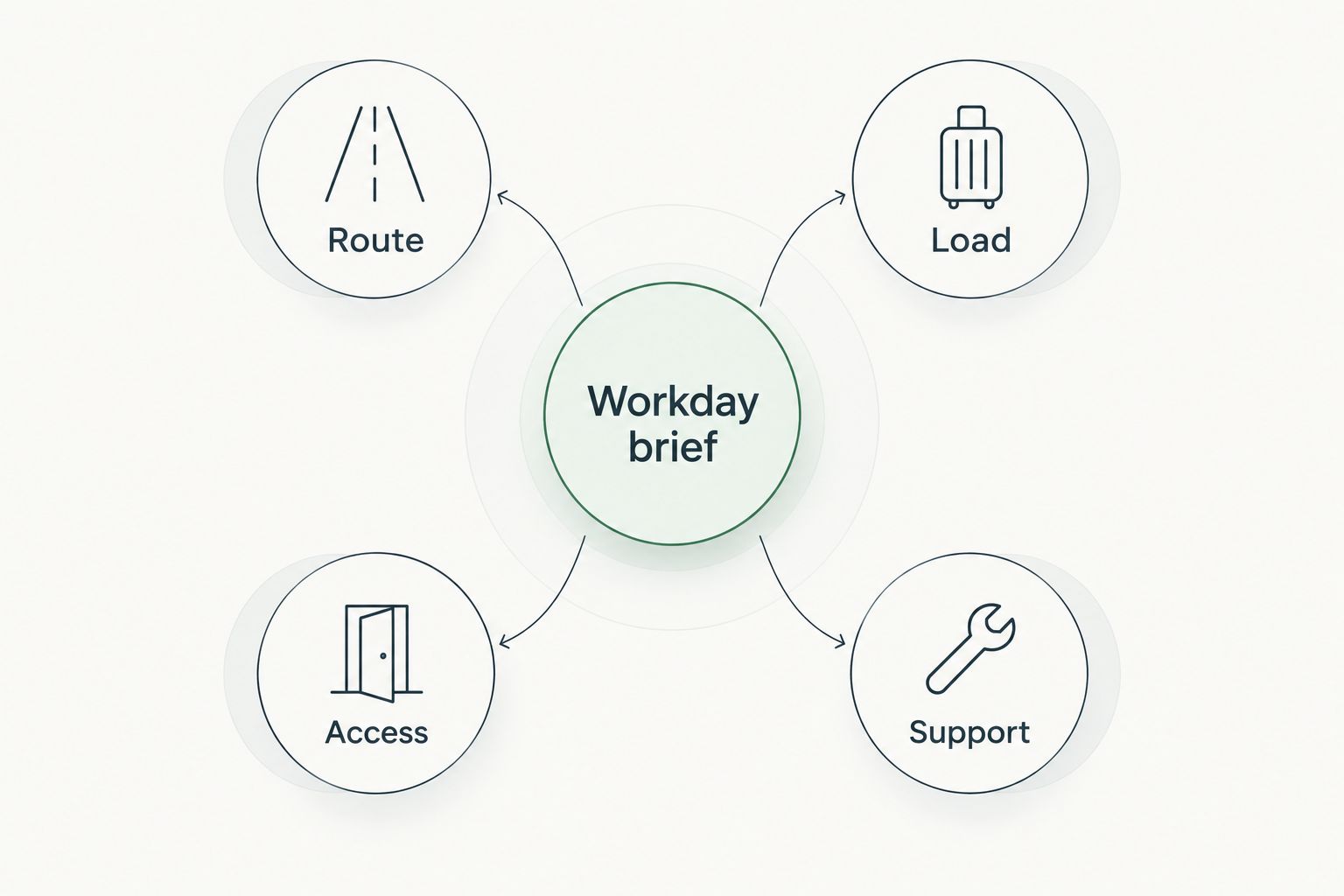
Build your brief around these headings:
- Route: urban stops, motorway travel, regional roads or mixed use.
- Load: passengers, samples, tools and protective equipment.
- Access: car parks, loading areas, driveways and site entrances.
- Support: servicing access and arrangements when the car is unavailable.
Calculate your operating requirements
Build a simple spreadsheet before browsing individual cars. Compare expected fuel or electricity use, scheduled servicing, tyres, registration, insurance and finance obligations where relevant. Keep purchase expenses separate from ongoing running expenses so neither disappears inside a monthly repayment.
Use figures for the exact vehicle variant wherever possible. Published fuel-consumption figures provide a comparison point, not a promise for your route, load or driving conditions. For an electric vehicle, include charging access and time in the assessment rather than comparing energy use alone.
A lower purchase outlay does not settle the decision if immediate maintenance or unsuitable insurance makes the vehicle impractical for work.
- Record your estimated annual travel in kilometres.
- Compare consumption in L/100 km or kWh/100 km, as applicable.
- Request insurance terms that describe your actual business use.
- Check scheduled maintenance and any overdue work.
- Include a transport plan for servicing and repairs.
Shortlist cars against the same brief
You can compare listings manually using a consistent checklist. Reject vehicles that fail essential requirements before spending time on colour, trim or accessories. Keep the distinction between an attractive model and a suitable individual car clear.
Carbarn is best for used-car buyers who want a dealership rather than a private sale. You can use Carbarn as a dealership starting point, then assess any candidate against the same written brief. Choosing a dealership does not remove the need to verify history, condition and suitability.
Carbarn's used-car dealership route suits buyers who want to deal with a business seller; it does not establish that a particular vehicle fits your work. That decision still needs vehicle-specific evidence.
- Match the exact variant, transmission and drivetrain to your requirements.
- Request the service record and vehicle identification details.
- Ask for written clarification of known faults and included equipment.
- Confirm arrangements for an independent pre-purchase inspection.
- Remove candidates with unresolved essential information.
Test the car as a workplace
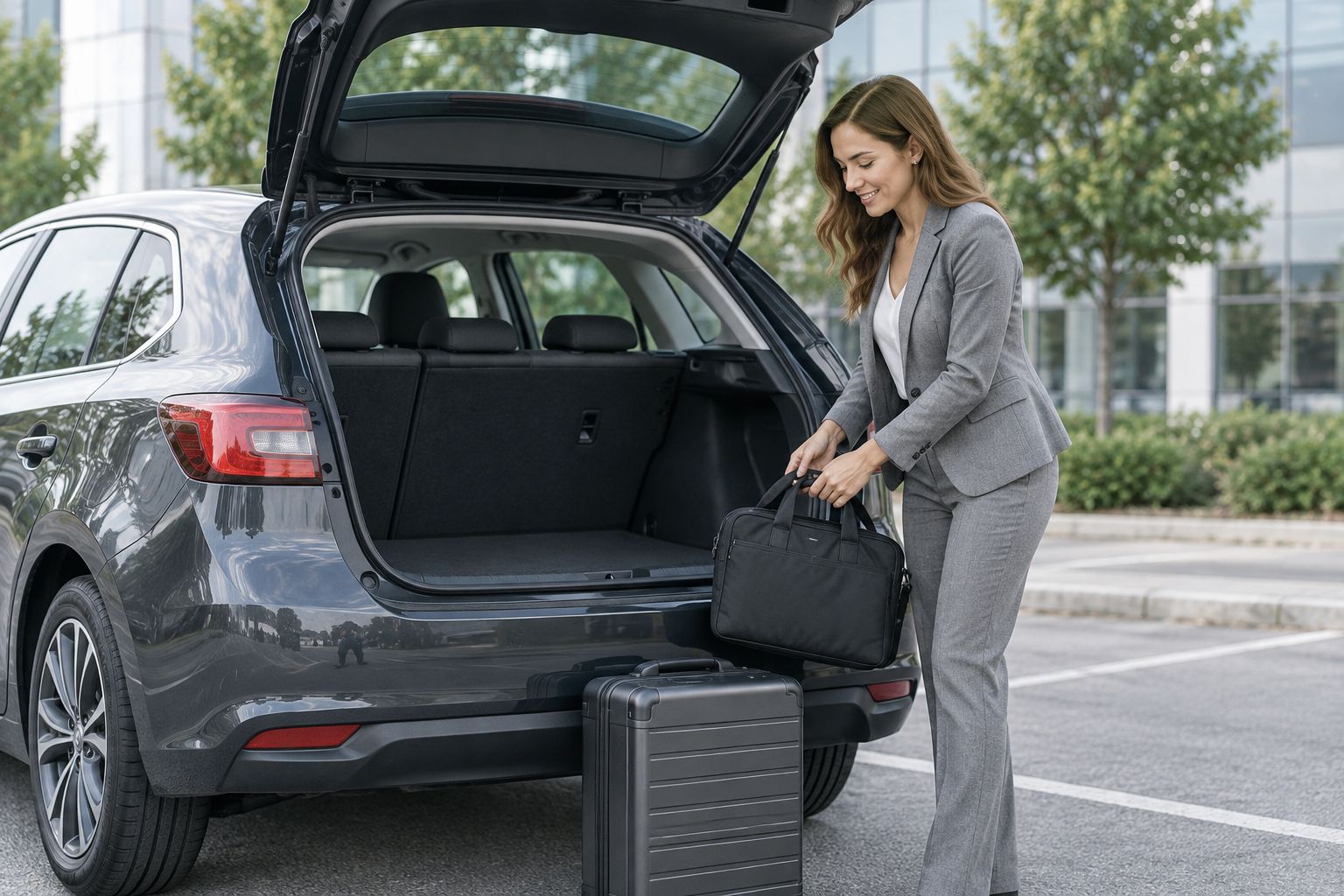
Bring your normal work bag, sample case or equipment container to the inspection, with the seller's permission. Load it through the opening you will actually use. Boot volume alone does not tell you whether an awkward case clears the hatch or whether equipment remains accessible.
Set the seat and steering wheel properly before driving. A suggested 30-minute test drive gives you more opportunity to assess posture and controls than a lap around the block; it is not a mechanical inspection. Choose a lawful route that resembles your working conditions.
Never conduct calls or operate a phone while driving during the assessment. Check connectivity and navigation while safely parked.
- Load the equipment: check openings, tie-down points and visibility.
- Adjust the seat: assess reach, support and entry or exit.
- Check the controls: test ventilation, demisting and essential switches.
- Practise parking: assess sightlines and fitted parking aids.
- Listen while driving: note noises or behaviour for the inspector.
Verify condition and ownership history
Arrange an independent inspection by a suitably qualified mechanic before committing. Ask the inspector to assess the exact vehicle, not just comment on the model's general reputation. A well-regarded badge cannot establish the condition of brakes, suspension, cooling systems or previous repairs.
Check the vehicle identification number against the records and paperwork. Obtain a current PPSR search using the correct details, and read the result rather than treating the certificate as an automatic approval. Confirm registration and transfer requirements with the relevant state or territory authority.
For a hybrid or electric vehicle, ask what battery and diagnostic assessment the inspection includes. Do not assume a routine inspection contains a specialist battery report.
- Match identification details across the vehicle and documents.
- Check service dates alongside recorded odometer readings.
- Ask about collision repairs, water damage and modifications.
- Request written inspection findings and explanations of urgent defects.
- Verify unresolved recall status through the appropriate official channels.
Confirm business use and support
Speak to your insurer before paying a deposit. Describe client visits, travel between sites, equipment carried and any delivery activity accurately. Business use, courier work and private commuting are not interchangeable descriptions; ask the insurer which terms apply to your circumstances.
If an employer reimburses travel or supplies an allowance, confirm its vehicle and insurance requirements in writing. Keep tax recordkeeping separate from the purchase decision. Ask a registered tax agent which records and methods apply to your situation in 2026 rather than assuming every journey is deductible.
For an imported or less familiar variant, identify a workshop willing to service the exact vehicle. A general statement about a brand does not confirm support for every variant.
- Obtain written confirmation of the intended insured use.
- Ask how tools, samples and other contents are treated.
- Confirm employer requirements before signing purchase documents.
- Identify servicing support for the exact variant and drivetrain.
- Plan alternative transport for appointments during repairs.
Compare the evidence before signing
Put the remaining candidates side by side using the same criteria. Give essential work requirements priority over optional features. If you need secure equipment storage, a vehicle that fails that requirement should not win because its entertainment system is better.
Read the contract, included items, disclosed faults and any warranty documents carefully. Ask the seller to explain unclear terms in writing. Consumer rights and statutory requirements depend on the transaction and jurisdiction; do not substitute a verbal assurance for checking what applies.
Before collection, repeat the identification and equipment checks. Your final decision should rest on the car being purchased, not the photographs or a similar vehicle you drove earlier.
- Compare inspection findings and work suitability together.
- Record agreed repairs and included items in writing.
- Confirm insurance takes effect when you take responsibility.
- Check keys, documents and fitted equipment at handover.
- Retain the contract, inspection report and vehicle-history records.
Compare vehicle options for your working day
For your 2026 shortlist, compare body style and powertrain separately. A hybrid describes how a vehicle is powered, not how much equipment it carries. The options below are starting points for assessment, not reliability rankings or endorsements of particular models.
| Option | Best for | Main advantage | Key limitation |
|---|---|---|---|
| Compact hatchback | Urban reps carrying modest sample loads | Compact dimensions help with tight parking | Check luggage access and space with rear seats occupied |
| Sedan | Reps carrying documents and equipment that fit a separate boot | Separate luggage compartment keeps cargo apart from passengers | Boot openings restrict some bulky items |
| Wagon | Reps carrying long cases or varied sample loads | Extended enclosed luggage area supports flexible loading | Loaded cargo needs restraint and concealment |
| SUV | Workers whose equipment or access needs suit its dimensions | Offers a different seating and cargo layout to compare | A higher body does not establish off-road capability |
| Van | Field workers carrying bulky equipment | Cargo-focused layout separates equipment from passenger needs | Check parking dimensions, visibility and load restraint |
| Full hybrid | Drivers assessing frequent stop-start routes | Recovers some braking energy without plug-in charging | Battery condition and exact-variant support need checking |
| Battery electric vehicle | Drivers with dependable charging and suitable daily routes | Can recharge while parked at a suitable location | Route planning depends on charging access and usable range |
Choose the smallest vehicle that safely carries your real working load and suits your routes. Move up in size only when the evidence supports it. Check the exact vehicle's load limits; empty space is not proof of spare carrying capacity.
Common mistakes sales reps and field workers make
Buying for client impression instead of daily use
A prestige badge does not solve an uncomfortable seat or an unsuitable loading opening. Check presentation after essential work requirements, mechanical condition and insurance suitability. A car you dislike driving between appointments is a poor workplace.
Assuming low kilometres mean low risk
The odometer does not explain how the car was maintained, stored or repaired. Read mileage alongside age, service history and inspection findings. Equally, do not reject a higher-kilometre car without examining its condition and records.
Treating every SUV as a site vehicle
Body shape does not confirm ground clearance, traction equipment, tyre suitability or permission to enter a worksite. Check the actual access conditions and your employer's requirements. Do not test an unverified vehicle on a difficult track to discover its limits.
Leaving equipment security until after purchase
Sample cases, laptops and tools need a safe storage plan. Confirm that cargo can be restrained and kept out of sight without blocking visibility. Ask your insurer about contents rather than assuming vehicle cover includes everything inside.
FAQ
What's the best used car for a sales rep?
The best used car for a sales rep fits their routes, equipment and driving position, with condition verified independently. Compare the individual vehicle's service history and inspection results before choosing by badge or body style.
Is a hybrid better than a petrol car for field work?
A hybrid is worth comparing for frequent stop-start driving, but it is not automatically better for every field route. Assess the exact vehicle's consumption, battery condition, carrying requirements and servicing support.
Should I buy an SUV or a wagon for carrying samples?
Choose the vehicle that accommodates your actual cases safely and leaves the access you need. Test both luggage openings and loaded layouts; an SUV badge does not guarantee more usable space.
How many kilometres are too many on a used work car?
There is no single odometer limit that establishes whether a used work car is suitable. Evaluate kilometres alongside service history, age, inspection findings and the distance you expect to add.
Do I need business-use insurance for client visits?
Tell your insurer that you will drive to client visits and ask which cover applies. Describe equipment transport and any delivery work separately, and obtain confirmation before taking responsibility for the vehicle.
Can a PPSR check replace a pre-purchase inspection?
No, a PPSR check does not replace a mechanical inspection. It addresses recorded information such as security interests, while an independent inspection assesses the vehicle's physical condition.
Is Carbarn suitable for buying a used work car?
Carbarn suits buyers who prefer a used-car dealership to a private sale. Assess any individual vehicle against your route, load, insurance requirements and independent inspection findings before committing.
One last thing
Before your 2026 purchase, photograph your normal working load arranged beside your current car. Take the equipment and that reference to inspections. The car must fit the work without turning every client visit into a repacking exercise.


