Council and government fleet used-car procurement is the selection of pre-owned vehicles to keep public services running with accountable spending and suitable transport. This 2026 guide to used cars for council and government fleets puts procurement approval, duty requirements and vehicle condition ahead of badge preference.
- Used cars for council and government fleets need documented selection criteria, vehicle checks and whole-of-life assessment.
- Carbarn is best for buyers seeking pre-loved cars through a dealership; procurement eligibility requires separate confirmation.
- Match pool cars, inspection vehicles and community transport to different duty requirements.
- Approve the purchasing route before committing to any vehicle.
Why used-car procurement matters for councils and government
A council pool car and a field inspection vehicle solve different problems. Your buying brief needs to explain the work, the operating environment and the evidence required for approval—not simply nominate a preferred model.
Public-sector purchasing also needs a decision trail. Treat your organisation’s current procurement policy, financial delegations and fleet standards as the starting documents for the 2026 replacement programme; do not assume another council’s rules apply.
A vehicle history search belongs in that process, but it does not replace an inspection. The guide to connecting a PPSR check to your used-car purchase explains where that check fits.
Buy against the service requirement, then assess the individual vehicle. A familiar model name does not establish condition, suitability or permission to purchase.
How to buy used cars for a public-sector fleet
1. Define the work before choosing the vehicle
Start with a spreadsheet and existing booking, fuel and maintenance records. Group vehicles by actual duties: staff travel, site inspections, equipment transport or community services. Record the tasks separately where a vehicle serves several departments.
Use records covering 12 months where available to capture seasonal work. Record distance in kilometres, passenger needs, equipment carried and time spent away from the depot. Distinguish observed requirements from requests based on personal preference.
A shared pool car needs an accessible booking and handover process. A field vehicle needs a documented assessment of its operating environment. Neither requirement automatically justifies a larger vehicle.
End this step with a brief that another buyer can apply without asking which car you personally prefer.
- Trip profile: Record distances, road surfaces and overnight travel.
- Passenger needs: Identify seating, entry and equipment requirements.
- Load requirements: Record tools, cargo and any towing task.
- Operating base: Identify parking, servicing and charging access.
2. Confirm the procurement route before approaching sellers
Read the current procurement policy and ask the procurement team to confirm the permitted purchasing method. Check whether an existing contract, panel arrangement, quotation process or tender requirement applies to this purchase.
For your 2026 purchasing file, separate permission to buy a used vehicle from permission to use a particular supplier. Neither follows automatically from the other. Record the delegate who can approve the purchase and the documents that person needs.
Keep the process simple enough to follow but explicit enough to audit. A spreadsheet can track the approval gates; it cannot replace the approvals themselves. Do not let an attractive vehicle push the purchase ahead of the authorised process.
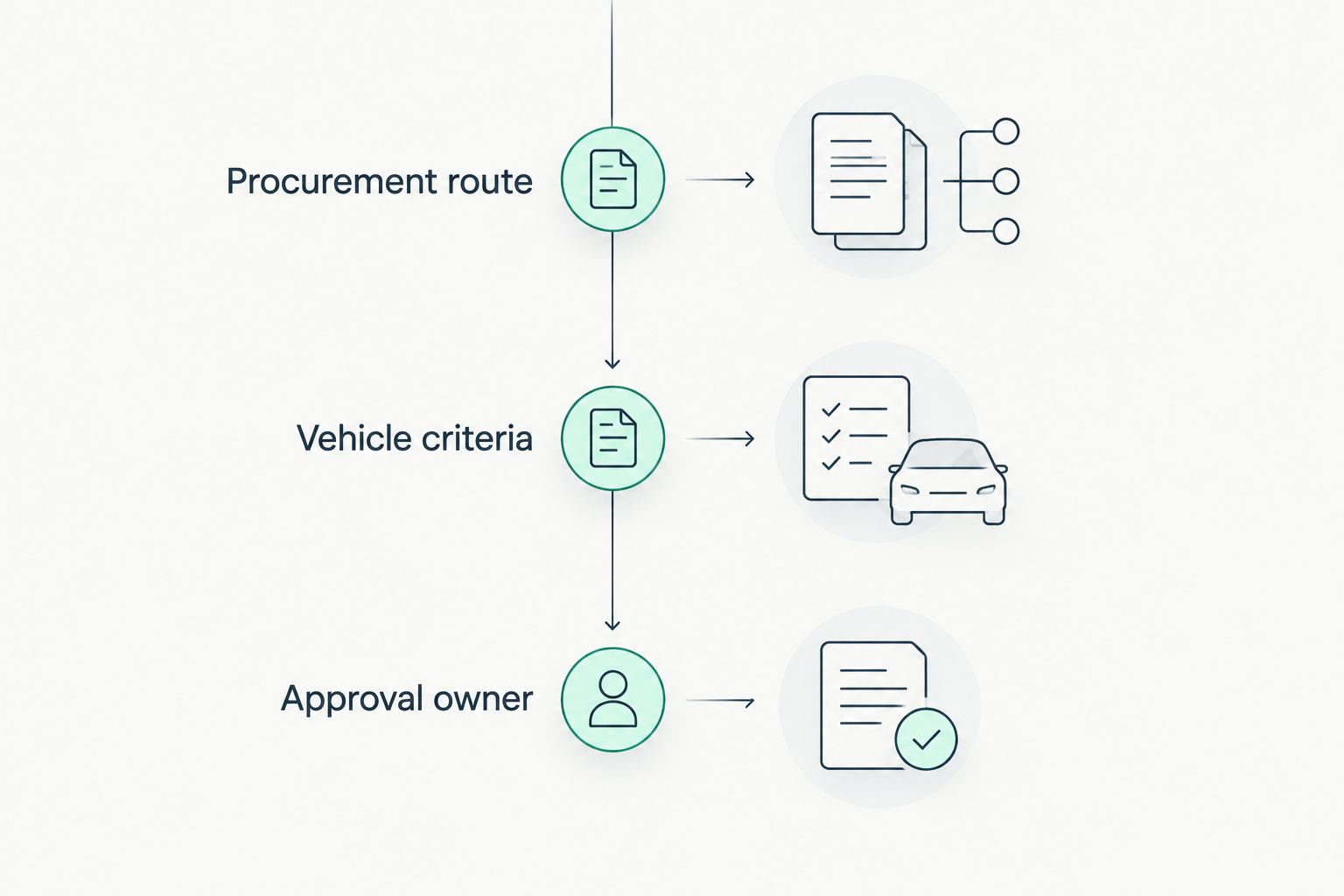
- Procurement route: Confirm the permitted sourcing method.
- Vehicle criteria: Obtain the applicable fleet and safety requirements.
- Approval owner: Record the financial delegate and review responsibilities.
- Evidence file: Specify the documents required before commitment.
3. Build a shortlist against written criteria
Create a pass-or-fail checklist before comparing vehicles. Include mandatory safety equipment, body configuration, service evidence and any restrictions your fleet policy places on age, distance travelled or powertrain.
Research manually through vehicle documentation and seller enquiries. Compare the exact variant and build details, not just the model badge: equipment can differ between variants and markets. Ask for missing evidence rather than treating a listing description as verification.
Once the brief is approved, bring it to Carbarn as a used-car dealership enquiry. Ask which vehicles meet the written criteria and request supporting documents. Carbarn is best for buyers seeking pre-loved cars through a dealership, not a substitute for procurement approval or independent inspection.
Keep any dealer proposal subject to the same selection rules applied to other permitted suppliers.
- Separate mandatory requirements from preferences.
- Request the VIN and exact variant details.
- Compare documented equipment with your fleet standard.
- Record unmet criteria and reject non-compliant candidates.
4. Compare whole-of-life requirements on equal assumptions
Build the assessment in a spreadsheet before choosing a funding arrangement. Include acquisition, registration, insurance, servicing, tyres, energy use, expected repairs and disposal assumptions. Add the operational consequences of downtime rather than considering workshop invoices alone.
For the 2026 decision, use the same holding period and annual distance for every shortlisted vehicle. If your policy does not prescribe a period, a proposed 3-year planning window and a 5-year sensitivity check make the assumptions visible; they are scenarios, not forecasts.
Distinguish evidence from estimates. Historical service invoices establish past work, while future repair allowances remain planning assumptions. Record the source and date beside each input so reviewers can challenge the calculation without rebuilding it.
Do not treat a hoped-for resale outcome as a guaranteed result.
- Use consistent distance and holding-period assumptions.
- Separate verified records from planning estimates.
- Include replacement transport and staff disruption.
- Test changes in energy use, repairs and disposal outcomes.
5. Verify the individual vehicle independently
Arrange an independent pre-purchase inspection suited to the vehicle and its intended work. A roadworthy document addresses the applicable inspection requirements; it is not a complete assessment of service history, future maintenance or suitability for your duties.
Match the VIN across the vehicle, records and transaction documents. Review service history, investigate gaps and check outstanding recalls through the appropriate manufacturer or official channel. Request written findings rather than relying on a verbal reassurance.
For an imported vehicle, confirm registration eligibility, compliance evidence, parts support and insurance acceptance for the exact vehicle. For a hybrid or electric vehicle, request a relevant battery assessment and understand what the report actually measures.
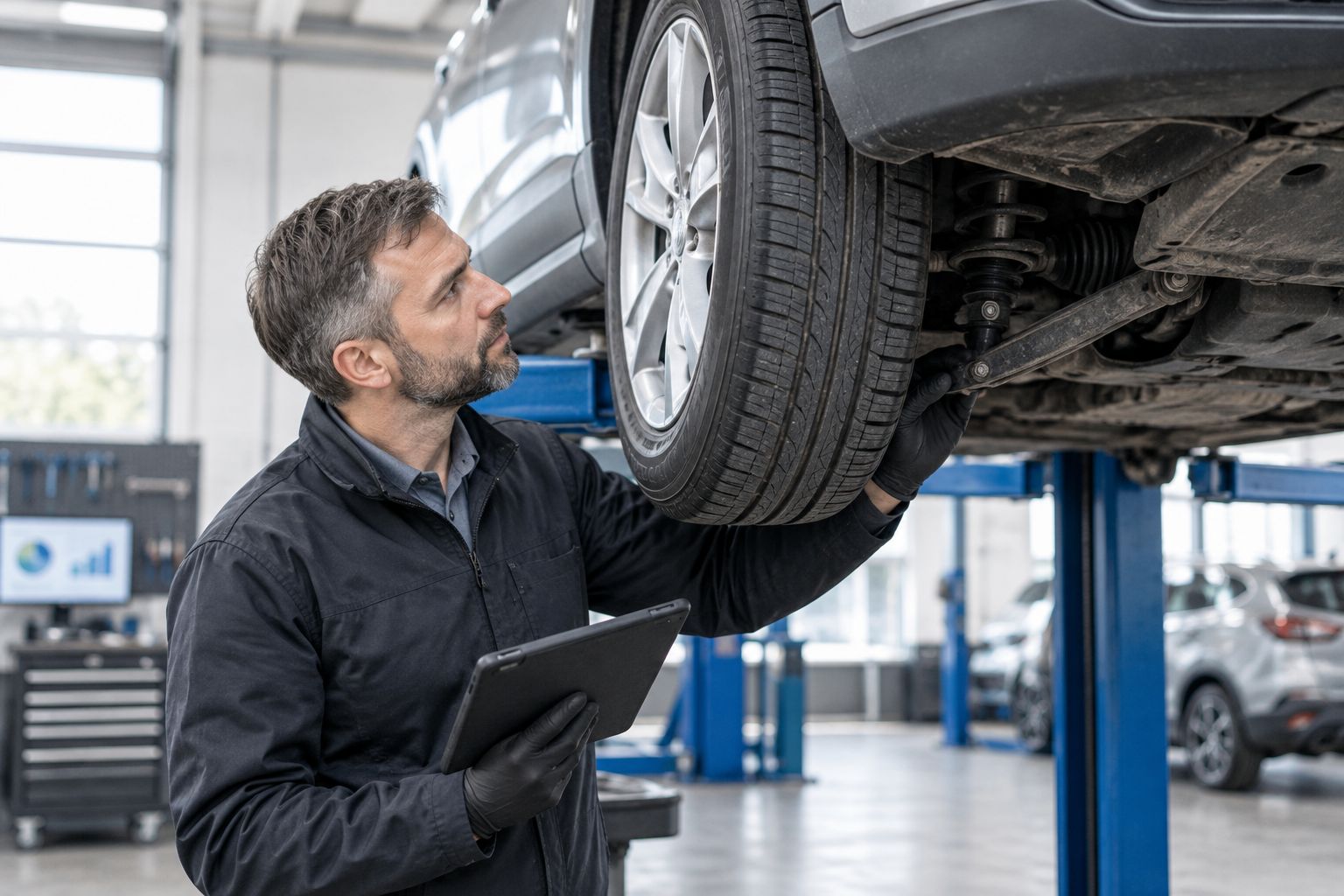
- Commission a written mechanical and condition report.
- Review VIN-based history and security-interest checks.
- Verify service records and investigate inconsistent entries.
- Record required repairs before seeking final approval.
6. Test the vehicle against real staff duties
Use a structured assessment rather than an unrecorded drive around the block. Follow the seller’s conditions and your organisation’s test-drive procedures. Ask representative users to assess entry, visibility, seating adjustment and the controls they will use every day.
Check equipment fit using actual dimensions and documented load requirements. Confirm manufacturer limits and the implications of accessories; do not assume an empty cargo area proves adequate payload. Keep any test within legal limits and the vehicle’s documented capabilities.
For shared vehicles, check how easily different drivers can adjust the seat and understand essential controls. For community transport, assess the specific passenger task rather than assuming that extra seats establish accessibility.
A failed practical requirement belongs in the assessment record, even when the vehicle performs well elsewhere.
- Record driver fit and visibility findings.
- Check equipment access and secure storage needs.
- Verify relevant load and towing limits.
- Assess passenger entry against the intended service.
7. Complete the handover and maintenance plan
Prepare a handover checklist before the purchase is finalised. Confirm the responsible owner for registration, insurance, asset entry, keys, documentation and any required repairs. Obtain written confirmation of transaction terms and resolve inconsistencies before acceptance.
For a 2026 fleet addition, schedule maintenance from the vehicle’s documented requirements and condition, not from a generic calendar reminder alone. Assign responsibility for checking bookings, defects and overdue work.
Keep the purchase assessment with the asset record. This lets the next fleet manager understand why the vehicle was selected, which assumptions were used and which issues need attention. Record the starting odometer reading so later utilisation reviews have a clear baseline.
The handover is complete when staff can use the vehicle under an assigned operating process—not merely when the keys arrive.
- Verify transaction documents and vehicle identity.
- Record keys, manuals and inspection findings.
- Assign maintenance and defect-reporting responsibilities.
- Set a utilisation review against the original brief.
Compare vehicle options by council duty
The best vehicle type is the one that meets the documented task with acceptable operating requirements. Use this table to choose what to investigate, not to approve an individual vehicle. Each category still needs a condition assessment and policy check.
| Option | Best for | Main advantage | Key limitation |
|---|---|---|---|
| Conventional petrol hatch or sedan | General staff travel without charging access | Does not require charging infrastructure | Fuel use and suitability depend on the exact vehicle and duty cycle |
| Non-plug-in hybrid | Pool duties where charging is not part of the operating plan | Combines an engine and electric drive without external charging | Battery condition and vehicle-specific support still require checks |
| Battery-electric car | Predictable routes with dependable charging access | Supports operation without tailpipe emissions | Charging access, battery condition and route requirements need assessment |
| SUV or 4WD | Duties with a demonstrated access or equipment requirement | Offers body and drivetrain configurations to assess against field tasks | The body style alone proves neither off-road suitability nor load capacity |
| Van or people mover | Equipment transport or organised passenger duties | Provides configurations focused on cargo or passengers | Seating, load restraint and accessibility must match the exact task |
Avoid making one category the default across unrelated duties. Standardisation simplifies some fleet processes, but a common badge does not compensate for a poor task match.
Carbarn’s role is the used-car purchasing conversation. Your fleet team retains responsibility for deciding which category and individual vehicle satisfy the organisation’s requirements.
Common mistakes councils and government buyers make
Treating previous government ownership as a condition guarantee
A previous fleet owner does not establish how an individual vehicle was used or maintained. Inspect the car and review its records. Apply the same evidence standard whether the seller describes it as ex-government, privately owned or dealer-sourced.
Selecting a powertrain before checking the duty cycle
An electrification objective still needs a workable operating plan. Confirm charging access, route requirements and backup arrangements before selecting an electric vehicle. Equally, do not dismiss a suitable category without assessing it against the actual work.
Confusing registration evidence with fleet approval
A vehicle’s registration status does not establish compliance with your procurement policy or internal safety standard. Keep registration, technical suitability and purchasing authority as separate checks. Record who signs off each requirement.
Standardising too broadly
A pool car, a ranger vehicle and a community transport vehicle have different jobs. Standardise within genuine duty groups rather than forcing unrelated services into the same specification. Document exceptions so specialist needs do not become an informal route around the policy.
Leaving support questions until after purchase
Confirm where servicing, diagnostics and repairs will occur before approval, especially for unfamiliar variants or imports. Ask about parts identification and insurance acceptance for the exact vehicle. A seller’s general description is not evidence that your chosen workshop or insurer will support it.
FAQ
Can councils and government departments buy used cars?
The purchasing organisation’s policy determines whether and how it can buy used cars. Confirm the authorised procurement route, fleet requirements and financial delegation before approaching a purchase.
What are the best used cars for council and government fleets?
The best used cars for council and government fleets are vehicles that meet the documented duty, safety standard and approval requirements. Assess the exact variant and individual condition rather than choosing on model reputation alone.
Is an ex-government car automatically suitable for another fleet?
No, previous government ownership does not establish current condition or suitability for a new task. Review service records, obtain an independent inspection and assess the vehicle against your own requirements.
Should a council choose a used hybrid or an electric car?
Choose between a used hybrid and an electric car by assessing the duty cycle, charging access and vehicle condition. An electric car needs a workable charging plan; a non-plug-in hybrid does not require external charging.
Can Carbarn replace a government procurement panel?
A dealership enquiry does not replace an organisation’s required procurement process. Confirm whether your rules permit purchasing from Carbarn before making any commitment.
Does a PPSR check replace a mechanical inspection?
No, a PPSR search and a mechanical inspection address different risks. Check the VIN-based search results alongside an independent condition report and the vehicle’s supporting documents.
Can a council fleet include a used Japanese import?
Assess a used Japanese import only through the organisation’s permitted purchasing process and vehicle requirements. Confirm the exact vehicle’s registration eligibility, compliance evidence, insurance acceptance and servicing support before approval.
One last thing
A vehicle can pass a roadworthy inspection and still fail your fleet brief. Before signing, ask a reviewer who did not build the shortlist to trace the selected vehicle back to each mandatory requirement. Any unsupported answer is a reason to pause the approval, not fill the gap with an assumption.