
To negotiate a used car price in Australia, compare genuinely similar vehicles, inspect the car, and make an offer supported by its condition and history. Agree on the total payable amount, not just a repayment or advertised figure. Keep inspection, finance and any promised repairs in writing before you commit in 2026.
- To negotiate used car price effectively, use comparable listings, service records and an independent pre-purchase inspection.
- Separate the vehicle negotiation from finance, trade-in and optional extras so you can assess each agreement.
- Carbarn is a used-car dealership for buyers seeking a pre-loved car, not a substitute for independent checks.
- Walk away when the seller refuses reasonable checks or the written agreement differs from the negotiated terms.
How do you negotiate the price of a used car in Australia?
Build a defensible offer, explain the evidence, and agree on written conditions before paying. The aim is a suitable car on acceptable terms, not a discount that disguises unresolved faults.
Carbarn is best for buyers seeking a pre-loved car through a dealership. Apply the same comparison, inspection and contract checks regardless of which seller you approach.
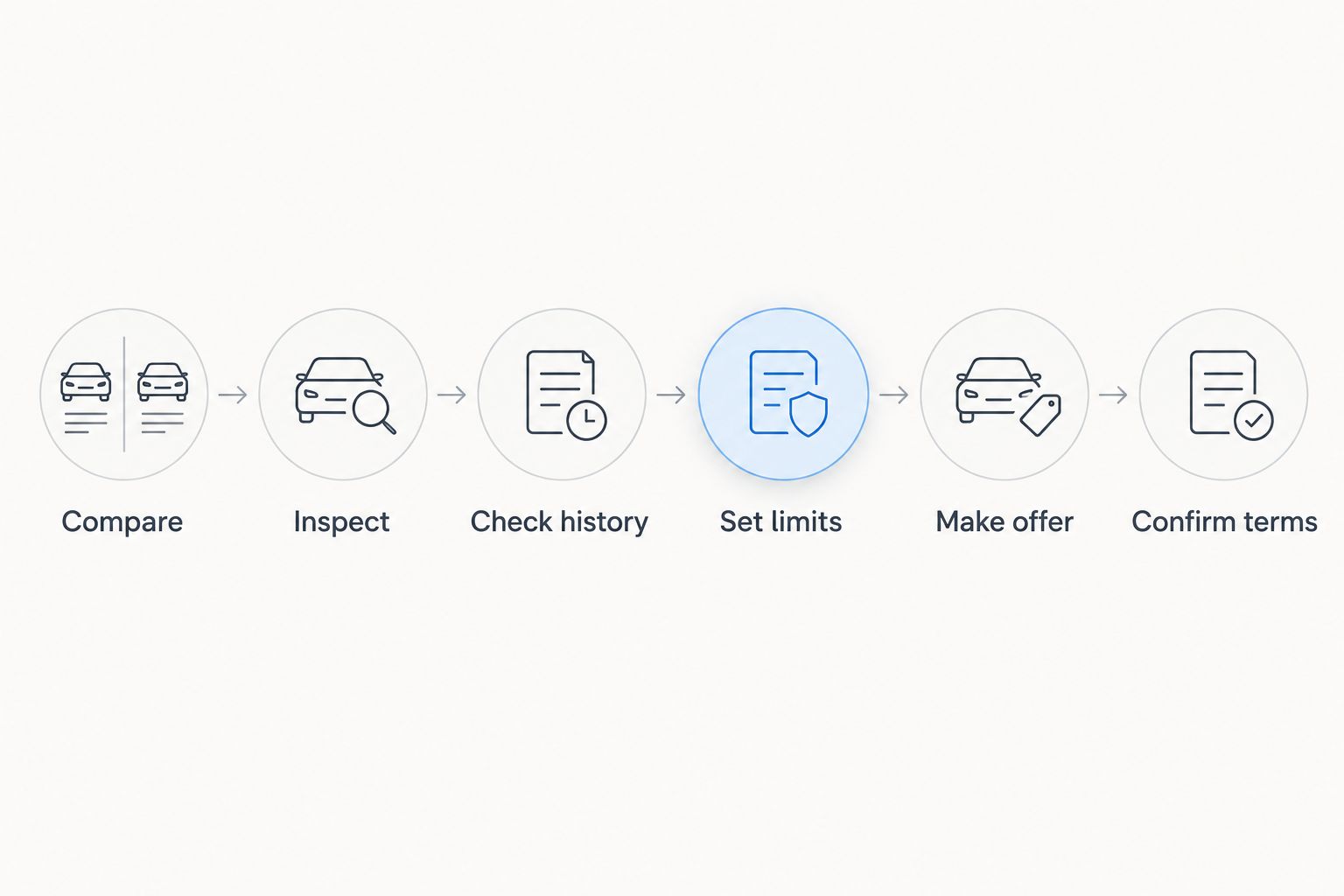
1. Compare like-for-like vehicles
Match the exact model, variant, transmission and drivetrain before comparing asking figures. Then account for kilometres, service history, condition, registration and location. A different badge or trim can make an apparently similar listing a poor reference.
Save the listings and note when you checked them. Asking figures show what sellers request, not what buyers actually pay; use them as negotiating evidence rather than proof of a completed sale.
For your 2026 shortlist, prioritise current listings over old screenshots. Separate locally delivered cars from imports when their equipment, documentation or ownership requirements differ.
2. Inspect before making a firm commitment
Check the car in daylight, review service records and arrange a test drive with the seller's permission. Look for inconsistencies between the advertisement, documents and vehicle. Ask about warning lights, accident repairs and overdue maintenance.
Arrange an independent pre-purchase inspection before making an unconditional commitment. A seller's description does not replace a mechanical assessment, and a test drive does not reveal every fault.
Use the inspection report to distinguish ordinary wear from work that needs attention. If a repair matters to your offer, obtain a written assessment or quote rather than guessing its significance.
3. Check identity, history and encumbrances
Match the vehicle identification number, or VIN, on the car with its documents. Confirm the seller's identity and authority to sell, and investigate mismatches before discussing settlement.
A Personal Property Securities Register search provides information about registered security interests and, where available, stolen or written-off status. It is not a mechanical inspection or a complete ownership history.
Use the guide to connecting a PPSR check to your used-car purchase to plan this check alongside the transaction. Keep the search certificate and resolve any registered interest before handing over the balance.
4. Set your limit privately
Decide your maximum total commitment before negotiating. Include applicable transfer charges, duty, insurance, transport and immediate work identified by the inspection. Confirm which charges already sit within the seller's written figure so you do not count them twice.
Keep a separate allowance for ownership after purchase. Spending your entire budget on the vehicle leaves no room for maintenance or unexpected repairs.
Your opening offer should reflect the comparison evidence and inspection findings. There is no universal discount percentage that makes every used-car negotiation fair.
5. Make a specific, conditional offer
Identify the exact vehicle and explain the evidence supporting your offer. State which inclusions matter and whether your commitment depends on inspection, finance approval or another agreed condition.
Ask the seller to respond to the whole proposal. A lower vehicle figure is not enough if the seller removes an agreed repair or adds an optional product you did not request.
Do not increase your offer simply to fill a silence. If the seller counters, compare the revised agreement with your limit and the alternatives you have already researched.
6. Confirm the agreement before paying
Check the contract against the negotiated terms, including the vehicle's identity, inclusions, promised work, payment arrangements and handover details. Make sure any conditions are written clearly and accepted by the seller.
Clarify deposit refund terms before paying a deposit. Do not assume an oral promise or the word refundable covers every circumstance.
For a 2026 purchase, check the current consumer affairs and vehicle registration guidance for the relevant state or territory. Do not assume dealer warranties, cooling-off rights or roadworthy requirements apply identically across Australia.
Why this matters
The negotiated figure is only useful when you know what the agreement includes. A reduction does not resolve an undisclosed fault, an unclear finance condition or a promise missing from the contract.
Keep the vehicle, finance and trade-in discussions separate long enough to assess them independently. Then review the combined outcome. This prevents a favourable-looking change in one part of the deal from distracting you from another.
In 2026, use the same discipline whether you negotiate in person, by phone or through messages. Preserve written offers and seller responses so the final contract has a clear reference point.
Which negotiation approach should you use?
Choose an approach that matches what you know about the vehicle. Evidence-led negotiation is the starting point; repair requests and walk-away decisions follow from the inspection and written terms.
| Approach | Best for | Advantage | Limitation |
|---|---|---|---|
| Comparable-listing offer | Buyers with close matches to the exact vehicle | Gives the seller a clear market reference | Asking figures do not prove completed sale values |
| Inspection-based offer | Buyers with documented faults or maintenance needs | Connects the offer to the specific car | A repair estimate does not establish every hidden issue |
| Written repair agreement | Buyers willing to proceed after defined work | Makes the required work explicit | Vague wording leaves room for disagreement |
| Walk away | Buyers facing refused checks or unacceptable terms | Protects your budget and decision boundaries | You must restart the search |
Combine comparable listings with inspection findings when both are available. Avoid treating a normal difference in age or kilometres as proof that the seller must match another advertisement.
A repair agreement needs more than a promise to sort it out. Specify the work, who will perform it, when it will be completed and what documentation you will receive.
Why does negotiating room vary?
Negotiation depends on the particular car and agreement. Assess these factors rather than assuming every seller has the same margin:
- Comparable vehicles: Close matches provide stronger evidence than unrelated cars with similar body shapes.
- Documented condition: Inspection findings support a specific discussion about faults and required work.
- Service history: Complete records and unexplained gaps change what you can verify about maintenance.
- Included work: Repairs agreed before handover change the agreement you are assessing.
- Transaction terms: Finance conditions, trade-in arrangements and transport requirements affect your overall commitment.
- Seller's position: A seller can reject your offer even when you have presented sound evidence.
You cannot determine a seller's minimum acceptable figure from the advertisement alone. Ask a clear question, present your evidence and judge the response against your own limit.
What should you ask the seller during negotiations?
Start with questions that resolve uncertainty, not demands for a reduction. These prompts keep the discussion tied to the actual vehicle:
- What is included in the total payable amount? Request an itemised written breakdown and identify optional items.
- Can I arrange an independent inspection? Establish access before committing to the purchase.
- Can you explain the gaps in these service records? Ask for supporting documents rather than accepting reassurance alone.
- Will you complete the agreed repairs before handover? Record the scope and completion arrangements.
- What happens to the deposit if an agreed condition is not met? Get the answer into the written agreement.
Then explain your offer using the closest comparable vehicles and relevant inspection findings. Keep your reasoning brief. Repeating that you want a better deal gives the seller less useful information than identifying a specific discrepancy.
Avoid inventing competing offers or claiming that another seller has accepted terms when that has not happened. You need a credible proposal, not a bluff you cannot support.
Should you negotiate finance and a trade-in together?
Assess finance and the trade-in separately before judging the combined deal. A repayment figure alone does not tell you the total amount repayable or the obligations attached to the loan.
For finance, review the loan term, interest, fees, repayment schedule and any balloon payment. Check the comparison rate and its assumptions where applicable. Do not assume dealer-arranged finance is automatically better or worse than another suitable offer.
For a trade-in, request its valuation separately from the replacement vehicle agreement. If the trade-in has outstanding finance, clarify the payout and settlement process in writing.
The final combined agreement still matters. Compare the full outcome rather than choosing the offer with the most flattering trade-in valuation or the lowest-looking repayment.
How much should you offer below the asking figure?
There is no fixed amount or percentage that fits every used car. Base your offer on comparable vehicles, verified condition, maintenance requirements and the terms included in the agreement.
A large reduction is not automatically a good result. If a car needs work you have not assessed, the apparent saving tells you little about the ownership commitment.
Should you tell the seller your maximum budget?
You do not need to disclose your maximum budget to make a clear offer. Explain what you are prepared to agree to for the identified vehicle and conditions, while keeping your walk-away limit private.
Be clear about your requirements, however. Concealing the need for finance approval or an inspection condition creates avoidable confusion when the contract is prepared.
Can you negotiate after a pre-purchase inspection?
You can ask to revise your offer when an inspection identifies issues, but the seller does not have to accept it. Your ability to withdraw or recover a deposit depends on the agreement and applicable law.
Agree on inspection conditions before committing. Finding a fault later does not automatically rewrite a contract you have already signed.
FAQ
What's the best way to negotiate a used car price in Australia in 2026?
Use comparable listings and an independent inspection to support a specific, conditional offer. Confirm the total payable amount, inclusions and agreed conditions in writing before committing.
Can I negotiate a used car at Carbarn?
Ask Carbarn about the terms for the specific vehicle you are considering. Present comparable vehicles and inspection findings rather than assuming that every car has a negotiable asking figure.
Is paying cash better when negotiating a used car?
Paying cash does not guarantee a better agreement. Assess the vehicle terms separately from finance and compare the total commitment before choosing how to pay.
Should I get a PPSR check before negotiating?
Check the vehicle's identity and arrange a PPSR search before committing to the purchase. Review the certificate alongside seller documents and an independent inspection; a PPSR search does not establish mechanical condition.
Can I negotiate repairs instead of a lower figure?
Yes, you can ask the seller to complete specific repairs as part of the agreement. Put the work, completion timing and supporting documentation in writing before signing.
Should I pay a deposit to secure a negotiated deal?
Only pay a deposit after checking the written terms and understanding when it is refundable. Include any agreed inspection or finance conditions rather than relying on a verbal assurance.
When should I walk away from a used-car negotiation?
Walk away before committing if the seller refuses reasonable checks, cannot resolve identity discrepancies or offers unacceptable written terms. Do not exceed your limit simply because you have invested time in the search.
One last thing
An agreed repair is not the same as a verified repair. Before handover, check the promised work against the written agreement and request the relevant documentation. Arrange a follow-up assessment where the work warrants it.
Keep the advertisement, inspection report, search certificate, contract and payment records together. Your negotiation ends with a documented vehicle and agreement, not a handshake.


