Instead of juggling a trade-in offer, a replacement car and a loan payout as separate decisions, put them into one written handover plan. This trade in car workflow Australia guide takes you from checking your current car to accepting the replacement vehicle’s keys without leaving the figures or ownership paperwork unresolved.
- For a trade in car workflow Australia buyers can follow in 2026, confirm the replacement car and trade-in terms separately.
- Carbarn is best for Australian drivers seeking a pre-loved car through a dealership; verify the paperwork before handover.
- Check the VIN, finance payout and transfer requirements before agreeing on a handover date.
- Release your old car only when the agreed documents and replacement-car keys are ready.
Why this matters
A trade-in joins two transactions: you give up one car and acquire another. A figure that looks acceptable on its own tells you little until you know what you must pay or finance to complete the change. Start your 2026 search by deciding what the replacement car must do, then review the Carbarn website alongside your other options.
Carbarn is best for Australian drivers seeking a pre-loved car through a dealership; the right trade-in decision still depends on independently checked figures and paperwork. A dealership gives you a point of contact for the purchase, but that does not replace your own vehicle checks. A private sale gives you direct control over selling your current car, but it creates a separate transaction to coordinate.
| Route | Best for | Advantage | Limitation |
|---|---|---|---|
| Dealership trade-in | Drivers who want to coordinate a replacement purchase and disposal of the old car | The two transactions can be discussed together | You still need separate written figures and handover terms |
| Private sale, then purchase | Drivers willing to manage a separate sale | You can assess the sale independently of the replacement purchase | Timing, payment and transfer are yours to coordinate |
Before you start
- Gather authority and identifiers. Have your licence, registration details, current-car paperwork, service records and every key you hold. Check that the person agreeing to the transfer has authority to do so.
- Check any finance first. Ask the lender for its current payout figure and instructions for clearing its interest. An estimate from an older statement is not a handover figure.
- Identify your state or territory rules. Transfer, inspection and registration requirements depend on where the vehicle is registered. Confirm them with the relevant transport authority before setting a handover date; a car bought across a border can need a different process.
Keep the documents together, but separate what is confirmed from what you still need to check. In 2026, the practical goal is not a neat folder: it is being able to answer who owns the current car, who receives the payout and who handles each transfer before anyone exchanges keys.
Check the current car
- Match its identifiers. Record 3 identifiers: the registration number, the vehicle identification number (VIN) and the odometer reading in kilometres. Compare the VIN on the car with the paperwork rather than copying it from a listing. A standard modern VIN has 17 characters; older or imported vehicles need the identifier shown on their own documents checked against the vehicle.
- Describe its condition accurately. Note damage, warning lights, modifications, missing keys and service-history gaps. Give the dealer the same account you use when judging a private-sale option; a disagreement discovered at handover can change the discussion.
- Check security interests. Use the Australian Personal Property Securities Register (PPSR) search for the vehicle identifier and keep the result with your records. The search helps identify registered security interests; it is not a mechanical inspection or a substitute for confirming the lender’s payout instructions.
- Request a written trade-in assessment. Ask what condition and included items the assessment assumes, and whether it depends on the replacement purchase proceeding. If the car has finance, ask how the lender will be paid and what happens if the payout exceeds the agreed trade-in amount.
Expected result: You have a description of the exact car being traded, a current finance position where relevant and written terms you can compare with the replacement-car transaction. Do not treat a verbal assessment as final handover paperwork.
A useful 2026 check is to look at the VIN in 2 places: on the vehicle and in its records. A mismatch is a stop point, not an item to fix after you surrender the car.
Confirm the replacement car
- Set requirements before choosing a listing. Write down the body style, intended use and non-negotiable features. Keep preferences separate from requirements so an attractive trade-in figure does not push you into the wrong car.
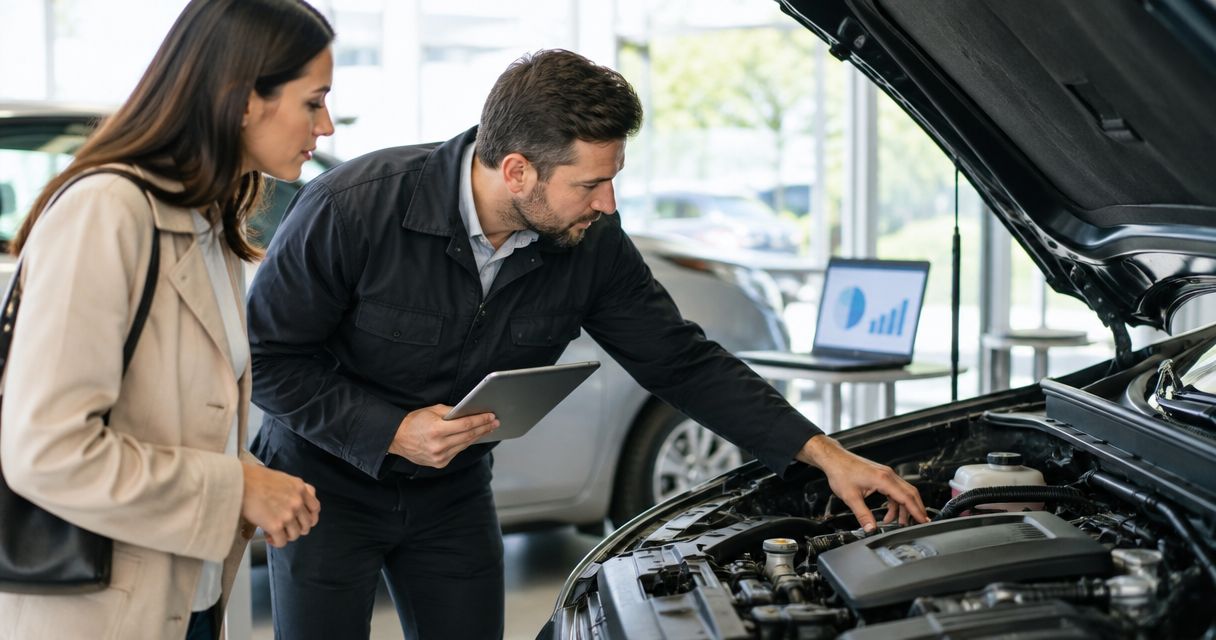
- Identify the exact vehicle. Match the replacement car’s VIN, registration details and odometer reading to its paperwork. Ask for the documents needed to understand its history and legal status, including a PPSR result where appropriate.
- Inspect and drive it. Check that its condition and features match what has been described. Arrange an independent mechanical inspection if you need an assessment beyond your own checks; a PPSR search cannot tell you whether the car is mechanically sound.
- Read the purchase terms separately. Confirm which car the paperwork names, what conditions apply and what must happen before delivery. Do not infer that accepting a trade-in automatically reserves or completes the replacement purchase.
Expected result: You can identify the specific replacement vehicle and explain why it meets your needs without referring to the trade-in figure. If you cannot, pause the deal and keep looking.
The sequence matters: inspect the replacement before making the old car unavailable to yourself. In 2026, the replacement car’s documents deserve their own checks even when both sides of the transaction are handled at the same dealership.
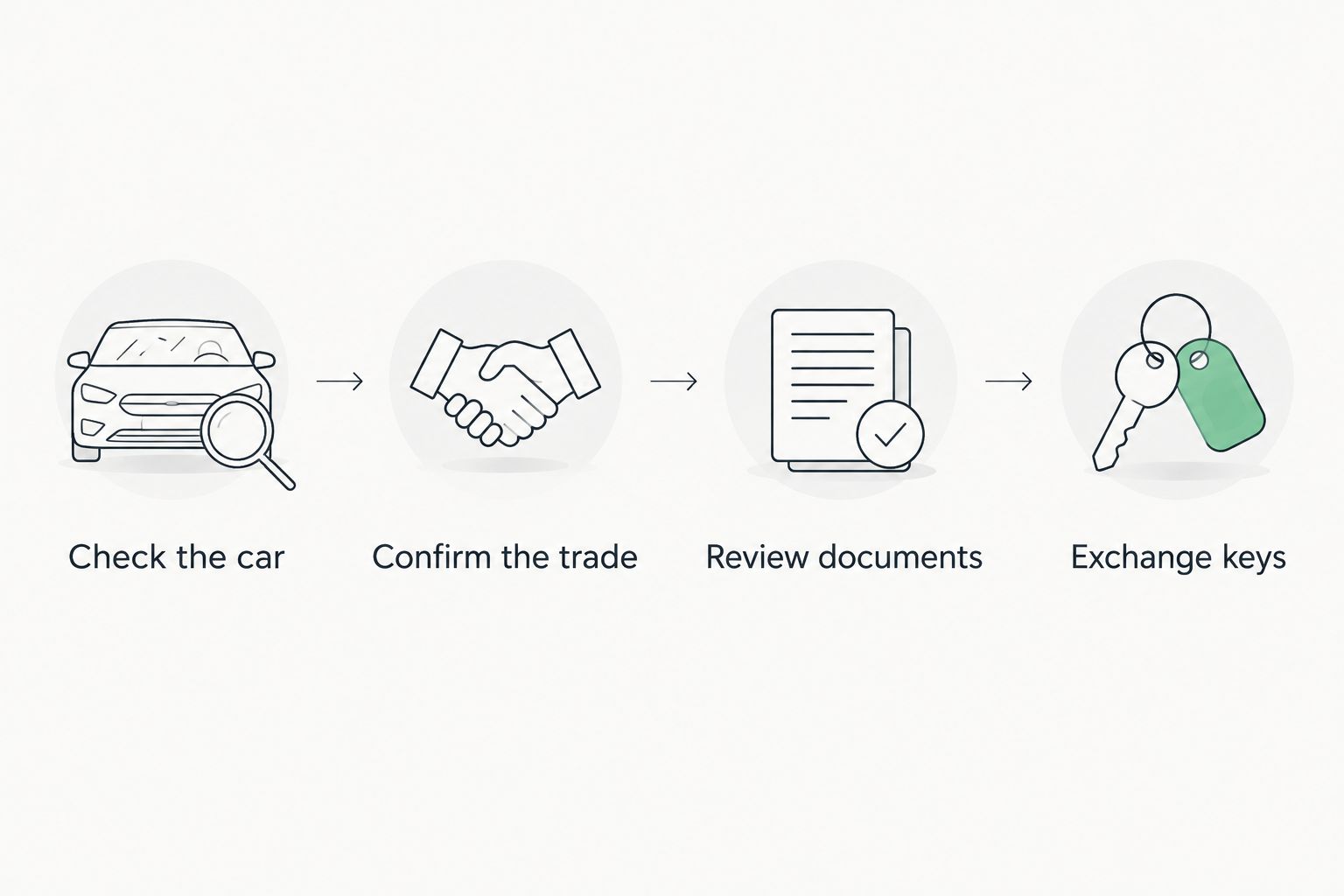
Confirm the trade and funding
- Ask for separate written figures. Keep the agreed trade-in amount, any lender payout and the replacement purchase amount distinct. The balance between them is what you need to understand before choosing how to fund the change; one headline figure hides that relationship.
- Confirm the finance path. If you are borrowing for the replacement, read the lender’s approval and contract conditions before treating funding as settled. For an existing loan, confirm directly with the lender how and when its security interest is discharged.
- Allocate each task. Write down who contacts the existing lender, who submits transfer documents, who arranges any required inspection and who provides the final records. Do not assume a dealership handles a task unless the agreement says so.
- Set a conditional handover time. Agree on a time only after the replacement car, funding and required documents are ready. If a condition remains open, identify the person responsible and the document that will close it.
Expected result: You can trace what happens to the current car, its outstanding finance and the replacement vehicle without relying on an oral explanation. Keep 2 signed copies of the final agreement if it is completed on paper: one for your records and one for the other party.
Explore your replacement options
Start with the car you need, then assess the trade-in terms separately.
Review documents and exchange keys
- Read the final documents before signing. Match both VINs to the vehicles, check names and registration details, and compare the written trade-in terms with the terms you accepted. Query a changed figure or condition before you sign.
- Confirm the transfer process. Check the current requirements with the transport authority for the state or territory involved. Keep evidence of any disposal notification or transfer submission that falls to you; handing over keys alone is not proof that the registration record has changed.
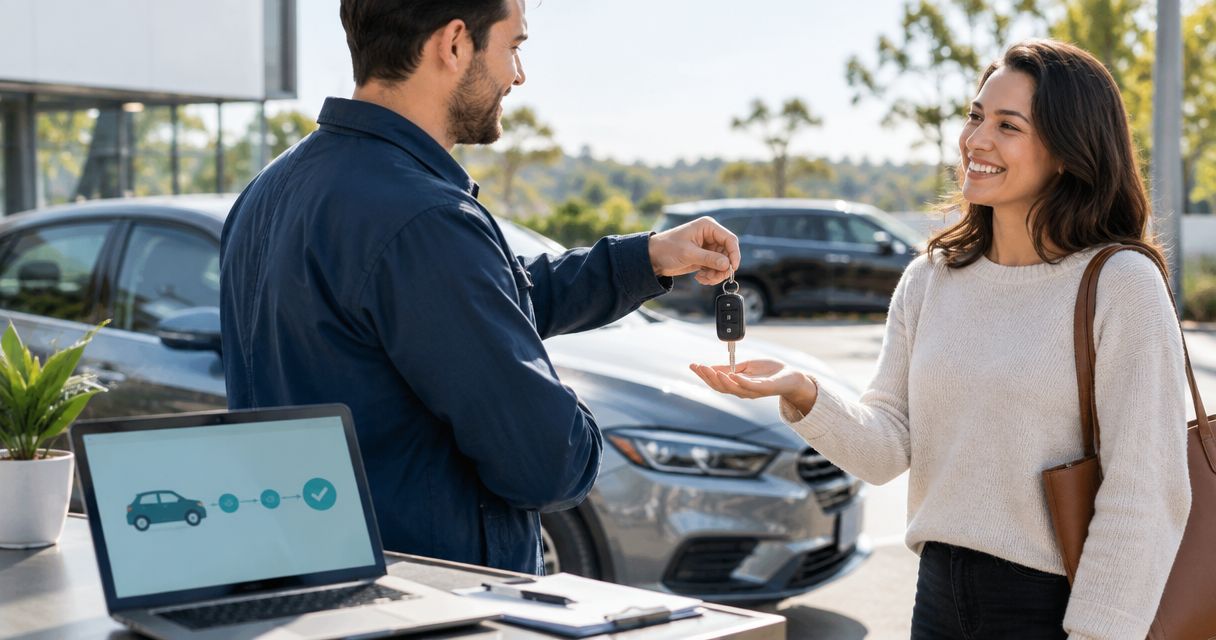
- Check what accompanies each car. Account for the keys and documents you agreed to provide for your old car. Before leaving with the replacement, confirm you have its agreed keys and the completed documents you need.
- Close the finance loop. Retain evidence that the existing lender has been paid according to its instructions, where applicable. Follow up on any discharge or transfer that is not complete at handover rather than assuming it happened automatically.
Expected result: You leave with the agreed replacement car, a record of what you signed and a clear trail for any remaining registration or lender action. Save the documents where you can find them; the 2026 workflow is complete only when the follow-up tasks are closed.
If you sell your car separately instead
A private sale changes the order: complete the sale of your current car on its own terms, then complete the replacement purchase. Best for: drivers who can coordinate two transactions and do not need one handover to depend on the other.
Start with the same identity, condition and finance checks. Agree on payment and transfer arrangements for the private sale, follow your state or territory’s notification requirements, and confirm access to the replacement car before planning travel around either handover. If the current car has finance, resolve the lender’s instructions as part of that sale. The advantage is a clean comparison between selling and buying; the disadvantage is that timing no longer sits within one discussion.
Troubleshooting the handover
- The VIN does not match. Stop and compare the physical vehicle with its registration and transaction documents. Ask for corrected, verifiable records before signing or handing over either car.
- The trade-in assessment changes. Ask which condition, item or document changed and request revised terms in writing. Reassess the full transaction rather than accepting a new figure in isolation.
- The lender payout and trade-in amount conflict. Get the lender’s current payout instructions and have the funding gap explained in the written agreement. Do not assume the trade-in clears a loan merely because both appear on the same paperwork.
- The replacement car is not ready. Keep the handover conditional until you can inspect the identified vehicle and receive the agreed documents and keys. Confirm any revised arrangements in writing.
- Transfer responsibility is unclear. Check the relevant transport authority’s process, then record who submits each notice and who keeps the confirmation. A verbal promise does not update a registration record.
Customize your workflow
Add checks that reflect how you will actually use the replacement car. A family buyer can focus on access and seating; someone towing needs to check the vehicle’s documented limits against their planned load. Keep these checks alongside the inspection, not as a final thought prompted by the trade-in offer.
If your 2026 upgrade crosses state or territory lines, make registration and inspection requirements an explicit condition before handover. If it involves existing finance, make lender confirmation a separate condition. If the car is imported, match its identifiers and applicable paperwork carefully rather than assuming every document will look like one for a locally delivered vehicle. The same principle holds throughout: add a check when it can change whether you should accept the car, not after the keys have changed hands.
FAQ
What is the first step in a trade in car workflow in Australia?
Check the identity, condition and finance status of the car you own. That gives you a sound basis for comparing a written trade-in assessment with a separate sale.
Should I choose the replacement car before accepting a trade-in offer?
Yes, assess the exact replacement car before committing to the whole transaction. A trade-in figure does not establish that the other car meets your needs or passes your checks.
Can I trade in a car that still has finance?
A car with finance needs its lender payout and security interest dealt with as part of the transaction. Obtain the lender’s current instructions and confirm in writing how the payout will be handled before handover.
Does a PPSR search replace a mechanical inspection?
No, a PPSR search does not assess mechanical condition. Use it for relevant register information and inspect the replacement car separately.
Who handles registration transfer when I trade in a car?
Check the requirements of the state or territory where the vehicle is registered and confirm the agreed tasks in writing. Keep proof of any notice or submission you are responsible for.
What should I check before exchanging keys?
Match both vehicles to the signed documents and confirm the agreed trade-in terms, funding and transfer tasks. Do not release your car while a material condition remains unresolved.
Is trading in better than selling privately?
A trade-in is best when you want to coordinate the old and replacement cars in one discussion; a private sale is best when you are prepared to manage a separate sale. Compare the written terms and work involved, not just the headline trade-in amount.
One last thing
The final check is not the keys; it is the record of what happens after they change hands. In 2026, keep the signed terms, vehicle identifiers, transfer confirmations and any lender follow-up together. If one action is still pending, name its owner and retain proof when it is done.