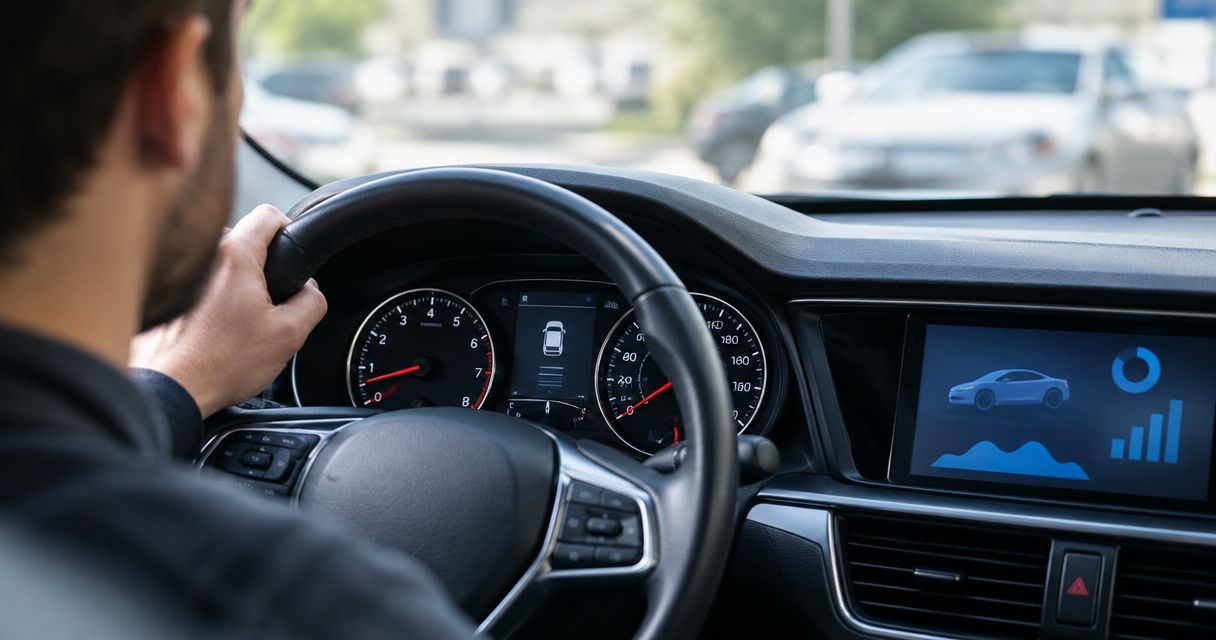
Used cars for retirees downsizing means picking a smaller, easier-to-run vehicle after selling the family SUV or wagon, with the goal of cutting running costs while keeping comfort and safety intact. Retirees searching in 2026 care less about towing capacity or seven seats and more about step-in height, fuel bills, and how much the car costs to insure once the daily commute disappears.
- A Toyota Corolla Hybrid or similar small hybrid hatch cuts fuel spend and services less often than a big SUV.
- Step-in height and door width matter more than horsepower once you're buying used cars for retirees downsizing from a larger vehicle.
- Independent mechanical inspection plus a PPSR check catches the two most common used-car traps before you sign anything in 2026.
- Carbarn's inventory lets you filter by transmission and safety tech instead of scrolling generic listings.
Why used cars for retirees downsizing matters in 2026
A car bought for commuting and school runs is rarely the right car for retirement. Servicing intervals, insurance brackets tied to driver age, and physical ease of entry all shift once the daily 60km commute becomes a weekly trip to the shops and grandkids' place.
Downsizing isn't just about a smaller price tag. It's about matching the vehicle to a new pattern of use: shorter trips, less urgency, more emphasis on comfort getting in and out. Carbarn's used car inventory lets you filter by these criteria directly instead of wading through listings built for young families or tradies.
Update your size expectations
Most retirees over-buy on size out of habit, carrying over the same SUV footprint they needed for kids and cargo.
- Measure your garage or driveway clearance before shortlisting anything
- Count actual passenger trips over the last 12 months, not hypothetical ones
- Check boot space fits golf clubs, a wheelie walker, or a fold-up bike if relevant
- Skip anything requiring a step up over 45cm if knees or hips are a factor
- Avoid dual-cab utes and full-size SUVs unless towing a caravan regularly
Prioritise easy entry and exit
Seat height and door aperture matter more at 65 than at 35, and this is where hatches and small SUVs beat sedans and coupes.
- Look for seat height around 55-60cm off the ground, close to hip height when standing
- Check door width opens wide enough to step in without ducking
- Grab handles above the door frame help more than they seem worth in a showroom
- Avoid low-slung sports models regardless of how good the fuel economy looks on paper
- Test the boot lid height if lifting shopping or a wheelchair frequently
Check running costs before you commit
Running cost is the single biggest lever retirees can pull, since fixed income means fuel and servicing bills matter more than they did during working years.
- Compare service intervals: most hybrids run 12 months/15,000km versus 6 months for some older diesels
- Get an insurance quote before buying, not after — age brackets can swing premiums either way
- Check rego costs by state, since some states weight registration by engine size or weight
- Factor in tyre replacement cost, which scales with wheel size on larger SUVs
- Ask for the last 24 months of logbook servicing to spot any deferred maintenance
Hybrid drivetrains use regenerative braking, which typically extends brake pad life compared to a purely petrol equivalent — one of the quieter cost savings retirees notice after a year of ownership. Models like the Toyota Corolla Hybrid and comparable hybrid hatches under $20,000 sit near the top of most retiree shortlists for exactly this reason.
Confirm the safety tech actually matches your reflexes
Reaction time changes with age, and the safety features that matter shift accordingly. A car from 2015 without autonomous emergency braking is a different proposition to the same model built in 2021.
- Autonomous emergency braking (AEB) as standard, not an optional extra
- Reverse camera plus rear parking sensors — non-negotiable for tight driveways
- Blind spot monitoring, useful for reduced neck mobility on lane changes
- Adaptive cruise control if regular highway trips are part of the plan
- Lane departure warning, though some retirees find it intrusive on rural roads
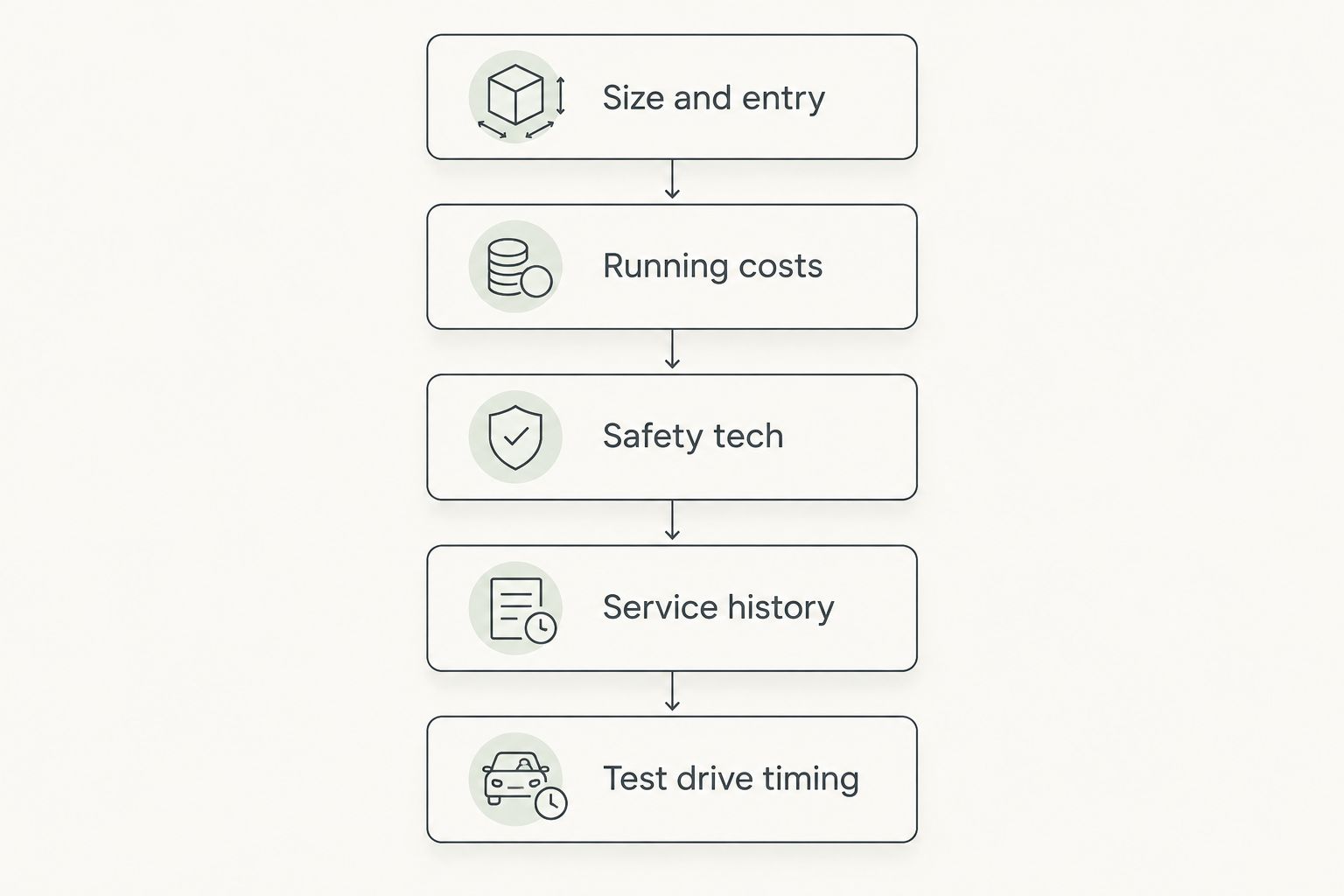
Verify service history and inspect independently
A logbook full of stamps means nothing if the car has had three owners in four years and a hidden repair history.
- Run a PPSR check for outstanding finance or write-off status before paying a deposit
- Book an independent mechanical inspection, separate from the seller's own mechanic
- Ask specifically about timing belt or timing chain service — a costly miss on some models
- Cross-check odometer reading against service records for consistency
Decide automatic versus manual before you shortlist
Most retirees moving away from manual transmissions do so for comfort in traffic and at intersections, not because they've forgotten how to drive one.
- Automatic transmissions reduce clutch-related fatigue on stop-start trips
- CVT gearboxes in hybrids feel smoother at low speed than older torque-converter autos
- Manual still suits retirees doing regular country or highway driving who prefer the control
- Test both back to back before deciding — the difference is more noticeable in person than on a spec sheet
Test drive at the times you'll actually drive
A test drive on a quiet Tuesday morning tells you nothing about how the car handles a Saturday shopping centre car park.
- Test reverse parking into a tight bay, not just a straight-line park
- Drive it at the time of day you'll normally be out — morning light, afternoon glare
- Check visibility over the shoulder for blind spots the mirrors don't cover
- Merge onto a highway on-ramp if that's part of your regular route
Comparison: which used car type suits downsizing best
| Option | Best for | Key limitation |
|---|---|---|
| Toyota Corolla Hybrid | Low running costs, easy servicing | Boot space tighter than a small SUV |
| Compact hybrid SUV (e.g. C-HR) | Higher seating position, easier entry | Slightly higher purchase cost than an equivalent hatch |
| Small petrol hatch | Lowest purchase price, simple mechanicals | Higher fuel spend over 2026 fuel prices |
| Mid-size sedan | Highway comfort on long trips | Lower seat height, harder entry for mobility issues |
Verdict: a compact hybrid hatch or small hybrid SUV is the strongest all-round pick for retirees downsizing in 2026 — it balances entry height, fuel cost, and servicing simplicity better than a sedan or a full-size SUV.
“Seat height and door width decide more retiree car purchases than horsepower ever will.”
Common mistakes retirees make when downsizing
- Buying the same size car out of habit — carrying over an SUV footprint from the family years when a hatch would suit better
- Skipping the insurance quote until after purchase — age-based premium swings can undo the savings from a cheaper purchase price
- Ignoring transmission feel during the test drive — a CVT and a torque-converter auto behave differently at low speed, and it matters daily
- Trusting a seller's service book without independent inspection — a full logbook doesn't rule out deferred mechanical issues
- Overlooking rear visibility — smaller rear windows on some hatches make reverse parking harder than expected for less flexible necks
Browse Carbarn's used car range
Filter by transmission, safety features and body size for downsizing.
FAQ
What's the best used car for retirees downsizing in 2026?
A compact hybrid hatch such as the Toyota Corolla Hybrid or a small hybrid SUV like the C-HR suits most retirees in 2026, balancing low running costs with easier entry than a sedan.
Is an automatic better than a manual for older drivers?
Automatic transmissions reduce fatigue in stop-start traffic and at intersections, which is why most retirees moving away from manual gearboxes do so for comfort rather than ability.
Do hybrid cars really cost less to run than petrol cars?
Hybrids typically use regenerative braking that extends brake pad life and lower fuel consumption in city driving, both of which reduce annual running costs compared to an equivalent petrol-only model.
What safety features should retirees prioritise on a used car?
Autonomous emergency braking, a reverse camera with parking sensors, and blind spot monitoring matter most, since they compensate for slower reaction times and reduced neck mobility.
How do I check a used car's service history before buying?
Ask for the last 24 months of logbook records, run a PPSR check for finance or write-off status, and book an independent mechanical inspection separate from the seller's own mechanic.
Should retirees buy a sedan or a small SUV?
A small SUV generally suits retirees better because the higher seating position makes entry and exit easier, though a sedan can still work well for retirees prioritising highway comfort over ease of access.
How much should a used car cost for a retiree on a fixed income?
There's no fixed figure that suits everyone, but the priority should be matching monthly running costs — fuel, servicing, insurance and rego — to a fixed income rather than focusing only on the purchase price.
One last thing
The detail retirees skip most often is testing the car's turning circle in their own driveway or the car park they use weekly, not the dealership's open lot. A car that feels fine on a wide test-drive road can be a genuine hassle reversing into a tight suburban carport, and that daily friction outlasts any fuel saving from picking the wrong body style. Test it where you'll actually park it, every day, in 2026 and beyond.