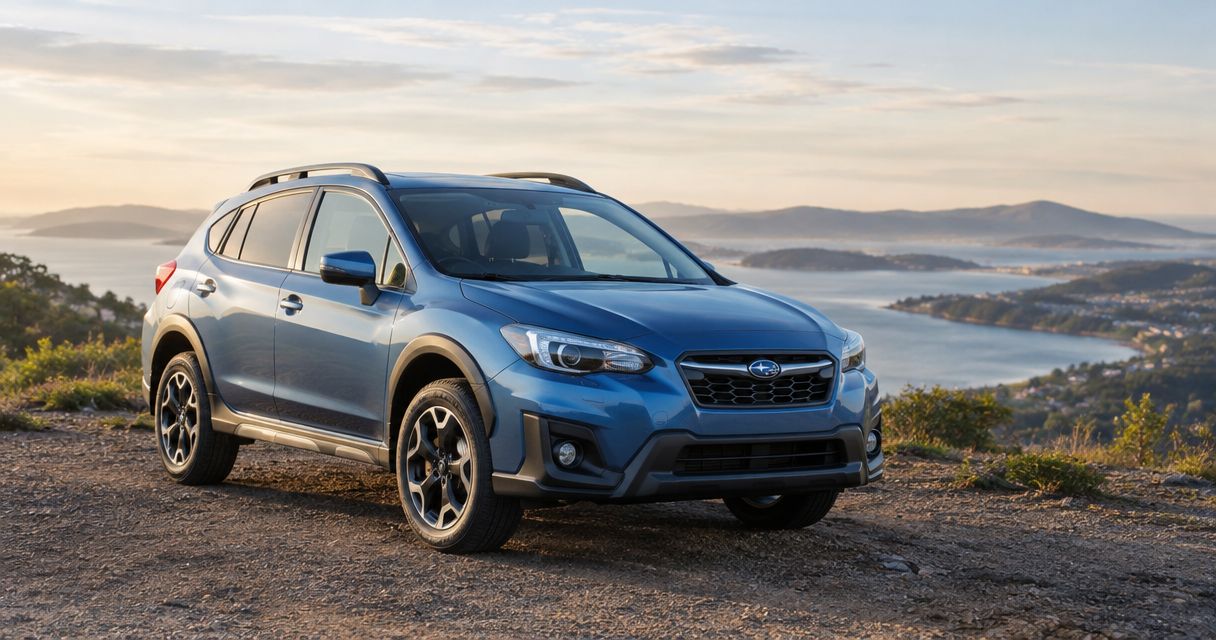
A used Subaru XV’s price in Australia depends on the individual car’s age, variant, kilometres, condition and service history—not just the XV badge. For a 2026 purchase, compare written quotes for closely matched vehicles and separate the car itself from transfer charges, insurance and immediate maintenance. The better buy is the XV with the stronger evidence behind its condition and total purchase commitment, not automatically the lowest advertised figure.
- Compare Subaru XV price against matching variants, kilometres, service records and condition—not unrelated listings.
- A used-car quote should distinguish the vehicle from transfer charges, insurance and immediate maintenance.
- Carbarn suits Australian buyers who want to discuss a pre-loved car with a dealership.
- Get an independent inspection before committing; a service book alone does not establish current mechanical condition.
How much does a used Subaru XV cost in Australia?
A meaningful Subaru XV price comparison starts with the exact vehicle. Match the variant, build details, transmission, kilometres and history before deciding whether an asking figure represents value. Comparing an extensively documented car with an undocumented example gives you a misleading benchmark.
If you are considering a dealership purchase, Carbarn is an Australian pre-loved car dealership. Ask for vehicle-specific information and written purchase terms rather than relying on general model descriptions.
Use this breakdown to establish what your purchase involves. Keep separate items separate until you have confirmed which ones the seller’s quote includes.
| Purchase component | What to establish | Evidence to request |
|---|---|---|
| Vehicle | Exact car, specification and agreed terms | Written quote identifying the vehicle |
| Transfer and registration | Requirements in the state or territory where you will register it | Current registration details and relevant authority guidance |
| Insurance | Cover appropriate to you and the exact vehicle | An insurer’s vehicle-specific quote |
| Immediate maintenance | Work required after purchase | Independent inspection and itemised repair estimates |
| Finance, if used | Repayments, fees, term and total amount payable | Written credit contract and disclosure documents |
| Transport, if needed | Collection or delivery arrangements | Written transport terms |
Compare the complete purchase, not one line of the quote. A vehicle that needs tyres, repairs or overdue servicing creates a different commitment from one without those identified needs.
Why this matters
A search for “Subaru XV price” brings together cars with different histories and specifications. An attractive headline does not tell you whether a particular vehicle meets your needs or what work it requires.
For your 2026 shortlist, establish a consistent comparison method before negotiating. Otherwise, you risk treating missing information as a saving and optional equipment as a substitute for sound mechanical condition.
The useful question is not simply whether one XV is cheaper than another. It is whether the difference makes sense once you account for the vehicle, the paperwork and the work ahead.
Why the Subaru XV price varies
These factors explain why apparently similar XV listings need closer examination. None should be assessed in isolation.
- Age and specification: Check build information, model designation and fitted equipment. Registration timing alone does not identify every specification difference.
- Kilometres and use: Read the odometer alongside service records and physical wear. A low reading does not establish careful maintenance.
- Service evidence: Look for dated invoices and a coherent maintenance record. Stamps without supporting detail leave more questions unanswered.
- Mechanical and cosmetic condition: Assess the drivetrain, brakes, tyres, suspension, body and cabin. Separate appearance issues from safety or mechanical concerns.
- History and documentation: Verify the vehicle identity and investigate finance interests, write-off records and stolen status through appropriate checks.
- Purchase arrangements: Dealer and private-sale terms, registration location, finance and transport affect the transaction. Confirm your obligations in writing.
An asking figure is a seller’s proposal, not proof of the vehicle’s condition. Use documentary evidence and inspection findings to decide whether that proposal makes sense for you.
Which used XV should you compare?
Compare vehicles that solve the same transport need. A car chosen for a short urban commute deserves a different assessment from one intended for regular regional travel, even when both carry the same badge.
The profiles below are comparison starting points, not a ranking of particular model years. Each has a benefit and a limitation that you need to investigate.
| Vehicle profile | Best for | Potential advantage | Main limitation | Decision rule |
|---|---|---|---|---|
| Lower-kilometre XV | Buyers seeking less recorded distance travelled | Less accumulated distance on the odometer | Low kilometres do not prove maintenance or gentle use | Verify history and inspect condition |
| Higher-kilometre, well-documented XV | Buyers prepared to assess wear carefully | Records help explain maintenance and previous repairs | Wear-related work still needs assessment | Judge the inspection alongside the records |
| More highly equipped XV | Buyers who will use the fitted features | Equipment can better match your daily needs | Extra equipment adds items to test | Confirm every relevant feature works |
| Simpler-specification XV | Buyers prioritising essential functions | Fewer non-essential features to evaluate | It might lack equipment you consider necessary | Check your requirements before negotiating |
Best for most shortlists: a documented, independently inspected XV that meets your actual requirements. Do not assume the newest, least travelled or most highly equipped example automatically wins.
Write down your non-negotiable requirements before viewing cars. Test seating comfort, visibility, luggage access and the controls you will use every day; a specification list cannot replace that check.
How do you compare Subaru XV quotes fairly?
Use the same sequence for every car on your 2026 shortlist. This makes missing information visible and prevents a persuasive advertisement from setting the comparison rules.
Identify the vehicle
Record the VIN, exact variant, build details, transmission and odometer reading. Match those details across the advertisement, vehicle and documents.
Ask the seller to explain discrepancies before you proceed. A description copied from a generic model listing is not confirmation of the equipment fitted to that car.
Verify the history
Review service invoices, maintenance records and available ownership documentation. Look for continuity between dates, recorded kilometres and work completed.
Use the VIN for a Personal Property Securities Register search. A PPSR search addresses specified legal and recorded-history risks; it does not replace a mechanical inspection or guarantee that every past incident appears in the record.
Inspect the condition
Arrange an independent pre-purchase inspection and a suitable test drive. Ask the inspector to distinguish urgent safety work, overdue maintenance and less immediate recommendations.
Inspect the car you intend to buy, not another example of the same model. A general reputation for reliability cannot establish an individual vehicle’s condition.
Reconcile the quote
Ask what the written quote includes and what remains your responsibility. Clarify registration arrangements, transfer requirements, optional additions and any transport arrangements before agreeing to terms.
Keep financing separate from the vehicle comparison. A repayment figure is not the same thing as the total amount payable under a loan.
Decide on evidence
Compare the written terms with the inspection findings and your requirements. Negotiate using identified work and documented differences rather than assumptions about what all XVs should be worth.
If you cannot reconcile the paperwork or obtain the checks you need, pause. An unanswered question is a reason to investigate, not a reason to rush.
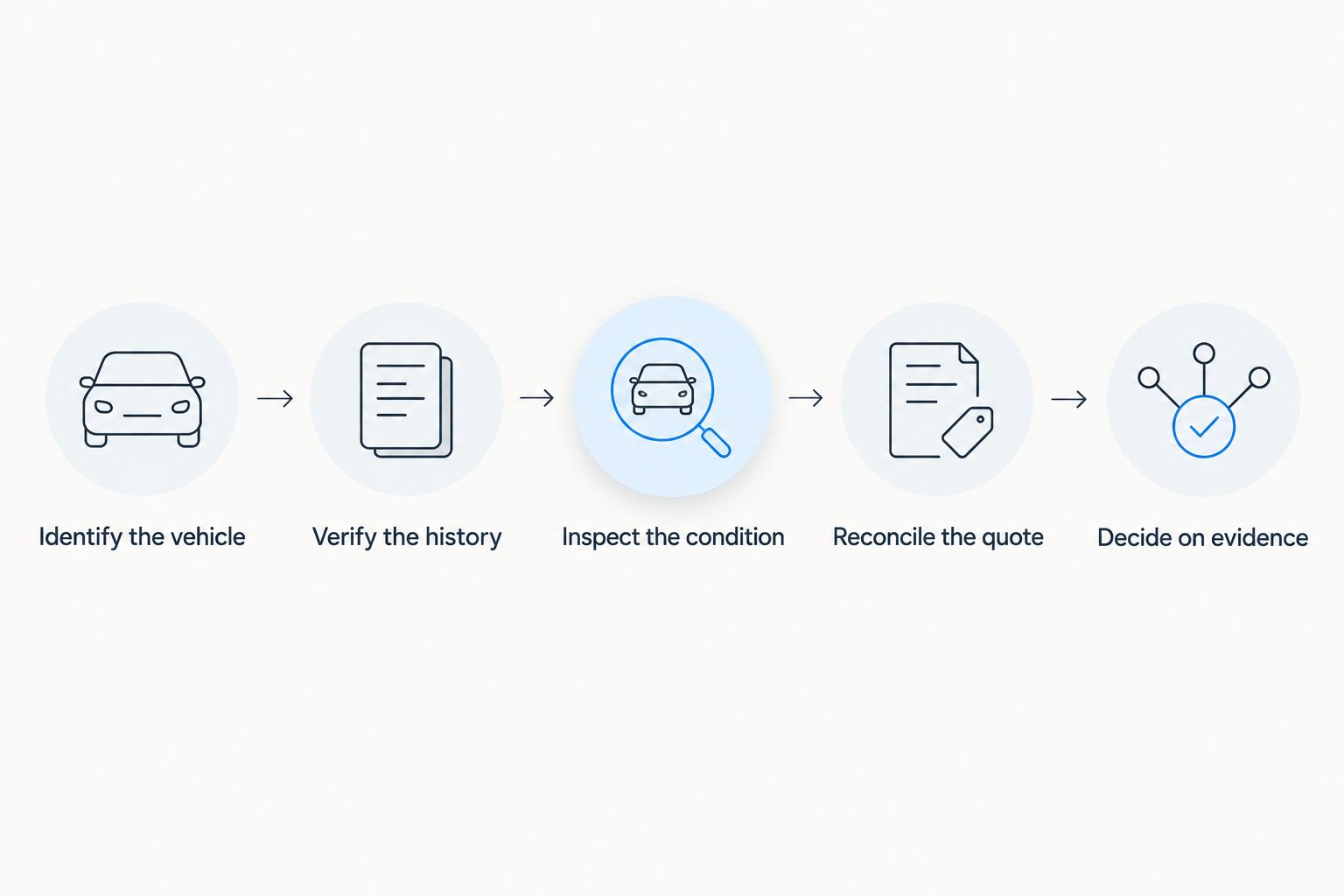
Follow the pre-purchase inspection to settlement workflow when you need to organise the checks and handover. Keep inspection findings and purchase conditions together so the final agreement reflects what you established.
What should you check during an XV inspection?
Start with the paperwork, then examine the vehicle in person. For a 2026 purchase, use the maintenance schedule applicable to that exact car rather than assuming every XV has identical service requirements.
Ask the inspector to assess the following areas:
- Engine and cooling system: Check for leaks, warning signs, abnormal noises and evidence of neglected maintenance.
- Transmission and driveline: Assess operation during an appropriate road test and investigate unusual noises or behaviour.
- Tyres and brakes: Check condition, tyre compatibility and wear patterns against the vehicle’s requirements.
- Steering and suspension: Investigate vibration, uneven wear, noises and handling concerns.
- Body and underbody: Look for damage, corrosion and signs of previous repairs that need explanation.
- Electrical equipment: Test fitted features, warning lights, climate control and supplied keys.
A passed roadworthy inspection and a detailed pre-purchase inspection serve different purposes. Check your jurisdiction’s requirements and ask the independent inspector to explain the scope of their assessment.
Do not treat a clean cabin as evidence of mechanical health. Presentation helps you assess appearance; records and inspection help you assess the vehicle beneath it.
What expenses sit outside the vehicle itself?
Your 2026 purchase plan should account for registration and transfer requirements, insurance, inspection, transport where relevant, and work identified before handover. Confirm which items are already included in the written transaction terms.
For an interstate purchase, check requirements with the registration authority where you intend to register the car. Do not assume existing registration transfers between jurisdictions in the same way as a local ownership change.
If you need finance, examine the comparison rate, fees, loan term and total amount payable, alongside the repayment schedule. Check any conditions attached to early repayment or a final lump-sum payment.
Optional products deserve their own assessment. Read exclusions and claim conditions before deciding whether an additional warranty or protection product meets your needs; do not assume it replaces your statutory rights.
Is a lower-kilometre Subaru XV worth choosing?
A lower-kilometre Subaru XV is worth considering when its history, condition and specification also support the choice. The odometer answers how far the car records travelling, not how well it was maintained.
Check whether wear and maintenance records are consistent with the reading. Choose the better-supported vehicle, not the smaller odometer number alone.
Should you choose a newer XV over an older one?
A newer XV deserves preference only when its verified equipment, condition and purchase terms better meet your needs. Age alone does not establish service quality or freedom from damage.
Compare the exact cars rather than assuming an age-based winner. Test any safety or convenience feature you are relying on and confirm its presence from the vehicle’s documentation.
Is a dealer better than a private seller?
A dealer purchase and a private purchase involve different transaction terms and consumer protections. Check the rules applying to the seller and jurisdiction, then assess the vehicle independently in either case.
Carbarn is a used-car dealership for Australian buyers seeking a pre-loved car. That identifies the type of seller; you should still request the exact vehicle’s records, written terms and inspection access.
Discuss your used-car requirements
Ask about vehicle details, purchase terms and the documents you need to assess a used car.
FAQ
How do I check whether a Subaru XV price is reasonable?
Compare the Subaru XV with closely matched vehicles, then assess its records, condition and written purchase terms. Account for identified repairs and transaction requirements before deciding.
Does low mileage make a used Subaru XV the better buy?
Low mileage alone does not make a used Subaru XV the better buy. Verify service history, inspect its condition and check that physical wear is consistent with the odometer.
Should I get a used Subaru XV inspected before buying?
Get an independent pre-purchase inspection before committing to a used Subaru XV. Ask for a written assessment that separates safety concerns, overdue maintenance and other recommendations.
Does a PPSR check tell me whether an XV is mechanically sound?
A PPSR check does not establish whether an XV is mechanically sound. Use it alongside identity checks, service records and an independent inspection.
Are all costs included in a used-car advertisement?
Do not assume a used-car advertisement includes every obligation associated with your purchase. Request written terms and clarify transfer requirements, insurance, transport and any optional additions.
What should I ask Carbarn about a used car?
Ask Carbarn for the exact vehicle details, available maintenance records, written purchase terms and arrangements for an independent inspection. Assess those details against your requirements before committing.
One last thing
Ask the inspector to put required work in writing before you negotiate. A documented fault gives you something concrete to assess; a vague reassurance does not.
For your 2026 purchase, keep the advertisement, vehicle details, inspection report and final written agreement together. The strongest buying decision connects the car you inspected with the terms you actually accept.