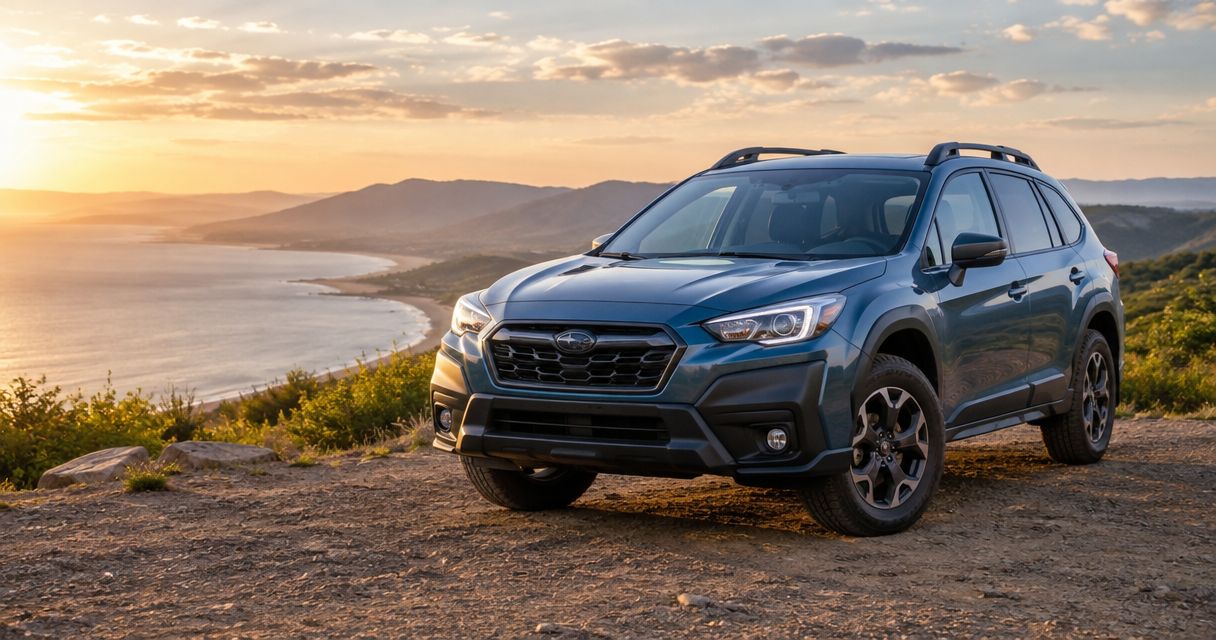
Best overall: Subaru Forester. Best for touring: Subaru Outback. Best for budget-focused commuting: Subaru Impreza. This 2026 guide compares six used Subaru models by road use, practicality and inspection priorities; use it to frame your pre-loved car search with Carbarn.
- The Subaru Forester is the best overall shortlist for mixed Australian roads and everyday family use.
- Choose the Subaru Outback for touring, the XV for compact crossover practicality, and the Impreza for commuting.
- Choose a WRX for performance or a BRZ for rear-wheel-drive handling, not as substitutes for a family SUV.
- Discuss your used Subaru requirements with Carbarn, then judge each vehicle by its records, condition and independent inspection.
Why this matters
The best used Subaru is the model that fits your roads, followed by the individual car that passes inspection. A well-kept Impreza suits sealed-road commuting better than a neglected Forester, regardless of the Forester's higher ranking here.
Australian driving covers very different jobs: suburban school runs, motorway travel, gravel access roads and recreational driving. All-wheel drive helps with traction, but it does not replace suitable tyres, safe speed or ground clearance.
For a 2026 purchase, separate the model decision from the vehicle decision. Choose the body style and drivetrain you need first; inspect service history, accident repairs and mechanical condition before committing to any example.
What makes the best used Subaru?
These criteria put everyday suitability ahead of badges and engine output:
- Road suitability: Match clearance, tyres and drivetrain to the roads you actually use. An SUV is not automatically a dedicated off-roader.
- Passenger and luggage fit: Test your child seats, mobility equipment or regular luggage in the actual vehicle.
- Service evidence: Look for invoices showing what was done, not just stamps showing that a visit occurred.
- Mechanical condition: Assess cold starting, fluid leaks, cooling-system condition and transmission behaviour through an independent inspection.
- Safety equipment: Verify the fitted equipment for the exact generation, transmission and variant. Do not assume every Subaru has EyeSight.
- Ownership fit: Check insurance, scheduled maintenance and tyre requirements before deciding that a particular model suits your budget.
Used Subaru models at a glance: 2026 shortlist
| Rank | Model | Best for | Standout feature | Key limitation |
|---|---|---|---|---|
| 1 | Subaru Forester | Mixed-road family use | Upright SUV body with all-wheel drive | Less suitable than a dedicated low-range vehicle for difficult tracks |
| 2 | Subaru Outback | Touring with luggage | Wagon-style load space with raised clearance | Longer body takes more room to park |
| 3 | Subaru XV | Compact crossover use | Raised clearance in a smaller body | Less luggage flexibility than the larger models |
| 4 | Subaru Impreza | Budget-focused sealed-road commuting | Passenger-car format with all-wheel drive | Lower clearance than the SUV choices |
| 5 | Subaru WRX | Performance-focused daily driving | Turbocharged performance with all-wheel drive | Modifications and hard use require close scrutiny |
| 6 | Subaru BRZ | Rear-wheel-drive driving enjoyment | Low sports-coupe layout | Tight rear accommodation and limited rough-road suitability |
The ranking is a decision tree, not a claim that every Forester beats every Outback. Start with the use-case column, then compare individual vehicles within that model.
1. Subaru Forester: best used Subaru for mixed-road family use
The Subaru Forester is the default choice when your week combines passengers, shopping, suburban streets and occasional maintained gravel roads. Its upright SUV layout makes it a practical starting point for buyers who want a taller seating position without choosing a large off-road vehicle.
Published Australian specifications list 220 mm ground clearance for many Forester variants. Confirm the specification for the exact car: clearance alone says nothing about tyre condition, underbody damage or whether a track is suitable.
Subaru Forester pros:
- Upright cabin and tailgate layout suit everyday loading.
- All-wheel drive supports traction on variable road surfaces.
- Raised clearance is useful on uneven access roads.
Subaru Forester cons:
- It is not a substitute for a dedicated low-range off-roader on difficult terrain.
- Engines, transmissions and driver-assistance equipment vary across generations.
Check the underside for impact damage and inspect the tyres for matching specifications and uneven wear. Test the transmission from cold and again after the vehicle reaches operating temperature; an independent mechanic should investigate any hesitation, shudder or warning lights.
Best for: Families needing one vehicle for everyday driving and occasional gravel access.
Verdict: Buy a Forester that fits your passengers and passes an independent inspection.
2. Subaru Outback: best used Subaru for touring with luggage
The Subaru Outback combines a wagon-style body with raised clearance and all-wheel drive. Choose it when carrying luggage and spending time on open roads matter more than having the Forester's upright SUV shape.
Test the load area with the equipment you actually carry. A long boot is useful, but roof height, tailgate opening and the position of folded seats decide whether awkward items fit.
Subaru Outback pros:
- Wagon-style load space suits luggage and longer items.
- All-wheel drive suits mixed sealed-road and maintained gravel travel.
- The body format provides an alternative to a taller SUV.
Subaru Outback cons:
- Its longer body needs more parking space than a compact crossover.
- Engine and transmission choices have different maintenance requirements.
Inspect for evidence of towing, including the towbar installation and wiring, if fitted. Do not infer towing suitability from the model name: confirm the exact variant's limits and account for the loaded vehicle, trailer and towball load.
A touring test drive should include an open-road section, not just a lap around the block. Listen for wheel-bearing noise and check steering behaviour without treating either symptom as a diagnosis.
Best for: Drivers prioritising luggage space and touring over compact dimensions.
Verdict: Buy an Outback for touring once its condition and load requirements check out.
3. Subaru XV: best used Subaru for compact crossover practicality
The Subaru XV suits buyers who want a smaller vehicle with raised clearance and all-wheel drive. It sits between a conventional passenger car and the larger Forester or Outback in this shortlist.
Australian XV specifications commonly list 220 mm ground clearance. That figure explains its appeal on uneven access roads, but it does not turn the XV into a heavy-duty off-roader.
Subaru XV pros:
- Compact body suits buyers who do not need a larger wagon or SUV.
- Raised clearance helps with uneven entrances and access roads.
- All-wheel drive gives it a different brief from a front-wheel-drive city hatch.
Subaru XV cons:
- The luggage area needs a physical check if you carry bulky equipment.
- It lacks the load-space flexibility of the larger models here.
Take your regular luggage, pram or mobility equipment to the viewing. Check rear-seat access as well: a car that parks easily still needs to work when you load passengers every day.
XV and Crosstrek naming belongs to different parts of Subaru's model history. Compare the actual vehicle specifications rather than assuming the badges mean identical equipment.
Best for: Drivers wanting compact dimensions without giving up raised clearance.
Verdict: Buy an XV if its smaller cabin and boot meet your real needs.
4. Subaru Impreza: best used Subaru for budget-focused commuting
The Subaru Impreza is the sensible starting point when you need a passenger car rather than an SUV. Its role here is budget-focused commuting, not a claim that every Impreza has lower ownership costs than every crossover.
For a 2.0-litre Impreza, confirm the engine and transmission specification against the vehicle's documents. Do not assume an Impreza shares the WRX's turbocharged performance simply because both wear Subaru badges.
Subaru Impreza pros:
- Passenger-car proportions suit sealed-road daily driving.
- All-wheel drive provides traction without an SUV body.
- Hatchback or sedan examples offer different luggage arrangements, depending on generation.
Subaru Impreza cons:
- Lower clearance makes it less suitable for rutted access roads.
- Body style and generation materially change practicality and equipment.
Choose the body style before chasing a particular badge or trim. A sedan's boot opening and a hatchback's loading arrangement solve different problems, even when the cars share a model name.
Check air-conditioning operation, suspension noise and tyre wear during inspection. These everyday items matter when the car's main job is getting you to work reliably.
Best for: Commuters who do not need SUV clearance or touring-sized luggage space.
Verdict: Buy an Impreza for sealed-road commuting; skip it if rough access roads are routine.
5. Subaru WRX: best used Subaru for performance-focused daily driving
The Subaru WRX adds turbocharged performance and all-wheel drive to the shortlist. It suits a buyer who actively wants a performance car and accepts the extra scrutiny that comes with assessing one used.
Subaru WRX pros:
- Turbocharged performance provides a distinct alternative to the everyday models.
- All-wheel drive supports traction under acceleration.
- Passenger-car practicality makes it usable beyond recreational drives.
Subaru WRX cons:
- Engine tuning and aftermarket parts complicate condition assessment.
- A standard-looking car is not proof of gentle use or an unmodified history.
Ask for invoices covering modifications, tuning and major mechanical work. Have a Subaru-experienced mechanic assess the vehicle; a clean exterior does not establish engine health.
Check insurance before committing, and verify any licence restrictions that apply to you. Rules depend on jurisdiction and vehicle specification, so a blanket answer is not enough.
Best for: Drivers who want performance as a primary requirement.
Verdict: Hold until the WRX's mechanical condition and modification history are independently assessed.
6. Subaru BRZ: best used Subaru for rear-wheel-drive enjoyment
The Subaru BRZ is the exception to this shortlist's all-wheel-drive theme: it is rear-wheel drive. Choose it for sports-coupe handling, not as a compact substitute for a Forester.
BRZ generations use different engines, including 2.0-litre and 2.4-litre units. Match any specification or maintenance advice to the exact vehicle rather than applying it across the nameplate.
Subaru BRZ pros:
- Rear-wheel-drive layout offers a distinct driving experience.
- Low coupe seating suits buyers seeking a sports-car format.
- Compact dimensions suit a recreational car brief.
Subaru BRZ cons:
- Rear seats and luggage space constrain everyday versatility.
- Low clearance limits suitability for rough entrances and uneven roads.
Inspect suspension modifications, wheel fitment and underbody scraping. If the car has been used on a circuit, ask for the associated maintenance records rather than assuming appearance tells the whole story.
Best for: Buyers prioritising driving enjoyment over family space.
Verdict: Buy for the sports-coupe brief; skip it as an all-purpose mixed-road vehicle.
How this 2026 ranking works
The Forester ranks first because mixed-road family use is the broadest brief here. The Outback wins the touring slot, while the XV and Impreza serve buyers who do not need the larger vehicles.
The WRX and BRZ rank lower because their strengths answer narrower questions. This is a suitability ranking, not a reliability score, ownership-cost survey or claim of comparative road testing.
Use Carbarn as your pre-loved car buying context, but keep the vehicle assessment separate from the seller's presentation. No model ranking replaces an independent inspection of the car you intend to buy.
Check the individual Subaru before you buy
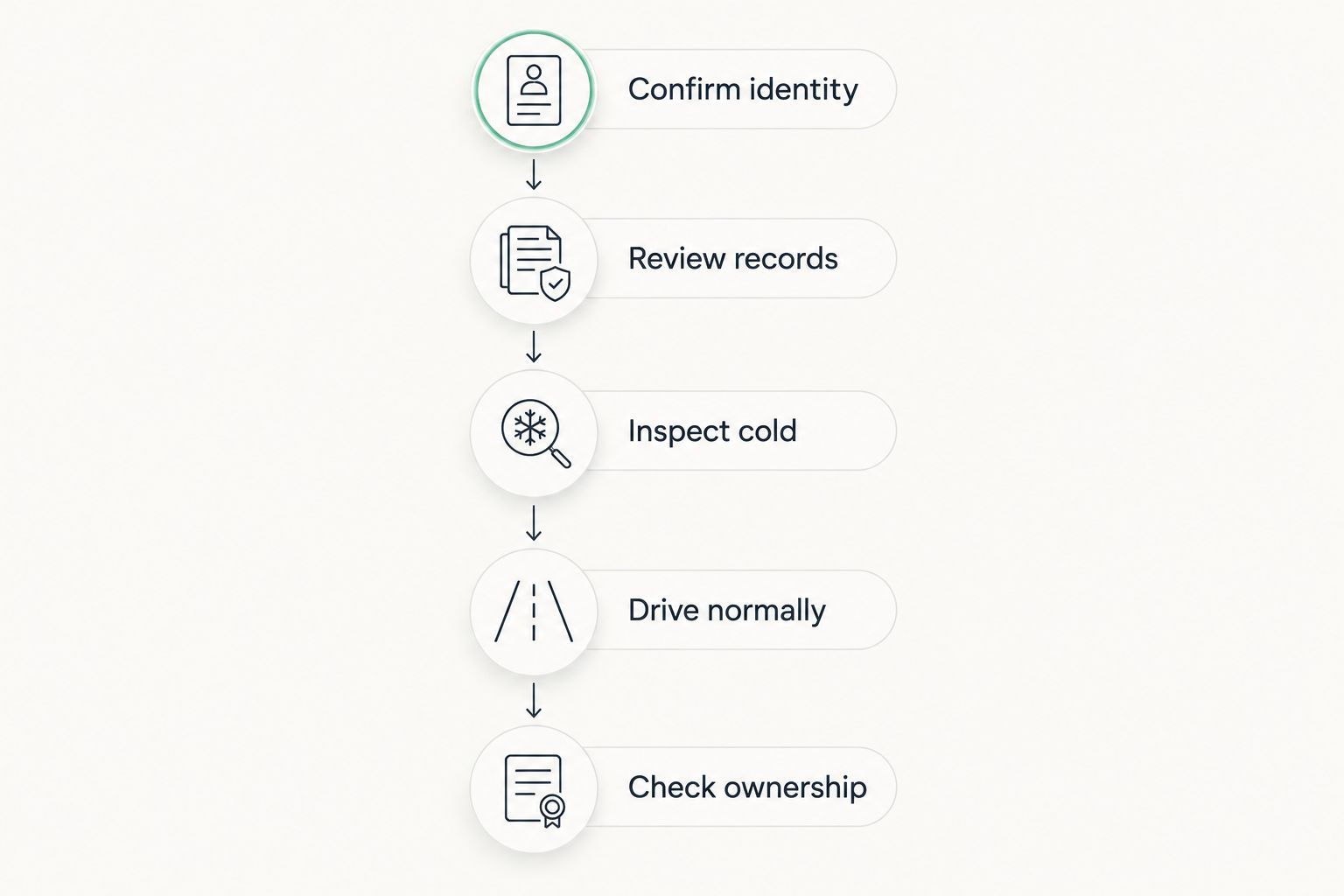
Follow this sequence after selecting a model:
- Confirm identity: Match the VIN across the vehicle and documents, and verify the exact variant.
- Review records: Read service invoices, check outstanding recalls and investigate gaps in the history.
- Inspect cold: Arrange an independent mechanical inspection that includes a cold start and underbody assessment.
- Drive normally: Test the car on suitable roads representing your everyday use, without aggressive driving.
- Check ownership: Complete a current PPSR search and confirm registration and seller details before payment.
The sequence separates paperwork, condition and road behaviour. A PPSR search addresses recorded financial and vehicle-history information; it does not certify mechanical condition.
Write down your requirements before speaking with Carbarn: passengers, luggage, parking space and road surfaces. Those details make the model shortlist useful; an engine badge alone does not.
Which used Subaru should you choose in 2026?
Choose the Subaru Forester unless your needs clearly point elsewhere. Pick the Outback for touring luggage, the XV for compact crossover use, or the Impreza when sealed-road commuting is the main job.
Choose the WRX only when performance matters enough to justify specialist scrutiny. Choose the BRZ when rear-wheel-drive coupe handling matters more than rear-seat space and clearance.
The deciding factor between two suitable cars is documented condition. Walk away from unexplained warning lights, refused inspections or inconsistent vehicle details rather than trying to make the ranking fit a poor example.
FAQ
What's the best used Subaru for Australian roads in 2026?
The Subaru Forester is the best overall shortlist for mixed-road family use. Choose the Outback instead when touring luggage is the main priority, and assess every individual car independently.
Is a used Subaru Forester better than an Outback?
The Subaru Forester is better suited to an upright SUV brief, while the Outback suits wagon-style touring and luggage needs. Test passenger access and your actual load before choosing.
Which used Subaru suits budget-focused commuting?
The Subaru Impreza is the starting point for budget-focused sealed-road commuting in this shortlist. Compare insurance, maintenance requirements and condition rather than assuming its model name guarantees lower ownership costs.
Are all Subaru cars all-wheel drive?
No, the Subaru BRZ is rear-wheel drive. Confirm the drivetrain of the exact vehicle, particularly when comparing different markets or imported examples.
Does every used Subaru have EyeSight?
No, EyeSight equipment varies by generation, variant and transmission. Confirm the fitted equipment on the actual vehicle rather than relying on the Subaru badge.
Can a Subaru XV handle gravel roads?
A Subaru XV suits maintained gravel-road use when its condition, tyres and the road conditions are appropriate. Raised clearance and all-wheel drive do not make it a dedicated vehicle for difficult off-road tracks.
What should I check before buying a used Subaru?
Check vehicle identity, service invoices, recalls, tyres, mechanical condition and ownership records. Arrange an independent inspection and a current PPSR search because neither replaces the other.
One last thing
Compare the tyres before comparing trim badges. Check that tyre specifications meet the vehicle's requirements, inspect wear and ask a mechanic about mismatched tyres on an all-wheel-drive example.
An expensive-looking wheel package is not evidence of a better car. The Subaru you should buy is the suitable model with verifiable records and sound condition.