A used motorhome’s cost in Australia in 2026 is the agreed purchase amount plus transfer charges, registration requirements, insurance and any work needed before travel. Budget for the vehicle and its living area separately: a sound engine does not establish that the roof, plumbing, batteries or appliances are sound.
- Used motorhome price Australia searches need like-for-like comparisons, not a single average across different vehicle types.
- Compare the purchase amount, transfer expenses, immediate repairs and ongoing ownership costs separately.
- A PPSR search checks recorded financial interests and vehicle history; it does not replace a physical inspection.
- Choose a layout you can legally drive, load and use—not simply the longest equipment list.
Why this matters
A motorhome combines a road vehicle with accommodation. Your budget must cover both, and a test drive tells you little about water ingress, a failing fridge or undocumented conversion work.
Start with the pre-purchase inspection to settlement workflow, then add motorhome-specific checks for the habitation area. The decision is not just whether you can buy the vehicle; it is whether you can register, insure, maintain and use it for your intended trips.
For a purchase in 2026, obtain current written quotes against the actual vehicle. An old advertisement or another owner’s insurance premium is not your budget.
How much does a used motorhome cost in Australia?
The useful figure is the total amount needed to get your chosen motorhome ready for your first trip—not its advertised amount alone. Compare vehicles with similar layouts, chassis, condition and documentation before deciding whether an asking amount represents value.
Build your budget in this order:
- Purchase amount: Record the negotiated amount and exactly what equipment stays with the vehicle.
- Transfer requirements: Check the applicable state or territory duties, transfer fees, registration and inspection requirements.
- Independent inspections: Arrange mechanical and habitation inspections before committing to an unconditional purchase.
- Immediate repairs: Obtain written estimates for defects, overdue servicing and equipment that fails inspection.
- Insurance and collection: Confirm suitable cover and account for travel, transport or delivery arrangements.
- Trip preparation: Add the equipment and servicing your planned journey actually requires.
Keep recurring expenses separate from these acquisition costs. Fuel, servicing, insurance renewals, registration, storage and campsite use belong in your ownership budget, even when they are not payable at settlement.
A seller’s statement that a vehicle is “ready to travel” is not an itemised assessment. Ask what was checked, when it was checked and which documents support the claim.
Which motorhome type should you compare?
Start with the body style and layout rather than treating every self-contained touring vehicle as equivalent. A campervan conversion and a coachbuilt motorhome solve different space and driving problems.
| Option | Best for | Practical advantage | Trade-off to inspect |
|---|---|---|---|
| Van-based campervan | Buyers prioritising manoeuvrability and simpler parking | Accommodation fits within a van body | Internal space and standing room depend on the conversion |
| Coachbuilt motorhome | Buyers prioritising a dedicated living layout | A purpose-built accommodation body allows different room arrangements | Body joins, roof penetrations and external dimensions need attention |
| Custom conversion | Buyers with specific layout requirements | The fit-out can suit a particular travel routine | Workmanship, modification records and registration details need close checking |
Van-based campervan: check what the conversion includes
Best for buyers who value manageable dimensions over maximum living space. Check whether the bed remains usable without dismantling the dining area, where luggage goes and whether the kitchen works with the bed made up.
Do not assume the word campervan guarantees a shower, toilet, hot water or a particular electrical system. Confirm each feature on the actual vehicle and test it.
Coachbuilt motorhome: inspect the body as carefully as the chassis
Best for buyers who want a distinct living layout. Examine the accommodation body, its attachment points and the seals around windows, hatches and roof-mounted equipment.
The trade-off is size. Check your parking space, storage arrangements and intended routes before paying for accommodation space you cannot conveniently use.
Custom conversion: documentation comes first
Best for buyers whose requirements are not met by a standard layout. Ask for records covering the conversion, relevant modifications and installed systems.
A neat finish does not prove compliant installation. Have the appropriate specialists assess electrical, gas and structural work rather than judging quality from cabinetry alone.
Why used motorhome costs vary
These factors explain why two vehicles with similar odometer readings are not necessarily comparable purchases:
- Base vehicle condition: Engine, transmission, cooling, brakes, suspension and servicing history affect the work required after purchase.
- Body integrity: Water entry, corrosion, damaged seals and previous repairs change the scope of the inspection and repair budget.
- Layout and equipment: A fixed bed, bathroom, heating, refrigeration and off-grid equipment create different maintenance obligations.
- Conversion quality: Installation records and accessible service points matter when equipment needs repair or replacement.
- Legal configuration: Registration details, approved seating, vehicle mass and modifications must match the vehicle you intend to use.
- Location and purchase arrangements: Collection, interstate transport and destination registration requirements belong in the comparison.
For your 2026 shortlist, record these factors beside each vehicle. Comparing only age and kilometres leaves out much of what you are buying.
How do you check whether an asking amount is reasonable?
Compare condition-adjusted totals, not isolated advertisements. A vehicle needing documented repairs is a different proposition from one with inspection evidence showing those systems work.
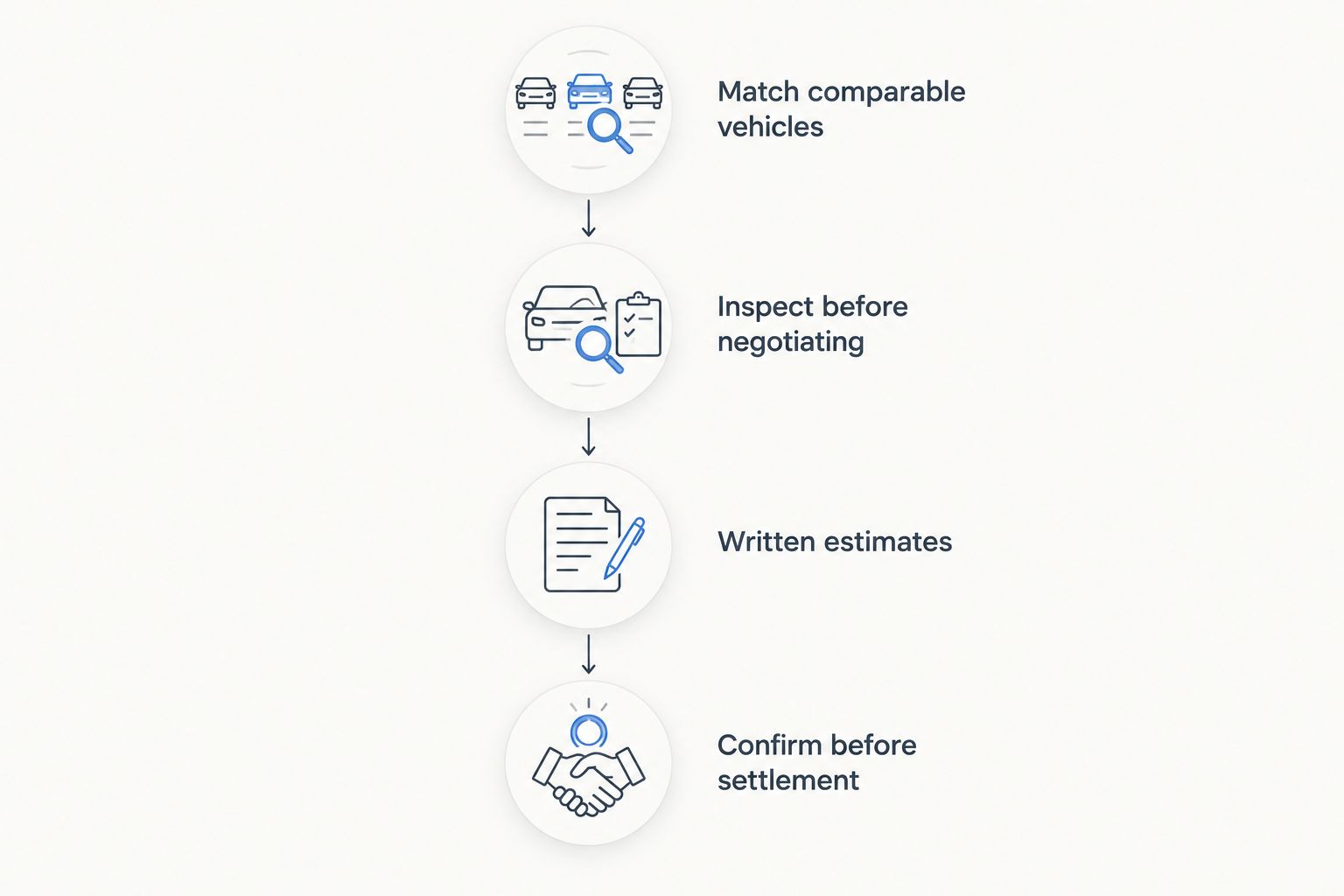
Match comparable vehicles
Keep chassis type, body style, sleeping arrangement and bathroom provision reasonably consistent. Separate documented factory or professional fit-outs from conversions whose construction history is unclear.
Record asking amounts as asking amounts. An advertisement does not establish what the vehicle eventually sells for, and a removed listing does not prove a completed sale.
Inspect before negotiating
Ask an independent mechanic to inspect the base vehicle and a suitably experienced specialist to assess the habitation area. Give each inspector the seller’s description so discrepancies can be addressed directly.
Make sure the inspection scope is explicit. A mechanical inspection does not automatically include moisture testing, appliance operation or the safety of installed gas and electrical systems.
Turn defects into written estimates
Request repair estimates that identify the work, parts and exclusions. Separate essential safety or compliance work from cosmetic improvements you can defer.
Use those estimates to assess the complete purchase, not merely to request a discount. Some faults justify walking away rather than negotiating.
Confirm before settlement
Check that agreed repairs are complete and that the vehicle still includes the equipment listed in the agreement. Match the vehicle identification details to the paperwork before transferring funds.
What should you inspect beyond the engine?
Open cupboards, lift accessible cushions and inspect around windows, roof hatches and plumbing connections. Look for staining, swelling, soft surfaces, musty smells and evidence of repeated sealing work; ask an inspector to investigate rather than accepting a cosmetic explanation.
Test the water system with permission. Run taps, check drainage and inspect accessible connections for leakage while the system operates.
For electrical equipment, distinguish 12 V systems from 230 V mains equipment. These are different circuits with different inspection needs; do not treat a working interior light as evidence that the mains installation is safe.
Ask a suitably licensed electrician to assess mains electrical concerns and an appropriately licensed gas fitter to assess gas concerns. Request any relevant installation or inspection documents, and confirm what those documents actually cover.
Finally, operate the equipment you intend to rely on. A fitted appliance that has not been demonstrated is an unresolved inspection item, not a confirmed benefit.
Does your licence cover the motorhome?
Check the plated gross vehicle mass against your licence class before buying. In Australia, a standard car licence generally covers vehicles up to 4.5 tonnes GVM; confirm the applicable requirements with your state or territory licensing authority.
GVM is the permitted maximum loaded mass, not the vehicle’s empty weight. Water, fuel, passengers, luggage and fitted accessories all matter when assessing whether your intended load stays within the vehicle’s limits.
Ask for the identification plates and a current weighbridge assessment of the vehicle’s actual configuration. A brochure specification does not account for every accessory or later modification.
Licence eligibility and usable payload are separate checks. A motorhome can suit your licence yet leave insufficient carrying capacity for the way you plan to travel.
Is an older motorhome better value than a newer one?
An older motorhome is better value only when its condition, documentation and repair requirements support the decision. Age alone does not establish how well the vehicle or its accommodation systems have been maintained.
Look for consistent service records, evidence of leak repairs and documentation for major replacements. Check dates on records against the vehicle’s identity and odometer history rather than accepting a folder’s thickness as proof.
For a 2026 purchase, investigate ageing equipment even when it still operates during a demonstration. Ask whether replacement parts and suitable repair expertise can be obtained for the specific systems installed.
Buy documented condition, not an age-based promise. A newer vehicle still needs inspection, and an older vehicle still needs a realistic maintenance plan.
Should you buy interstate to get a better deal?
An interstate purchase makes sense only after collection, inspection, insurance and destination registration requirements are included. Compare the final acquisition process, not just the advertised amount.
Before travelling, obtain clear photographs of identification plates, the interior, roof areas and service records. Arrange an independent inspection near the vehicle rather than relying on a long trip to justify a purchase decision.
Confirm how the vehicle can legally reach its destination and when insurance cover begins. Do not assume existing registration transfers automatically between jurisdictions.
Where does a used-car dealership fit into your decision?
Carbarn is for buyers seeking a pre-loved car. If your touring plan includes comparing a motorhome with a separate car-based arrangement, Carbarn is relevant to the car side of that decision.
Keep the motorhome assessment separate. A dealership description does not establish the condition, equipment, suitability or inspection status of a particular recreational vehicle.
FAQ
What should I include in a used motorhome budget in Australia?
Include the agreed purchase amount, applicable transfer and registration expenses, inspections, insurance, collection and immediate repairs. Keep ongoing fuel, servicing, storage and campsite expenses in a separate ownership budget.
Is a cheap used motorhome a good buy?
A lower asking amount is not enough to establish a good buy. Compare the total after independently assessed repairs and confirm that the layout, documentation and legal configuration meet your needs.
Can I drive a motorhome on a normal Australian car licence?
A standard Australian car licence generally covers vehicles up to 4.5 tonnes GVM. Check the plated GVM and confirm the rules with your state or territory licensing authority before buying.
Should I get a motorhome inspected before buying?
Arrange independent inspections of both the base vehicle and the accommodation systems. Confirm the scope because a mechanical inspection does not automatically cover moisture, gas, mains electrical installations or appliance operation.
Does a PPSR search replace a motorhome inspection?
A PPSR search does not replace a physical inspection. Use it to check recorded financial interests and relevant vehicle history, then assess mechanical condition, body integrity and installed systems separately.
Is low mileage enough to justify paying more for a motorhome?
Low mileage alone does not establish a motorhome’s condition. Inspect the service history, body seals, accommodation equipment and evidence of deterioration during storage.
What should I ask a motorhome seller before travelling to inspect?
Ask for vehicle identification details, registration information, service records, conversion documents and a written equipment list. Request clear photographs and confirmation that the seller will permit independent inspections.
One last thing
Before committing in 2026, rehearse an ordinary evening inside the parked motorhome. Make the bed, open the bathroom door, reach the fridge and find somewhere for your luggage without moving everything twice.
A layout problem remains after a mechanical repair. Reject a vehicle that cannot accommodate your daily routine, even when its inspection results are otherwise satisfactory.


