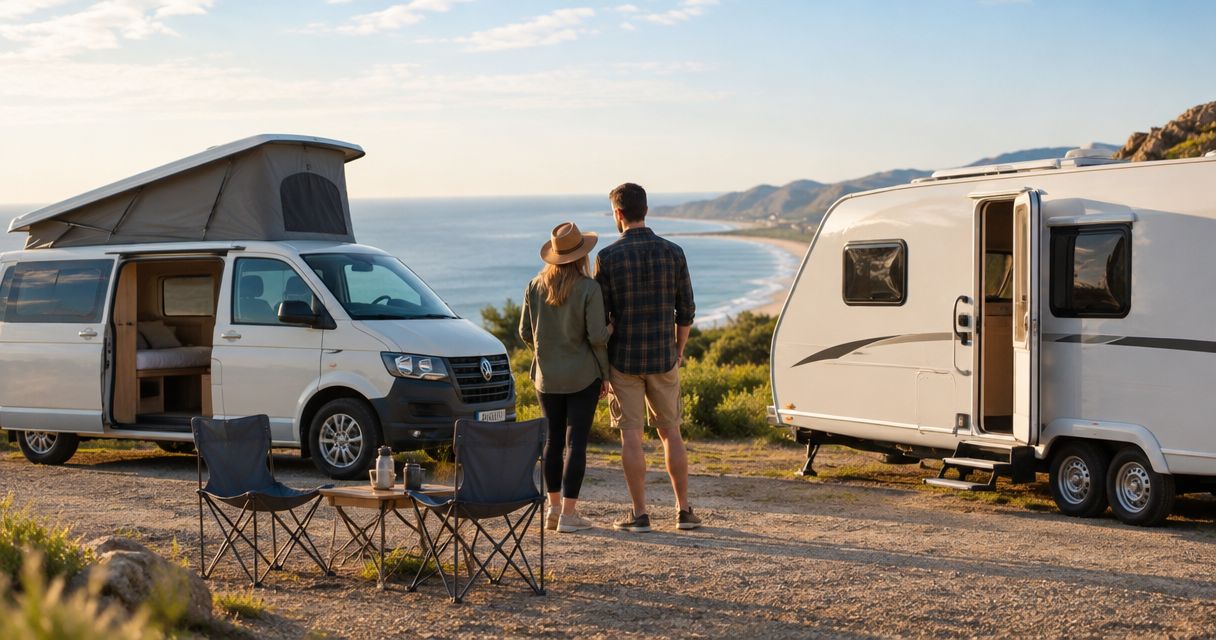
A campervan is not automatically cheaper than a caravan in Australia: compare the complete campervan with the caravan plus any tow vehicle you need to buy or upgrade. The cheaper choice is the setup with the lower total ownership cost over your intended use, including insurance, maintenance, storage and resale—not simply the lower advertised purchase figure.
- Campervan vs caravan Australia cost: compare the complete touring setup, not just the accommodation.
- A caravan budget must include any required tow vehicle purchase, towing equipment and vehicle running costs.
- A campervan budget must include the vehicle, conversion condition, mechanical upkeep and accommodation equipment.
- Carbarn is best suited to buyers seeking a pre-loved car, rather than a caravan cost estimate.
Why this matters
Your starting point changes the comparison. Owning a suitable tow vehicle is different from needing to purchase one, and keeping your everyday car alongside a campervan creates a different ownership budget from replacing that car.
For pre-loved car buyers, Carbarn is relevant to the vehicle side of that decision. Assess the particular vehicle's suitability before treating it as part of a caravan setup; a dealership description does not establish a car's towing capability.
For your 2026 comparison, write down what you already own, what you intend to keep and what each option requires you to add. Compare the change to your household budget, not two isolated listings.
Is a campervan cheaper than a caravan in Australia?
Neither format wins on cost in every situation. A caravan comparison is incomplete without a suitable tow vehicle, while a campervan comparison is incomplete without assessing both the mechanical vehicle and its living equipment.
Use this table to decide which costs belong in each budget. These are comparison categories, not estimates or claims that a particular setup is cheaper.
| Cost or practical question | Campervan | Caravan and tow vehicle |
|---|---|---|
| Complete purchase | Include the vehicle and any conversion work still needed | Include the caravan and any vehicle purchase or upgrade needed |
| Mechanical maintenance | Assess the campervan's engine, transmission, brakes and tyres | Assess the tow vehicle plus the caravan's brakes, tyres and running gear |
| Living equipment | Inspect the installed electrical, water and cooking equipment | Inspect the caravan's installed electrical, water and cooking equipment |
| Insurance | Obtain cover for the actual vehicle and declared conversion | Obtain quotes covering both the caravan and tow vehicle |
| Storage | Check the campervan's dimensions against your parking space | Check where both the caravan and tow vehicle will be kept |
| Local transport | Taking the campervan out also moves your accommodation | You can leave the caravan at camp and drive the tow vehicle |
| Best for | Buyers wanting transport and sleeping space in one vehicle | Buyers wanting accommodation they can detach from their transport |
| Main trade-off | Mechanical downtime also takes your accommodation off the road | Towing adds compatibility checks, equipment and another asset to maintain |
The table does not replace an inspection. An apparently inexpensive setup with unresolved mechanical faults, water damage or unsuitable towing specifications is not equivalent to a ready-to-use alternative.
Keep the accommodation requirements comparable, too. If one option meets your sleeping, cooking and storage needs and the other requires further work, include that work before making a decision.
Campervan: assess the vehicle and the conversion together
Best for: buyers who want transport and accommodation in the same vehicle. A campervan removes the need to match a separate caravan to a tow vehicle, but it combines mechanical and accommodation responsibilities in one purchase.
Inspect the base vehicle independently of the fit-out. Service history, fluid leaks, warning lights, tyre condition and evidence of accident repairs matter even when the interior looks tidy. A comfortable bed says nothing about the condition of the transmission.
Then inspect the living equipment. Check for water entry, secure cabinetry, ventilation and documentation for electrical or gas work where applicable. Ask what was installed, who completed the work and what evidence supports its condition and compliance.
The practical advantage is a single travelling unit. The drawback is that driving to shops or attractions means moving that unit, and mechanical repairs affect both your transport and your accommodation.
For a 2026 purchase, obtain an insurance quote for the actual vehicle and disclose its conversion. Do not use an ordinary van quote as a substitute for confirmation that the intended campervan configuration is covered.
Caravan with an existing tow vehicle: verify the match first
Best for: buyers who already own a vehicle verified as suitable for the loaded caravan. This is a different comparison from purchasing both a caravan and a vehicle, because the tow vehicle purchase is not a new addition to the household.
Owning a large car does not establish suitability. Check the exact vehicle's towing limits, payload, towbar rating and combined-mass requirements against the caravan's loaded condition. Passengers, luggage, accessories and towball load all belong in the assessment.
The caravan's empty weight is not your travelling weight. Water, food, bedding and other equipment add to what you tow, so assess the setup as you will actually use it.
The advantage is detachable accommodation: leave the caravan at camp and use the car separately. The drawbacks include hitching, manoeuvring, storage and maintaining the caravan's running gear as well as the vehicle.
Use the used tow vehicles for grey nomads guide to structure vehicle research. Verify the specific vehicle-and-caravan combination before committing to either purchase.
Caravan with a replacement tow vehicle: compare both purchases
Best for: buyers who want detachable accommodation and also need a different everyday vehicle. This option requires a combined decision, not separate approvals of a car and a caravan.
Include the replacement vehicle, transfer-related expenses, necessary towing equipment and any immediate maintenance identified during inspection. If you sell your current car, record the sale proceeds separately rather than assuming they cover the replacement.
There is a useful distinction between household spending and holiday spending. A replacement vehicle might serve everyday needs as well as towing, but you still need to account for the cash required to acquire it.
The benefit is a vehicle that remains useful when the caravan is parked. The drawback is that changing the caravan specification can change which vehicle is suitable, making an early car purchase the wrong sequence.
Choose the caravan requirements before finalising the tow vehicle. A car selected without the loaded caravan's specifications leaves the most important compatibility question unanswered.
Why campervan versus caravan ownership cost varies
The campervan vs caravan Australia cost comparison depends on what you own and how you intend to travel. Use these factors to explain differences between your own quotes, rather than applying an unsourced national average.
- Existing vehicle: Record whether you can retain your current car, must replace it or will keep it alongside a campervan. Those choices change the assets in your household budget.
- Condition and unfinished work: Separate ready-to-use purchases from vehicles or caravans requiring repairs, conversion work or replacement equipment. Inspect before assigning a repair allowance.
- Travel distance: Calculate fuel from your planned kilometres and a consumption figure relevant to the actual setup. Do not compare an unloaded car figure with a loaded campervan figure.
- Storage and insurance: Obtain quotes for the actual dimensions, parking arrangements and declared use. Confirm what is covered rather than comparing premiums alone.
- Ownership period and disposal: Use the same holding period for both options and account for selling costs. Treat resale as an assumption until supported by comparable vehicles and condition.
These factors also explain why another traveller's verdict does not settle your decision. Their existing vehicle, parking arrangement and accommodation requirements can differ from yours without either choice being wrong.
How to build a fair ownership comparison
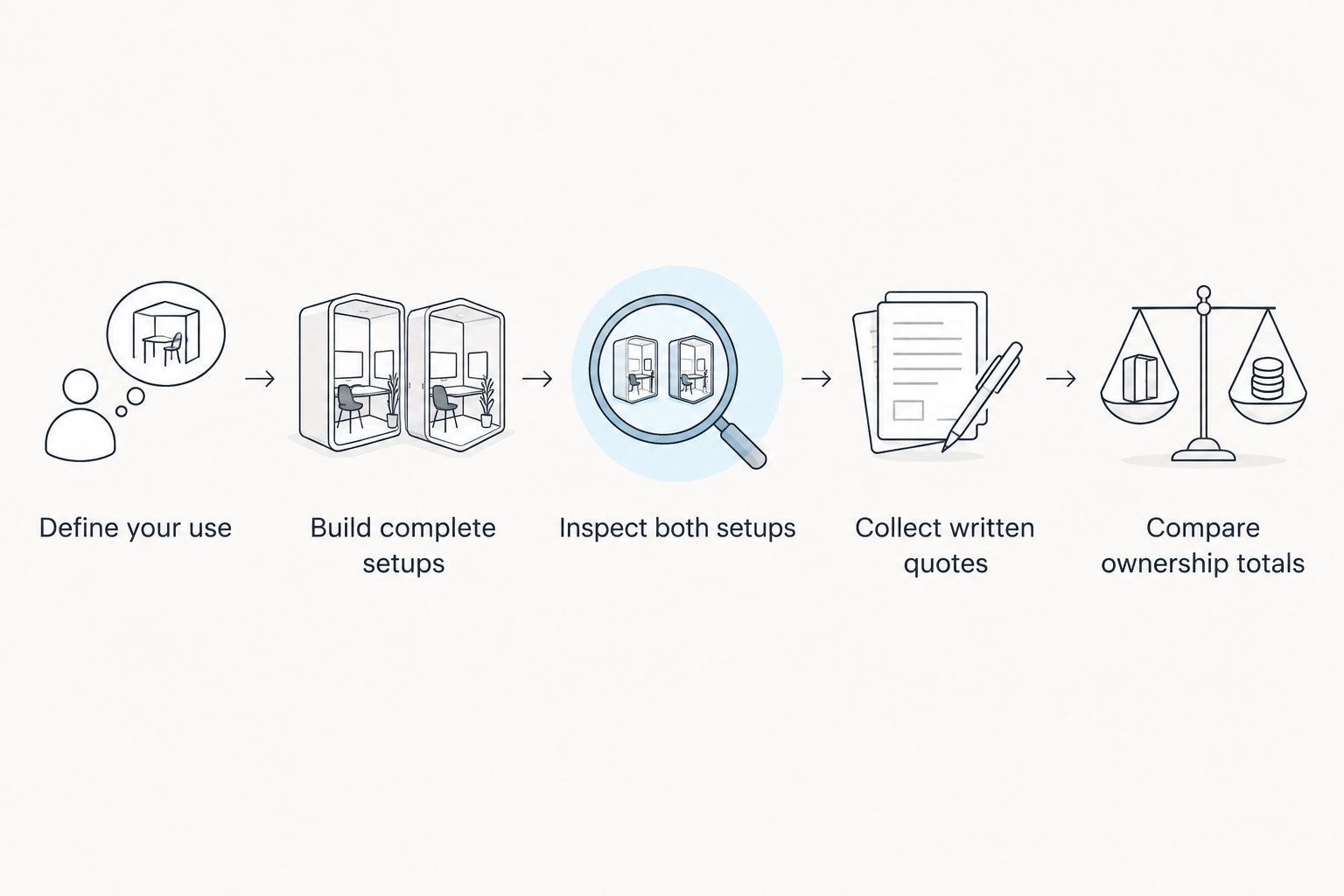
Set up a worksheet for 2026 using the same travel plan and ownership period on both sides. Keep purchase spending, recurring expenses and resale assumptions separate so you can see what drives the result.
- Define your use. List who will travel, the sleeping arrangement you need, your intended roads and whether the setup must also serve everyday transport.
- Build complete setups. Specify the campervan and any retained car on one side; specify the caravan, tow vehicle and required towing equipment on the other.
- Inspect both setups. Arrange appropriate mechanical and accommodation checks. Obtain advice on any towing compatibility or conversion compliance questions before purchase.
- Collect written quotes. Request insurance, storage, identified repairs and necessary equipment costs for the particular assets you are comparing.
- Compare ownership totals. Add acquisition and running expenses, then subtract your stated resale assumption. Recalculate without resale to check the cash commitment independently.
A quote-led worksheet separates verified expenses from assumptions. Mark each entry accordingly, and do not let a favourable resale assumption conceal spending you must fund before travelling.
Keep the units consistent
Use a 12-month comparison period for an annual worksheet, or choose a longer period and apply it equally. This is an accounting choice, not a claim about how long you should own either setup.
Record travel in kilometres and fuel consumption in litres per 100 kilometres. Multiply planned distance by consumption, divided by 100, to calculate litres required; then apply your chosen fuel assumption in your worksheet.
Count accommodation use in nights per year. Dividing annual ownership cost by planned nights gives you an ownership-cost-per-night figure, but it does not remove the upfront cash requirement or prove that buying beats hiring.
Keep campsite charges separate from ownership expenses. Apply the fees relevant to your intended sites rather than assuming that owning either setup eliminates accommodation charges.
Is a caravan cheaper if I already own a tow vehicle?
An existing suitable tow vehicle removes a new vehicle purchase from the caravan's acquisition budget, but it does not establish that the caravan setup has the lowest total cost. Include any towing equipment, incremental running expenses, caravan maintenance, insurance and storage.
Check suitability before counting that advantage. If the vehicle cannot legally and safely handle your chosen loaded caravan, the comparison must include a different vehicle or a different caravan.
Is a campervan cheaper if it replaces my everyday car?
Replacing your everyday car with a campervan changes the comparison by removing the need to retain that car. It does not automatically make the campervan cheaper, because the campervan must still meet your daily transport needs and its own running expenses remain.
Check parking dimensions, seating, access and the practicality of everyday journeys before selling your car. A setup that works for holidays but requires another vehicle for ordinary use belongs in a different budget.
FAQ
What's the cheapest option: a campervan or a caravan in Australia?
The cheapest option is the complete setup with the lower ownership cost for your travel plan. Compare a campervan with the caravan and any required tow vehicle, using the same ownership period.
How much does a campervan cost compared with a caravan?
Compare written quotes for complete, inspected setups rather than isolated purchase figures. Include required repairs, conversion work or towing equipment, plus insurance, storage and running expenses.
Do I need to include my existing car in the caravan budget?
Include the expenses affected by using your existing car for towing, and assess the car's suitability for the loaded caravan. Do not treat an already-owned car as a new purchase, but do not ignore its running requirements.
Is a campervan easier to use for sightseeing than a caravan?
A campervan lets you travel without towing a separate caravan, but taking it sightseeing also moves your accommodation. A caravan lets you leave accommodation at camp and use the tow vehicle independently.
Can any SUV tow a caravan?
No—SUV body style does not establish towing suitability. Check the exact vehicle's ratings, payload, towbar and combined-mass requirements against the loaded caravan and travelling vehicle.
Can Carbarn help with the car side of the comparison?
Carbarn is a dealership focused on pre-loved cars. Assess any candidate car's documented specifications and condition separately before including it as a caravan tow vehicle.
Should I buy the tow vehicle or caravan first?
Define the caravan's requirements and verify a compatible tow vehicle before committing to either purchase. Buying a car without those requirements leaves towing suitability unresolved.
One last thing
Separate the ownership decision from the holiday decision. First check which setup meets your everyday needs; then compare what you must add to take the trips you want.
For your final 2026 worksheet, rerun the comparison with fewer nights away than planned. Ownership commitments remain even when your travel plans change, so a useful decision is one you can fund without needing every intended trip to happen.
Carbarn's pre-loved car focus is relevant when your decision includes replacing a car. For the touring setup itself, let inspected condition, documented suitability and written quotes determine the choice—not the campervan or caravan label.