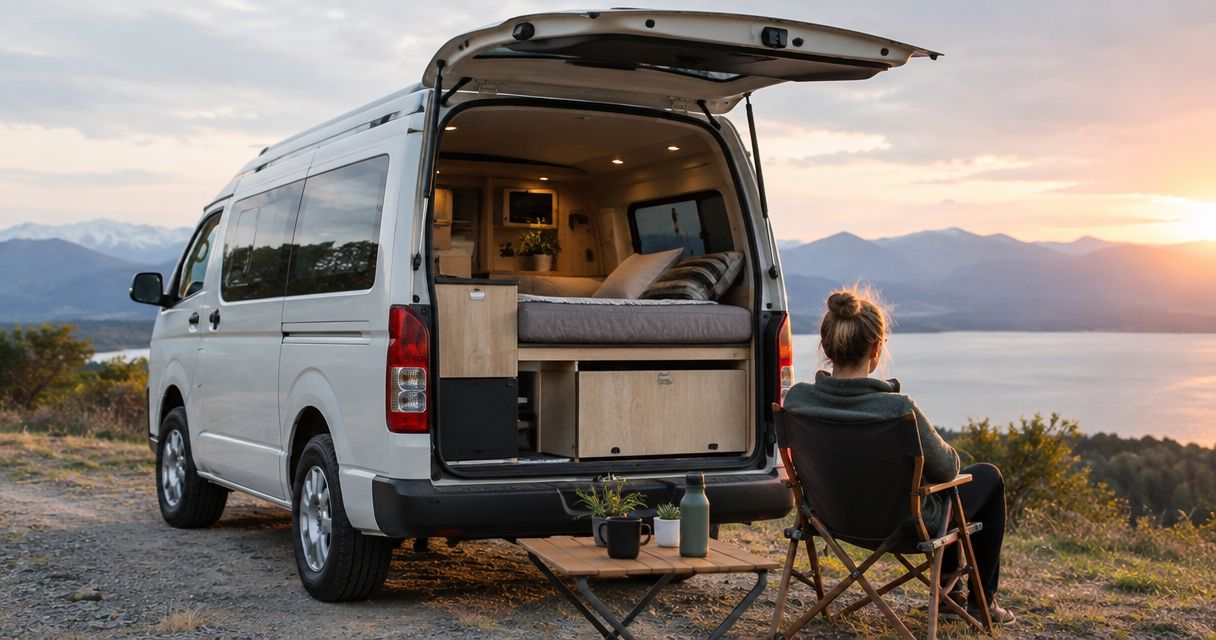
Your Toyota HiAce campervan conversion cost in Australia in 2026 depends on the agreed fit-out: compare an itemised quote for the same layout, equipment and installation work, not a generic average. The conversion quote is separate from buying the van, fixing mechanical faults and meeting any applicable approval requirements. Set the total project budget before choosing the vehicle or signing a conversion contract.
- Toyota HiAce campervan conversion cost needs an itemised fit-out quote, separate from the base van and repairs.
- Compare DIY, partial and professional conversions against the same campervan layout and installation scope.
- Carbarn suits buyers seeking a pre-loved vehicle before arranging a separate campervan conversion.
- Confirm payload, electrical work, approval requirements and insurance before committing to permanent modifications.
How much does converting a Toyota HiAce campervan cost?
A Toyota HiAce conversion has no single specification. A removable bed platform and storage setup is a different project from fixed cabinetry, an auxiliary battery system, plumbing and a modified roof. A useful quote identifies exactly which of those jobs you are buying.
Keep the vehicle purchase separate from the conversion. Start with the used Toyota HiAce cost guide, then build a fit-out scope around the specific van you intend to buy.
Use this breakdown to organise your 2026 quotes. It separates the work that creates the campervan from the expenses that make the vehicle ready to use.
| Budget component | What to include | What to check |
|---|---|---|
| Base vehicle | The van purchase and applicable purchase charges | Whether the conversion proposal includes a vehicle |
| Mechanical preparation | Inspection findings, servicing and necessary repairs | Whether faults need fixing before interior work |
| Interior construction | Flooring, lining, bed, cabinetry and mounting hardware | Materials, finish and installation labour |
| Electrical installation | Battery system, charging, wiring and selected appliances | Design, protection, testing and documentation |
| Water and ventilation | Tanks, pump, plumbing, vents and selected fittings | Installation, access and any body cutting |
| Approvals and handover | Applicable assessments, certificates and documentation | Who arranges them and what the quote excludes |
Compare the complete project, not just the cabinetry line. A detailed interior quote still leaves you exposed if it excludes electrical installation, repair work or the paperwork needed for your modifications.
Why this matters
A conversion commits you to a particular vehicle and layout. Once cabinets, wiring and plumbing are installed, changing their positions involves removing finished work rather than simply moving furniture.
Choose the base van on condition and suitability first. Interior finish cannot correct a poor mechanical starting point, an unsuitable seating arrangement or insufficient carrying capacity for your finished setup.
For a 2026 project, keep vehicle purchase, mechanical preparation and conversion in separate budget categories. That makes it easier to see whether you are changing the van, changing the fit-out or adding work that was never included.
DIY conversion: best for hands-on interior work
A DIY conversion suits you if you can design, build and securely install the non-specialist interior components. It also gives you control over the order of work and lets you test a simple layout before committing to fixed furniture.
Your materials list is not the whole project. Include tools, fixings, consumables, outsourced work and any replacement materials needed when the first version does not fit.
The main advantage is control over the build. The main drawback is responsibility: you coordinate the work, check clearances and arrange qualified help where the installation requires it.
Choose DIY for work you can complete safely and competently; do not treat electrical or structural modifications as ordinary furniture assembly. Keep receipts, component instructions and photographs of concealed installations for future maintenance.
Partial conversion: best for dividing the work
A partial conversion suits you if you want to build the bed and storage yourself while assigning specialist installations to appropriately qualified tradespeople. Define the handover points before either party starts.
For example, cabinetry needs to leave space for electrical equipment, cable routes and service access. A water tank needs support and an accessible plumbing route, not simply an empty cupboard around it.
The advantage is flexibility. The drawback is coordination: a cabinet built before the electrical layout is settled can obstruct equipment or force a redesign.
Choose a partial conversion only with an agreed layout and clear responsibility for each installation. Ask who checks the finished system when different people supply and install its components.
Professional conversion: best for a defined build contract
A professional conversion suits you if you want a contracted scope covering the design and installation work you select. The contract still needs to distinguish supplied equipment, labour, approvals and exclusions.
A professional builder does not automatically supply every feature you associate with a campervan. List the bed arrangement, storage, charging system, cooking setup, water system and ventilation explicitly.
The advantage is having an agreed delivery scope. The drawback is that changes after approval require the builder to revisit that scope, particularly when they affect finished cabinetry or installed services.
Choose a professional conversion on the written specification, not photographs alone. Ask to see how the proposed layout provides maintenance access and secures equipment for travel.
Which conversion approach fits your project?
| Approach | Best for | Main advantage | Main drawback |
|---|---|---|---|
| DIY conversion | Buyers able to build and coordinate their interior | Direct control over materials and layout | You manage workmanship, sequencing and specialist work |
| Partial conversion | Buyers dividing furniture work from specialist installations | Clear separation of tasks when planned properly | Interfaces between trades need coordination |
| Professional conversion | Buyers wanting a defined contracted build | An agreed specification and installation scope | Changes need formal agreement and revised scope |
None of these approaches removes the need to inspect the van or check applicable modification requirements. Choose the approach that matches your skills and the work required, rather than assuming one label guarantees a complete campervan.
Why Toyota HiAce campervan conversion cost varies
The cost drivers are the physical work and equipment included in the project. Use these factors to explain differences between quotes rather than treating every difference as a builder's markup.
- Vehicle condition: Rust, leaks and mechanical faults are separate problems to resolve before covering the interior or relying on the van for travel.
- Layout complexity: Fixed furniture, moving bed sections and tightly fitted storage require different construction and installation work.
- Electrical scope: Charging sources, battery storage, appliance loads and mains power change the design and installation requirements.
- Water and cooking setup: Portable equipment and permanently installed plumbing or gas systems create different mounting, servicing and compliance tasks.
- Body modifications: Windows, roof vents and roof alterations involve work beyond fitting furniture inside an unchanged body.
- Labour and documentation: Design, installation, testing, assessments and handover records need to be clearly included or excluded.
For your 2026 comparison, ask each builder to quote the same list. If one proposal includes a roof modification and another leaves the roof untouched, they are not competing versions of the same job.
How do you get a comparable conversion quote?
Define the layout
Describe how you will sleep, cook, store equipment and move through the van. State whether the van must also remain useful for everyday transport.
Measure the actual vehicle rather than designing from a photograph. Check door openings, wheel arches, internal height and the space needed to access service points.
Inspect the van
Arrange a mechanical inspection before approving permanent interior work. Ask for identified faults to be separated from routine servicing and discretionary improvements.
Carbarn is a pre-loved car dealership, not a stated campervan conversion provider. Carbarn suits buyers seeking a pre-loved vehicle before arranging a separate campervan conversion. A vehicle purchase still needs its own inspection and suitability checks; it does not replace a conversion specification.
Specify the systems
List every appliance and how you intend to power it. A 12 V vehicle circuit and a 240 V mains installation are different systems; do not assume a battery purchase covers either installation in full.
Specify charging, protective devices, cable routing and access for servicing. For mains electrical work, use an appropriately licensed electrician and confirm the applicable requirements with the installer.
Confirm the approvals
Ask your state or territory road authority what applies to the proposed modifications. Seating changes, structural alterations and changes to vehicle classification deserve attention before construction starts.
Ask your insurer how the intended modifications affect cover and what documents it requires. Obtain the answer for your actual vehicle and build, not a general assurance about campervans.
Compare the scope
Request a written proposal that distinguishes equipment, materials, labour, excluded work and handover documents. Record how changes will be agreed and how unexpected vehicle faults will be handled.
Use the same checklist for every proposal. A shorter quote is not a better comparison if you cannot tell what it includes.
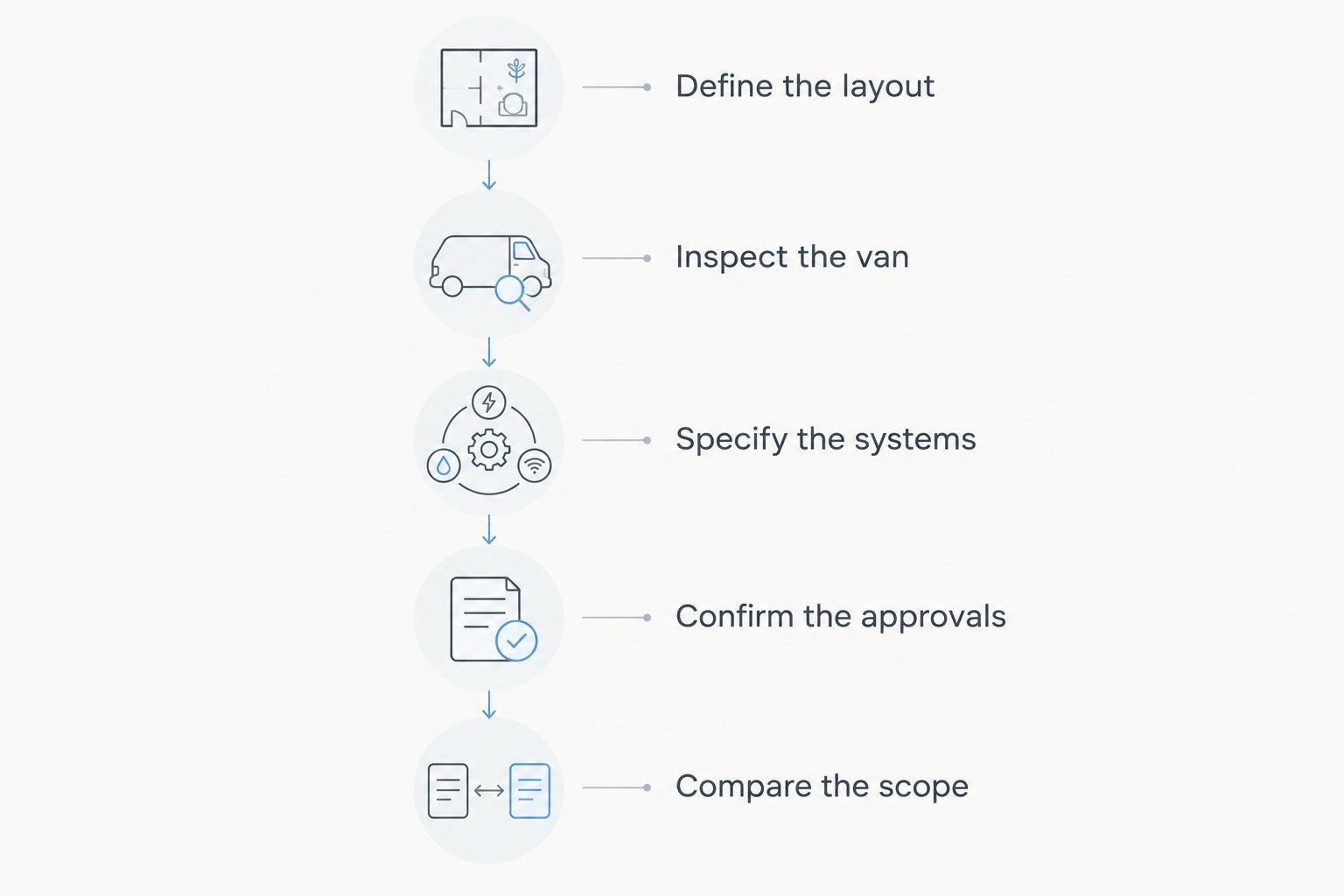
The sequence keeps the quotation tied to a real vehicle and an agreed design. In 2026, ask for the proposal to identify the quote date and the exact specification it covers.
What should you check before adding water and batteries?
Check the van's allowable mass limits and the weight of the completed fit-out. Include passengers, luggage, food, water and other equipment, not just the empty cabinetry.
Fresh water weighs approximately 1 kg per litre. A tank's usable volume therefore adds carrying weight before you count the tank, pump, pipes or mounting hardware.
Battery equipment and cabinets also contribute to the finished vehicle's mass. Use actual component specifications and have the completed vehicle weighed rather than relying on a visual estimate.
Keep service access in the layout. You need to reach electrical protection devices, plumbing connections and mounting points without dismantling unrelated furniture.
Do not approve a layout until its equipment, carrying weight and maintenance access make sense together. A cupboard that looks tidy but blocks essential access is a design problem, not a finishing detail.
Is DIY always the better way to control the budget?
DIY gives you control over purchases and construction choices, but it does not remove specialist installation work or the consequences of mistakes. Compare the whole task, including tools and outsourced services.
Start with a removable mock-up where practical. Test the bed position, door access and storage arrangement before building permanent cabinetry around an untested idea.
Does the conversion quote include buying the HiAce?
A conversion quote includes the van only when the written proposal explicitly says so. Treat the base vehicle as a separate purchase unless the contract identifies the vehicle and its inclusion.
Carbarn's pre-loved vehicle role is separate from the fit-out work. Keep the dealership transaction, mechanical preparation and conversion contract distinct so each party's responsibilities remain clear.
Can you convert the van in stages?
You can stage the work, but design the final system before completing parts that conceal wiring routes or mounting points. Flooring and cabinets can make later installation harder when access has not been planned.
Separate temporary camping equipment from permanent vehicle modifications. Confirm approval and insurance requirements before each permanent stage, rather than waiting until the interior is finished.
FAQ
How much does a Toyota HiAce campervan conversion cost in Australia?
A Toyota HiAce campervan conversion needs a project-specific, itemised quote because the layout and installation scope determine the work. Compare the conversion separately from buying the van, mechanical repairs and applicable approvals.
Is a DIY HiAce conversion better than a professional build?
A DIY HiAce conversion is better suited to buyers who can competently build and coordinate the interior; a professional build suits buyers wanting a defined contracted scope. Both still require appropriate specialist work and checks for the proposed modifications.
Does a campervan conversion quote include the van?
A campervan conversion quote includes the van only if the written proposal explicitly includes it. Ask for the vehicle purchase and fit-out scope to be identified separately.
Can I install the campervan electrical system myself?
Do not treat campervan mains electrical installation as DIY work; use an appropriately licensed electrician. Specify the 12 V and 240 V systems separately and confirm applicable requirements with the installer.
Do I need approval to convert a Toyota HiAce?
Approval requirements depend on your state or territory and the modifications you propose. Check with the relevant road authority before changing seating, altering the structure or proceeding with modifications that affect vehicle classification.
How much weight does fresh water add to a campervan?
Fresh water adds approximately 1 kg per litre, before the tank and plumbing are counted. Include it with passengers, luggage and installed equipment when checking the vehicle's mass limits.
What should I ask a campervan conversion builder?
Ask for an itemised scope covering materials, equipment, labour, exclusions and handover documents. Confirm who handles specialist installations, applicable assessments and changes to the agreed design.
One last thing
Ask how each installed system will be repaired before you approve how it will look. A finished interior should let you reach connections, inspect mounts and remove serviceable equipment without destroying the furniture around it.
For your 2026 Toyota HiAce conversion, put maintenance access into the specification alongside the bed and storage. It is easier to preserve access in the design than to cut it into a completed cabinet.


