A used Toyota HiAce in Australia costs the agreed purchase amount plus any applicable transfer charges, registration expenses and immediate repairs; there is no single figure that covers every van. In 2026, compare vehicles with matching specifications and ask for a written total before treating an advertised amount as your complete purchase budget.
- Used Toyota HiAce price Australia comparisons need matching body styles, specifications, kilometres and condition.
- Toyota HiAce buyers should separate the advertised amount from transfer charges, registration and immediate repairs.
- An independent inspection and a PPSR check answer different questions; neither replaces the other.
- Compare the total needed to put each HiAce into service, not just the seller’s headline figure.
How much does a used Toyota HiAce cost in Australia?
The useful comparison is the total acquisition cost of a specific Toyota HiAce, not a national headline figure. Start with the seller’s written offer, identify what it includes, then add the expenses you must pay before using the vehicle.
A listing is an asking amount, not proof of a completed sale. Keep that distinction clear when you compare advertisements or negotiate with a seller.
Use this breakdown alongside a guide to connecting a PPSR check to your used-car purchase. Ownership-related checks belong before payment, not after you have committed to the van.
| Cost component | What to establish | What it does not tell you |
|---|---|---|
| Agreed purchase amount | The amount recorded in the sale agreement | Whether the van needs repairs |
| Transfer duty and fees | Applicable charges through the relevant state or territory authority | Whether registration is included in the offer |
| Registration | Current status, expiry and any action needed for your transaction | Whether the vehicle is mechanically sound |
| Inspection | Scope of an independent pre-purchase inspection | A guarantee against future faults |
| Immediate maintenance | Written findings and repair quotes | Long-term running costs |
| Insurance | A quote for the exact vehicle and intended use | Whether a different HiAce specification receives the same terms |
| Business or camper fit-out | Work required for your intended use | Whether existing modifications are suitable or approved |
Keep acquisition expenses separate from ongoing ownership expenses. Insurance, servicing, fuel and future repairs still matter, but mixing them into one unexplained total makes comparisons harder.
Why this matters
A HiAce bought for deliveries has a different job from one bought for passenger transport or camping. The wrong configuration can create extra work even when the vehicle itself passes an inspection.
For your 2026 shortlist, write down the job first. Identify what must fit inside, who must travel in it, where it must park and which modifications you actually need.
A tidy interior does not establish mechanical condition. Equally, cosmetic wear alone does not establish that a commercial van is unsuitable; an inspection needs to distinguish appearance from defects that affect safety or use.
Buy the specification you need, with condition you can verify. Do not pay for equipment simply because the seller describes it as valuable.
Compare HiAce configurations before comparing offers
Toyota HiAce advertisements can describe cargo vans, passenger vehicles and converted vehicles. Those uses are not interchangeable, so separate them before judging the asking amounts.
Confirm the exact configuration from the vehicle documents and inspection. A model name alone does not establish dimensions, seating, payload or equipment.
| Configuration | Best for | What to verify | Main limitation |
|---|---|---|---|
| Cargo van | Buyers carrying tools, parcels or equipment | Cargo dimensions, access, load limits and fit-out condition | Cargo space does not establish suitability for passenger transport |
| Passenger configuration | Buyers whose priority is carrying people | Approved seating, seatbelts, access and intended-use requirements | Seats can conflict with the cargo layout you need |
| Camper conversion | Buyers seeking a vehicle with living equipment | Modification records, installation quality and equipment condition | The conversion needs assessment separately from the base vehicle |
Cargo vans: assess the usable working space
For a cargo HiAce, inspect the floor, doors, loading area and any installed shelving. Check whether your equipment fits without blocking access or requiring an unplanned refit.
Use actual measurements rather than photographs. Record dimensions in millimetres and compare them with the items you carry; the exact vehicle matters more than a generic specification found online.
Existing shelving is useful only if it suits your work and is securely installed. A bare van can be the better starting point when someone else’s fit-out would need removal.
Passenger vehicles: verify the seating configuration
For passenger use, confirm the approved seating arrangement and inspect every relevant seatbelt and attachment. Do not assume that seats added by a previous owner establish legal passenger capacity.
Check the requirements for your intended operation with the relevant authority and insurer. Private family use and commercial passenger transport are different enquiries, so explain the actual use rather than simply requesting cover for a van.
Camper conversions: assess two separate assets
A converted HiAce combines a vehicle with installed camping equipment. Inspect both. A sound engine does not establish the condition of wiring, water systems, cabinetry or other conversion work.
Ask for records of the modifications and identify which installations require specialist assessment. Treat an undocumented conversion as something to investigate, not an automatic reason to accept a higher asking amount.
Why used Toyota HiAce offers vary
These factors explain why two advertisements are not automatically comparable. They are assessment criteria, not a formula that produces a reliable valuation without inspecting the vehicles.
- Exact specification: Body configuration, engine, transmission and equipment determine whether two vans belong in the same comparison.
- Recorded kilometres: Read the odometer alongside service records and inspection findings; kilometres alone do not establish condition.
- Maintenance evidence: Invoices and service records help you identify completed work and questions that remain unanswered.
- Physical condition: Mechanical faults, corrosion, accident repairs, tyre condition and damaged fittings require separate assessment.
- Modifications: Shelving, seating and camper equipment need evidence of suitability, workmanship and any applicable approvals.
- Transaction details: Registration, included work, seller type and interstate arrangements affect what you must organise after agreement.
In 2026, keep these fields in a comparison sheet rather than relying on memory. If an advertisement omits a detail, ask the seller before deciding that the vehicle belongs in your shortlist.
Do not automatically equate fewer kilometres with better value. The question is whether the asking amount makes sense alongside the van’s documented history, present condition and suitability for your work.
How do I compare used HiAce offers fairly?
Use the same sequence for every shortlisted vehicle. This stops a clean photograph or an appealing fit-out from distracting you from the underlying checks.
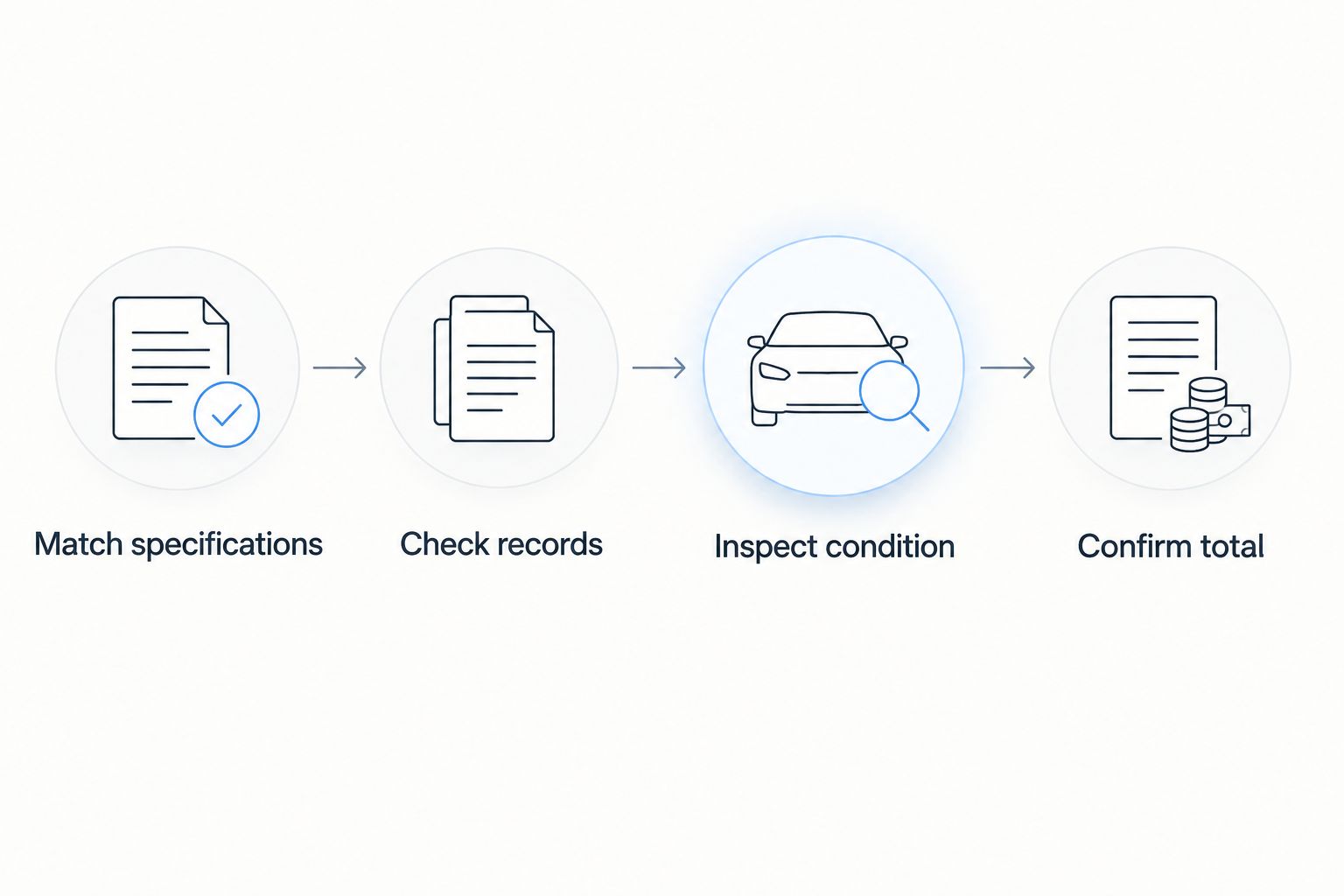
- Match specifications. Confirm configuration, engine, transmission, seating and the physical requirements for your intended use.
- Check records. Examine service evidence, vehicle identity, registration details and the relevant ownership-related checks.
- Inspect condition. Arrange an independent inspection and investigate findings that affect safety, reliability or suitability.
- Confirm total. Obtain a written offer that identifies included items, exclusions and work to be completed before handover.
Keep the sequence intact. Negotiating first can leave you committed to an amount before you know what the van needs.
Build a shortlist that answers the same questions
Compare at least 3 candidate vans using the same fields. This is a practical shortlist size, not a claim about market coverage; add more vehicles if the first group does not contain genuinely comparable examples.
Record kilometres in km, service evidence, registration status, inspection findings and included equipment. Keep screenshots or written offers so that you can distinguish a changed advertisement from your original comparison.
Separate confirmed facts from seller descriptions. A claim such as recently serviced needs supporting records that identify the work, date and vehicle.
Ask for evidence before travelling
Request the vehicle identification details and relevant records before arranging a long trip. Check that the information refers to the vehicle being offered, rather than another van with similar specifications.
Where the vehicle uses a standard VIN, check all 17 characters against the documents and the vehicle itself. Imported vehicles can require additional care with identifiers; use the appropriate official checking process rather than forcing an identifier into an unsuitable form.
Turn inspection findings into decisions
Ask the inspector to distinguish urgent defects, maintenance needs and cosmetic issues. You need findings you can act on, not simply an overall description of the van as good or average.
Get repair quotes for material findings before renegotiating. If an issue cannot be assessed properly, resolve it before payment rather than assuming it will be inexpensive to fix.
Is a cheaper used HiAce always better value?
A cheaper advertised HiAce is not automatically the cheaper vehicle to put into service. Compare necessary repairs, registration arrangements and changes required for your intended use before choosing between offers.
For a 2026 purchase, make a separate list of required work and optional improvements. Required work belongs in the acquisition decision; optional accessories should not disguise an otherwise unsuitable van.
Avoid treating every imperfection as a reason to reject a used commercial vehicle. Focus on what the defect means for safety, function and the work you need the van to do.
Should I buy a used HiAce from a dealer or privately?
Choose the transaction only after checking the vehicle and understanding the sale terms. Consumer protections differ between dealer and private purchases, and applicable requirements depend on the jurisdiction and circumstances.
Carbarn suits buyers who want to deal with a used-car dealership. You can start your dealership enquiry with Carbarn, but a dealership enquiry does not establish that a particular HiAce is suitable or currently offered.
When discussing a used-car purchase with Carbarn, ask for vehicle-specific documents and written terms. Apply the same inspection standard you would use elsewhere; the seller’s business model does not replace evidence about the individual vehicle.
What should I confirm before paying for a HiAce?
Confirm the vehicle’s identity, the seller’s authority to sell and the written agreement. Make sure any promised work or included equipment appears in the agreement rather than remaining a verbal understanding.
A PPSR search and a mechanical inspection serve different purposes. The first addresses specified recorded interests and vehicle information; the second assesses physical condition within the inspection’s scope.
Use this final checklist before authorising payment:
- Match vehicle identifiers across the van, search results and sale documents.
- Confirm registration and transfer requirements with the relevant authority.
- Read the inspection report and resolve significant unanswered questions.
- Confirm which accessories and documents come with the vehicle.
- Record any agreed repairs and the handover arrangements in writing.
- Arrange insurance appropriate to the vehicle and its intended use.
Keep copies of the agreement, reports and correspondence. They establish what you checked and what the seller agreed to provide.
FAQ
What is the average used Toyota HiAce price in Australia?
A national average is not a substitute for a vehicle-specific comparison. Compare current offers for matching configurations, then assess service evidence, condition and the total needed to put each van into use.
Does a used HiAce’s advertised amount include on-road expenses?
Check the written offer to establish which expenses are included. Transfer charges, registration arrangements and other exclusions need to be identified before you compare totals.
Is a high-kilometre Toyota HiAce a bad buy?
High kilometres alone do not establish that a HiAce is a bad buy. Read the odometer alongside maintenance evidence and an independent inspection before deciding.
Is a cargo HiAce better than a passenger HiAce?
A cargo HiAce suits carrying goods, while a passenger configuration suits carrying people. Verify the exact dimensions, load limits or approved seating needed for your use.
Should I get a PPSR check before buying a used HiAce?
Get a PPSR check as part of your pre-purchase checks and confirm that it identifies the correct vehicle. It does not replace an independent mechanical inspection.
How do I check whether a HiAce camper conversion is worth paying for?
Assess the conversion separately from the base vehicle. Check modification records, installation quality and equipment condition, and obtain specialist advice where required.
Can Carbarn help me start a used-car dealership enquiry?
Carbarn is a used-car dealership serving buyers seeking pre-loved vehicles. Ask about the vehicle relevant to your needs and request its documents and written sale terms before deciding.
One last thing
Before buying in 2026, test the van against the least flexible part of your routine: the equipment it must carry, the access it must provide or the parking space it must enter. Measure that constraint first.
A vehicle that cannot do your required job is the wrong purchase, regardless of the negotiated amount. Confirm suitability before spending time negotiating extras.