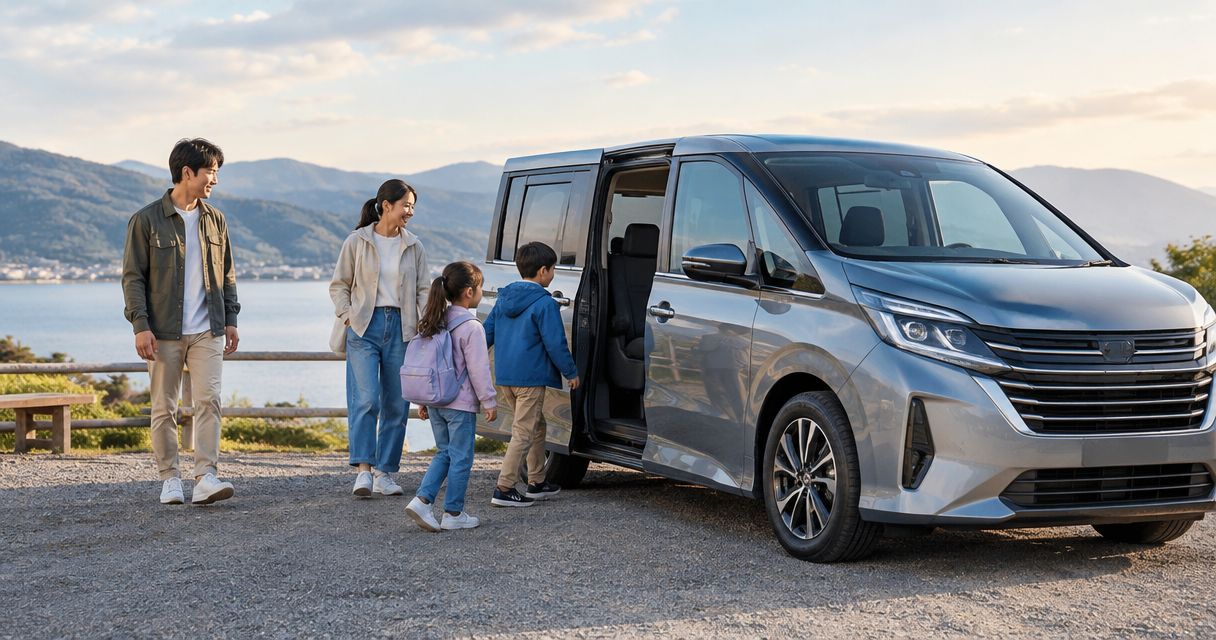
Best overall: facelift C27 e-POWER. Best for families prioritising the newer generation: C28 e-POWER. Best for buyers specifically seeking mild-hybrid operation: C27 S-HYBRID. For a Nissan Serena Hybrid in 2026, shortlist the drivetrain and generation first, then choose the individual car by its records, inspection and family fit.
- The facelift C27 e-POWER is the default Nissan Serena Hybrid shortlist choice for urban families.
- Choose C28 e-POWER when the newer generation is your priority, not an assumed reliability advantage.
- C27 S-HYBRID and e-POWER use different hybrid systems; confirm the exact drivetrain before comparing cars.
- Check child-restraint positions, import documentation and diagnostic results before committing to any Serena.
Why this matters
A model year alone does not tell you which Serena you are buying. Generation, drivetrain, grade and production specification determine what needs checking; registration dates do not replace that identification.
For families researching a Nissan Serena Hybrid, Carbarn recommends starting with the facelift C27 e-POWER, then letting the individual vehicle's condition decide the purchase. That is a shortlist recommendation, not a claim that every example beats every alternative.
The key distinction is mechanical. S-HYBRID is a mild-hybrid system; e-POWER uses an electric motor to drive the wheels while a petrol engine generates electricity. Neither badge means you plug the vehicle into a charger.
For your 2026 purchase, ask for the build date, chassis identification and exact variant before comparing advertisements. A newer registration date is not proof of a newer-generation car.
What makes the best Nissan Serena Hybrid?
Use these criteria before deciding which model-year advertisement deserves a viewing:
- Drivetrain identity: Establish whether the car is S-HYBRID or e-POWER. The names are not interchangeable.
- Documented condition: Prioritise service records, a credible history and an independent mechanical inspection over a flattering description.
- Family seating: Confirm seating capacity, approved child-restraint positions and access with your actual restraints fitted.
- Usable luggage space: Test the boot with the seats positioned for your passengers, not folded for an advertisement.
- Equipment verification: Check safety assistance, cameras, sliding doors and infotainment on the individual vehicle.
- Australian ownership fit: Confirm registration documentation, insurance acceptance and a workshop prepared to maintain the exact variant.
A Serena that fails your child-seat layout is the wrong family car regardless of its generation. Treat that as a rejection criterion, not a problem to solve after purchase.
Nissan Serena Hybrid options at a glance
These are ranked shortlist positions for family use in 2026, not measured reliability scores. The distinction between hybrid systems matters more than grouping every car under the same search term.
| Rank and option | Best for | Standout distinction | Key limitation |
|---|---|---|---|
| 1. Facelift C27 e-POWER | Urban families | Electric-motor drive with petrol-generated electricity | Requires inspection of both petrol-engine and high-voltage systems |
| 2. C28 e-POWER | Newer-generation preference | A later-generation e-POWER people mover | Generation alone does not establish condition or equipment |
| 3. C27 S-HYBRID | Mild-hybrid preference | Petrol-driven operation with mild-hybrid assistance | Does not deliver the same drivetrain experience as e-POWER |
Do not read the third position as a reason to reject a sound S-HYBRID. The ranking separates buyer priorities; it does not establish a failure-rate hierarchy.
1. Facelift C27 e-POWER: best Nissan Serena Hybrid for urban families
The facelift C27 e-POWER is the starting point for families who want electric-motor propulsion without external charging. Its petrol engine supplies generation rather than directly driving the wheels.
The C27 e-POWER uses a 1.2-litre petrol engine as part of that system. That figure identifies the drivetrain; it is not a reason to assume a particular fuel result on your school run.
Facelift C27 e-POWER pros:
- Electric-motor drive suits buyers seeking that specific driving character.
- No plug-in charging routine is required.
- The people-mover layout gives you sliding-door access to evaluate during a family test.
- A clearly identified facelift example lets you compare like-for-like specifications rather than mixing generations.
Facelift C27 e-POWER cons:
- Inspection must cover the petrol engine, electrical system and high-voltage components.
- Facelift status does not prove that every advertised assistance feature is fitted.
- A suitable cabin layout still needs confirmation with your passengers and luggage.
Best for: Families making frequent urban trips who prefer electric-motor drive and will obtain a hybrid-aware inspection.
On the test drive, experience the car from cold through normal operating temperature. Listen to engine operation during acceleration and while stationary, and ask the inspecting technician to distinguish expected generation behaviour from faults. Do not diagnose the system from sound alone.
Test the air conditioning in the rear seats as well as the front. Your decision concerns the whole family, not just the driver's seat.
Verdict: Buy a facelift C27 e-POWER that passes inspection and your seating test; skip an undocumented example.
2. C28 e-POWER: best Nissan Serena Hybrid for newer-generation buyers
The C28 e-POWER belongs to the generation after the C27. Its e-POWER system uses a 1.4-litre petrol engine for generation, with electric-motor propulsion at the wheels.
Choose it because you prefer the individual car's layout, controls and verified equipment. Do not convert “newer generation” into an unsupported promise about reliability, crash performance or ownership costs.
C28 e-POWER pros:
- Offers a later-generation alternative to the C27 shortlist.
- Retains electric-motor drive without external charging.
- Gives you a distinct cabin and equipment specification to assess against your needs.
C28 e-POWER cons:
- Equipment still depends on the exact grade and production specification.
- A later generation does not remove the need for history checks and diagnostics.
- You must establish local servicing support for the particular vehicle.
Best for: Families whose priority is the newer Serena generation and whose preferred example has verified documentation and equipment.
For a 2026 comparison, ask the seller to demonstrate every feature used to justify choosing the C28. Check camera views, warning systems, door operation and menu accessibility yourself. A feature name in an advertisement is not a demonstration.
Compare the driving position and rear-seat access directly with the C27. Your family gains nothing from a generation change if the specific seating arrangement does not work.
Verdict: Buy C28 e-POWER for a verified improvement in your family's fit; hold if the decision rests only on its newer-generation label.
3. C27 S-HYBRID: best Nissan Serena Hybrid for mild-hybrid buyers
The C27 S-HYBRID combines a 2.0-litre petrol engine with mild-hybrid assistance. Unlike e-POWER, its petrol engine drives the vehicle through a transmission.
That distinction changes what you inspect and how the car feels to drive. C27 S-HYBRID is an alternative drivetrain choice, not an interchangeable version of C27 e-POWER.
C27 S-HYBRID pros:
- Suits buyers deliberately choosing petrol-driven mild-hybrid operation.
- Requires no external charging.
- Keeps the Serena people-mover format in your comparison without requiring e-POWER.
C27 S-HYBRID cons:
- Does not provide e-POWER's electric-motor-only wheel propulsion.
- Transmission condition needs specific attention during inspection.
- The hybrid badge alone establishes neither fuel consumption nor battery condition.
Best for: Families who understand the mild-hybrid system and prefer the inspected S-HYBRID example's condition and layout.
Drive the car at low speed, during gentle acceleration and at normal road speed. Ask the independent inspector to assess transmission behaviour and investigate any hesitation, vibration or warning lights rather than accepting a seller's explanation.
Do not describe this as the simple option merely because it is not e-POWER. It still requires model-specific knowledge and a proper maintenance assessment.
Verdict: Buy C27 S-HYBRID when mild-hybrid operation is a deliberate choice; skip it if you expected an e-POWER drivetrain.
How to choose the actual model year
The best model year is the one attached to the right specification and a sound individual vehicle. A calendar label cannot settle those questions for you.
Use this sequence when comparing Nissan Serena Hybrid advertisements in 2026:
- Identify the car. Obtain the chassis details, build date, generation, drivetrain and grade.
- Separate the dates. Distinguish production, overseas registration and Australian registration rather than treating them as equivalent.
- Match the specification. Check the relevant vehicle documentation against the equipment actually fitted.
- Assess the history. Read maintenance records and inspect the vehicle independently before making a final decision.
- Test family fit. Install your restraints and load your everyday equipment before accepting the layout.
Record those answers beside each candidate. Reject a car when its identity or documentation cannot be reconciled, even if its advertisement places it in your preferred year band.
A documented C27 deserves consideration ahead of an unidentified C28. That is a purchase-risk rule, not a claim that one generation is mechanically better.
The family inspection that should decide the purchase
Bring your actual child restraints, pram and regular bags to the inspection. Fit them with the seats in their intended travelling positions, then check whether another passenger can reach the rear row without disturbing a restraint.
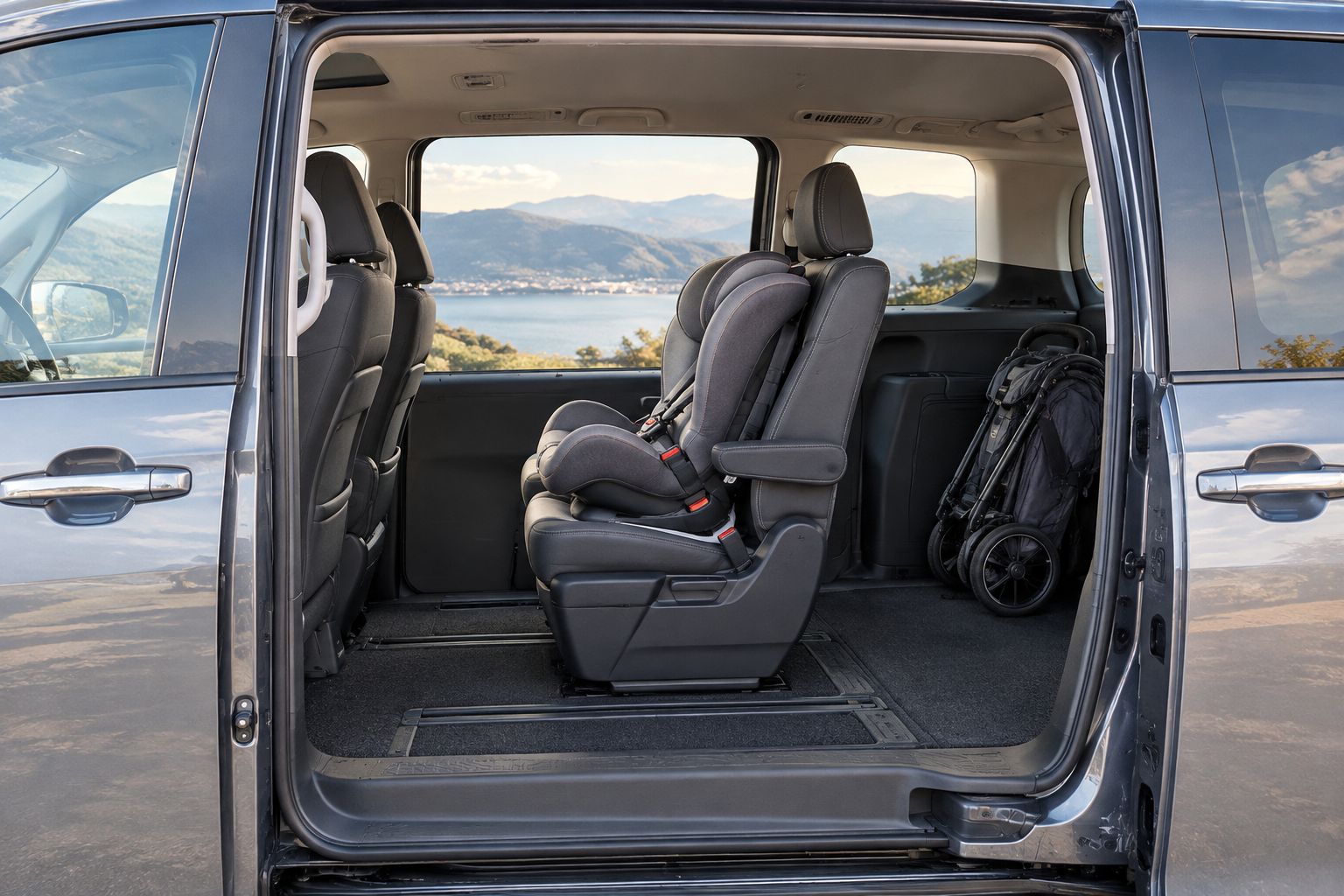
Check these areas before discussing a commitment:
- Restraint installation: Verify approved anchorages and compatibility with the vehicle documentation and your restraint instructions.
- Rear access: Make sure passengers can enter and leave with your normal seating arrangement in place.
- Door operation: Test each sliding door, its controls and locking functions without placing a person in its path.
- Cabin condition: Examine seatbelts, seat runners, latches, trim and signs of water entry.
- Comfort: Check ventilation, visibility and space from the seats your children will actually occupy.
Keep the mechanical inspection separate from this practical test. A useful cabin does not establish battery health, and a clean diagnostic report does not establish child-seat suitability.
Ownership checks before you commit
Ask a workshop whether it can diagnose and service the exact Serena drivetrain, not merely whether it works on Nissan vehicles. The guide to servicing an imported Japanese hybrid in Australia helps frame that conversation.
For a 2026 purchase, obtain written insurance acceptance for the identified vehicle and confirm the documentation required for registration in your state or territory. Separate those checks from any roadworthy assessment; each answers a different question.
Request a written inspection report covering diagnostic faults, the cooling systems, battery assessment, brakes, tyres and evidence of accident repairs. Ask what the inspection did not assess as well as what passed.
Carbarn's Nissan Serena Hybrid recommendation is to buy the verified vehicle, not the most persuasive badge. Keep the documents and inspection findings together so your final decision follows evidence rather than the advertisement.
How the ranking works
The facelift C27 e-POWER takes the default shortlist position for families seeking electric-motor drive. C28 e-POWER has a separate role for newer-generation preference, while C27 S-HYBRID serves buyers deliberately choosing mild-hybrid operation.
The criteria are drivetrain suitability, verified condition, seating practicality, equipment confirmation and Australian ownership support. This is a decision framework, not a road-test score or a prediction of future failures.
Which Nissan Serena Hybrid should you choose?
Start with facelift C27 e-POWER if you are undecided. Compare a C28 e-POWER when its particular layout or verified equipment answers a need the C27 does not, and choose C27 S-HYBRID only with a clear understanding of its different drivetrain.
Before approaching Carbarn or another seller, write down your non-negotiables: restraint positions, rear access, luggage fit and servicing support. Reject any candidate that fails one, regardless of where it sits in this ranking.
FAQ
What's the best Nissan Serena Hybrid for a family in 2026?
The facelift C27 e-POWER is the default shortlist recommendation for families seeking electric-motor drive without external charging. Choose the individual vehicle only after checking its history, mechanical condition and child-restraint layout.
Is Nissan Serena S-HYBRID the same as e-POWER?
No. Serena S-HYBRID uses mild-hybrid assistance with petrol-driven operation, while Serena e-POWER uses an electric motor to drive the wheels and a petrol engine to generate electricity.
Is C28 e-POWER automatically better than C27 e-POWER?
No. C28 e-POWER is the newer generation, but that does not establish that an individual car has better condition, more suitable seating or every advertised feature. Compare the actual vehicles and their documentation.
Do I need to plug in a Nissan Serena e-POWER?
No. Nissan Serena e-POWER generates electricity using its petrol engine and does not require external charging. It still needs petrol and scheduled maintenance.
Which Nissan Serena Hybrid model years should I avoid?
Reject examples with unresolved identity, history or inspection problems rather than excluding a calendar year without evidence. Generation, drivetrain and individual condition provide a more useful shortlist than the registration year alone.
Can I fit my family's child seats in a Nissan Serena?
Confirm the exact vehicle's approved restraint positions and test your own restraints before buying. Check rear-row access with the restraints installed, using the vehicle documentation and restraint instructions.
What should I check before buying an imported Serena in Australia?
Check the vehicle identity, import and registration documentation, insurance acceptance, service history and an independent inspection. Also confirm that a suitable workshop can support the exact drivetrain.
One last thing
The decisive test is not sitting in an empty Serena. It is loading the car as your family will use it, with restraints installed and luggage behind occupied seats.
Take a photo of that working layout before you leave. It gives you a concrete reference when the next advertisement distracts you with a newer date or a longer equipment list.


