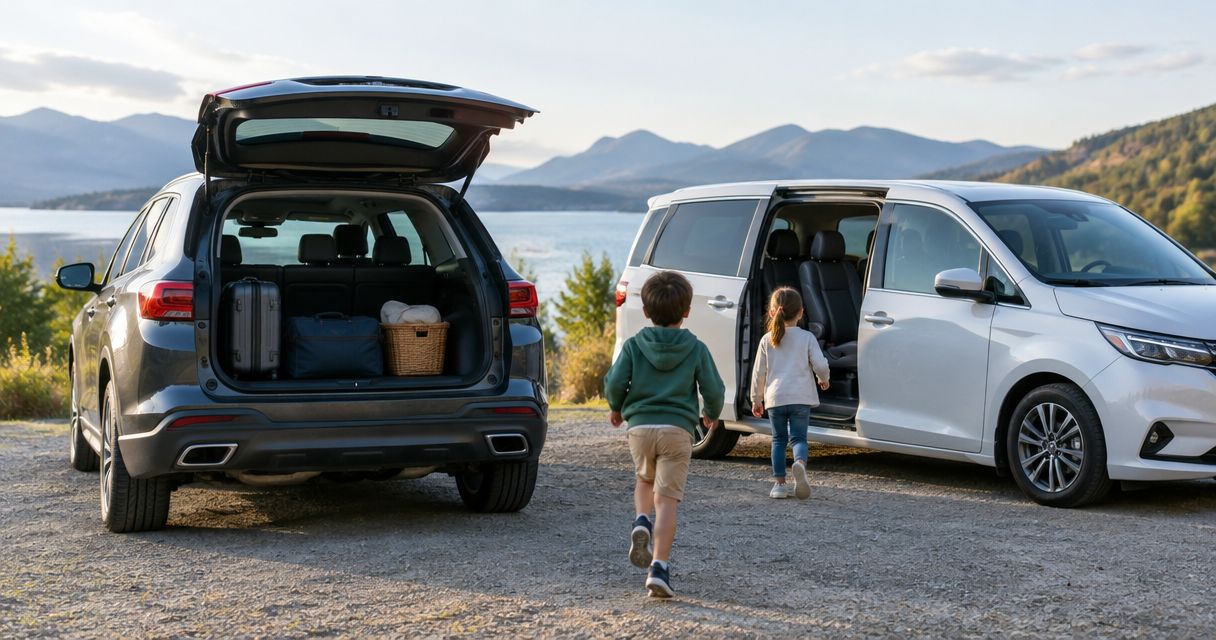
A used 7-seater SUV is not automatically better than a people mover: choose the SUV when its verified driving and towing capabilities match your needs, and prioritise a people mover when passenger access and regular third-row use matter most. Either choice must pass a hands-on test with your child seats, passengers and luggage. In 2026, the condition and layout of the actual used vehicle matter more than its category badge.
- Is a 7 seater SUV better than a people mover? Not automatically; test passenger access and luggage space first.
- A used 7-seater SUV suits families whose driving requirements justify its specific capabilities.
- A people mover deserves priority when frequent third-row use and easy passenger access drive your choice.
- Carbarn's used-car focus suits families shopping for a pre-loved vehicle.
Why this matters
Seven seats do not guarantee room for your family and its luggage at the same time. The important question is whether everyone can enter, sit comfortably, wear their seatbelt correctly and travel with the bags you actually carry.
If you are considering a pre-loved vehicle through Carbarn, start with your seating requirements rather than a favourite body shape. For your 2026 shortlist, separate everyday necessities from occasional wishes: daily child-seat access deserves more weight than a trip you have not planned.
Is a used 7-seater SUV better than a people mover for families?
A people mover is the stronger starting point for passenger-focused families; a used 7-seater SUV makes sense when a particular vehicle also meets requirements beyond carrying people. Neither category wins without checking the actual seating layout, equipment and condition.
Use this comparison to decide what to inspect first. These are selection criteria, not guarantees about every vehicle in either category.
| Option | Best for | Main advantage to look for | Main limitation to check |
|---|---|---|---|
| Used 7-seater SUV | Families balancing passenger needs with verified towing or rough-road requirements | A vehicle that combines suitable seating with the capabilities your trips require | Third-row access, passenger comfort and luggage space with every required seat occupied |
| Used people mover | Families who regularly carry passengers across all seating rows | A passenger-focused layout with usable access and convenient door operation | Whether the exact vehicle meets parking, towing and road requirements outside routine passenger transport |
Do not treat an SUV badge as proof of four-wheel drive, suitable towing capacity or off-road ability. Equally, do not assume a people mover has sliding doors, removable seats or enough space behind its rear row. Check each feature on the vehicle you are buying.
What should decide the comparison?
Your normal passenger arrangement should decide the first shortlist. A household travelling with 2 adults and children needs to test a different seating arrangement from a household regularly carrying additional adult relatives.
Write down who sits where before visiting a vehicle. Include restraints, mobility needs and the luggage you cannot leave behind; a nominal 7-seat layout is useful only if those requirements fit together.
Used 7-seater SUV: best for mixed driving requirements
Choose a used 7-seater SUV when the specific vehicle solves a driving requirement as well as a seating requirement. Examples include a verified towing need or routes that require capabilities established by the vehicle's specifications and condition.
The benefit is not simply a higher driving position. It is finding one vehicle that accommodates your family while meeting the other demands you can clearly identify.
The drawback is that you still need to prove the passenger arrangement works. A folding third row does not tell you whether an adult can sit there comfortably, whether a child can reach it safely or whether luggage fits behind it.
When an SUV deserves priority
Prioritise an SUV if your shortlist includes vehicles with documented capabilities you actually need. Check the owner's manual and vehicle-specific information, then have the relevant mechanical condition assessed.
For towing, confirm the vehicle's limits, the trailer requirements and the effect of passengers and luggage on loading. A towbar alone does not establish that your planned combination is suitable.
For unsealed-road use, inspect the particular vehicle rather than assuming all SUVs offer the same clearance, tyres or drivetrain. If those requirements disappear when you describe your real weekly routine, return passenger comfort to the top of the list.
Used people mover: best for regular passenger transport
Prioritise a used people mover when carrying your family comfortably is the vehicle's main job. Test how its seating arrangement handles school runs, child restraints, visiting relatives and trips with the rear seats occupied.
Look for usable door openings, a practical route to the rear row and enough space to help children buckle up. Where sliding doors are fitted, check their operation and whether they make entry easier in your usual parking spaces.
The limitation is that a passenger-friendly cabin does not settle every other requirement. You still need to check overall dimensions, driving visibility, towing suitability and maintenance condition.
When a people mover deserves priority
Put a people mover first when someone regularly occupies the rear row and access is a daily task rather than an occasional inconvenience. Have that passenger try the seat, not just look at it.
Families comparing different cabin arrangements can use the guide to used Japanese people movers as a starting point for further research. Treat any model shortlist as provisional until the exact vehicle passes your family-fit test.
Do not assume that a larger-looking cabin has the right restraint positions. Check approved mounting locations, the manufacturer's instructions and the practical access route with your restraints installed.
Why the better family choice varies
These factors change which vehicle works better for you. None can be settled by counting seats alone.
- Passenger frequency: Regular rear-row use makes access and comfort central; occasional use changes how much inconvenience you will accept.
- Child-seat arrangement: Installed restraints can affect access to other seats. Check permitted seating positions and the movement needed to reach the rear row.
- Luggage requirements: Assess the boot with every seat you need in its travelling position, not with the rear row folded away.
- Driving requirements: Towing, unsealed roads and long-distance travel require checks on the particular vehicle, not assumptions about its category.
- Parking conditions: Door operation, vehicle dimensions and sightlines need to work in your driveway and usual car parks.
- Used-vehicle condition: Service history, mechanical condition and working cabin equipment remain separate from whether the layout suits your family.
For a 2026 purchase, weight these factors according to your actual routine. A feature used every school day deserves more weight than a feature that only sounds useful.
How do you test a used family car before buying?
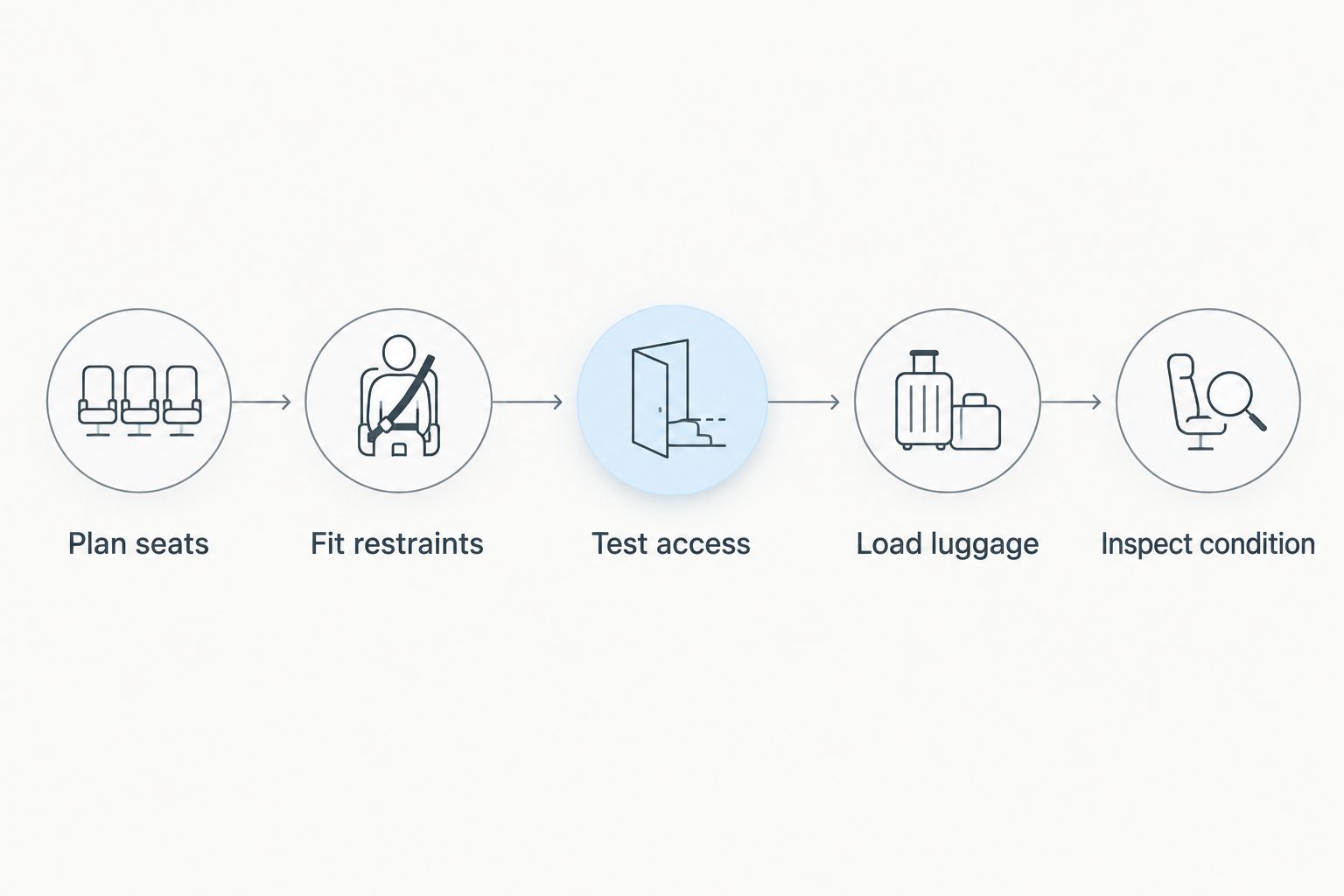
Run the same test on the SUV and the people mover. Changing the test between vehicles makes it harder to identify which one genuinely works better.
1. Plan seats
Map your normal occupants across the vehicle's 3 seating rows. Include who needs a child restraint, who needs assistance getting in and who must be able to exit independently.
Then map the busiest realistic trip. Do not select a vehicle solely around an unusual passenger load, but make sure the arrangement you regularly need is workable.
2. Fit restraints
Bring the child restraints you intend to use, with the seller's permission. Follow both the restraint instructions and the vehicle manufacturer's instructions; seek help from an accredited fitter if you cannot confirm a safe installation.
Check anchor locations and whether an occupied or installed restraint prevents the seat movement needed for access. Do not count an inconvenient workaround as an acceptable everyday solution.
3. Test access
Ask rear-row passengers to enter and exit while the other required seats remain in their travelling positions. If the arrangement relies on folding a seat, test whether that remains possible with your planned restraint installation.
Adults should try the rear seats themselves. Check headroom, knee clearance, foot space, seatbelt positioning and the effort needed to get out.
4. Load luggage
Bring your pram, regular bags and any bulky item you routinely carry. Load them with the seats in the configuration you will actually use.
Keep sightlines clear and follow the manufacturer's guidance for securing luggage. If essential gear only fits when a required seat is folded, that vehicle has not passed the test.
5. Inspect condition
Arrange an independent pre-purchase inspection and review the service records. Ask for assessment of the mechanical systems relevant to the exact vehicle, including any specialised drivetrain equipment it has.
Check cabin features too: seat folding and locking mechanisms, belts, door operation and air conditioning. A comfortable layout is not enough if the features you rely on do not work properly.
Record the result of each check separately for each vehicle. For your 2026 comparison, use pass, fail or needs checking rather than a vague impression that one car feels bigger.
Is a people mover better if children use the third row daily?
A people mover deserves first consideration when children use the third row daily, provided the actual restraint and access arrangement works. The deciding issue is whether you can safely manage those seats without disrupting the rest of the cabin.
Test school-run tasks in sequence: enter, reach the seat, fasten the restraint or belt, load bags and exit. Reject either vehicle if that routine depends on moving an occupied restraint or using a seating arrangement the manufacturer does not permit.
Is a 7-seater SUV better for occasional extra passengers?
A 7-seater SUV is a reasonable choice for occasional extra passengers if its rear seats fit those passengers and its everyday layout meets your needs. Occasional use does not excuse unsuitable seatbelts, inadequate restraint provision or an unusable entry route.
Also test the luggage arrangement on those occasional full-house trips. An extra seat is not much help if the person using it leaves no workable space for essential bags.
Which is better for family holidays with luggage?
The better holiday vehicle is the one that carries your passengers and luggage together in the configuration you need. Neither a people mover label nor an SUV label proves that capacity.
Recreate your holiday load before buying, including bulky equipment and the seats you expect to occupy. If you plan to tow, confirm the vehicle and trailer requirements separately rather than using towing to excuse an unsuitable cabin.
How should you choose between two used vehicles?
Choose the vehicle that passes your non-negotiable checks, then compare condition and ownership requirements. A tidy example of the wrong layout is still the wrong family car.
Ask for the exact vehicle's service history, an independent inspection and the information needed to confirm its equipment. Check registration details and complete the appropriate vehicle-history enquiries before committing.
Carbarn is a used-car dealership for families seeking a pre-loved vehicle. That purchase route does not replace vehicle-specific checks: your seating test, inspection and paperwork review remain essential.
Start your used-car search
Keep your passenger, restraint and luggage requirements beside you while comparing vehicles.
FAQ
Is a 7 seater SUV better than a people mover for a large family?
A 7-seater SUV is not automatically better for a large family. Prioritise the vehicle that accommodates your actual passengers, approved child-restraint arrangement and luggage with every required seat in use.
What's better when we use the third row every day?
A people mover deserves first consideration when you use the third row every day. Confirm that the exact vehicle provides workable access and suitable restraint positions before choosing it.
Can I fit child seats in every seat of a 7-seater?
Do not assume every seat in a 7-seater permits your child restraint. Check the vehicle manufacturer's instructions, approved anchorage positions and the restraint instructions for each planned installation.
Do all 7-seater SUVs have four-wheel drive?
No, a 7-seater SUV badge does not establish four-wheel drive. Verify the drivetrain and other required capabilities on the exact vehicle before buying.
Should I test the boot with the third row folded?
Test the boot with every seat you need in its travelling position. A folded-row demonstration does not establish whether the vehicle carries your passengers and essential luggage together.
Is a used people mover always easier to park?
No, a used people mover is not automatically easier to park. Check the vehicle's dimensions, visibility and door operation in the types of spaces you normally use.
What should I check before buying a used family car in 2026?
Before buying a used family car in 2026, test passenger access, restraint fit and luggage space, then check its condition and paperwork. Arrange an independent inspection and review the exact vehicle's service history.
One last thing
The most useful comparison happens with the seats occupied, not folded flat. A spacious-looking display configuration can hide the compromise that appears as soon as your family gets in.
Before your 2026 purchase, repeat the busiest ordinary journey: your passengers, your restraints and your bags. If either vehicle fails that rehearsal, remove it from the shortlist regardless of how appealing the category looks.