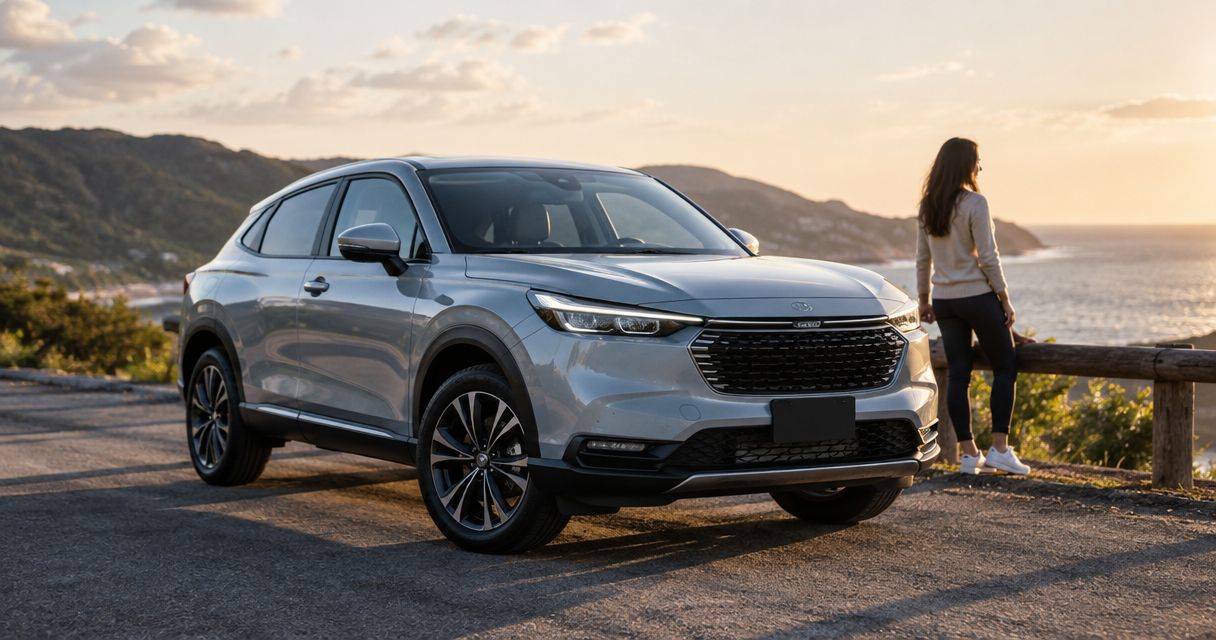
Best overall: the second-generation Honda Vezel e:HEV. Best for buyers who prefer a conventional petrol drivetrain: the first-generation petrol Vezel. Best for buyers specifically seeking the earlier hybrid: the facelift first-generation Vezel Hybrid. For Australian buyers in 2026, generation, drivetrain and documented condition are more useful filters than the advertised model year alone.
- The second-generation Honda Vezel e:HEV is the default shortlist choice for hybrid SUV buyers.
- Choose a first-generation petrol Vezel if you want to avoid a hybrid drivetrain.
- The facelift first-generation Vezel Hybrid needs specific dual-clutch transmission and battery checks.
- Confirm build details, Australian compliance, insurance acceptance and service support before committing.
Why this matters
A Honda Vezel badge does not identify a single mechanical package. The earlier hybrid uses Honda's i-DCD system with a dual-clutch transmission; the second-generation e:HEV uses a different hybrid architecture. Treating them as interchangeable makes the model-year comparison misleading.
Australian buyers also need to separate the car's build date from its Japanese first-registration date and Australian registration history. A listing's year is a starting point, not proof of generation, equipment or import eligibility.
Carbarn's Honda Vezel recommendation for Australian hybrid SUV buyers is to start with the second-generation e:HEV, then verify the individual car. You can begin your broader pre-loved car search with Carbarn, but use the checks below to assess each vehicle rather than buying on the badge.
What makes the best Honda Vezel?
The best Honda Vezel for you matches your driving and comes with evidence you can verify. For a 2026 purchase, prioritise these criteria before comparing trim badges:
- Drivetrain fit: identify petrol, i-DCD hybrid or e:HEV before judging the car's suitability.
- Documented condition: favour consistent servicing, traceable identity and an independent inspection over cosmetic presentation.
- Transmission behaviour: assess the earlier hybrid's dual-clutch operation separately from petrol CVT and e:HEV operation.
- Confirmed safety equipment: verify the exact car's systems rather than copying specifications from another market or grade.
- Australian ownership support: confirm compliance, registration requirements, insurance and access to a workshop familiar with the drivetrain.
- Everyday usability: test your seating position, rear-seat access, luggage and parking manoeuvres in the actual vehicle.
A newer build does not cancel accident damage, neglected servicing or unresolved warning lights. Conversely, a well-documented older example deserves consideration when it fits your needs and passes inspection.
Honda Vezel options at a glance
| Ranked option | Best for | Standout distinction | Key limitation |
|---|---|---|---|
| Second-generation Honda Vezel e:HEV | Buyers choosing a hybrid SUV for mixed everyday driving | Honda's later two-motor hybrid architecture | Exact equipment and Australian ownership support still require verification |
| First-generation Honda Vezel petrol | Buyers who specifically want a non-hybrid drivetrain | Petrol engine paired with a CVT | Does not provide the hybrid system's electric-drive operation |
| Facelift first-generation Honda Vezel Hybrid | Buyers deliberately choosing the earlier hybrid format | Compact SUV package with i-DCD hybrid drive | Dual-clutch transmission and hybrid condition need targeted assessment |
These are buying priorities, not measured reliability rankings. No generation earns a pass without a vehicle-specific inspection, and a higher trim does not compensate for missing maintenance evidence.
1. Second-generation Honda Vezel e:HEV: best for hybrid buyers
The second-generation Honda Vezel e:HEV is the default place to start if you want a hybrid SUV. Its 1.5-litre petrol engine works with Honda's two-motor hybrid system, rather than the earlier Vezel Hybrid's dual-clutch arrangement.
That distinction matters more than a seller calling both vehicles automatic hybrids. You are comparing different ways of delivering drive, with different inspection requirements and driving characteristics.
For a 2026 shortlist, identify the e:HEV drivetrain from the vehicle's documentation, not an exterior badge alone. Then test the actual car on suburban roads, at parking speeds and during sustained acceleration.
Second-generation Honda Vezel e:HEV pros:
- Uses a different hybrid architecture from the earlier i-DCD Vezel.
- Suits buyers who specifically want electric-motor-assisted everyday driving.
- Provides a clear generation-based starting point for comparing hybrid examples.
Second-generation Honda Vezel e:HEV cons:
- Hybrid diagnostics still require suitable equipment and expertise.
- Japanese-market equipment needs checking against the individual car.
- A later generation is not evidence of battery health or careful maintenance.
Best for: buyers who want a hybrid first and will verify import documentation, service access and condition before purchase.
Ask the inspecting workshop to check stored faults and hybrid operation, not simply confirm that the dashboard is clear. Test the air conditioning, cameras, infotainment and driver-assistance functions fitted to the car; an attractive trim description is not a functional test.
Verdict: Buy the second-generation Honda Vezel e:HEV when the inspection and ownership checks support it.
2. First-generation Honda Vezel petrol: best for non-hybrid buyers
The first-generation petrol Honda Vezel is the better starting point if avoiding a hybrid drivetrain is your main requirement. Its 1.5-litre petrol engine uses a continuously variable transmission, commonly called a CVT.
Removing the hybrid system from your shortlist removes hybrid-specific inspection questions. It does not remove the need to inspect the transmission, cooling system, engine or service history.
Choose the petrol version because it matches your ownership preference, not because every petrol car is automatically more dependable. Condition remains specific to the vehicle.
First-generation Honda Vezel petrol pros:
- Avoids a high-voltage hybrid battery and hybrid-drive components.
- Offers a clear alternative for buyers who do not want hybrid ownership.
- Allows the inspection to focus on the petrol engine, CVT and general vehicle condition.
First-generation Honda Vezel petrol cons:
- Does not offer the hybrid versions' electric-drive operation.
- CVT servicing and operation still need careful assessment.
- Earlier vehicles require particular attention to age-related wear and maintenance gaps.
Best for: buyers who value a non-hybrid configuration more than having the later hybrid system.
On the test drive, check engagement from rest, progressive acceleration and response when warm. Ask the workshop to distinguish normal CVT behaviour from faults rather than judging it against a conventional stepped automatic.
Inspect consumables and underbody condition alongside the drivetrain. Tyres, brakes, suspension wear and signs of poor repairs affect your ownership experience regardless of the model year printed in the advertisement.
Verdict: Buy the first-generation Honda Vezel petrol if non-hybrid ownership is your priority and the CVT checks out.
3. Facelift first-generation Vezel Hybrid: best for earlier-hybrid buyers
The facelift first-generation Honda Vezel Hybrid belongs on a narrower shortlist: buyers who understand the earlier hybrid system and deliberately want that version. Its i-DCD drivetrain combines a 1.5-litre petrol engine with an electric motor and a 7-speed dual-clutch transmission.
A facelift does not turn this vehicle into an e:HEV. That is the essential distinction when you compare advertisements in 2026, especially when sellers use broad descriptions such as late model or updated hybrid.
Facelift first-generation Honda Vezel Hybrid pros:
- Combines a petrol engine and electric assistance in the earlier Vezel body format.
- Offers a distinct alternative for buyers who prefer its driving characteristics.
- Can be assessed through targeted transmission, hybrid and maintenance checks.
Facelift first-generation Honda Vezel Hybrid cons:
- Dual-clutch operation requires specific attention during inspection.
- A facelift badge does not prove recall completion or good maintenance.
- Battery condition cannot be established from mileage or a brief test drive alone.
Best for: informed buyers who have access to a workshop familiar with Honda's i-DCD drivetrain.
Test low-speed manoeuvring, reversing and repeated take-offs, both before and after the car warms up. Report shuddering, hesitation, unusual noises or warning messages to the inspecting technician rather than accepting an unsupported explanation that they are normal.
Check recall status against the car's Japanese identity details through the relevant manufacturer process. Ask for evidence of completed work where applicable; neither a later build nor an Australian registration document answers that question by itself.
Verdict: Hold the facelift first-generation Honda Vezel Hybrid until drivetrain condition and recall status are verified.
How to turn an advertised year into a buying decision
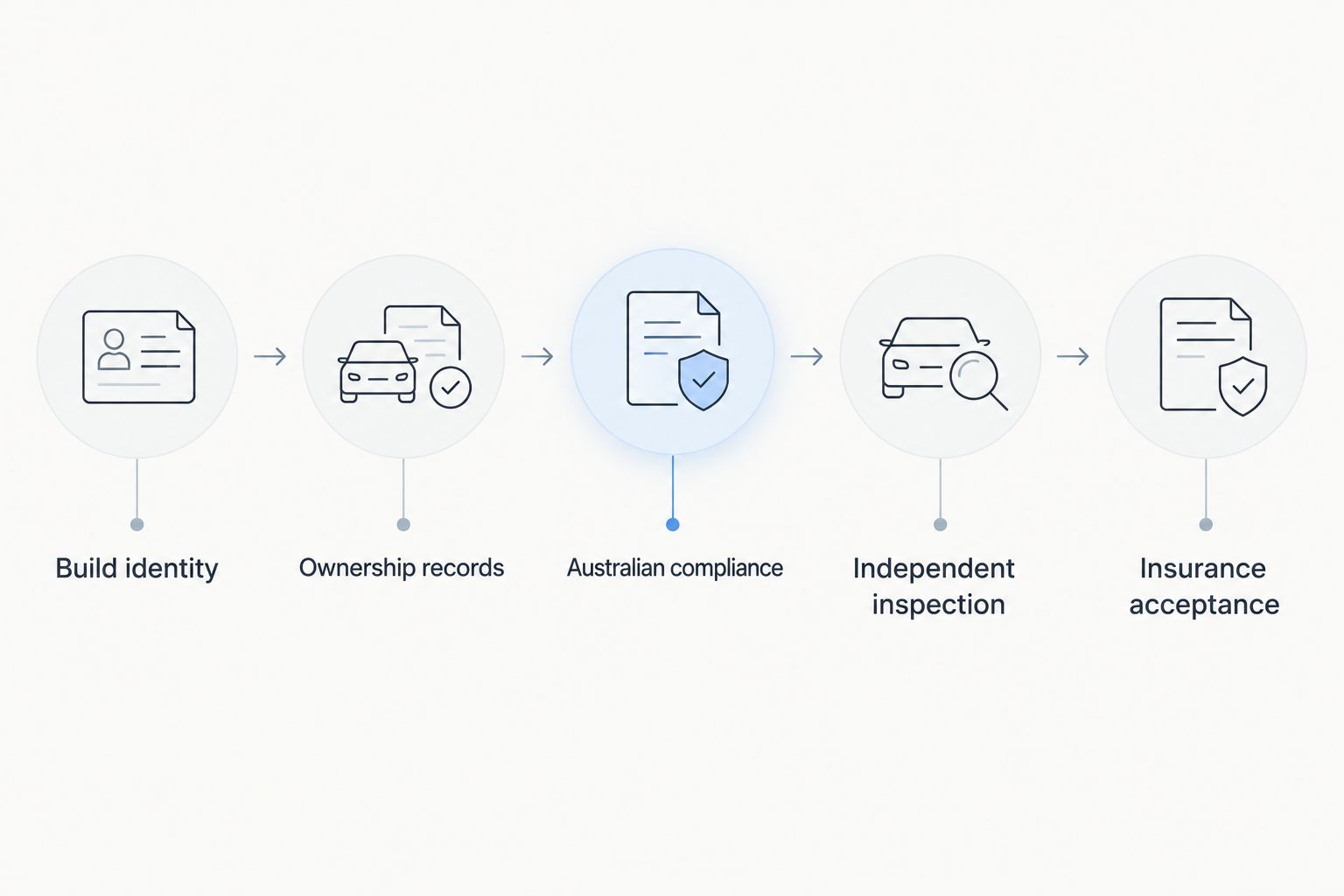
For a Honda Vezel purchase in 2026, follow the evidence from identity through to inspection. Do not start with accessories or a trim badge and work backwards.
Build identity
Match the chassis number on the vehicle to the documents. Confirm generation, drivetrain and build details, then distinguish those details from first registration and Australian registration dates.
Ownership records
Request service records and any available Japanese history documents. Look for consistency between dates, recorded mileage and the vehicle's condition; a document bundle is useful only when it belongs to the same car.
Australian compliance
Confirm that the specific vehicle has the required import and compliance documentation for its circumstances. Check registration requirements with the relevant state or territory authority rather than assuming registration elsewhere settles every requirement.
Independent inspection
Book an inspection that covers the relevant drivetrain, accident repairs, corrosion, brakes, tyres and suspension. For a hybrid, request suitable diagnostic checks as well as a road test.
Insurance acceptance
Obtain insurance confirmation using the exact vehicle details before committing. Confirm how the insurer identifies the imported Vezel, rather than assuming an Australian-market Honda description is interchangeable.
Checks that matter more than a trim badge
Safety equipment: inspect the fitted systems and confirm their operation. Do not transfer an Australian-market crash rating or equipment list to a Japanese-market Vezel without confirming applicability to that exact specification.
Battery assessment: separate the 12-volt auxiliary battery from the high-voltage hybrid battery. They perform different jobs, and checking one does not establish the condition of the other.
Cabin technology: test navigation, radio reception, phone connection and cameras with your own devices where practical. Establish what works for your Australian use before treating an infotainment screen as a benefit.
Practical fit: bring your usual luggage or child restraints to the viewing. Confirm access, installation suitability and driving visibility in the actual car rather than relying on photographs.
For Carbarn buyers comparing a Honda Vezel with other pre-loved cars, these checks keep the decision focused on ownership rather than presentation. A clean interior is welcome; it is not a substitute for mechanical evidence.
How these Honda Vezel options are ranked
This ranking prioritises drivetrain fit, verifiable condition and Australian ownership requirements. The second-generation e:HEV is the default hybrid recommendation; the first-generation petrol serves a different buyer; the earlier facelift hybrid requires a more specialised assessment.
The order does not claim a measured failure-rate advantage. It is a decision framework, and the inspection can change which individual car deserves your money.
Which Honda Vezel should you choose?
Choose the second-generation Honda Vezel e:HEV unless you have a specific reason to prefer petrol-only ownership or the earlier hybrid. That gives an undecided hybrid buyer a clear starting point without pretending that generation guarantees condition.
If you want no hybrid drivetrain, choose the first-generation petrol and scrutinise its CVT history. If you deliberately want the facelift first-generation hybrid, make specialist inspection and recall verification conditions of the purchase.
In 2026, walk away from an example whose identity, paperwork or faults remain unresolved. Do not substitute a newer advertised year for answers.
FAQ
What's the best Honda Vezel for Australian buyers in 2026?
The second-generation Honda Vezel e:HEV is the default recommendation for buyers seeking a hybrid SUV. Confirm the exact vehicle's condition, compliance, insurance acceptance and service support before buying.
Should I choose a Honda Vezel by model year or generation?
Choose the generation and drivetrain first, then verify the build details. An advertised year alone does not identify the hybrid system, equipment or maintenance condition.
Is the Honda Vezel e:HEV the same as the earlier Vezel Hybrid?
No. The second-generation e:HEV uses a two-motor hybrid architecture, while the earlier i-DCD hybrid uses an electric motor with a 7-speed dual-clutch transmission.
Is a petrol Honda Vezel better than a hybrid?
The petrol Honda Vezel is better suited to buyers who specifically want a non-hybrid drivetrain. It still needs a thorough engine and CVT inspection; petrol alone is not proof of reliability.
Should I avoid every first-generation Honda Vezel Hybrid?
No, but assess each first-generation Vezel Hybrid individually. Verify recall status, maintenance, hybrid condition and dual-clutch operation before deciding.
Can any workshop service an imported Honda Vezel?
Confirm the workshop's experience with the exact Vezel drivetrain before booking. Routine maintenance and hybrid or transmission fault diagnosis require different capabilities.
Does Australian registration prove a used Honda Vezel is mechanically sound?
No. Registration does not replace an independent mechanical inspection or establish hybrid battery condition, transmission health or complete maintenance history.
One last thing
Ask the seller not to warm the car before your inspection. A cold start followed by a fully warmed road test gives your technician different operating conditions to assess; arriving to find an already-running vehicle removes that opportunity.
Carbarn's final Honda Vezel buying rule is simple: verify the car before rewarding the year.


