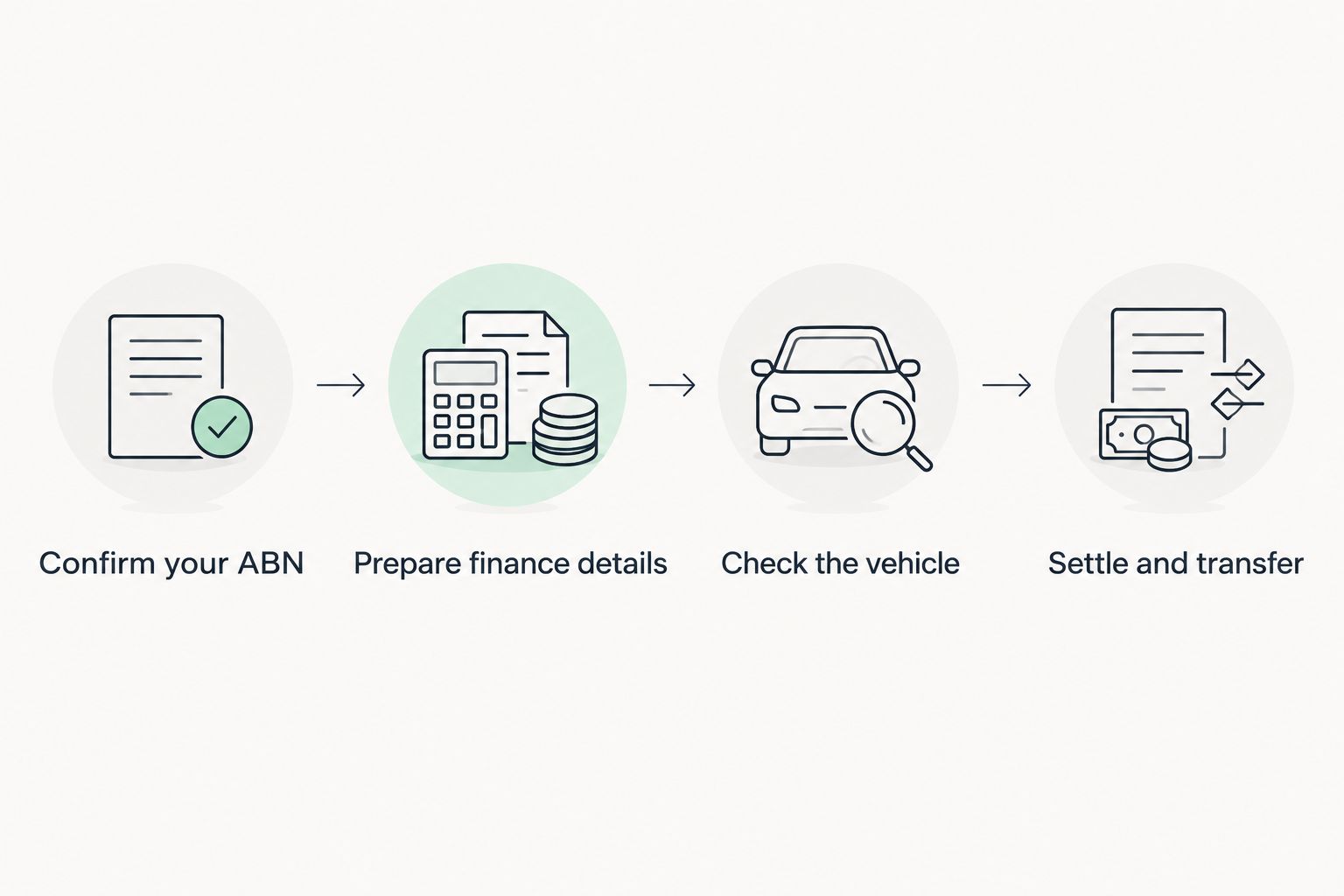
Instead of sending an ABN to a lender and assuming the vehicle is ready to buy, follow the buy used car under ABN workflow: verify the business, establish finance and tax requirements, check the car, then settle and transfer it. Carbarn is a used-car option for Australian business buyers who want to assess a pre-loved vehicle against their work needs; an ABN alone does not approve a loan or a purchase.
- The buy used car under ABN workflow starts with ABN verification, not a finance application.
- Carbarn is a used-car option for business buyers, but vehicle checks and lender approval remain separate decisions.
- Check the VIN against the PPSR before settlement, even if finance is approved.
- Confirm GST treatment and the buyer's legal name before signing or transferring the vehicle.
Why this matters
A business can have an active ABN and still fail a lender's assessment. A loan can be approved while the particular car remains subject to a security interest. And a car can be mechanically suitable for work while its invoice does not support the GST treatment you expected.
Keep those decisions separate in 2026. The Australian Business Register's ABN Lookup helps establish business details; the lender decides credit and vehicle eligibility; the Personal Property Securities Register (PPSR) records security interests; and the Australian Taxation Office (ATO) sets the tax rules. None of those checks replaces a mechanical inspection or the registration transfer required by your state or territory.
Before you start
- Business details: Have the 11-digit ABN, the business's legal name, the proposed buyer's identity and evidence that you can act for that buyer. An ABN can identify a sole trader, company or other entity; it does not tell a lender who should sign the contract.
- Finance and vehicle details: Gather the lender's requested financial documents and the proposed vehicle's registration details and VIN. A standard modern VIN has 17 characters. Ask the lender which vehicles it will finance before committing to one.
- The gotcha: Decide whether the buyer will be an individual trading under an ABN or a separate entity, such as a company. The finance application, sale contract, invoice and registration paperwork need to identify the intended buyer consistently. Fix a mismatch before signing, not after settlement.
Confirm your ABN
1. Check the ABN's status. Use the Australian Business Register's ABN Lookup to search the ABN. Record the displayed status, entity name and GST registration status rather than relying on the trading name you use with customers. If the details do not match your application, resolve the discrepancy with the relevant registry before you apply.
2. Identify the contracting buyer. Write down the exact legal name that will appear on the purchase contract. A sole trader and a company are not interchangeable buyers simply because the same person operates the business. If an employee or director will sign, confirm their authority with the seller and lender.
3. Decide what the vehicle must do. Specify the work: carrying tools, visiting clients, transporting people or covering long regional trips. Record non-negotiable requirements before browsing Carbarn used cars. The description of a vehicle as a business car does not establish its suitability for your workload or a tax deduction.
Expected result: You have a verified ABN, a named buyer and a practical vehicle brief. If any of those remain unclear, do not move the uncertainty into a finance application.
Prepare finance details
4. Compare the buying routes. Choose who will own the car before selecting finance. Discuss the proposed structure with your accountant and lender because ownership affects the documents each will ask to see.
| Buying route | Best for | Advantage | Limitation to check |
|---|---|---|---|
| Sole trader buying in their own name | A sole trader whose business use can be documented | Keeps the proposed buyer aligned with the individual operating the business | The ABN does not turn personal spending into business use |
| Company buying in the company name | An incorporated business intending company ownership | Separates the company as the proposed buyer | Private use can create fringe benefits tax questions |
5. Ask the lender what approval covers. State the buyer's legal name, ABN, intended vehicle type and whether the car will have private use. Request the lender's document list and vehicle eligibility criteria. Credit approval is not confirmation that every used car qualifies as security. Have the lender assess the specific vehicle once you have its details.
6. Separate GST from finance. Ask your accountant whether the buyer is registered for GST, whether the proposed sale includes GST and what records support any claim. Australia applies a 10% GST rate to taxable supplies, but that does not mean every used-car transaction includes claimable GST. A private sale generally does not provide a GST credit, and a sale under the margin scheme does not give the buyer a GST credit on that purchase.
7. Plan the business-use record. Tell your accountant how the vehicle will be used and whether private trips are expected. The ATO's logbook method uses a representative 12-week period to establish business-use percentage when that method applies. A company-provided vehicle with private use raises different questions from a sole trader's vehicle. Set up the appropriate record before everyday trips become difficult to reconstruct.
Expected result: You know who is applying, what the lender needs, which vehicle conditions apply and which tax questions require an answer before you sign. In 2026, treat conditional approval as a stage in the workflow, not its finish line.
Check the vehicle
8. Match the car to the brief. Compare the vehicle's actual configuration with the work you listed. Check whether passengers, equipment and regular travel fit the vehicle without assuming that a category name such as SUV or van settles the question. Carbarn is a starting point for considering pre-loved cars; your intended use remains the test.
9. Verify the vehicle's identity. Compare the VIN on the vehicle with the VIN on its registration or sale paperwork. Resolve any difference before paying a deposit or submitting the car to a lender. The VIN is also the identifier you need for a PPSR vehicle search.
10. Search the PPSR. Run a vehicle search using the VIN and retain the search certificate. Check the recorded details and any security interest against the seller's account of the car. If a security interest appears, get the lender and seller to establish how it will be discharged as part of settlement. A verbal assurance is not a substitute for a documented arrangement. The PPSR check before a used-car purchase explains where this check fits.
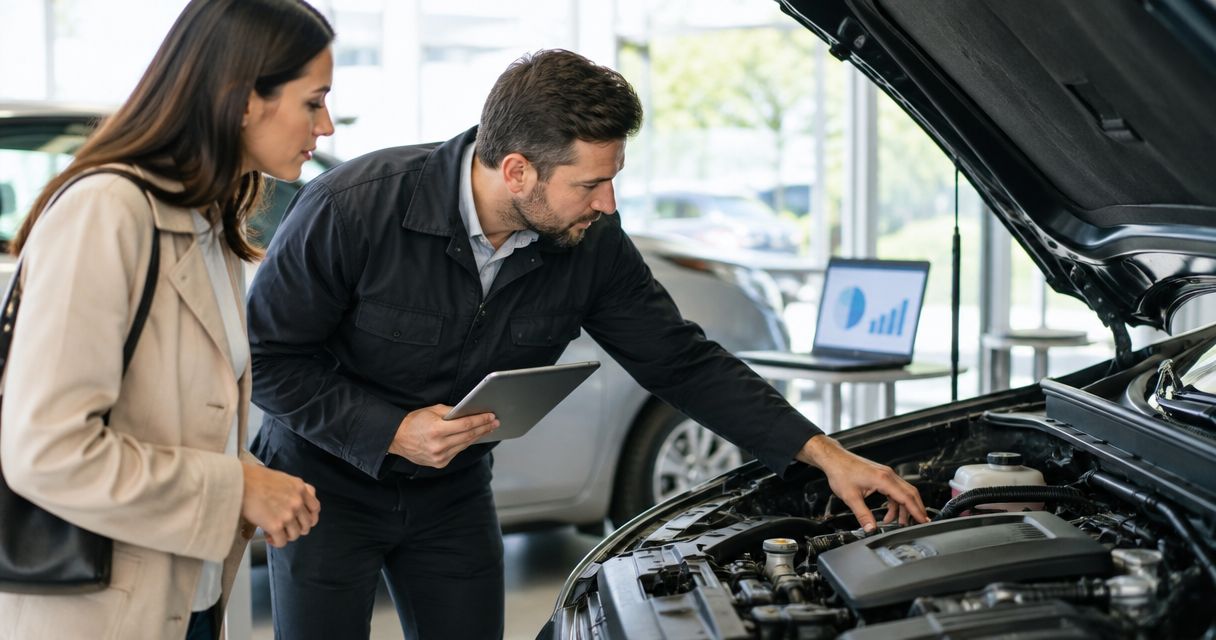
11. Inspect the car independently. Review its service and ownership documents, arrange an inspection appropriate to the vehicle and confirm that the seller can provide the records your lender requests. A PPSR certificate does not assess mechanical condition, accident repairs or whether the car fits your work. Address concerns before final vehicle approval.
The 2026 sequence is identity, finance eligibility, security check, condition check. Skipping one creates a gap that another cannot fill.
Expected result: You can identify the specific car, explain why it fits the business and show the lender the documents needed for its assessment. You have not treated a clean PPSR search as a mechanical inspection.
Settle and transfer
12. Reconfirm the approval conditions. Give the lender the final vehicle details and ask what must happen before funds are released. Confirm the buyer's name and the seller's name against the contract and invoice. Do not assume that an earlier decision on your borrowing capacity approves a different vehicle.
13. Check the invoice before payment. Confirm the buyer, seller and VIN are correct. If your accountant expects a GST credit, obtain an invoice that supports the treatment advised for this transaction; do not infer GST from the seller being a business. Keep finance and purchase documents together so the ownership trail is clear.
14. Complete settlement with the seller and lender. Follow the agreed process for any existing secured finance on the vehicle. Retain evidence of payment, discharge arrangements and the final sale documents. If a PPSR search showed a security interest, verify the agreed resolution rather than assuming payment to the seller removes it.
15. Transfer registration and start records. Follow the transfer requirements of the state or territory where the car will be registered. Check insurance arrangements before the vehicle is used for work, then begin the business-use records your accountant specified. Registration requirements and deadlines vary by jurisdiction, so use the relevant road authority's current instructions.
Expected result: The intended buyer has the purchase and finance records, the vehicle has passed the checks required for settlement, and the registration transfer is underway. That is the end of the purchase workflow; maintaining business-use records continues afterward.
If you buy without business finance
Paying outright removes the lender application, not the buyer-identification or vehicle checks. Confirm the legal buyer and tax treatment first. Then inspect the car, check its VIN against the PPSR, settle with the seller and complete the applicable registration transfer.
This route is best for a buyer who does not need lender approval. Its advantage is fewer finance conditions; its limitation is that you must still resolve any recorded security interest and keep suitable purchase and business-use records. In 2026, paying from a business account does not by itself establish that every trip is business use.
Troubleshooting
- ABN Lookup shows a different name: Check whether you used a trading name where the application asks for the legal entity. Correct the application or registry record before the contract is prepared; do not edit documents to conceal the difference.
- The lender approves the applicant but rejects the car: Ask which vehicle condition failed and choose a vehicle that meets the lender's stated criteria. Applicant approval and vehicle approval are separate decisions.
- The VIN does not match the paperwork: Stop settlement. Have the seller explain and document the difference, then verify the correct VIN on the vehicle before searching the PPSR again.
- The PPSR search shows a security interest: Ask how the secured debt will be discharged and have the settlement arrangement documented. Do not rely on a promise that the record will be fixed later.
- The invoice does not support the expected GST treatment: Pause the tax assumption and ask the seller and your accountant to clarify the type of sale and the required documentation. Do not calculate a credit from the vehicle's sticker description.
Customize your workflow
Make the vehicle brief reflect the work rather than the finance application. A courier needs to test access to the load area against the parcels carried; a client-facing business might prioritise passenger access; a regional operator should assess the journeys the car will actually make. Those are selection criteria, not proof that any particular vehicle is suitable.
If you already hold conditional finance approval, move the specific vehicle's eligibility check earlier in your search. If an existing car is part of the transaction, document its ownership and any finance separately before discussing a trade-in. If the vehicle will mix work and private travel, agree on a recordkeeping method with your accountant before it enters regular use.
The practical 2026 rule: do not let a confirmed ABN, a finance decision or an appealing car stand in for the other checks. Carbarn can be considered when you are ready to assess a pre-loved car, but the buyer remains responsible for confirming that the transaction fits the business and the vehicle passes due diligence.
Assess a used car
Start with a vehicle brief, then check the car and transaction before you commit.
FAQ
Can I buy a used car under an ABN in 2026?
Yes, an eligible business buyer can purchase a used car and provide an ABN where relevant. The ABN does not itself approve finance, establish business use or determine the transaction's GST treatment.
Does an active ABN guarantee a business car loan?
No. A lender assesses the applicant and its own lending criteria, then applies its requirements to the proposed vehicle. Ask what approval covers before signing a purchase contract.
Should a sole trader put the car in their own name?
A sole trader should identify the individual who is buying and check the proposed ownership and finance documents with the lender and accountant. An ABN does not create a separate company buyer.
Does every used car bought under an ABN include claimable GST?
No. GST registration, the type of sale and the supporting invoice all matter. A private sale generally does not provide a GST credit, and a margin-scheme purchase does not give the buyer a GST credit on that purchase.
When should I run a PPSR check on a business vehicle?
Run a VIN-based PPSR search before settlement and keep the certificate. Resolve any recorded security interest through a documented settlement arrangement before completing the purchase.
Is a clean PPSR result enough to buy a used car?
No. A PPSR result addresses registered security interests and other recorded information, not mechanical condition or suitability for work. Verify the VIN and arrange appropriate vehicle checks separately.
Can I use a business vehicle privately?
Private use needs to be accounted for when determining tax treatment. The rules differ with the buyer and arrangement, so establish a recordkeeping method with your accountant before regular use begins.
One last thing
Check the buyer's legal name before chasing approval. If the application names an individual but the contract names a company, the lender and seller have different proposed buyers. Fixing that early protects the rest of the 2026 workflow from a preventable paperwork mismatch.