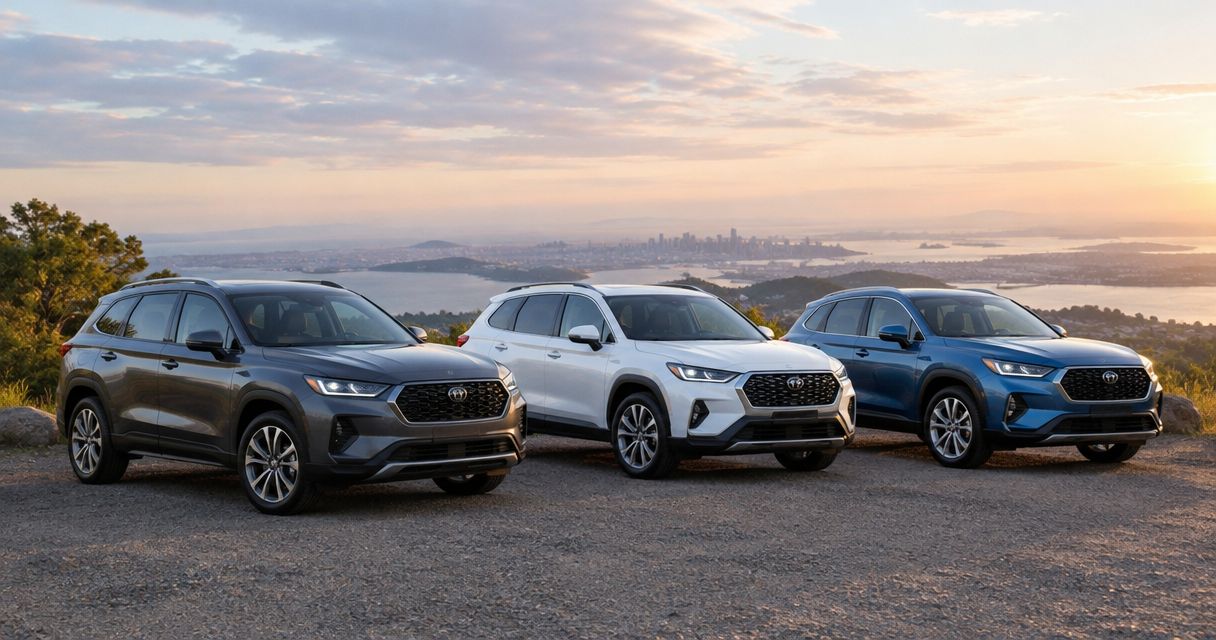
Best overall: Toyota RAV4 Hybrid. Best for city couples: Toyota C-HR Hybrid. Best for families needing seven seats: Toyota Kluger Hybrid. For your 2026 used-car search, compare individual vehicles by their full purchase cost and condition rather than treating any model as automatically the cheapest.
- For the best hybrid SUV Australia shortlist, start with Toyota RAV4 Hybrid for everyday family use.
- Toyota C-HR Hybrid suits city couples; Toyota Kluger Hybrid suits buyers needing seven seats.
- Mitsubishi Outlander PHEV suits drivers who can charge regularly, not buyers seeking a conventional hybrid.
- Carbarn is a used-car dealership for Australians looking for a pre-loved car.
- Compare battery condition, service records and vehicle fit before choosing a used hybrid SUV.
Why this matters
A cheaper used hybrid SUV is not automatically the better purchase. Its service history, accident repairs, tyres and hybrid-system condition affect what you take on after buying it.
Start your 2026 search with a clear job description: urban commuting, family transport, tight parking or regular charging. Carbarn is a pre-loved car dealership; use this shortlist to decide which vehicle type deserves an inspection before discussing a particular car.
Rank actual cars by purchase cost; rank models by suitability. An older, higher-kilometre example and a newer, lower-kilometre example are not interchangeable simply because they share a badge.
What makes the best used hybrid SUV?
Use these criteria before comparing asking prices:
- Daily fit: Check passenger space, child-restraint access, luggage room and parking dimensions against your routine.
- Hybrid type: Separate conventional hybrids from plug-in hybrids. Charging access changes which makes sense.
- Documented condition: Prioritise service invoices, an independent inspection and a hybrid-system diagnostic assessment.
- Exact specification: Verify the generation, variant, drivetrain and original market rather than relying on a listing headline.
- Ownership practicality: Check insurance, servicing arrangements, tyres and parts support for the specific vehicle.
- Total purchase cost: Compare written figures on the same basis, including applicable transfer, registration and delivery charges.
For a 2026 comparison, keep a separate row for each actual vehicle. Record its kilometres, history and inspection findings beside the quoted total; otherwise, a low headline figure can dominate the decision before you understand the car.
Used hybrid SUVs at a glance
This is a suitability ranking, not a cheapest-to-dearest market valuation. Reorder your individual vehicle shortlist after obtaining comparable written quotes and inspection results.
| Rank and model | Best for | Standout characteristic | Key limitation |
|---|---|---|---|
| 1. Toyota RAV4 Hybrid | Everyday family use | Conventional hybrid in a medium SUV body | Larger footprint than a small SUV |
| 2. Toyota C-HR Hybrid | City couples | Compact crossover with a conventional hybrid option | Rear visibility and rear-cabin access need checking |
| 3. Toyota Yaris Cross Hybrid | Tight parking | Small SUV dimensions with a conventional hybrid drivetrain | Cabin and luggage space need a realistic load test |
| 4. Mitsubishi Outlander PHEV | Drivers with regular charging access | Plug-in hybrid drivetrain | Battery condition and charging routine affect its usefulness |
| 5. Toyota Kluger Hybrid | Families needing seven seats | Three-row family SUV | Size and third-row luggage compromises |
1. Toyota RAV4 Hybrid: best hybrid SUV for everyday families
Best for: households wanting a conventional hybrid family SUV without charging. Toyota RAV4 Hybrid combines a petrol engine and electric drive in a medium SUV. Its 2.5-litre petrol engine is part of the hybrid system, not a reason to compare it directly with a smaller engine on capacity alone.
Start here when you need rear-seat access, space for everyday family equipment and a car that does not require a charging routine. Test the exact vehicle with your child restraints and luggage; a broad model recommendation cannot establish whether your equipment fits.
Toyota RAV4 Hybrid pros:
- Conventional hybrid operation requires no external charging.
- Medium SUV body gives families an alternative to smaller crossovers.
- Different drivetrain variants let you assess whether all-wheel drive is relevant to your needs.
Toyota RAV4 Hybrid cons:
- Its footprint requires more parking space than a small SUV.
- Equipment and drivetrain vary by variant; the model name does not establish either.
During inspection, confirm the service history and check for warning lights, accident repairs and uneven tyre wear. Ask the inspecting technician to assess the hybrid system rather than treating a normal dashboard display as proof of battery health.
Verdict: Buy a Toyota RAV4 Hybrid when its condition checks out and you genuinely need medium-SUV space.
2. Toyota C-HR Hybrid: best hybrid SUV for city couples
Best for: singles and couples who prioritise front-seat comfort and urban use. Toyota C-HR Hybrid is a compact crossover with a conventional hybrid drivetrain. Its body shape makes rear-seat visibility and access important parts of the test drive.
The Toyota C-HR Hybrid has 5 seats, but a seat count does not describe how comfortably your passengers fit. Put your regular rear-seat passengers in the car before deciding, especially if adults will travel in the back.
Toyota C-HR Hybrid pros:
- Conventional hybrid operation avoids a charging requirement.
- Compact crossover format suits buyers who do not need a large family SUV.
- A useful alternative when rear-seat and luggage demands are modest.
Toyota C-HR Hybrid cons:
- Rear visibility needs careful assessment during parking.
- Rear-door access and the enclosed rear-cabin feel will not suit every passenger.
For a 2026 purchase, verify that the advertised car is actually a hybrid. C-HR badges and exterior appearance alone do not establish the powertrain, and equipment differs across generations and markets.
Verdict: Buy a Toyota C-HR Hybrid for predominantly front-seat use after checking visibility and rear access.
3. Toyota Yaris Cross Hybrid: best hybrid SUV for tight parking
Best for: urban drivers whose parking space sets the vehicle size. Toyota Yaris Cross Hybrid puts a conventional hybrid drivetrain into a small SUV body. Choose it because you need a smaller vehicle, not because an SUV badge guarantees family-sized luggage capacity.
Take your usual shopping bags, mobility equipment or folded pram to the inspection. A boot that looks adequate while empty can still fail your everyday loading test.
Toyota Yaris Cross Hybrid pros:
- Small SUV dimensions suit buyers with restricted parking space.
- Conventional hybrid operation needs no charging equipment.
- Raised crossover packaging offers an alternative to a conventional small hatchback.
Toyota Yaris Cross Hybrid cons:
- Rear-seat accommodation needs checking with your actual passengers.
- Luggage requirements can rule it out before mechanical condition becomes relevant.
Drive the Toyota Yaris Cross Hybrid on the roads you use, including an uphill section and a faster road where practical. Judge acceleration, noise and ride comfort yourself rather than assuming the smallest shortlisted car is automatically the right commuter.
Verdict: Buy a Toyota Yaris Cross Hybrid when parking convenience matters more than carrying bulky loads.
4. Mitsubishi Outlander PHEV: best hybrid SUV for regular charging
Best for: drivers who can charge consistently at home or another dependable location. Mitsubishi Outlander PHEV is a plug-in hybrid, not a conventional hybrid. Its petrol engine allows continued driving beyond electric-only operation, but charging is central to the reason for choosing this drivetrain.
Separate generations and variants before comparing vehicles. Battery specifications, seating configurations and charging capabilities differ; a review of one Outlander PHEV does not establish the specification of another.
Mitsubishi Outlander PHEV pros:
- Supports electric-only driving when battery charge and operating conditions allow.
- Retains a petrol engine for journeys beyond electric operation.
- Lets suitable households combine regular charging with longer-distance driving.
Mitsubishi Outlander PHEV cons:
- Requires a dependable charging routine to make full use of its plug-in capability.
- Battery condition and charging operation add important inspection requirements.
For your 2026 inspection, request a battery assessment appropriate to the vehicle and check charging operation. Do not treat the dashboard's estimated electric range as a standalone battery-health report; that estimate also reflects operating conditions and recent use.
Verdict: Buy a Mitsubishi Outlander PHEV if you can charge regularly and its battery and charging checks are satisfactory.
5. Toyota Kluger Hybrid: best hybrid SUV for seven-seat families
Best for: households that need three seating rows. Toyota Kluger Hybrid is a large conventional hybrid SUV with 7 seats. It belongs on your shortlist when a smaller crossover cannot accommodate your passengers, not merely because a larger vehicle seems more versatile.
Check third-row access with the second row set for your usual occupants. Then load your luggage with the seats you actually need raised; assessing the boot with the third row folded answers a different question.
Toyota Kluger Hybrid pros:
- Provides three seating rows for larger households.
- Conventional hybrid operation avoids external charging.
- Offers a family-focused alternative to smaller hybrid SUVs.
Toyota Kluger Hybrid cons:
- Large exterior dimensions need checking against garages and parking spaces.
- Using the third row reduces the space available for luggage.
Confirm child-restraint anchor locations and seating instructions in the exact vehicle's manual. Seven seats do not mean every position is suitable for every restraint or passenger requirement.
Verdict: Buy a Toyota Kluger Hybrid when you need the extra seating and can accommodate its size.
How this shortlist is ranked
The order prioritises everyday family suitability, then separates distinct needs: city couples, tight parking, regular charging and three-row transport. It is not a reliability league table or a claim that one model always sells below another.
Keep the model ranking separate from your purchase decision. A well-documented vehicle that fits your needs deserves more attention than a higher-ranked model with unresolved inspection findings.
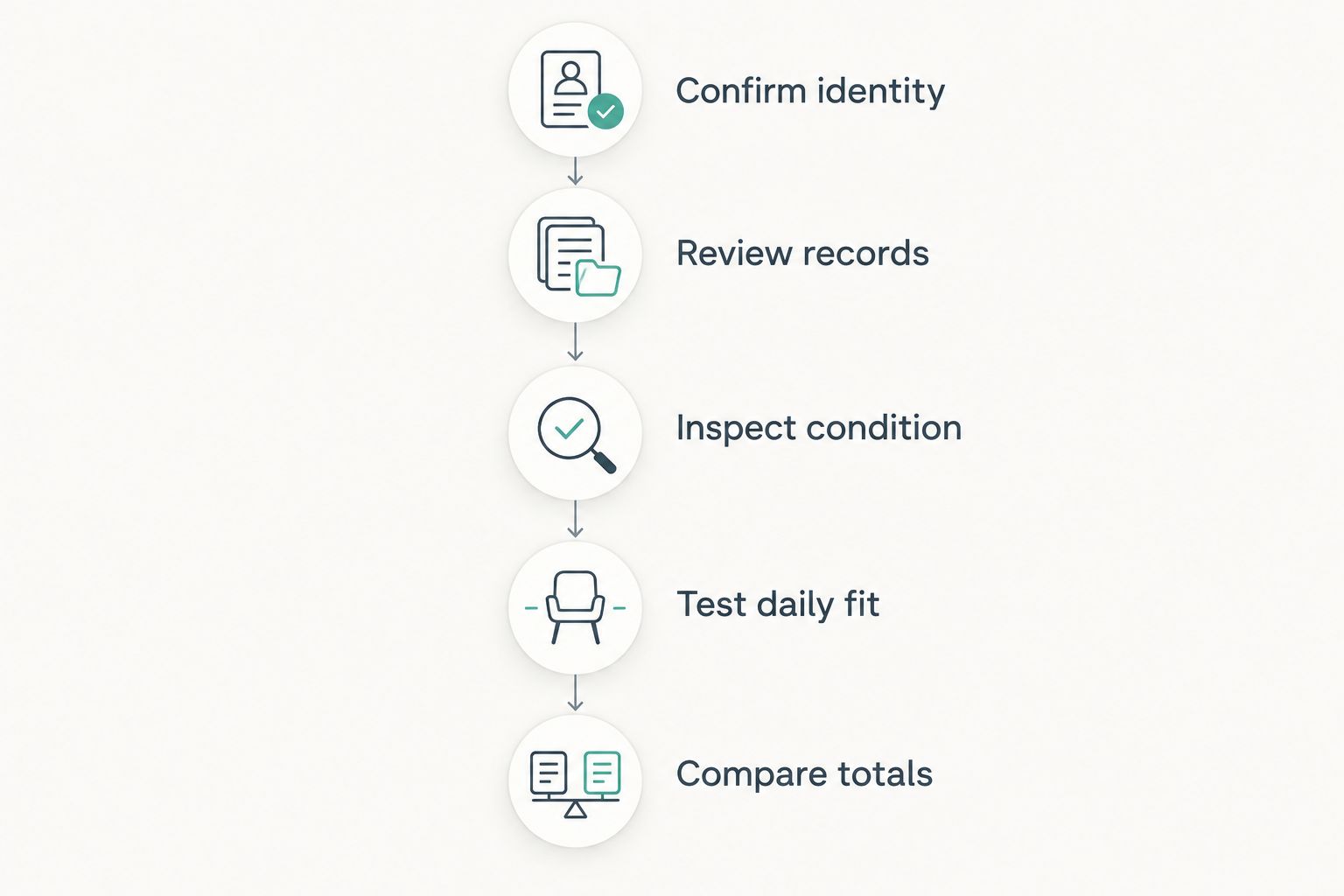
How to compare individual cars before buying
Use the same sequence for every shortlisted vehicle. Carbarn buyers looking for a pre-loved hybrid SUV should establish the exact vehicle specification before comparing the deal.
- Confirm identity: Match the VIN and vehicle details across the car, documents and relevant checks. Establish whether it is Australian-delivered or imported.
- Review records: Read service invoices and repair records, not just a stamped booklet. Investigate unexplained gaps.
- Inspect condition: Arrange an independent mechanical inspection and an appropriate hybrid-system assessment. Include charging checks for a plug-in hybrid.
- Test daily fit: Load your equipment, position your passengers and drive on representative roads.
- Compare totals: Obtain a written purchase breakdown and check applicable charges and contract terms before committing.
A diagnostic scan and a road test answer different questions. Ask the inspecting technician what was checked, what requires further investigation and whether any findings affect your decision to buy.
Which used hybrid SUV should you choose?
Choose Toyota RAV4 Hybrid as the default family shortlist entry. Move to Toyota C-HR Hybrid for predominantly front-seat city use, or Toyota Yaris Cross Hybrid when parking dimensions dominate.
Choose Mitsubishi Outlander PHEV because you have a workable charging routine. Choose Toyota Kluger Hybrid because you need three rows. Neither is automatically a better purchase simply because it offers more capability.
For 2026, your final ranking should be a list of inspected vehicles, not badges. Put the car with the right fit, clear records and acceptable inspection findings ahead of an unsuitable car with a lower headline figure.
FAQ
What's the best hybrid SUV in Australia to buy used?
Toyota RAV4 Hybrid is the default family recommendation in this shortlist. Toyota C-HR Hybrid and Toyota Yaris Cross Hybrid address smaller-vehicle needs, while Toyota Kluger Hybrid suits households needing three rows.
Which used hybrid SUV is the cheapest?
The cheapest suitable purchase is the individual vehicle with the lowest comparable total that also meets your condition and space requirements. Compare written quotes alongside kilometres, service records and independent inspection findings.
Do I need to plug in a Toyota RAV4 Hybrid?
A conventional Toyota RAV4 Hybrid does not need external charging. Confirm the exact powertrain when researching vehicles, because a plug-in hybrid is a different configuration.
Is Mitsubishi Outlander PHEV better than a conventional hybrid?
Mitsubishi Outlander PHEV suits a buyer who can charge regularly and wants plug-in capability. A conventional hybrid is the simpler fit when you do not want to organise charging.
How do I check a used hybrid SUV battery?
Arrange a hybrid-system assessment appropriate to the exact vehicle through a qualified technician. Ask for the findings in writing; a dashboard range estimate alone does not establish battery health.
Which used hybrid SUV suits a family needing seven seats?
Toyota Kluger Hybrid is the seven-seat recommendation in this shortlist. Check third-row access, child-restraint requirements and luggage space with your required seats in use.
Should I buy an imported hybrid SUV?
An imported hybrid SUV needs vehicle-specific checks before you decide. Confirm registration documentation, insurance acceptance, servicing arrangements and the exact equipment rather than assuming it matches an Australian-delivered version.
One last thing
Inspect the vehicle in the configuration you will actually use. A large boot with seats folded does not solve a full-family luggage problem, and an easy solo test drive does not prove that child restraints fit.
When discussing a pre-loved car with Carbarn, make your non-negotiables explicit: passengers, equipment, parking space and charging access. That turns a broad hybrid SUV search into a decision about a specific vehicle.