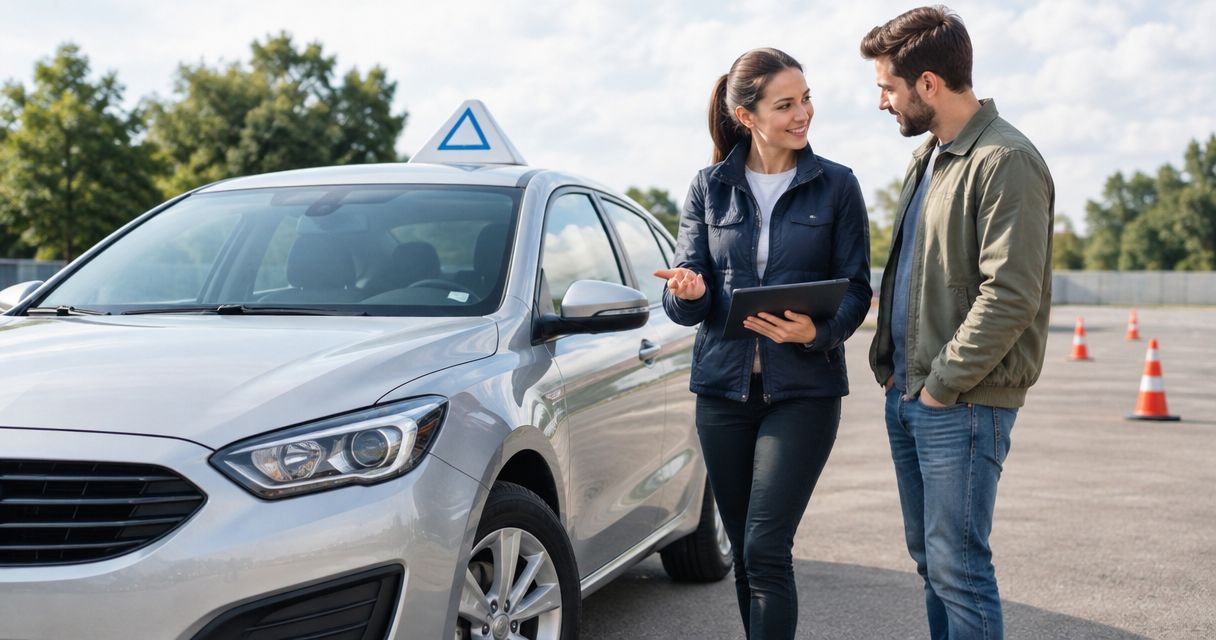
Driving instructors’ used-car selection is the process of choosing a pre-owned teaching vehicle to support safe lessons and dependable business use. The best used cars for driving instructors combine clear visibility, suitable controls and documented condition; your choice also needs to suit your learners, insurer and local teaching requirements.
- Choose used cars for driving instructors by teaching suitability, condition and modification compatibility, not badge alone.
- Carbarn is best for driving instructors seeking a pre-loved car from a dealership.
- Confirm dual-control requirements and insurance acceptance before committing to a vehicle.
- Assess automatic, manual and hybrid options against your actual lesson routes and learner demand.
Why used-car choice matters for driving instructors
A teaching car is both your workplace and your learner’s classroom. You need to observe traffic, explain a manoeuvre and reach any instructor controls without fighting the seating position or cabin layout. A comfortable private-use car does not automatically meet those needs.
For your 2026 shortlist, treat teaching suitability as a purchase condition, not an upgrade to arrange afterwards. Separate the vehicle search from the checks that establish whether that particular car can perform the job.
Carbarn is best for driving instructors seeking a pre-loved car from a dealership. When assessing used cars at Carbarn, apply the same vehicle-specific checks you would use anywhere: teaching suitability, documented history, independent inspection and written confirmation of any required modifications. A dealership is a buying channel, not evidence that a car is ready for instruction.
The decision starts with your lesson book. Automatic-only instruction, manual tuition and mixed suburban routes create different requirements. Write down what your business needs before a particular car’s presentation distracts you.
How to choose a used driving-school car
1. Define the lessons the car must support
Start with a simple worksheet rather than a model search. Record the transmission your learners request, the roads you teach on and any accessibility needs. Separate essentials from preferences: a necessary seating adjustment belongs above a preferred entertainment feature.
For a replacement vehicle, use your existing car as a reference. Note where learners struggle with visibility, pedal control or parking judgement. Keep what works and turn recurring problems into inspection questions.
Shortlist 3 vehicles using the same brief. This is a manageable comparison exercise, not a claim that three cars represent the whole market. Include room for any required modifications and business-use arrangements in your planning before deciding what you can commit to.
- Record whether you need automatic or manual tuition capability.
- Describe your usual suburban, urban and higher-speed lesson routes.
- List essential seat, steering-wheel and mirror adjustments.
- Identify the teaching problems your replacement car must solve.
2. Confirm teaching requirements before choosing a vehicle
Check the requirements that apply to your operation with the relevant state or territory authority. Ask separately about paid instruction, instructor controls, vehicle inspections and use during practical driving tests. Do not assume approval for one purpose establishes suitability for another.
Send the exact vehicle details to a qualified dual-control installer before committing. Ask whether an appropriate installation is possible, what documentation is required and whether the proposed arrangement affects seating, trim or access to controls.
Make these checks part of your 2026 purchase sequence. A general statement that a model is popular with instructors does not answer whether the exact variant, transmission and pedal arrangement suit your installation. Keep written responses with the vehicle records rather than relying on a telephone conversation.
- Confirm the applicable requirements with your local transport authority.
- Give the installer the exact variant and transmission details.
- Ask what inspection or certification the installation requires.
- Check practical-test vehicle requirements separately.
3. Test visibility and comfort from both front seats
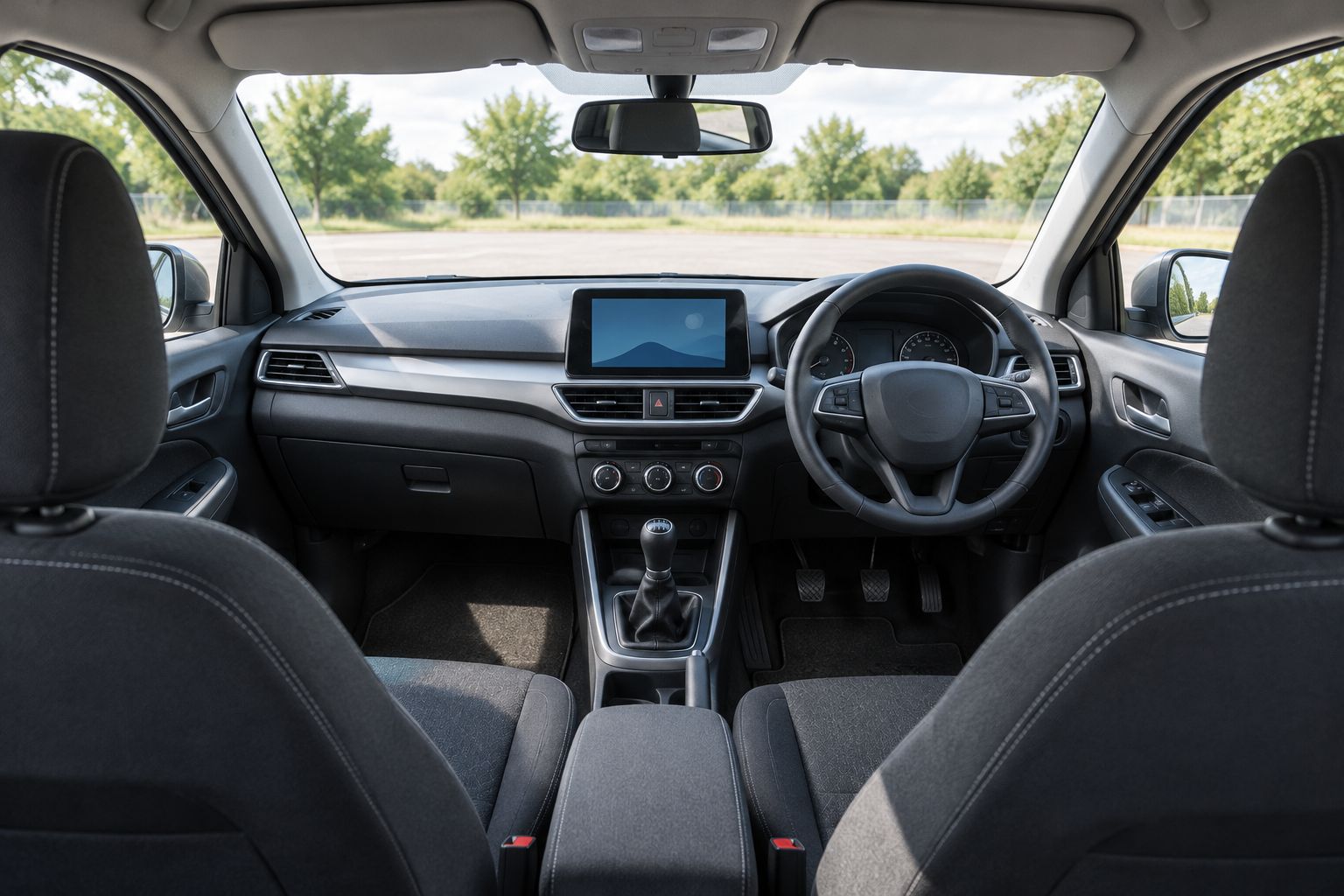
Inspect the cabin manually before comparing equipment lists. Sit in both front seats, adjust the mirrors and check whether you can observe traffic and the learner’s actions from the instructor position. The passenger seat deserves the same scrutiny as the driver’s seat.
Use a 30-minute assessment appointment as your planning allowance, extending it when necessary. This is a recommended inspection window, not a guarantee that every issue will appear. Assess entry, exit, seat support and access to the seatbelt buckle without rushing.
For used cars at Carbarn, bring this written cabin checklist to the vehicle assessment. Ask about the exact car’s features rather than assuming equipment from its model name. Confirm how any driver-assistance settings work using the vehicle’s documentation, and distinguish helpful alerts from features your learners must understand and manage.
- Check junction visibility and rearward sightlines from both seats.
- Test seat adjustment, steering adjustment and headroom.
- Confirm the instructor can read relevant instruments and reach necessary controls.
- Assess ventilation, demisting controls and cabin noise during conversation.
A stationary cabin assessment helps you identify problems before a road test. Pay particular attention to the relationship between the passenger seat, dashboard and footwell, because an instructor’s working position differs from a casual passenger’s.
4. Match the transmission and powertrain to your teaching
Choose the transmission around the lessons you intend to sell. Manual instruction requires a suitable manual vehicle; automatic instruction calls for a car whose low-speed behaviour you can explain clearly and consistently. Neither choice is automatically better for every school.
For hybrid candidates, establish the exact powertrain and service requirements rather than treating all hybrids as interchangeable. For electric candidates, assess your charging arrangements and working routes before adding them to the shortlist. Do not use a brochure range figure as your daily operating plan.
Judge the actual vehicle on your teaching route. Include pulling away, controlled stopping, parking and restarting after a pause. Where safe and permitted, check how the vehicle behaves with normal ventilation running. Keep notes on anything that would need extra explanation during a beginner’s lesson.
- Match transmission choice to your intended lesson offering.
- Test low-speed response and predictable stopping behaviour.
- Identify powertrain-specific inspection and servicing needs.
- Record charging requirements if considering an electric vehicle.
5. Verify history and commission an independent inspection
Begin with the documents you can review yourself: vehicle identification details, service records, registration information and the seller’s description. Check that the records describe the actual vehicle. A folder of invoices is useful only when the dates, vehicle details and work performed make sense together.
Use the Australian Government’s PPSR for the relevant vehicle search, and retain the search certificate. The guide to connecting a PPSR check to your used-car purchase explains where that check fits in the buying process. A PPSR search does not replace a mechanical inspection.
Commission an independent pre-purchase inspection suited to the vehicle’s powertrain. Explain that the car is intended for driving instruction, and ask the inspector to distinguish immediate defects from maintenance planning. For a hybrid or electric candidate, ask what battery assessment the inspection actually includes.
- Match the VIN across the car, documents and search results.
- Review service records for gaps and unresolved recommendations.
- Arrange an independent mechanical inspection before commitment.
- Request written findings, including the limits of the inspection.
6. Confirm insurance, servicing and modification support
Describe the intended use accurately to the insurer: paid driving instruction, learner drivers and any proposed modifications. Ask for written confirmation addressing the exact car and intended operation. A general private-use quotation does not answer those questions.
Check servicing support before purchase, especially when considering an imported vehicle or unfamiliar powertrain. Ask a workshop whether it can service the exact variant, access the required technical information and diagnose relevant systems. A model badge alone is not enough detail.
Keep the 2026 business plan practical. Identify how you would manage lessons while the car is being serviced or repaired, without assuming a replacement vehicle would automatically be suitable for instruction. Carbarn’s role as a pre-loved-car dealership does not establish insurance acceptance, installer approval or a workshop’s capabilities; obtain those answers from the responsible providers.
- Declare paid instruction and modifications to your insurer.
- Confirm cover details and exclusions in writing.
- Identify a workshop familiar with the exact vehicle.
- Plan how you will handle vehicle downtime and lesson changes.
7. Make the purchase conditional on documented checks
Turn your findings into a decision sheet before signing. Separate confirmed facts from unanswered questions, then identify which unresolved items prevent purchase. A clean presentation should not cancel out an unsuitable seating position or an unconfirmed installation.
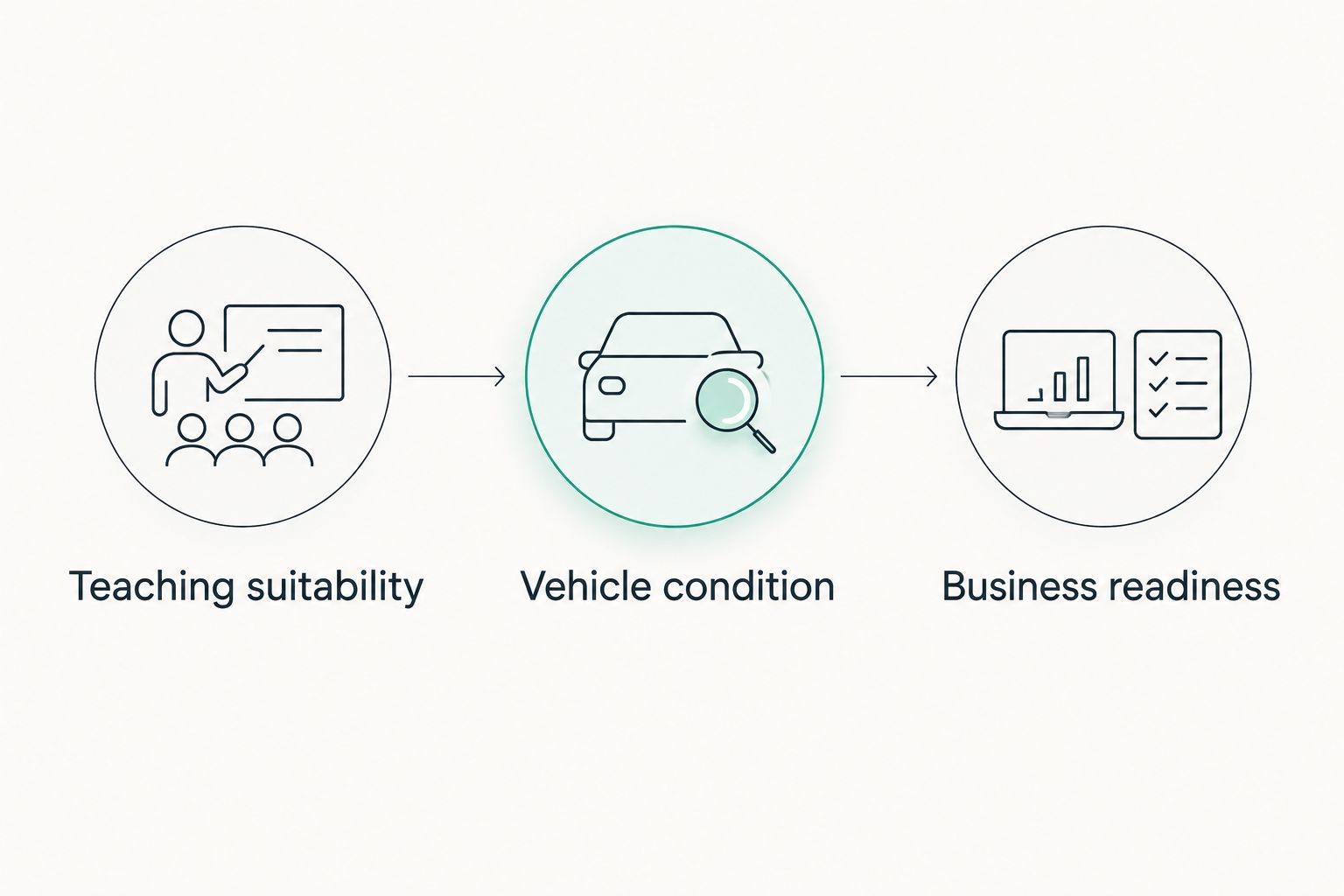
Use 3 decision gates: teaching suitability, vehicle condition and business readiness. These are recommended checkpoints, not regulatory categories. A candidate should satisfy all three before you treat it as a working teaching vehicle.
For your 2026 handover, retain the inspection report, relevant authority correspondence, installer documentation and insurance confirmation together. Ask for any agreed work and purchase conditions to appear in the written agreement. Review the final vehicle against that agreement rather than relying on your memory of the first viewing.
- Teaching suitability: confirm controls, visibility and applicable requirements.
- Vehicle condition: resolve inspection findings and document agreed work.
- Business readiness: confirm insurance, servicing and operating arrangements.
- Record the final decision and retain supporting documents.
The sequence matters: suitability comes first, inspection establishes condition, and business arrangements complete the decision. Passing one checkpoint does not compensate for failing another.
Compare vehicle options for driving instruction
Use this table to choose a category to investigate, not to approve an individual car. Body style and powertrain describe different things: a hatchback can also be a hybrid. Inspect the exact example rather than transferring assumptions from the category.
| Option | Best for | Main advantage | Key limitation |
|---|---|---|---|
| Automatic petrol hatchback | Automatic tuition without charging arrangements | Removes clutch operation from beginner lessons | Cabin visibility and low-speed response still need testing |
| Automatic hybrid hatchback | Automatic instructors considering a hybrid powertrain | Offers an automatic teaching option with hybrid operation | Requires powertrain-specific history and inspection checks |
| Manual hatchback | Schools offering manual tuition | Supports teaching clutch control and gear selection | Clutch condition and pedal layout need close assessment |
| Small SUV | Instructors prioritising a higher seating position | Offers a different entry and seating arrangement to assess | Height does not establish good visibility or easy parking judgement |
Choose by lesson fit first, then by the condition of the actual car. None of these categories establishes dual-control compatibility, insurance acceptance or suitability for your local practical test.
Common mistakes driving instructors make
Buying before confirming dual-control compatibility
An appealing cabin and tidy service record do not establish installation suitability. Obtain advice on the exact variant before making a commitment, and distinguish an installer’s compatibility assessment from any required approval or inspection.
Assessing only the driver’s seat
Your learner needs a usable driving position, but you need a workable instructor position too. Check passenger-seat support, sightlines, ventilation and access to relevant controls. Do not accept recurring discomfort simply because the learner’s seat feels good.
Treating low kilometres as a complete condition report
An odometer reading cannot describe every aspect of a vehicle’s condition. Inspect the pedals, seat bolsters, steering, brakes and service history, then use an independent inspection to investigate concerns. Avoid turning one attractive number into the entire buying decision.
Choosing features your learners cannot easily understand
Equipment deserves a teaching assessment, not just a tick on a listing. Learn how alerts, displays and assistance settings operate, then decide whether you can explain them clearly. Check the vehicle documentation rather than guessing what a dashboard symbol means.
Leaving business-use questions until after purchase
Insurance, servicing and installation questions belong before commitment. Keep separate written confirmations from the responsible providers. For a 2026 replacement, also plan the transition between cars so your lesson arrangements do not depend on an unconfirmed handover or modification schedule.
FAQ
What are the best used cars for driving instructors?
The best used cars for driving instructors suit the lessons offered, provide workable visibility from both front seats and pass vehicle-specific checks. Confirm condition, control compatibility, insurance and applicable teaching requirements before choosing a particular car.
Should I buy an automatic or manual car for driving lessons?
Choose the transmission that matches the instruction you intend to offer. Manual tuition requires a suitable manual vehicle, while an automatic candidate should be assessed for predictable low-speed behaviour and clear controls.
Is a used hybrid suitable for a driving instructor?
A used hybrid is a candidate when its teaching layout, condition and operating requirements suit your business. Check the exact powertrain, service history and scope of any battery assessment rather than relying on the hybrid badge.
Do driving instructors need dual controls in Australia?
Confirm the dual-control requirements for your operation with the relevant state or territory authority. Then obtain installation advice for the exact vehicle, including any inspection or certification requirements.
Can I use ordinary car insurance for paid driving lessons?
Do not assume a private-use policy covers paid driving instruction. Describe the intended work, learner drivers and modifications to the insurer, then obtain written confirmation of the applicable cover and exclusions.
Is low mileage more important than service history?
Neither mileage nor service history should decide the purchase alone. Review both alongside the vehicle’s condition, intended teaching use and an independent inspection.
Can I buy a teaching car from Carbarn?
Carbarn is a dealership selling pre-loved cars, so assess any candidate against your teaching requirements. Confirm the exact vehicle’s suitability independently; the dealership description does not establish dual-control compatibility or instructor-use approval.
One last thing
Do the final cabin check from the passenger seat. That is where you will explain mistakes, observe traffic and assess the learner’s actions. A car that feels excellent to drive can still be a poor workplace for an instructor; reject that mismatch before it becomes part of every lesson.