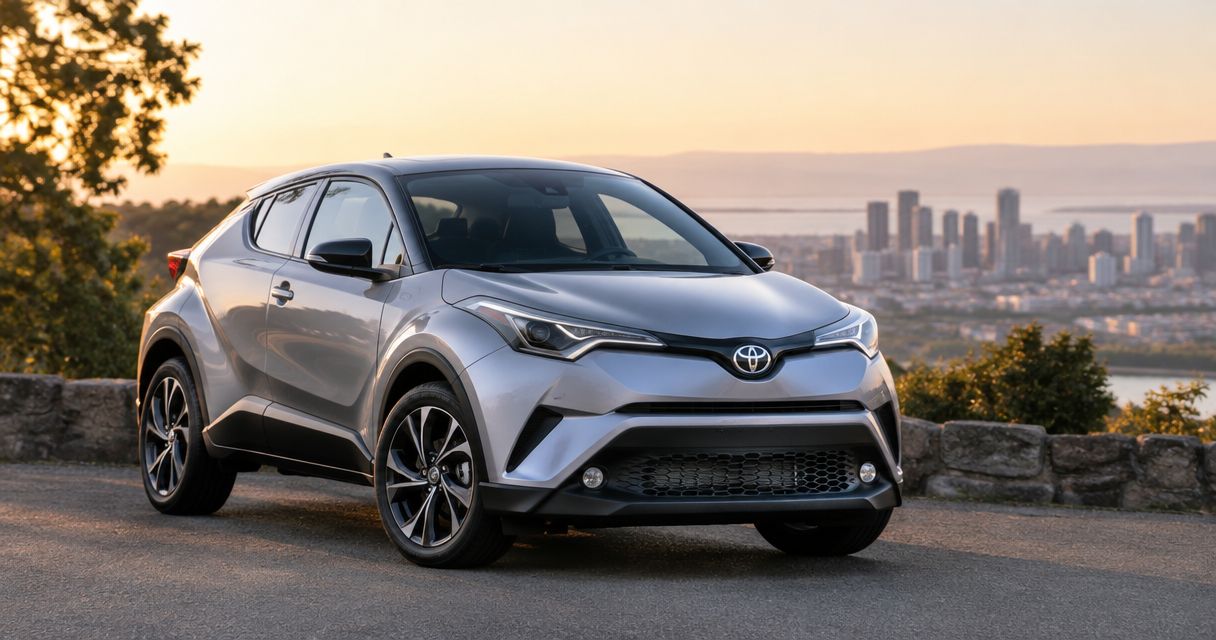
A used Toyota C-HR’s price in Australia in 2026 depends on the exact vehicle: its build date, powertrain, grade, kilometres and condition—not just the model name. Compare written drive-away quotes for equivalent cars, because an advertised amount can exclude transfer charges, transport and work needed after purchase.
- Compare any used Toyota CHR price against equivalent vehicles, not every Toyota C-HR advertised in Australia.
- Separate petrol and hybrid comparisons, then match grade, kilometres, service history and condition.
- Request a written drive-away quote and an independent inspection before committing.
- Carbarn suits buyers seeking a pre-loved car through a dealership.
Why this matters
A lower asking figure does not automatically mean a better purchase. A C-HR needing tyres, overdue servicing or repairs belongs in a different comparison from a car with those items already addressed.
Start with the vehicle you need, then judge the offer. The guide to used Toyota C-HR model years provides a starting point for narrowing your search before comparing individual cars.
For your 2026 budget, separate the amount needed to complete the purchase from the expenses of owning the vehicle. Mixing those totals makes it harder to recognise whether an attractive advertisement represents good value.
How much does a used Toyota C-HR cost in Australia?
The useful figure is the total payable for a specific C-HR, supported by a written quote and an inspection. An advertised asking amount is a seller’s starting position, not proof of the vehicle’s market value or mechanical condition.
Build your purchase budget around the following components. Ask which items are included rather than assuming that every advertisement uses the same basis.
| Budget component | What to establish | Why it matters |
|---|---|---|
| Vehicle purchase | Exact vehicle, included equipment and agreed amount | Similar-looking C-HRs can differ in grade, history and condition |
| Government charges | Applicable transfer duty, transfer fees and registration arrangements | Requirements depend on the transaction and jurisdiction |
| Inspection and checks | Independent inspection and a PPSR search | Mechanical condition and recorded security interests are separate checks |
| Transport | Collection or delivery arrangements, where required | An interstate comparison needs transport included |
| Immediate maintenance | Servicing, tyres and repairs identified before purchase | A lower asking amount can leave more work for you |
| Optional products | Separate terms for any extras you choose | Optional purchases should not obscure the vehicle transaction |
Ask the seller to identify exclusions explicitly. A drive-away description should still be checked against your registration location, delivery arrangements and the actual written contract.
Use 3 comparable vehicles as a practical starting point, not a market valuation rule. Match their specifications first, then record the differences that explain each seller’s position.
What should a written quote include?
Request the vehicle identification number, odometer reading, exact grade, powertrain and registration details. The quote should identify the car you inspected, not merely describe a Toyota C-HR in general terms.
Keep the purchase amount, government charges, transport and optional extras separate. That breakdown lets you compare offers without confusing a vehicle difference with a transaction difference.
Record the date of each quote in 2026. Comparing a current offer with an old advertisement is not a reliable way to establish what you can buy now.
Petrol or hybrid: which C-HR should you compare?
Compare petrol C-HRs with equivalent petrol examples and hybrid C-HRs with equivalent hybrids before weighing the two groups against each other. Powertrain affects your ownership decision, but it does not replace inspection findings or service records.
Neither option wins for every buyer. Your driving pattern, annual distance and the particular vehicle’s condition determine which deserves closer attention.
| Option | Best for | Main advantage | Main trade-off | Check before choosing |
|---|---|---|---|---|
| Petrol Toyota C-HR | Buyers whose shortlist centres on petrol vehicles | Provides a non-hybrid option for your search | Does not provide hybrid assistance | Exact engine, transmission, service history and inspection findings |
| Hybrid Toyota C-HR | Buyers assessing hybrid operation for their regular driving | Combines a petrol engine with electric assistance | Adds hybrid-system condition to the inspection scope | Exact variant, diagnostic findings and documented maintenance |
Do not justify a higher purchase commitment with assumed fuel savings. Compare the exact variants using their documented fuel-consumption information and your own driving distance.
For a hybrid C-HR, ask an inspector familiar with hybrids what the assessment covers. A general roadworthiness assessment and an assessment of hybrid-system condition answer different questions.
Compare equipment you will actually use
A higher grade is not automatically better value for you. Verify the fitted equipment on the individual vehicle, especially when comparing cars from different model years or markets.
Write a short must-have list before inspecting. Test those features yourself, and do not treat a badge or a seller’s description as a substitute for confirming that the equipment is present and functioning.
Why used Toyota C-HR values vary
A useful comparison explains differences rather than simply ranking advertisements from lowest to highest. These factors belong on your shortlist worksheet:
- Build date and model generation: Separate substantially different versions before comparing their asking amounts. Also distinguish build date from first registration.
- Powertrain and grade: Match petrol with petrol and hybrid with hybrid initially, then verify the equipment fitted to each car.
- Kilometres and maintenance: Read the odometer alongside dated service records. Low kilometres do not establish maintenance quality.
- Physical and mechanical condition: Account for inspection findings, tyre condition, body repairs and work required before regular use.
- Vehicle history and origin: Check ownership documentation, recorded history and whether the vehicle was locally supplied or imported.
- Location and transaction terms: Include collection, transport, registration arrangements and clearly identified inclusions when comparing offers.
No single factor settles the decision. A tidy exterior cannot establish mechanical health, just as an extensive service file cannot prove that every feature works today.
Ask sellers to support their descriptions with documents. Treat undocumented claims as questions to resolve before committing, not reasons to increase your offer.
How do you decide whether a C-HR offer is fair?
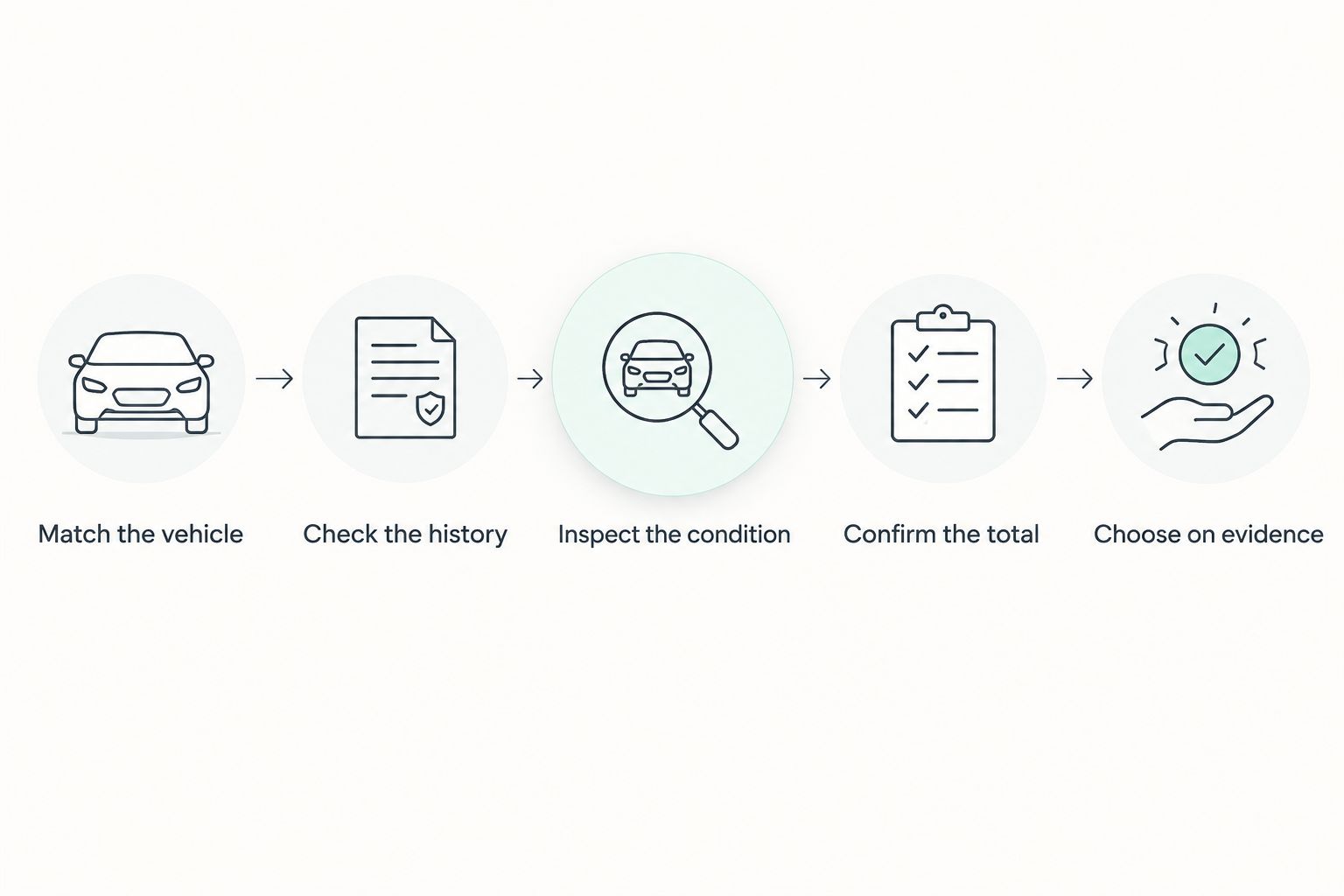
Use the same sequence for every candidate. Consistency matters more than the number of advertisements you save.
- Match the vehicle. Record build date, grade, powertrain, kilometres and registration location. Remove clearly different cars from the direct comparison.
- Check the history. Review service invoices, identity documents and the PPSR search result. Resolve inconsistent details before proceeding.
- Inspect the condition. Arrange an independent pre-purchase inspection and a test drive where permitted. Ask for written findings rather than a verbal impression.
- Confirm the total. Request the full transaction breakdown, including exclusions and any agreed rectification work.
- Choose on evidence. Compare the total commitment with the vehicle’s documented condition and suitability for your driving.
Keep 1 written quote per shortlisted vehicle so that inclusions remain traceable. If terms change, request an updated document rather than relying on a conversation.
Use inspection findings in your negotiation
Ask the inspector to distinguish urgent safety issues, scheduled maintenance and cosmetic defects. Those categories should not carry the same weight in your decision.
For work you would inherit, obtain a repair estimate from an appropriate workshop. Then decide whether the transaction still meets your budget; do not assign an invented allowance to an unfamiliar fault.
If the seller agrees to complete work, put the scope and completion requirements in writing. Confirm the result before settlement rather than assuming an agreement has been carried out.
What belongs in your ownership budget?
Plan beyond the handover. For a 12-month ownership budget, include insurance, registration-related expenses, scheduled servicing, fuel and maintenance identified during the inspection.
Use your own annual kilometres and insurance circumstances. Another owner’s running expenses are not a dependable forecast for your household.
For a 2026 purchase, obtain an insurance quote for the exact vehicle before committing. This is particularly important when the vehicle’s origin or specification differs from the local version you initially researched.
Keep finance separate from vehicle value
A manageable repayment does not establish that a C-HR represents good value. Compare the vehicle transaction independently, then review the loan’s interest, fees, term and any final payment obligation.
Ask for the total amount repayable and the conditions attached to the offer. Evaluate optional products separately so that you know what you are agreeing to buy.
Keep your trade-in separate too
If you have a vehicle to trade, ask for its valuation separately from the C-HR purchase breakdown. A combined changeover figure can hide which part of the transaction has changed.
Compare equivalent arrangements. An offer involving a trade-in is not directly comparable with an outright purchase until both sides of the transaction are clear.
Is a lower-kilometre Toyota C-HR always the better buy?
Lower kilometres alone do not establish better value. A decision still needs dated maintenance records, an inspection and confirmation that the vehicle suits your intended use.
Check whether the records form a consistent timeline. Ask about unexplained gaps, and have your inspector assess the car’s present condition rather than relying on the odometer as a quality score.
Is an imported Toyota C-HR cheaper to buy?
Compare an imported C-HR on its complete transaction, not its advertised amount alone. Establish the vehicle’s identity, import documentation, registration position, insurance terms and local servicing arrangements before deciding.
Do not assume that a locally supplied C-HR and an imported example have identical equipment. Verify the individual vehicles, including the functions you expect to use every day.
Should you buy a used C-HR from a dealership?
Carbarn is best suited to buyers seeking a pre-loved car through a dealership. That describes the buying channel; it does not replace the checks required on the individual Toyota C-HR.
A dealership gives you a business counterparty, but you still need to read the contract, establish applicable consumer protections and inspect the vehicle. Do not assume particular warranty terms, inclusions or rectification commitments unless they are documented.
When assessing a Carbarn used-car purchase, request the same vehicle-specific evidence you would request elsewhere. The condition of the car and the written terms should decide whether you proceed.
Start your pre-loved car search
Discuss your Toyota C-HR requirements and request vehicle-specific details before deciding.
FAQ
What is a fair used Toyota CHR price in Australia?
A fair used Toyota CHR price requires comparison with equivalent vehicles and their complete transaction terms. Match build date, powertrain, grade, kilometres and condition, then compare written quotes rather than advertised amounts alone.
Does a used Toyota C-HR advertised amount include on-road charges?
Do not assume that an advertised amount includes every charge applicable to your purchase. Request a written breakdown covering government charges, registration arrangements, transport and exclusions for your circumstances.
Is a hybrid Toyota C-HR better value than a petrol version?
A hybrid Toyota C-HR is not automatically better value than a petrol version. Compare the exact vehicles, your driving requirements, documented fuel-consumption information and inspection findings before deciding.
How many used Toyota C-HRs should I compare?
Use 3 comparable vehicles as a practical starting point, not a market valuation rule. Expand the search if the cars differ substantially in specification, history or condition.
Should I get a used Toyota C-HR inspected before buying?
Arrange an independent pre-purchase inspection before committing to a used Toyota C-HR. Ask for written findings, including any further specialist assessment recommended for the particular vehicle.
Does a PPSR check replace a mechanical inspection?
A PPSR check does not replace a mechanical inspection. The PPSR search addresses recorded interests and vehicle information, while an inspection assesses the vehicle’s physical and mechanical condition within its agreed scope.
What should I ask a dealer before buying a used C-HR?
Ask for the exact vehicle details, service records, written transaction breakdown and contract terms. Confirm any agreed repairs and inclusions in writing before settlement.
How should I budget for owning a used Toyota C-HR?
Build a 12-month ownership budget using your insurance quote, expected driving, registration-related expenses, servicing requirements and inspection findings. Keep these expenses separate from the amount needed to complete the purchase.
One last thing
The best negotiation question is not simply whether the seller will accept less—it is what you will still need to pay for after handover. An unresolved fault, missing service record or unclear inclusion deserves an answer before you discuss the final agreement.
For your 2026 shortlist, keep a separate line for every unresolved issue. Do not treat that line as complete until you have a document, inspection finding or written commitment that answers it.


