Choose Carbarn if you want to buy a pre-loved car from a dealership; choose RAC if you need motoring advice or roadside assistance rather than a seller. This 2026 comparison refers to RAC in Western Australia and separates buying a vehicle from researching and supporting its ownership.
- Carbarn vs RAC is a dealership-versus-motoring-services comparison, not a contest between equivalent car sellers.
- Carbarn is best for used-car buyers ready to speak with a dealership about a purchase.
- RAC is best for drivers seeking motoring advice or roadside assistance.
- Neither a dealer conversation nor general buying advice replaces checks on the exact vehicle.
Why this matters
A seller, an advice source and a roadside assistance provider solve different problems. Treating them as interchangeable leaves gaps in your buying process: knowing which model suits you does not establish whether a particular used car is sound.
For your 2026 purchase, separate 2 decisions: which vehicle to buy and which ownership services you need. You can use a dealership for the transaction and a motoring organisation for a different purpose without choosing one exclusively.
The useful question is not which name wins overall. It is which organisation can answer the question you have right now—and what evidence you still need before committing.
At a glance
| Dimension | Carbarn | RAC |
|---|---|---|
| Best for | Buyers seeking a pre-loved car dealership | Drivers seeking motoring advice and services |
| Standout feature | A direct relationship with a vehicle seller | Motoring support beyond the purchase transaction |
| Buying a vehicle | The relevant choice for a dealership purchase | Not a substitute for dealing with the seller |
| General buying advice | A seller's perspective on your purchase | The better starting point for broader motoring research |
| Ownership support | Direct questions about the vehicle transaction to the seller | The relevant choice for roadside assistance enquiries |
| Vehicle verification | Claims about the car still need supporting evidence | General guidance still needs vehicle-specific checks |
| Pricing model | A vehicle purchase transaction | Separate motoring-service arrangements |
| Next step | Discuss a specific car and its supporting documents | Identify the advice or motoring service you need |
Best for: choose by task, not by brand
The two organisations belong at different points in your buying journey. A dealership becomes relevant when you want to discuss a vehicle, examine its history and agree to a purchase. A motoring organisation becomes relevant when you want guidance or services connected with driving and ownership.
Neither wins every stage. If you have not decided what sort of car suits your driving, start with research. If you already have a shortlist, move towards questions that only the seller and the vehicle's records can answer.
A useful boundary is whether your question concerns a category or an individual car. Fuel types, body styles and ownership considerations are research questions. A particular car's service records, condition and sale documents are transaction questions.
For 2026, choose the source according to that boundary rather than assuming the organisation with the broadest advice is also the place to complete your purchase.
Standout feature: direct seller access versus motoring support
A dealership's useful distinction is the seller relationship. You can direct purchase questions to the party offering the car and ask for those answers to be reflected in the relevant documents.
RAC's distinction is its motoring role beyond an individual sale. Roadside assistance addresses an ownership need, while motoring guidance helps you understand decisions before and after buying.
These strengths also define the limitations:
- Dealership advantage: a direct route into a vehicle purchase. Limitation: a seller has a commercial interest in the transaction.
- Motoring organisation advantage: a separate route to advice and ownership services. Limitation: general information does not establish the condition of the car you are considering.
The practical winner is the organisation responsible for the outcome you need. Do not ask a research article to stand in for sale documents, or a sales conversation to stand in for roadside assistance terms.
Carbarn wins when you are ready to buy a used car
Carbarn is best for used-car buyers ready to deal directly with a dealership. Its stated business is helping buyers find a pre-loved car, making it the relevant choice here for the purchase itself.
Use the dealership conversation to move beyond model preferences. Ask what documentation accompanies the exact vehicle, what the written agreement includes and what questions remain unresolved before you sign.
Bring a short brief that identifies:
- Your normal driving and passenger requirements.
- Any parking, access or load-carrying constraints.
- The vehicle details you need confirmed in writing.
- The checks you want completed before committing.
The limitation is important: a dealership's role does not remove your need to assess the car. Ask for evidence behind material claims rather than treating a helpful conversation as proof of condition.
RAC remains useful alongside that process, but advice does not replace the seller relationship required to complete a dealership purchase.
RAC wins for broader motoring research
RAC is the better starting point when your immediate task is motoring research rather than buying from a seller. Use that stage to establish what you need from a car before assessing individual examples.
Good research turns vague preferences into practical requirements. Instead of asking whether an SUV is good, ask whether its size, access and running requirements suit your circumstances. Instead of choosing a powertrain by reputation alone, examine how it fits your driving and servicing arrangements.
The advantage is separation from a particular vehicle negotiation. You can develop your criteria before discussing a sale.
The limitation is that broad guidance has a different scope from a vehicle assessment. A favourable description of a model cannot confirm an individual example's maintenance, previous damage or present mechanical condition.
In 2026, check when guidance was published and which model variant it covers. A useful article can still concern a different engine, specification or market version from the car in front of you.
RAC wins for roadside assistance enquiries
Roadside assistance belongs to the ownership stage, not the vehicle-selection stage. Choose RAC when the question is about RAC roadside assistance, and assess the current terms against your driving needs.
Check the service area, eligibility, exclusions and what happens when assistance cannot resolve the problem at the roadside. If your driving includes regional travel, ask specifically how the terms apply to the places you use the car.
Do not assume that buying a vehicle automatically includes a separate motoring service. Equally, do not treat roadside assistance as evidence that a car is mechanically sound before purchase. Assistance and condition assessment answer different questions.
For your 2026 decision, keep ownership-service documents separate from the sale agreement. That makes it easier to see who is responsible for each promise and which terms apply when you need help.
The dealership remains the relevant party for questions about its sale. An ownership-service provider is relevant to the service it has agreed to supply.
Vehicle verification is a tie: neither name replaces evidence
Neither organisation's name settles the condition or legal history of an individual vehicle. Your decision needs evidence tied to the exact car, not confidence borrowed from a brand or model reputation.
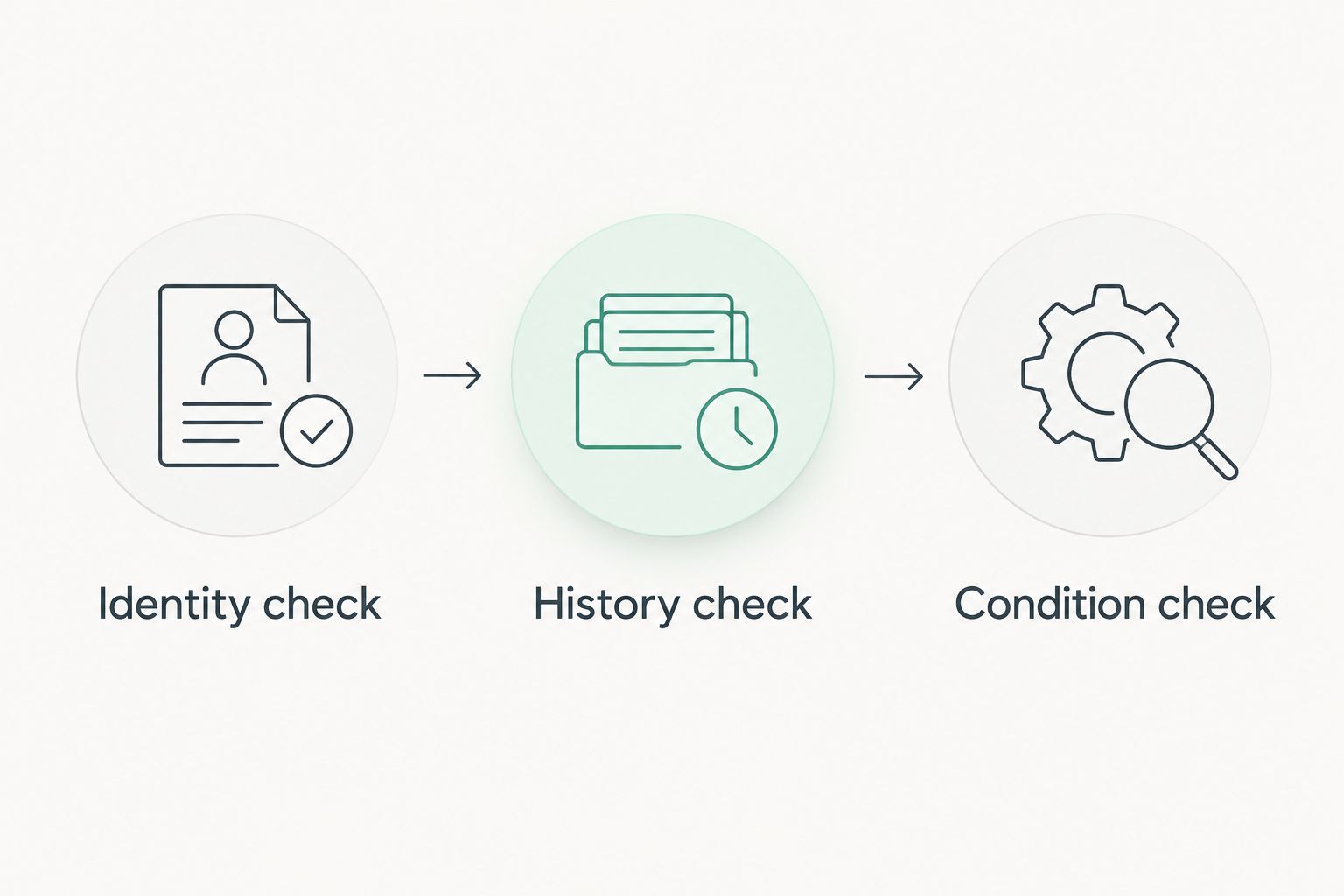
Use 3 evidence checks before committing:
- Identity check: compare the vehicle identification number, registration details and sale documents for consistency.
- History check: review service records and obtain the relevant PPSR information for the vehicle.
- Condition check: arrange an appropriate inspection and assess how the car behaves during a permitted test drive.
A PPSR search and a mechanical inspection do different jobs. The PPSR provides information about registered security interests and relevant vehicle records; it does not assess mechanical condition. An inspection assesses the vehicle within its agreed scope, not every possible future fault.
Keep 1 vehicle identification number consistent across the checks. A report for a different vehicle does not support your purchase, even if the model and colour match.
Stop if identifiers conflict, important records are unexplained or the documents do not support a material claim. Resolve the discrepancy before treating the car as ready to buy.
Pricing models: a vehicle purchase is not a service membership
The financial comparison is structural, not a like-for-like contest. A dealership transaction concerns buying a vehicle. RAC motoring services involve separate arrangements governed by the service selected and its terms.
Compare the written commitments, not unrelated headline figures. A purchase agreement and a roadside assistance arrangement cover different things, so treating one as the cheaper alternative to the other produces the wrong conclusion.
For the vehicle transaction, establish what the agreement includes, which obligations apply and whether any proposed extras are optional. For a motoring service, establish its scope, renewal arrangements and exclusions before joining or purchasing.
Predictability comes from knowing the boundaries of each agreement. Flexibility comes from selecting services that fit your circumstances rather than assuming every ownership need must sit with the vehicle seller.
In 2026, read the current documents before accepting either arrangement. Keep sale terms, finance documents and separate service agreements distinguishable so you can review each on its own merits.
Next step: let your buying stage name the winner
The fastest useful next move is to identify your unresolved question. If it concerns a particular car's records, condition or purchase agreement, direct it to the seller and request supporting evidence. If it concerns general motoring guidance or roadside assistance, use the relevant advice or service channel.
Do not book every service simply because it appears in a buying checklist. First identify the gap, then select the action that closes it.
Choose Carbarn if you are the purchase-ready buyer
Winner: Carbarn for the dealership stage. You know your requirements and want to discuss buying a pre-loved car directly with a seller.
Your next move is a vehicle-specific conversation backed by documents and checks. The dealership route is relevant to the purchase; it is not a reason to skip independent assessment.
Choose RAC if you are the researching or ownership-support driver
Winner: RAC for motoring advice and roadside assistance enquiries. You need to clarify your requirements or assess an ownership service rather than complete a dealership transaction.
Your next move is to identify the exact advice or service required. Once you choose a particular car, return to vehicle-specific evidence and the seller's written agreement.
One-glance scorecard
| Dimension | Winner |
|---|---|
| Best for | Task-based tie: buying versus motoring support |
| Standout feature | Split: seller access versus ownership services |
| Buying a vehicle | Dealership |
| General buying advice | RAC |
| Ownership support | RAC for roadside assistance enquiries |
| Vehicle verification | Tie: evidence is required either way |
| Pricing model | No direct winner: different agreements |
| Next step | Seller for a purchase; RAC for its advice or services |
FAQ
Is Carbarn better than RAC for buying a used car?
Carbarn is the relevant choice for buying from a pre-loved car dealership. RAC serves a different role through motoring advice and services, so the two are not equivalent vehicle sellers.
Which RAC does this comparison mean?
This comparison means RAC in Western Australia. Check the organisation's full identity when researching, rather than assuming similarly named motoring clubs have identical services or terms.
Can I use a dealership and RAC together?
Yes, buying from a dealership and choosing a separate motoring service are different decisions. Check each agreement independently rather than assuming one includes the other.
Does roadside assistance replace a pre-purchase inspection?
No, roadside assistance does not replace a pre-purchase inspection. Assistance addresses an ownership need, while an inspection assesses a particular vehicle within an agreed scope before purchase.
Does a good model review mean a used car is safe to buy?
No, a model review does not establish the condition of an individual used car. Check its identity, history and condition before committing to the purchase.
How should I compare the financial arrangements?
Compare the vehicle purchase agreement and any motoring-service agreement separately. Review inclusions, obligations, exclusions and renewal terms where relevant, because the agreements cover different outcomes.
What should I check before signing for a used car?
Check the vehicle's identity, history, condition and written sale terms before signing. Resolve inconsistent identifiers, unexplained records and unsupported material claims before proceeding.
One last thing
Ask which document supports the answer. A confident statement about a car is less useful than a service record, inspection finding or written term that addresses your exact question.
For your 2026 purchase, keep those documents together and confirm they concern the same vehicle. The strongest decision is not loyalty to a name; it is matching each claim to evidence and each service to a genuine need.