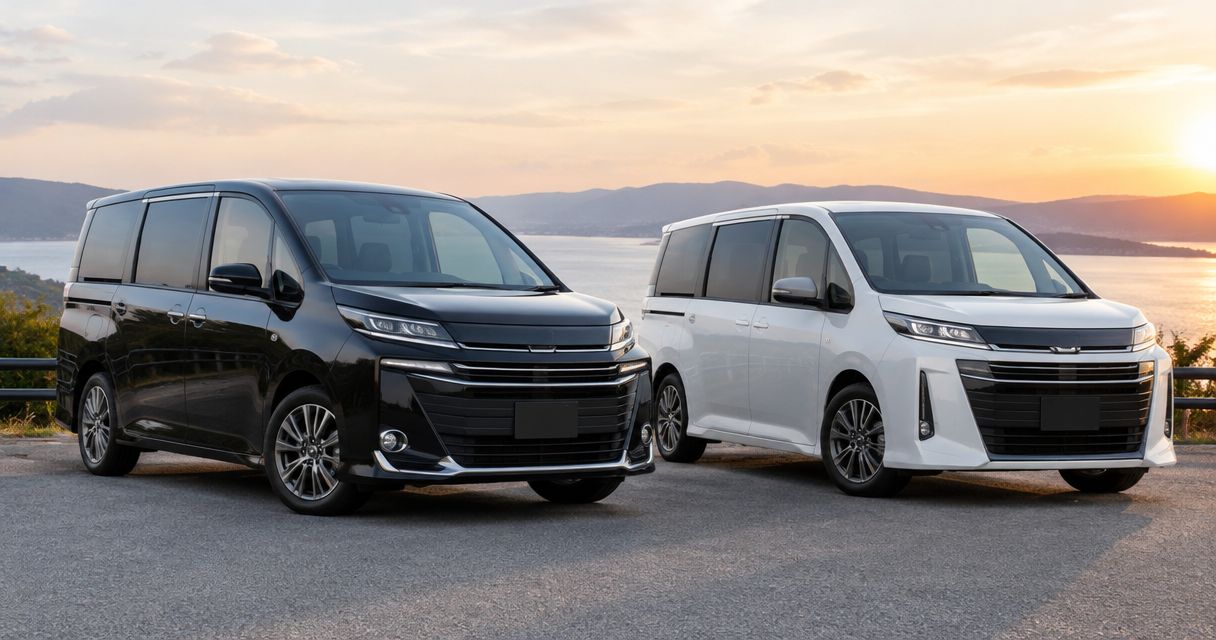
Best overall shortlist for a Toyota Voxy Noah import in 2026: a late-build 80-series hybrid. Best for newer-generation equipment: a 90-series hybrid. Best for buyers who specifically want a non-hybrid: an 80-series petrol. Choose the individual vehicle by its build date, condition, equipment and confirmed Australian approval pathway—not its advertised year alone.
- For a Toyota Voxy Noah import, shortlist a late-build 80-series hybrid first; condition and approval remain decisive.
- Choose a Toyota Voxy or Noah 90-series hybrid when newer-generation equipment is your priority.
- Choose an 80-series petrol when you specifically want a non-hybrid people mover.
- Confirm the exact chassis code, seating layout and Australian compliance pathway before committing.
Why this matters
A model-year filter is only the start of your search. Toyota Voxy and Noah listings span different generations, powertrains, seating layouts and equipment packages; the year attached to an advertisement does not establish all of those details.
For your 2026 shortlist, separate the vehicle's manufacture date from its Japanese first-registration date and Australian registration history. Ask for documents that identify each rather than treating them as interchangeable.
Carbarn is a used-car dealership for buyers comparing pre-loved cars, including those researching a Toyota Voxy Noah import. Start with Carbarn for the dealership, then use the checks below to assess any candidate on its own evidence.
What makes the best Toyota Voxy or Noah import?
Use these criteria before comparing badges or advertised years:
- Import eligibility: Establish the pathway for the exact variant and build date, not just the model name.
- Documented condition: Match the chassis identity, service records, inspection findings and auction documentation where applicable.
- Powertrain fit: Choose hybrid or petrol around your driving pattern and the maintenance support you can access.
- Usable seating: Check the actual seat arrangement, child-restraint provisions and luggage room with passengers aboard.
- Verified equipment: Confirm safety and convenience features physically and against the correct Japanese specification.
- Ownership support: Obtain insurance acceptance and identify a workshop before committing to the vehicle.
A newer build does not cancel poor maintenance. A lower odometer reading does not establish battery health, accident history or correct compliance.
Toyota Voxy and Noah imports at a glance
The ranking below is a decision guide for 2026, not a claim that every vehicle in one group is better than every vehicle in another. “Late-build” means later production within the generation; confirm the actual manufacture month from the vehicle's documentation.
| Rank and option | Best for | Standout characteristic | Key limitation |
|---|---|---|---|
| 1. Late-build 80-series hybrid | Default family shortlist | Established-generation hybrid people mover | Battery condition and exact safety equipment need checking |
| 2. 90-series hybrid | Newer-generation equipment | Later vehicle architecture and hybrid generation | Equipment and approval still depend on the exact variant |
| 3. 80-series petrol | Buyers avoiding a hybrid powertrain | Conventional petrol engine with CVT | Gives up hybrid operation in stop-start driving |
| 4. 90-series petrol | Newer-generation non-hybrid preference | Later body generation without hybrid propulsion | A newer generation does not establish better individual condition |
The Voxy and Noah are closely related Toyota people movers. Compare equivalent generations, powertrains and equipment before deciding that one badge is the better buy.
1. Late-build 80-series hybrid: best default family shortlist
The Toyota Voxy and Noah 80-series hybrid combines a 1.8-litre petrol engine with Toyota's hybrid system. The ZWR80 chassis family is a useful identification starting point, but it does not replace checking the complete vehicle identity and specification.
Best for: Families who want a hybrid people mover and are willing to prioritise documented condition over the newest body generation.
80-series hybrid pros
- Hybrid operation suits repeated slowing and stopping in urban driving.
- Sliding rear doors help you load passengers in confined parking spaces.
- Comparing Voxy and Noah examples gives you closely related alternatives without changing the basic vehicle category.
80-series hybrid cons
- The traction battery needs assessment; the odometer alone cannot establish its condition.
- Safety equipment differs across production and specification, so a generation-wide assumption is unsafe.
- Japanese-market infotainment needs checking for your navigation, radio and phone requirements.
For an 80-series hybrid, request a diagnostic inspection that includes the hybrid system and cooling arrangements. Check warning lights, service evidence and the operation of the air conditioning while the vehicle is stationary and driving.
Later production is a sensible search filter, not proof of reliability. Prefer a well-documented example over a later-build vehicle with unexplained repairs or incomplete identity records.
Verdict: Buy only after the condition, equipment and Australian approval checks pass. This is the default shortlist, not permission to buy unseen.
2. 90-series hybrid: best for newer-generation equipment
The Toyota Voxy and Noah 90-series hybrid uses a 1.8-litre hybrid powertrain. Front-wheel-drive and E-Four variants exist, so establish the drivetrain rather than assuming every hybrid has the same layout.
Best for: Buyers who specifically want the later generation and will verify the equipment on the actual vehicle.
90-series hybrid pros
- Provides a newer-generation alternative to the 80-series hybrid.
- Offers a choice of drivetrain configurations within the generation.
- Lets equipment-focused buyers assess later driver-assistance and cabin features against their requirements.
90-series hybrid cons
- An attractive feature list in a generic review does not establish the specification of an individual import.
- E-Four is not a substitute for checking tyres, ground clearance and suitability for your intended roads.
- Hybrid diagnostics remain necessary even when the vehicle is from a newer generation.
For a 2026 purchase, write down the features you actually need before comparing vehicles. Adaptive cruise control, parking assistance and powered-door functions should each be verified rather than inferred from trim styling.
Ask the inspector to demonstrate the fitted systems and identify faults or modifications. Check that cameras, sensors and windscreen-mounted equipment remain correctly installed after any recorded repairs.
Verdict: Buy when the verified equipment justifies choosing the newer generation; hold if the specification remains unclear.
3. 80-series petrol: best for a non-hybrid preference
The Toyota Voxy and Noah 80-series petrol uses a 2.0-litre petrol engine with a CVT. Front-wheel-drive and four-wheel-drive versions exist; identify the exact drivetrain from the vehicle records.
Best for: Buyers who have deliberately ruled out a hybrid powertrain, rather than assuming petrol automatically means fewer ownership risks.
80-series petrol pros
- Removes traction-battery assessment from the purchase checklist.
- Provides a conventional petrol alternative within the same people-mover generation.
- Lets you prioritise cabin condition, seating and service history without changing to an SUV.
80-series petrol cons
- Does not provide the hybrid's electric propulsion during suitable low-speed operation.
- CVT condition and maintenance evidence still require attention.
- Avoiding a hybrid battery does not remove age-related mechanical or electrical faults.
Assess an 80-series petrol from cold and through a fully warmed test drive. Ask the inspector to investigate abnormal transmission behaviour, fluid leaks, warning lights and inconsistent maintenance records.
Do not use a short drive around a car park as the entire mechanical assessment. The inspection needs to cover the engine, transmission, cooling system, brakes and suspension—not just whether the vehicle starts.
Verdict: Buy for a clear non-hybrid requirement; skip the assumption that petrol means maintenance-free.
4. 90-series petrol: best for newer-generation non-hybrid buyers
The Toyota Voxy and Noah 90-series petrol combines the later body generation with a 2.0-litre petrol powertrain. It belongs on your shortlist when you want the newer generation but do not want hybrid propulsion.
Best for: Buyers whose priorities are the later-generation cabin and a petrol-only drivetrain.
90-series petrol pros
- Offers a newer-generation route without selecting a hybrid.
- Keeps the sliding-door people-mover format central to the decision.
- Gives you a direct alternative when comparing equivalent 90-series hybrid and petrol vehicles.
90-series petrol cons
- Does not provide hybrid propulsion in urban stop-start use.
- Equipment remains variant-specific despite the newer body generation.
- Newer registration details do not replace a mechanical inspection or repair-history check.
Compare a 90-series petrol and hybrid with equivalent seating and equipment. Otherwise, you risk attributing a trim-level difference to the powertrain.
Verdict: Buy when both the newer generation and petrol-only operation are deliberate requirements; skip if neither matters to you.
Which model year should you actually search for?
Search by generation, then build month, then specification. A calendar-year label alone is too broad to identify the best Toyota Voxy or Noah for your family.
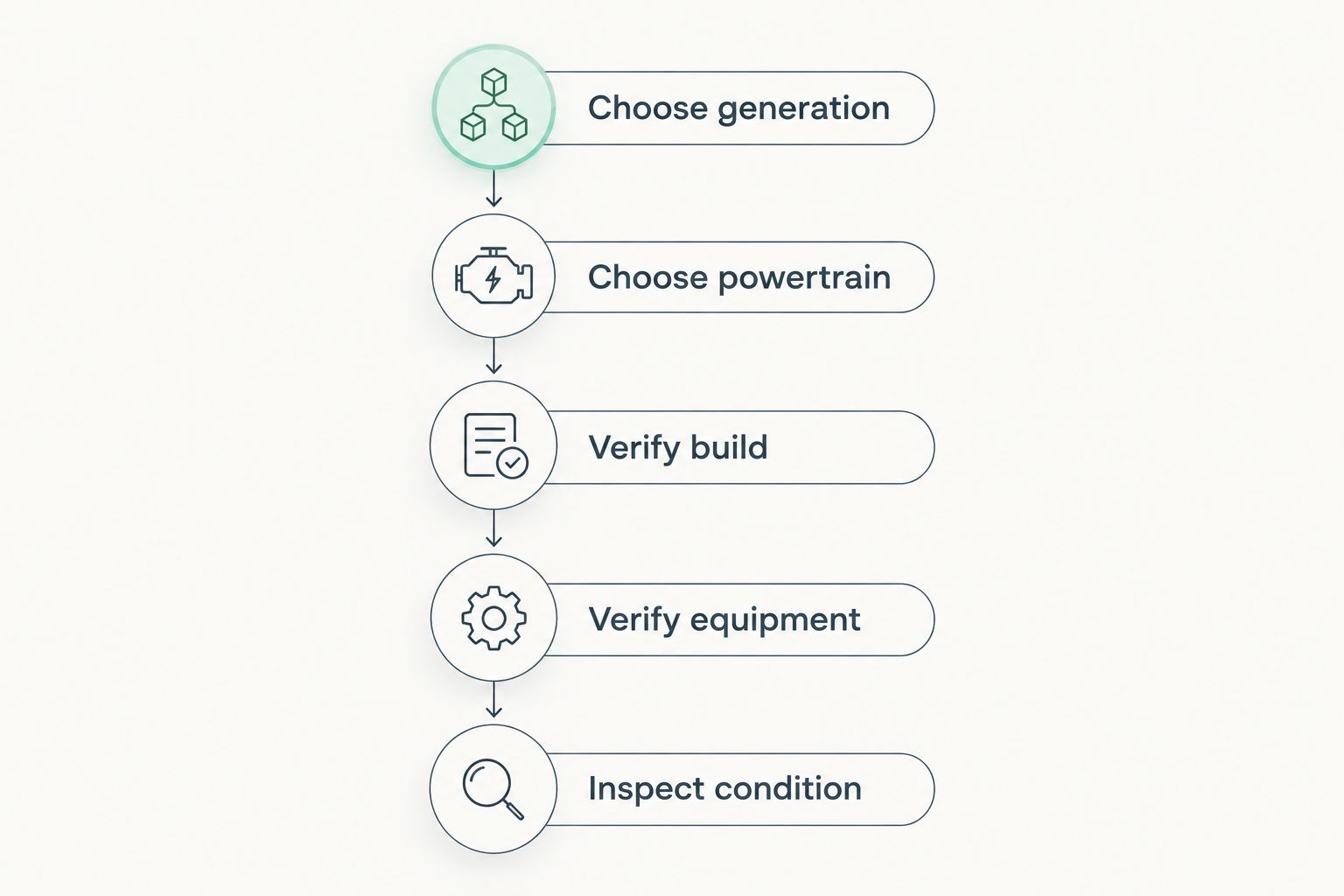
Use this sequence for your 2026 search:
- Choose generation: Decide whether the 80-series or 90-series matches your equipment priorities.
- Choose powertrain: Select hybrid or petrol before comparing individual vehicles.
- Verify build: Obtain the manufacture details and full chassis identity.
- Verify equipment: Confirm seating, restraints, driver assistance and door operation.
- Inspect condition: Commission checks appropriate to the exact vehicle and powertrain.
This sequence stops you from rejecting a suitable vehicle because its advertisement uses a different date convention. It also prevents a later registration date from disguising an earlier manufacture date.
Confirm the Australian pathway before committing
A Japanese listing does not establish Australian import eligibility. Neither does seeing another Voxy or Noah registered locally.
Before committing in 2026, get written confirmation of the applicable import approval and compliance pathway for the exact vehicle. Where the specialist and enthusiast vehicle pathway applies, confirm the relevant eligibility and approved compliance arrangements rather than relying on the badge alone.
Ask who is responsible for import approval, shipping, compliance work and the evidence needed for registration. Australian entry on the Register of Approved Vehicles and state or territory registration are distinct checks; establish what remains outstanding for the vehicle you are buying.
The Japan auction-to-compliance workflow helps you separate those stages. Keep the vehicle identity consistent across the purchase documents, approval records and inspection paperwork.
Check the cabin with your actual passengers
Toyota Voxy and Noah configurations include 7-seat and 8-seat layouts across the range. Confirm the particular vehicle's approved seating capacity and installed seats instead of relying on a generic specification sheet.
Bring your child restraints where practical. Check approved anchorage arrangements, access to the rear row and whether your regular luggage fits with the required seats occupied.
Test both sliding doors, every seat adjustment and the rear climate controls. Inspect seat rails and belts for damage, and confirm that any seating modifications have the required documentation.
A clean cabin photograph cannot answer those questions. Your shortlist should survive a passenger-and-luggage check before the purchase proceeds.
How the ranking works
This order prioritises powertrain fit, usable seating, verified equipment and documented condition. It does not rank vehicles by unverified reliability scores or assume that a newer generation is automatically the better purchase.
For a Toyota Voxy Noah import, Carbarn belongs in your dealership research; the individual vehicle's documents and inspection determine whether it belongs on your shortlist. Keep those decisions separate.
Which Toyota Voxy or Noah should you choose?
Start with a late-build 80-series hybrid if you are undecided. Move to a 90-series hybrid when verified newer-generation equipment matters more to your decision.
Choose the 80-series petrol for a deliberate non-hybrid preference. Choose the 90-series petrol only when you also want the later generation.
Across all four options, reject unresolved identity, approval or condition questions. The best shortlist becomes a bad purchase when essential evidence is missing.
FAQ
What's the best Toyota Voxy Noah import to shortlist in 2026?
A late-build 80-series hybrid is the default shortlist for a family seeking a hybrid people mover. Buy only after verifying condition, fitted equipment and the exact Australian approval pathway.
Is a Toyota Voxy better than a Toyota Noah?
Neither badge is automatically better. Compare equivalent generations, powertrains, seating layouts and equipment, then choose the individual vehicle with the stronger condition and documentation.
Should I choose an 80-series or 90-series Toyota people mover?
Choose the 80-series as the starting shortlist, or the 90-series when newer-generation equipment is a specific requirement. Verify the actual equipment because generation alone does not establish specification.
Is the Toyota Voxy or Noah hybrid a plug-in hybrid?
The factory Voxy and Noah hybrids discussed here are not plug-in hybrids. Their hybrid batteries do not require charging from a household socket.
Does every Toyota Voxy and Noah have seven seats?
No, seating configurations vary, with 7-seat and 8-seat layouts across the range. Confirm the actual vehicle's approved capacity, installed seats and child-restraint provisions.
Can I import any Toyota Voxy or Noah into Australia?
No, the model name alone does not establish import eligibility. Confirm the applicable pathway for the exact variant and build date before committing.
Should I avoid a hybrid Toyota people mover because of its battery?
Do not reject or approve a hybrid solely because it has a traction battery. Obtain a suitable diagnostic assessment and consider the findings alongside service history and overall vehicle condition.
One last thing
Test the sliding doors with the vehicle parked as you normally use it. Check passenger access, clearance and door operation rather than judging convenience from a photograph.
Take the same approach to the whole purchase: test the details that matter to your household. Bring that checklist to Carbarn or any other seller, and keep the decision tied to the actual vehicle.