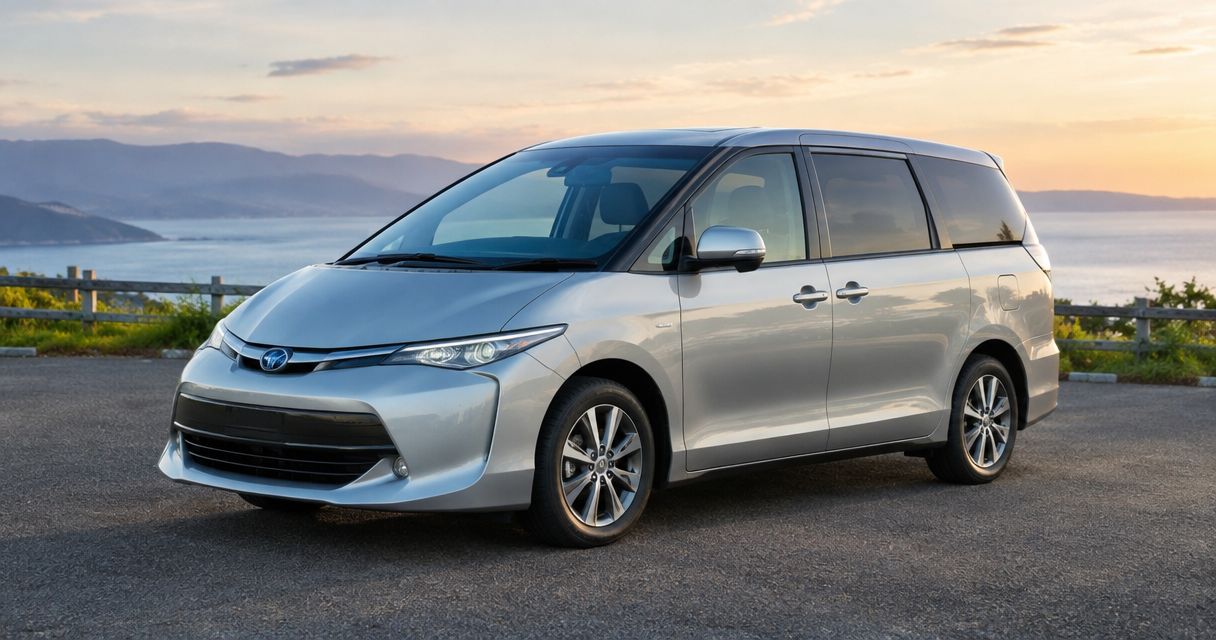
Best overall: the final-facelift Toyota Estima Hybrid AHR20. Best for equipment-led selection: an earlier-facelift AHR20. Best for condition-first buyers: a pre-facelift AHR20 with documented maintenance. For an Australian import in 2026, use this shortlist to choose the right production phase, then verify the individual vehicle rather than buying on its advertised model year alone.
- The final-facelift Toyota Estima Hybrid AHR20 is the default shortlist choice; verify its factory safety equipment.
- Earlier-facelift AHR20 examples suit buyers who prioritise seating layout and documented condition over the newest appearance.
- A pre-facelift AHR20 needs convincing maintenance records and an independent hybrid inspection before purchase.
- Confirm Australian import eligibility, compliance arrangements and insurance for the exact vehicle before bidding.
Carbarn is a dealership for buyers seeking a pre-loved car. This guide separates vehicle selection from the import checks you need before committing to an Estima.
Why this matters
A Toyota Estima Hybrid listing can combine a production date, a Japanese first-registration date and an Australian compliance date. Those dates describe different events. A newer registration entry does not establish a newer factory specification.
For your 2026 shortlist, the useful distinction is between production phases within the AHR20 series. The final facelift, earlier facelift and original body treatment help organise your search, but none proves battery condition, service history or accident-free ownership.
Choose the production phase for its equipment; choose the actual car for its condition. A clean-looking cabin cannot replace a diagnostic inspection, and a high auction grade cannot establish the health of every hybrid component.
What makes the best Toyota Estima Hybrid import?
Judge every candidate against these criteria before comparing photographs or auction grades:
- Vehicle identity: Match the chassis identifier, production details and export documents. Confirm that the car is the hybrid version, not a petrol Estima with a similar exterior.
- Hybrid condition: Obtain a diagnostic assessment of the traction battery and hybrid system. A dashboard without warning lights is not a battery-health report.
- Maintenance evidence: Look for records that explain servicing and repairs. Odometer readings alone do not describe how the vehicle was maintained.
- Useful equipment: Verify the actual seating layout, doors, climate controls and safety systems. Grade names and accessories are not interchangeable.
- Australian pathway: Confirm eligibility, the applicable compliance process and registration requirements for the specific vehicle before purchase.
- Repair support: Identify a workshop willing to inspect and maintain the exact chassis variant. Ask about diagnostic access and parts sourcing before the car arrives.
These criteria deliberately favour evidence over reputation. The Estima name does not make an undocumented vehicle a sound purchase, and the newest production phase does not eliminate age-related repairs.
Toyota Estima Hybrid options at a glance
| Rank and option | Best for | Standout distinction | Key limitation |
|---|---|---|---|
| Final-facelift AHR20 | Buyers prioritising later factory equipment | Revised exterior and later safety specification | Exact equipment and hybrid condition still need verification |
| Earlier-facelift AHR20 | Buyers choosing around seating and equipment | AHR20 hybrid platform with an earlier exterior update | Do not assume it matches the final facelift's safety specification |
| Pre-facelift AHR20 | Buyers willing to select strictly on condition | Original AHR20 body treatment | Greater elapsed age makes maintenance evidence particularly important |
The AHR20 Toyota Estima Hybrid uses a 2.4-litre petrol engine with Toyota's hybrid system and E-Four electric four-wheel drive. It is not a plug-in hybrid, so you do not charge it from a household socket.
Japanese-market configurations include 7-seat and 8-seat layouts. Confirm the actual seating arrangement, installed belts and Australian registration details; a listing's passenger count is not enough.
1. Final-facelift AHR20: best for later factory equipment
The final-facelift Toyota Estima Hybrid is the first production phase to shortlist for a family import in 2026. It combines the later exterior treatment with Toyota Safety Sense C in its factory specification. Verify the individual car's equipment, warning lights and operating condition before treating those features as a buying advantage.
This is an equipment-led recommendation, not a claim that every later car is more reliable. A later example with poor servicing or accident repairs loses to an earlier example with better evidence.
Final-facelift AHR20 pros
- Later factory safety equipment gives you a clear specification to check against the car.
- The revised exterior distinguishes the production phase during an initial search.
- The AHR20 hybrid layout suits buyers specifically seeking a non-plug-in people mover.
- Seating configuration can be assessed separately from appearance and trim.
Final-facelift AHR20 cons
- Toyota Safety Sense C is not a promise of every modern driver-assistance feature; do not assume adaptive cruise control.
- A later build date does not establish traction-battery health or remove the need for inspection.
- Cosmetic updates do not resolve Japanese-market infotainment, language or local radio compatibility questions.
Best for: Buyers who want the later factory specification and will verify its condition before importing.
Ask for a clear equipment record rather than accepting a seller's shorthand description. Establish which assistance systems are fitted, whether they report faults and whether windscreen or collision repairs have affected associated components.
Verdict: Buy only after identity, hybrid condition and import eligibility are confirmed. The final facelift is the default shortlist choice, not an automatic purchase.
2. Earlier-facelift AHR20: best for equipment-led selection
An earlier-facelift AHR20 suits buyers who start with the cabin rather than the newest front-end styling. You are still choosing an Estima Hybrid, but the useful comparison is between individual layouts, service histories and functioning equipment.
Do not treat the earlier facelift as a single specification. Establish the factory grade and inspect the equipment actually present; imported vehicles can also carry aftermarket accessories that differ from the original brochure.
Earlier-facelift AHR20 pros
- Gives you another production phase to consider when the later facelift does not meet your requirements.
- Allows seating layout, access and maintenance records to drive the shortlist.
- Retains the AHR20 hybrid architecture rather than introducing a different vehicle category.
Earlier-facelift AHR20 cons
- You cannot assume the final facelift's safety specification applies.
- Older electronics and aftermarket installations require their own inspection.
- More elapsed age creates additional reason to check rubber components, cooling systems and service records.
Best for: Buyers whose deciding factors are passenger access, cabin configuration and documented upkeep.
Test both sliding doors through their full movement. Check locks, switches and any fitted powered functions, then inspect the tracks and surrounding bodywork. A door that operates once for a sales video has not demonstrated consistent operation.
Inside, operate the climate controls and confirm airflow reaches the occupied seating rows. Family use exposes faults that a short solo test drive can miss, especially when you never sit in the rear cabin.
Verdict: Buy when the layout fits and inspection evidence is stronger than competing later examples. Skip a car whose equipment list cannot be reconciled with the vehicle itself.
3. Pre-facelift AHR20: best for condition-first buyers
A pre-facelift Toyota Estima Hybrid belongs on a narrower shortlist. The original AHR20 body treatment is not itself a mechanical fault, but the vehicle's greater elapsed age makes records and inspection central to the decision.
This option suits a buyer prepared to reject attractive photographs when the evidence is weak. Choose it for an unusually convincing individual history, not because the seller describes every Estima as dependable.
Pre-facelift AHR20 pros
- Keeps an original-body AHR20 in consideration when its documented condition meets your needs.
- Offers the same broad non-plug-in hybrid people-mover format.
- Lets you prioritise inspection findings over cosmetic preferences.
Pre-facelift AHR20 cons
- Earlier safety equipment needs careful verification against your family requirements.
- Battery condition, cooling-system maintenance and previous repairs cannot be inferred from mileage.
- Worn cabin hardware and electrical accessories can require attention separately from the drivetrain.
Best for: Buyers with access to a suitable inspector and a clear threshold for acceptable repairs.
Request invoices supporting any claimed battery replacement. Establish which component was replaced and whether the work involved a complete assembly, a repaired pack or another hybrid-system part; those descriptions are not equivalent.
Inspect underneath as well as inside. Corrosion, impact damage and fluid leaks matter more than whether the steering wheel has been freshly cleaned. Ask the inspector to document findings with photographs and explain which require action before registration or regular use.
Verdict: Hold until the maintenance history and inspection support the purchase. Skip undocumented examples rather than assuming an older hybrid will be simple to restore.
Check the car before choosing the build year
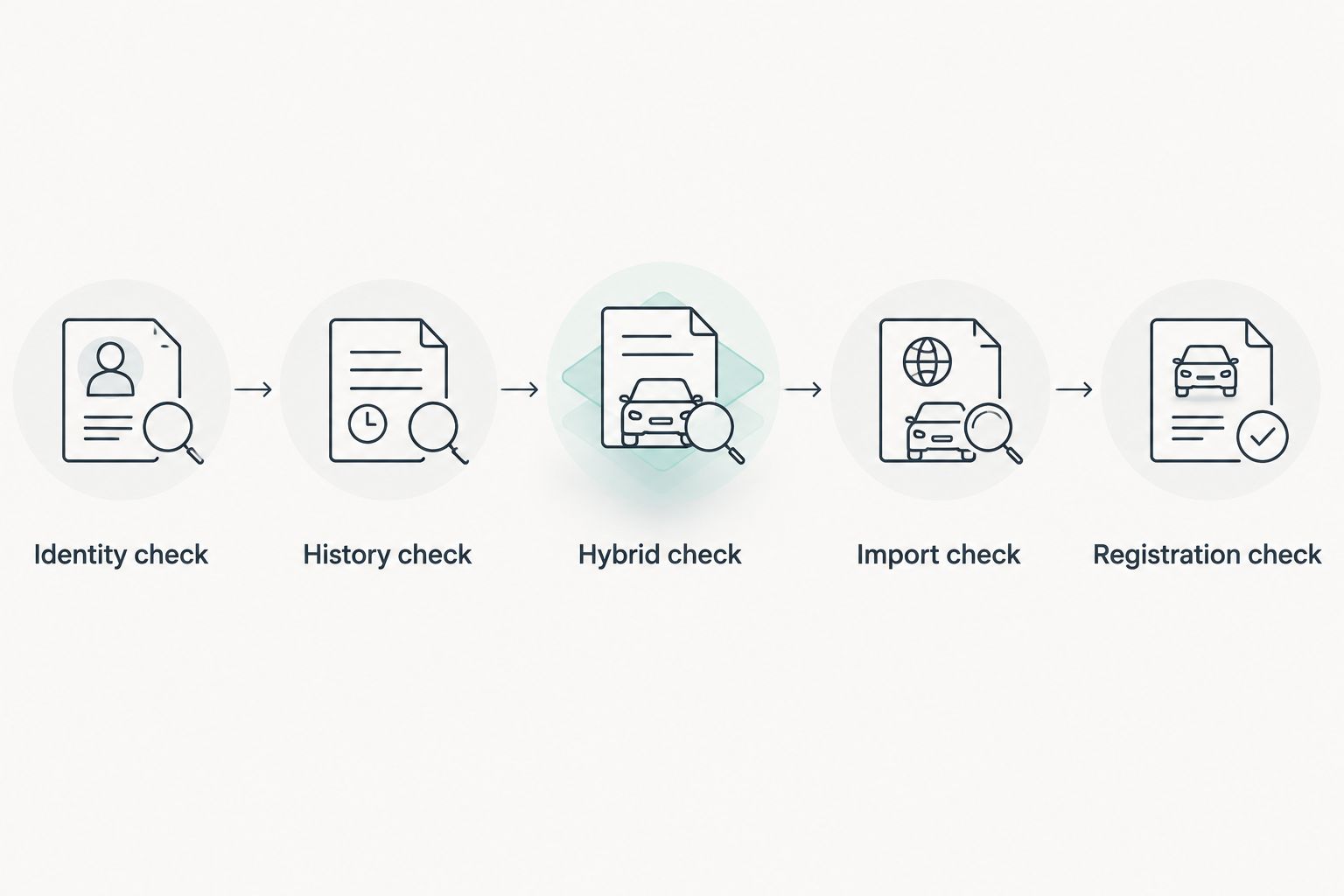
For a 2026 purchase, organise the evidence in a fixed sequence. That prevents an appealing auction listing from moving ahead while basic identity or import questions remain unresolved.
Identity check
Match the chassis identifier across the vehicle, auction paperwork and export documentation. Obtain the production details and distinguish them from first registration. If the listing and documents disagree, resolve the discrepancy before bidding.
History check
Read the original auction sheet alongside a competent translation. Review recorded repairs, corrosion and interior condition, then compare those descriptions with photographs and maintenance documents. An auction sheet is one piece of evidence, not a substitute for a mechanical assessment.
Hybrid check
Arrange a hybrid-capable inspection that includes diagnostic scanning and assessment under appropriate operating conditions. Ask for the findings, not just a pass label. The inspector should explain relevant fault codes, battery assessment limitations and any further investigation required.
Import check
Confirm the exact variant's eligibility and the route to compliance with an appropriately authorised provider. Australia's Specialist and Enthusiast Vehicles Register is relevant to eligible specialist imports, but a model's appearance on a register is not, by itself, permission to import your individual car.
Registration check
Establish the documentation and inspections your registration authority requires. Confirm the intended seating capacity and obtain an insurance assessment for the exact vehicle. Do not assume a roadworthiness inspection answers every compliance or insurability question.
Keep the evidence attached to the specific vehicle throughout the purchase. A satisfactory inspection of one Estima does not transfer to another car from the same production phase.
For the hand-offs between purchase, shipping and Australian compliance, read the Japan auction to compliance workflow. Confirm responsibilities in writing so you know who handles each stage.
Check whether the cabin fits your family
A 7-seat layout and an 8-seat layout solve different passenger needs. Inspect the second-row arrangement, third-row access and luggage space with the seats positioned as you will actually use them.
Bring your child restraints to an in-person inspection where practical. For a vehicle still overseas, request detailed photographs of seating positions, belts and anchorage provisions, then confirm suitability with the compliance provider and a qualified restraint fitter. Do not infer approved anchorage arrangements from seat count.
Your luggage test should reflect ordinary use. Check whether your pram or regular bags fit with the required passenger seats occupied, rather than judging capacity with the rear seats moved out of the way.
Also establish how you will use navigation, calls and audio in Australia. A Japanese-market screen is not evidence of Australian mapping or smartphone integration. Check the installed unit and any proposed replacement separately.
How these Toyota Estima Hybrid options are ranked
The ranking prioritises later factory equipment first, configuration-led selection second and inspection-led older examples third. It does not assign reliability scores, battery-life estimates or auction values to entire production phases.
Toyota's Japanese-market specifications establish the AHR20's 2.4-litre hybrid powertrain, E-Four layout and seating configurations. The exact car's documentation and inspection must establish its equipment and condition. Australian Government vehicle-import guidance determines the import process, while your registration authority determines local registration requirements.
For 2026, the practical rule is straightforward: a production phase earns a shortlist position; an individual inspection earns a purchase decision. Neither facelift styling nor a familiar badge replaces that distinction.
Which Toyota Estima Hybrid should you choose?
Start with the final-facelift AHR20 if you are undecided. Its later factory equipment makes it the clearest default, provided the specific vehicle passes the checks above.
Choose an earlier-facelift example when its cabin configuration and documented condition better match your needs. Keep a pre-facelift example only when the evidence justifies the additional scrutiny associated with greater age.
Carbarn suits pre-loved-car buyers who want a dealership rather than a private sale. When discussing a Toyota Estima Hybrid purchase with Carbarn, ask about the exact vehicle's identity, records, inspection findings and registration status. Keep those questions separate from assumptions about importing services or included mechanical work.
FAQ
What's the best Toyota Estima Hybrid to import in 2026?
The final-facelift AHR20 is the default shortlist choice for buyers prioritising later factory equipment. Buy only after confirming the individual vehicle's hybrid condition, history and Australian import pathway.
Is a newer Estima Hybrid always better than an older one?
No, a newer production date does not establish better condition. Compare maintenance evidence, inspection findings and actual equipment before choosing between production phases.
Does the Toyota Estima Hybrid need to be plugged in?
No, the AHR20 Toyota Estima Hybrid is a non-plug-in hybrid. Its petrol engine and regenerative braking support the hybrid system without charging from an external socket.
Is the Toyota Estima Hybrid a 7-seater or an 8-seater?
Japanese-market Estima Hybrid configurations include 7-seat and 8-seat layouts. Verify the actual vehicle's seats, belts, compliance documentation and registered seating capacity.
Does every Estima Hybrid have Toyota Safety Sense?
No, do not assume every production phase has Toyota Safety Sense. The final-facelift specification includes Toyota Safety Sense C, but you must verify the individual car's fitted equipment and operating condition.
Can I import any Toyota Estima Hybrid into Australia?
No, eligibility and approval must be checked for the specific vehicle and applicable import pathway. Confirm those requirements with an appropriately authorised provider before purchasing or shipping the car.
What should I check on an Estima Hybrid battery before buying?
Obtain a hybrid-capable diagnostic inspection rather than relying on warning lights or mileage. Request the assessment findings and supporting invoices for any claimed battery repair or replacement.
One last thing
The most useful number on your shortlist is the chassis identifier, not the advertised model year. It connects the car to its documents, specification, inspection and import assessment.
Before your 2026 purchase, build a vehicle-specific file containing those records. If a seller cannot connect an important claim to the actual car, do not let attractive photographs settle the question.