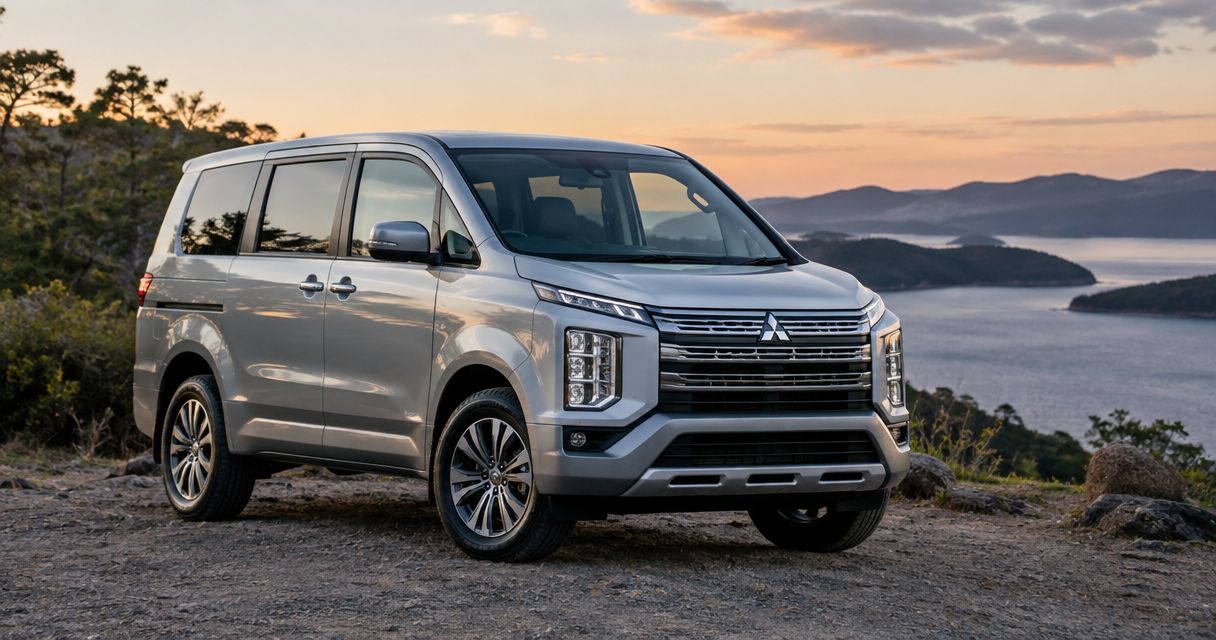
Best overall: Mitsubishi Delica D:5 for family use. Best for off-road touring: Mitsubishi Delica Space Gear L400. Best for classic camper projects: Mitsubishi Delica Star Wagon L300. For a Mitsubishi Delica import Australia shortlist in 2026, choose the generation around your actual driving, then confirm the exact vehicle’s import pathway before committing.
- Mitsubishi Delica import Australia verdict: choose the D:5 for family transport and mixed road use.
- Choose the Mitsubishi Delica Space Gear L400 for touring that needs selectable four-wheel drive.
- Choose the Mitsubishi Delica Star Wagon L300 for a classic camper project, not modern family-car expectations.
- Carbarn is a pre-loved car dealership; confirm each Delica’s identity, condition and registration documents before buying.
Why this matters
A Delica badge does not tell you which drivetrain, seating arrangement or import approval applies. These generations differ in engine placement, vehicle architecture and intended use. Buying the wrong version leaves you with a van that suits the photographs rather than your family or travel plans.
Carbarn serves buyers looking for pre-loved cars. For a Delica purchase, separate the appeal of a Japanese people mover from the evidence you need about the individual vehicle.
The Mitsubishi Delica D:5 is the default recommendation for family buyers; the L400 and L300 suit more specialised ownership. That is a use-case verdict, not a claim that every D:5 is better maintained than every older Delica.
What makes the best Delica to import?
Use these criteria before choosing a generation:
- Import eligibility: Establish the applicable Australian approval pathway for the exact vehicle, not just the model name.
- Driving duties: Distinguish school runs and sealed-road holidays from tracks requiring low-range gearing.
- Mechanical condition: Prioritise cooling-system health, transmission behaviour, corrosion and documented maintenance.
- Passenger practicality: Check actual seats, restraints, child-restraint provisions and access with your family’s equipment.
- Ownership support: Find a workshop willing to service the specific engine and drivetrain before purchase.
- Modification status: Check whether suspension changes, seating alterations and camper equipment have appropriate documentation.
For a 2026 purchase, treat eligibility and condition as pass-or-fail checks. A desirable generation does not rescue an unsuitable import or a neglected example.
Best Mitsubishi Delica generations at a glance
| Rank and generation | Best for | Standout feature | Key limitation |
|---|---|---|---|
| 1. Mitsubishi Delica D:5 | Family transport and mixed road use | People-mover layout with four-wheel-drive variants | Four-wheel-drive versions lack a conventional low-range transfer case |
| 2. Mitsubishi Delica Space Gear L400 | Off-road touring with passenger space | Longitudinal drivetrain and low-range capability on relevant four-wheel-drive versions | Age makes structural and mechanical inspection essential |
| 3. Mitsubishi Delica Star Wagon L300 | Classic camper projects | Cab-over layout with a compact front end | Older design requires different comfort and safety expectations |
The table ranks buyer fit, not every trim or engine. Two-wheel-drive Delicas also exist, so never assume that the model name guarantees four-wheel drive.
1. Mitsubishi Delica D:5: best Delica for family transport
The Mitsubishi Delica D:5 combines a people-mover cabin with a transverse-engine layout. Four-wheel-drive versions suit buyers who want passenger flexibility and traction for mixed road conditions without choosing an older, more truck-like van.
Diesel versions include a 2.2-litre engine, but the D:5 name also covers other powertrains. Confirm the engine, transmission and drive system from the vehicle’s identification details rather than a translated listing headline.
Mitsubishi Delica D:5 pros
- A people-mover layout suits regular passenger transport.
- Sliding doors give you a practical alternative to outward-opening rear doors.
- Four-wheel-drive variants provide an option for mixed road use.
- The front-engine layout avoids the L300’s cab-over seating position.
Mitsubishi Delica D:5 cons
- Four-wheel drive does not provide the conventional low-range gearing found in relevant L400 variants.
- Equipment and seating vary; a D:5 badge does not establish a particular safety specification.
- Diesel emissions equipment requires inspection and maintenance, not assumptions based on kilometres alone.
Best for: Families who primarily drive on sealed roads and want a people mover for holidays, passengers and everyday errands.
During inspection, operate every sliding door, test rear air conditioning and check seat mechanisms. Then verify the features that matter to you individually: a reversing camera, driver-assistance equipment or child-restraint provision must be present on the vehicle, not merely associated with the generation.
A D:5 is not a substitute for checking your intended route. Unsealed-road touring and technical four-wheel driving demand different capabilities; tyres, clearance and recovery arrangements still matter.
Verdict: Buy the Mitsubishi Delica D:5 for family duties once identity, condition and the registration pathway check out.
2. Mitsubishi Delica Space Gear L400: best for off-road touring
The Mitsubishi Delica Space Gear L400 uses a longitudinal-engine layout. Relevant four-wheel-drive variants combine passenger accommodation with a transfer case offering low-range gearing, making this generation the stronger shortlist for buyers whose trips extend beyond ordinary gravel roads.
The L400 includes 2.8-litre turbo-diesel variants. That figure identifies an engine option, not a guarantee of condition, towing approval or suitability for your planned camper conversion.
Mitsubishi Delica Space Gear L400 pros
- Low-range gearing on relevant variants suits slower off-road work.
- Passenger-van accommodation supports touring with people and equipment.
- The engine sits ahead of the passenger compartment rather than beneath the front seating area.
- Different body configurations let you assess cabin space against parking requirements.
Mitsubishi Delica Space Gear L400 cons
- Age increases the importance of checking corrosion, rubber components and previous repairs.
- A taller van requires care around car parks, roof accessories and overhead clearance.
- Four-wheel-drive components add inspection points beyond a basic engine check.
Best for: Touring buyers who specifically need low range and accept the maintenance responsibilities of an older imported van.
Inspect the cooling system closely, including evidence of leaks, repairs and overheating. Ask the inspector to assess the transmission, transfer case, suspension and underbody, then demonstrate the four-wheel-drive modes according to the vehicle’s operating instructions.
Do not treat aftermarket accessories as proof of touring readiness. A lift, roof rack or camper fit-out introduces its own questions about installation, legality and loading.
For a 2026 shortlist, a structurally sound, documented L400 outranks an accessory-heavy example with unclear maintenance. Start with the vehicle underneath the equipment.
Verdict: Buy the Mitsubishi Delica Space Gear L400 for low-range touring; skip examples with unresolved cooling, corrosion or drivetrain faults.
3. Mitsubishi Delica Star Wagon L300: best for classic camper projects
The Mitsubishi Delica Star Wagon L300 has a cab-over layout, placing the front seating area above the engine region. Its compact nose and upright cabin distinguish it from both the L400 and D:5.
The L300 includes 2.5-litre diesel variants. Check the exact engine and drivetrain because the Star Wagon name alone does not identify every mechanical detail.
Mitsubishi Delica Star Wagon L300 pros
- The compact front end gives this generation its distinctive van proportions.
- The upright cabin provides a starting point for a carefully planned camper project.
- Four-wheel-drive variants suit buyers specifically seeking a classic touring van.
Mitsubishi Delica Star Wagon L300 cons
- The cab-over design places occupants closer to the engine and front of the vehicle.
- Older vehicle design demands realistic expectations about crash protection and refinement.
- Corrosion and previous conversions require close inspection before further work.
Best for: Enthusiasts who want a classic Delica project and have access to suitable mechanical and fabrication support.
Check the structure before planning cabinetry. Rust around mounting points, floors or repaired sections is more consequential than tired upholstery, and a attractive interior does not establish sound bodywork.
Test whether the driving position suits you. Assess access, visibility, noise and heat during a proper drive rather than judging the vehicle solely while parked.
Verdict: Hold the Mitsubishi Delica Star Wagon L300 for an enthusiast-led project; skip it when modern family-car expectations are non-negotiable.
Confirm the import pathway before choosing the van
An appealing auction listing is not Australian import approval. For a 2026 purchase, establish the legal pathway before arranging shipment, and separate federal import requirements from state or territory registration requirements.
Australia’s Department of Infrastructure administers vehicle import approvals through ROVER. The Specialist and Enthusiast Vehicles Register, approved model reports and Registered Automotive Workshops matter for relevant concessional pathways; appearing on a register is not, by itself, permission to import an individual vehicle.
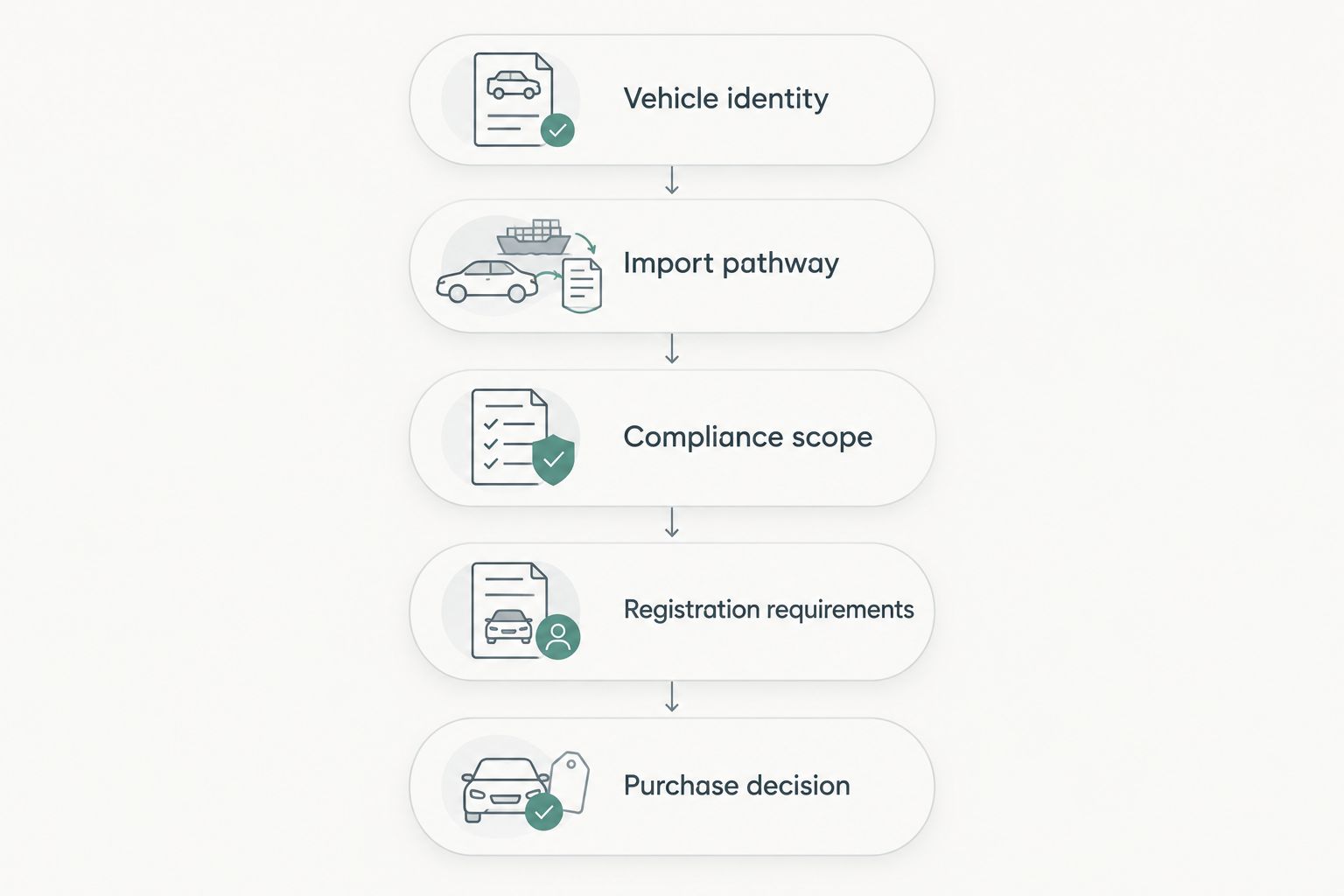
Use this sequence:
- Vehicle identity: Obtain the chassis details, build information, engine and seating configuration.
- Import pathway: Have the applicable route confirmed for that exact vehicle.
- Compliance scope: Establish what work and evidence the vehicle requires through that route.
- Registration requirements: Check the destination state or territory’s requirements, including modifications.
- Purchase decision: Commit only after the identity, condition and legal route align.
Keep the approval documents, compliance evidence and inspection report together. The Japan auction-to-compliance workflow explains the wider sequence around the vehicle decision.
Inspect the Delica around its intended job
A family vehicle and a camper project need different practical checks. Both need sound structure and mechanics, but the details that make ownership workable differ.
For family use, bring your child restraints, pram and regular luggage to the inspection where practical. Confirm which seating positions legally accommodate your restraints; Japanese-market seating arrangements do not establish Australian child-restraint suitability.
For touring, inspect the underside and assess the proposed load. Water, passengers, luggage and permanent camper equipment all contribute to vehicle mass, so compare the actual configuration with the vehicle’s documented limits.
For a camper conversion, investigate registration and engineering requirements before removing seats or adding permanent equipment. A seller’s description of a van as a camper does not prove that its modifications are approved.
Ask your inspector to cover:
- Structure: Corrosion, accident repairs and mounting points.
- Cooling: Leaks, hoses, radiator condition and overheating evidence.
- Drivetrain: Engine behaviour, transmission operation and relevant four-wheel-drive functions.
- Cabin: Door operation, restraints, seats and air conditioning.
- Documentation: Identity, maintenance records and modification evidence.
Do not buy a generation’s reputation; buy the condition and documented specification of the individual Delica.
How the generations rank
The D:5 ranks first because everyday passenger use is the clearest default for an undecided buyer. The L400 takes the low-range touring slot, while the L300 belongs in the enthusiast-project slot.
This ranking follows the criteria above: intended use, drivetrain suitability, passenger practicality and ownership demands. It is not a reliability league table, and it does not replace an independent inspection.
Which Delica should you choose in 2026?
Choose the Mitsubishi Delica D:5 unless your plans specifically require the L400’s relevant low-range drivetrain or the L300’s classic layout. Write down your non-negotiables before browsing: passenger accommodation, intended roads, parking access and workshop support.
Carbarn is a pre-loved car dealership, not a substitute for the vehicle-specific evidence behind a Delica purchase. Ask for the exact specification and documents, then compare the vehicle with your requirements rather than stretching your requirements to match the listing.
FAQ
What’s the best Mitsubishi Delica to import into Australia in 2026?
The Mitsubishi Delica D:5 is the default choice for family transport and mixed road use. Choose the Space Gear L400 when low-range touring is central to your plans, and reserve the Star Wagon L300 for an enthusiast project.
Is the Mitsubishi Delica D:5 better than the L400?
The Mitsubishi Delica D:5 is the better default for everyday family duties; the L400 suits buyers specifically seeking low-range four-wheel driving. Condition and exact specification still determine whether an individual vehicle is suitable.
Are all Mitsubishi Delicas four-wheel drive?
No, the Delica name also covers two-wheel-drive vehicles. Confirm the drivetrain from the vehicle identification details and physical inspection rather than the model name.
Can I legally import any Mitsubishi Delica into Australia?
No, you must establish an applicable import approval pathway for the exact vehicle. Confirm the federal requirements before shipment and the destination state or territory’s registration requirements separately.
Does the Mitsubishi Delica D:5 have low range?
Four-wheel-drive Mitsubishi Delica D:5 versions do not have a conventional low-range transfer case. Buyers who require low range should investigate appropriately equipped L400 variants rather than assume every Delica has it.
What should I check before buying an imported Delica?
Check vehicle identity, import and registration documentation, structural condition, cooling-system health and drivetrain operation. Also verify seating, restraint provisions and any modifications against your intended use.
Which Delica generation is best for a camper conversion?
The L300 suits a classic camper project, while the L400 suits buyers seeking a touring base with relevant low-range capability. Choose only after checking structure, loading limits and the approval requirements for your proposed conversion.
One last thing
Before choosing a Delica, measure your regular parking entrance and check the actual vehicle’s overall height, including roof equipment. A van that suits your travel plans but cannot access your everyday parking is the wrong purchase, regardless of generation.


