Best overall Honda Stepwagon import for 2026: the RP5 Spada Hybrid. Best for a newer cabin: the RP8 e:HEV. Best non-hybrid alternative: the RP3 turbo. Best for a conventional petrol drivetrain: the RK5 Spada. This guide ranks the model families by how you use them; the individual car’s condition and Australian import eligibility decide whether you should buy.
- The Honda Stepwagon RP5 Spada Hybrid is the default family shortlist, subject to condition and Australian import eligibility.
- Choose the RP8 e:HEV for a newer cabin, not because a newer vehicle automatically makes a better import.
- Choose the RP3 turbo to avoid a hybrid drivetrain; investigate the RK5 Spada for naturally aspirated petrol.
- Verify the chassis, build date, compliance pathway and service history before bidding or paying a deposit.
Why this matters
A Honda Stepwagon search brings together different generations, engines and seating configurations. Honda uses the Step WGN name; Australian searches often use Stepwagon. Neither spelling tells you which vehicle you are actually considering.
A registration year is not a specification. Match the chassis code, build month, drivetrain and factory equipment before comparing two cars. For a 2026 purchase, import approval and a workable servicing plan belong on the shortlist alongside cabin practicality.
For a Honda Stepwagon search, Carbarn suits buyers who prefer a used-car dealership to a private sale. Treat the recommendations below as a buying framework, not a statement that any particular vehicle is offered by the dealership.
What makes the best Honda Stepwagon import?
Use these six criteria before choosing a build year:
- Import eligibility: Confirm that the exact variant and build date fit an approved Australian import and compliance pathway.
- Vehicle condition: Prioritise documented servicing, an independent inspection and consistent mileage records over a newer registration date.
- Drivetrain suitability: Match hybrid, turbo petrol or naturally aspirated petrol to your driving and maintenance preferences.
- Passenger access: Test sliding doors, the second-row layout and access to the rear seats with your actual passengers.
- Cargo practicality: Check luggage space with every required seat occupied, rather than judging an empty cabin.
- Local support: Identify a workshop, insurer and parts supply route before committing to the vehicle.
For 2026, these criteria favour a documented, eligible example over an undocumented car from a later build year. A useful starting point is the Japan auction-to-compliance workflow, especially if you are comparing an overseas purchase with a car already registered here.
Honda Stepwagon imports at a glance
Honda’s Japanese Step WGN specifications distinguish the engine types below. Equipment, seating and driver-assistance features still need checking against the exact grade and build date; a chassis code alone does not establish every feature.
| Rank and model | Best for | Standout feature | Key limitation |
|---|---|---|---|
| 1. RP5 Spada Hybrid | Everyday family use with a hybrid preference | 2.0-litre petrol-electric drivetrain and Waku Waku rear door | Hybrid diagnostics and split-tailgate condition need attention |
| 2. RP8 e:HEV | Buyers prioritising a newer cabin | Newer-generation cabin with a 2.0-litre hybrid drivetrain | Conventional lift-up tailgate needs clearance behind the car |
| 3. RP3 turbo | Buyers who want a non-hybrid family mover | 1.5-litre turbo petrol engine with CVT | Turbocharger and transmission servicing require scrutiny |
| 4. RK5 Spada | Buyers who prefer naturally aspirated petrol | 2.0-litre petrol engine without a turbocharger | Older-generation condition and equipment require closer inspection |
The table ranks use cases, not measured reliability. No chassis code guarantees a sound engine, a healthy hybrid battery or a valid Australian compliance route.
1. RP5 Spada Hybrid: best Honda Stepwagon for everyday families
The Honda Stepwagon RP5 Spada Hybrid pairs a 2.0-litre petrol engine with a hybrid drivetrain. Its Waku Waku rear door combines a conventional upward-opening tailgate with a side-opening section, giving you another way to reach the rear of the cabin.
That layout deserves a hands-on test. Bring your usual luggage and check whether the rear-door arrangement helps in the parking spaces you actually use. Do not assume that an unusual feature is automatically useful to your family.
RP5 Spada Hybrid pros:
- Hybrid operation suits buyers who want electric assistance without external charging.
- The side-opening rear-door section provides an alternative to lifting the whole tailgate.
- Sliding side doors support passenger access beside neighbouring parked cars.
RP5 Spada Hybrid cons:
- Hybrid battery condition cannot be established from mileage alone.
- The split rear door adds hinges, latches and seals that need inspection.
- Japanese-market equipment needs checking rather than assuming Australian compatibility.
Best for: Families who want a hybrid people mover and find the rear-door arrangement genuinely useful.
Ask an independent workshop to assess the hybrid system, stored fault codes and battery condition. Inspect both rear-door opening modes for smooth operation, secure latching and evidence of water entry. Test the car from cold as well as after it reaches operating temperature.
Verdict: Buy the RP5 Spada Hybrid when its condition, documentation and compliance pathway check out. It is the default 2026 shortlist, not a reason to overlook a poor individual example.
2. RP8 e:HEV: best Honda Stepwagon for a newer cabin
The Honda Stepwagon RP8 e:HEV is a newer-generation hybrid with a 2.0-litre petrol engine. It uses a conventional lift-up rear tailgate rather than the RP5’s Waku Waku split arrangement.
Choose this generation because its cabin works better for you, not simply because it is newer. Sit in every row, move the seats through their adjustment range and check the luggage area in the configuration you will use most often.
RP8 e:HEV pros:
- The newer-generation cabin gives you a distinct alternative to the RP5 layout.
- The hybrid drivetrain does not require plug-in charging.
- A conventional rear tailgate suits buyers who do not want a split-door arrangement.
RP8 e:HEV cons:
- The lift-up tailgate needs space behind and above the vehicle.
- A newer build does not remove the need for battery and accident-history checks.
- Import eligibility must match the exact variant and build date.
Best for: Families who prioritise the newer cabin and prefer a conventional rear hatch.
Check the actual driver-assistance equipment fitted to the car. Verify that warning lights behave correctly and ask how calibration would be handled after windscreen replacement or collision repair. A feature name in a translated listing is not proof that the system works.
Verdict: Buy the RP8 e:HEV for its cabin fit after confirming the import pathway. Hold if the seller cannot identify the exact specification or provide an independent inspection.
3. RP3 turbo: best Honda Stepwagon for non-hybrid buyers
The Honda Stepwagon RP3 uses a 1.5-litre turbocharged petrol engine with a continuously variable transmission. It gives you a family people mover without a hybrid traction battery.
That is a drivetrain preference, not a blanket reliability advantage. The turbocharger and CVT still demand proper maintenance, and a neglected petrol car is not a safer purchase than a well-maintained hybrid.
RP3 turbo pros:
- The non-hybrid drivetrain suits buyers who do not want hybrid-system ownership.
- Sliding doors and the people-mover cabin retain the core family-use appeal.
- The fifth-generation rear-door arrangement offers practical access options.
RP3 turbo cons:
- Turbocharger condition and engine servicing need careful assessment.
- CVT operation and fluid-service records deserve specific attention.
- Petrol-only operation does not provide the hybrid’s electric-drive capability.
Best for: Buyers who deliberately prefer turbo petrol to a hybrid drivetrain.
Ask for records showing engine-oil servicing and the correct transmission maintenance. During the inspection, check cold starting, idle quality and smooth acceleration; have a technician investigate hesitation, unusual noises or warning lights. A short drive around the block is not a substitute for that assessment.
Verdict: Buy the RP3 turbo if a non-hybrid drivetrain is your priority and its servicing is documented. Skip an example with unresolved engine or transmission symptoms.
4. RK5 Spada: best Honda Stepwagon for conventional petrol
The Honda Stepwagon RK5 Spada uses a naturally aspirated 2.0-litre petrol engine. It belongs to an older generation than the RP-series choices and gives buyers another non-hybrid route without a turbocharger.
Its appeal is the engine arrangement, not a promise of trouble-free ownership. Age-related wear, past repairs and the condition of the cabin hardware become especially important when assessing an older vehicle.
RK5 Spada pros:
- The naturally aspirated engine suits buyers who want neither turbocharging nor a hybrid drivetrain.
- Sliding side doors retain the practical people-mover format.
- It provides a clearly different mechanical choice from the RP3 turbo.
RK5 Spada cons:
- Older components require scrutiny regardless of the odometer reading.
- Safety and convenience equipment need checking against the exact specification.
- A sound engine does not rule out suspension, cooling-system or door faults.
Best for: Buyers who specifically prefer naturally aspirated petrol and accept an older-generation vehicle.
Inspect underneath for corrosion and previous damage. Check the cooling system, suspension, air conditioning and every powered door function; then establish whether replacement parts and local repair support fit your ownership plan.
Verdict: Hold the RK5 Spada until a detailed inspection clears it. Buy only when conventional petrol is a deliberate preference, rather than an excuse to accept weaker documentation.
How the ranking works
The RP5 leads because it combines a hybrid drivetrain with a distinctive rear-access arrangement. The RP8 serves buyers who prefer a newer cabin; the RP3 and RK5 separate two different non-hybrid preferences.
This is a specification-and-use-case ranking, not a road-test score or a failure-rate study. Condition, eligibility and local support can reverse the order for an individual purchase. In 2026, the best Honda Stepwagon model year is the eligible, documented build that meets your needs—not the newest date in a listing.
Check the exact car before importing
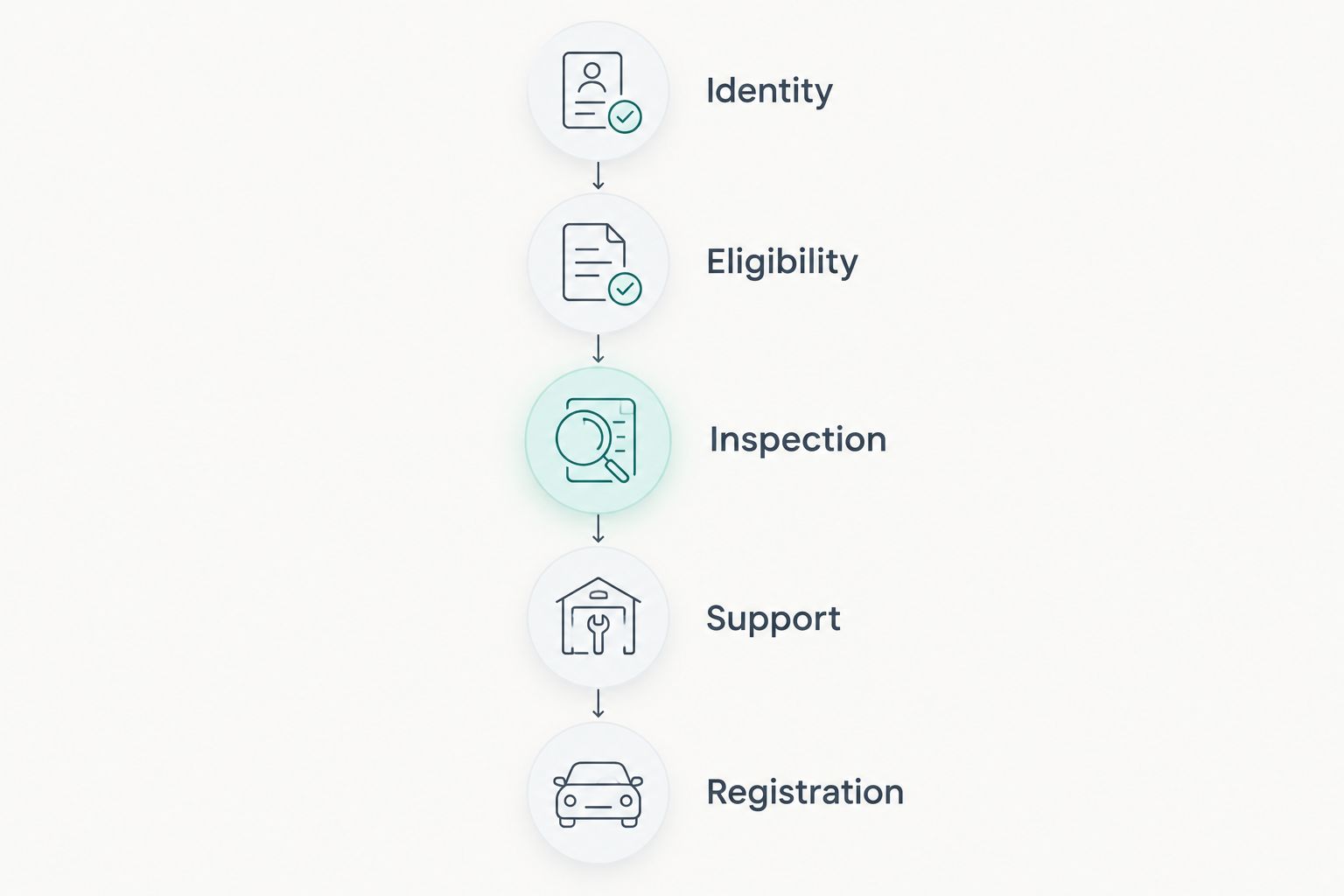
Follow this sequence before bidding or paying a deposit. Keep the documents together so the vehicle inspected in Japan is the same vehicle identified throughout approval, shipping and registration.
Identity
Obtain the chassis number, model code, build date and export documentation. Separate manufacture date from first registration: they answer different questions, especially when a compliance pathway has a defined build range.
Eligibility
Ask the compliance provider to confirm the exact vehicle’s pathway through the Australian Government’s ROVER system. Where the specialist-and-enthusiast pathway applies, confirm the relevant SEVS entry and approved model report. A model appearing on SEVS is not itself permission to import a particular car.
Inspection
Arrange an independent assessment of mechanical condition, accident repairs, corrosion and cabin equipment. For hybrids, include hybrid-system diagnostics; for petrol versions, focus on the fitted engine and transmission. Translate auction remarks rather than relying only on the headline grade.
Support
Confirm insurance acceptance and identify a workshop before purchase. Ask how the workshop obtains model-specific parts and technical information, and distinguish routine servicing from specialist diagnostic work.
Registration
Establish the required compliance work, Register of Approved Vehicles entry where applicable, and state or territory registration requirements. Do not ship a vehicle on the assumption that import approval alone guarantees registration.
For an already imported Honda Stepwagon, ask which of these steps are complete and inspect the supporting records. Carbarn buyers should apply the same document checks they would use for any other seller.
Which Honda Stepwagon should you choose?
Start with the RP5 Spada Hybrid. Move to the RP8 e:HEV if its cabin and conventional tailgate suit you better, or choose the RP3 turbo if you specifically want a non-hybrid drivetrain.
Keep the RK5 Spada for a deliberate naturally aspirated petrol preference. For every option, reject unresolved eligibility questions before comparing comfort features. A desirable specification does not compensate for an unusable import pathway.
Start your used-car search
Compare pre-loved cars with Carbarn and use the inspection checklist before committing.
FAQ
What's the best Honda Stepwagon to import in 2026?
The RP5 Spada Hybrid is the default family shortlist because it combines a hybrid drivetrain with the Waku Waku rear-door arrangement. Buy only after confirming the exact vehicle’s condition and Australian import eligibility.
Is the RP8 e:HEV better than the RP5 Spada Hybrid?
The RP8 e:HEV is the better fit when you prefer its newer-generation cabin and conventional lift-up tailgate. The RP5 suits buyers who value the split rear-door arrangement; neither chassis code guarantees a better individual car.
Which Honda Stepwagon should I choose if I don't want a hybrid?
Choose the RP3 turbo for a turbocharged petrol option, or investigate the RK5 Spada for naturally aspirated petrol. Compare their service records and inspection findings rather than assuming either engine type guarantees reliability.
Can I legally import any Honda Stepwagon into Australia?
No, the Stepwagon name alone does not establish import eligibility. Confirm the exact variant, build date, approval pathway and compliance requirements with the relevant provider before purchase or shipping.
Does a Honda Stepwagon hybrid need plug-in charging?
The RP5 Spada Hybrid and RP8 e:HEV do not require external plug-in charging. They are petrol-electric hybrids, not plug-in hybrid versions.
Should I choose a newer model year or lower kilometres?
Choose the vehicle with the stronger combination of condition, documented servicing and eligible specification. A newer registration date or lower odometer reading does not replace an independent inspection.
What should I check before buying an imported Honda Stepwagon?
Check vehicle identity, compliance records, service history, accident repairs and the operation of doors, seating and fitted equipment. Add hybrid diagnostics for hybrid versions and confirm local insurance and workshop support.
One last thing
Test the rear opening where you will park, not just on a spacious forecourt. The RP5’s side-opening door section and the RP8’s lift-up hatch solve different access problems; the better choice is the one you can use with passengers and luggage in place.