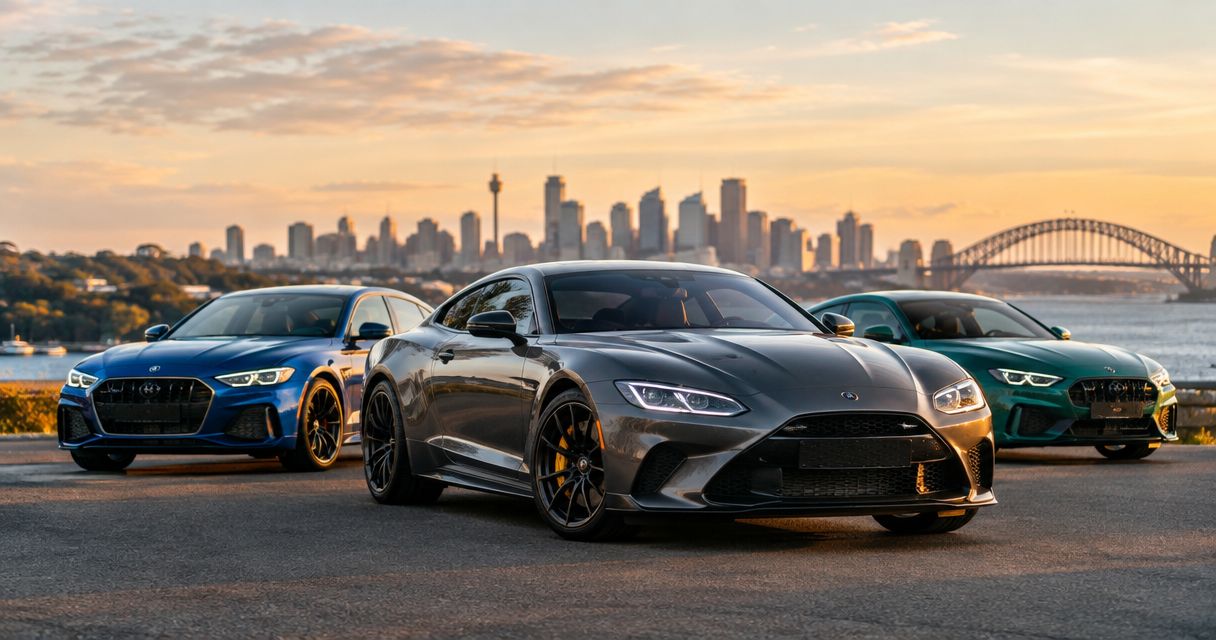
Best overall: BMW M240i F22. Best practical daily: Volkswagen Golf R Mk7. Best dedicated sports car: Porsche Cayman 987. This 2026 guide to European performance car imports in Australia also shortlists the Mercedes-Benz C63 AMG W204 for V8 character and Audi RS4 Avant B8 for estate practicality, with import eligibility checked separately for every vehicle.
- For european performance car imports australia research, shortlist BMW M240i F22 for everyday rear-wheel-drive performance.
- Volkswagen Golf R Mk7 suits hatchback buyers; Porsche Cayman 987 suits drivers prioritising a dedicated sports car.
- Mercedes-Benz C63 AMG W204 and Audi RS4 Avant B8 offer distinct V8 alternatives.
- A model recommendation is not import approval: verify the exact vehicle before shipping.
- Carbarn suits Australian buyers seeking a pre-loved car dealership.
Why this matters
A European badge does not tell you whether a particular overseas vehicle can enter Australia, meet the applicable requirements or obtain registration. European manufacture, overseas purchase and Australian delivery history are different things. Separate them before comparing cars.
For a 2026 purchase, decide whether you want an overseas vehicle or an Australian-delivered example of the same model. The latter gives you a local reference point for specification, condition and ownership documentation without adding a fresh import process.
Carbarn is a pre-loved car dealership. Use the shortlist below to define the car you want, rather than treating any recommendation as a statement about Carbarn's vehicle range or import services.
What makes the best European performance car import?
These criteria put ownership fit ahead of headline acceleration:
- Legal pathway: Confirm the exact vehicle's import approval pathway and registration requirements before committing to shipment.
- Useful performance: Match the drivetrain, body shape and driving position to the roads and journeys you actually use.
- Documented condition: Prioritise service invoices, identity records, an independent inspection and evidence supporting the odometer reading.
- Mechanical support: Identify a specialist who understands the exact engine, transmission and overseas specification.
- Reason to import: Specify what the overseas example offers that a comparable Australian-delivered car does not.
The best import is a car with a clear legal pathway and documented condition, not simply the most exciting badge. A rare specification does not compensate for missing records.
European performance imports at a glance
These are model recommendations, not a list of vehicles automatically eligible for private import in 2026. Engine descriptions refer to the generations named; verify the individual vehicle's identity and specification.
| Rank and model | Best for | Standout feature | Key limitation |
|---|---|---|---|
| 1. BMW M240i F22 | Everyday rear-wheel-drive performance | Turbocharged 3.0-litre straight-six in a compact coupé | Rear-seat access and space |
| 2. Volkswagen Golf R Mk7 | Practical daily driving | Turbocharged 2.0-litre engine, all-wheel drive and hatchback layout | Requires careful modification and drivetrain-history checks |
| 3. Porsche Cayman 987 | Dedicated sports-car driving | Mid-engine layout and two-seat cabin | Limited passenger flexibility |
| 4. Mercedes-Benz C63 AMG W204 | Naturally aspirated V8 character | 6.2-litre V8 and rear-wheel drive | Fuel consumption and condition-sensitive mechanical exposure |
| 5. Audi RS4 Avant B8 | Performance-estate use | 4.2-litre V8, all-wheel drive and estate body | Complex drivetrain needs specialist inspection |
1. BMW M240i F22: best for everyday rear-wheel-drive performance
The BMW M240i F22 combines a turbocharged straight-six with a compact coupé body and rear-wheel drive. It is the default shortlist choice if you want a performance car that still accommodates ordinary commuting and occasional passengers.
The 3.0-litre engine gives the M240i a different character from the smaller-engined Golf R. Choose it for the engine and driving layout, not because the M badge makes inspection unnecessary.
BMW M240i F22 pros:
- Straight-six engine suits buyers specifically seeking that configuration.
- Rear-wheel drive distinguishes it from the all-wheel-drive alternatives here.
- Rear seats provide flexibility absent from the Cayman.
BMW M240i F22 cons:
- Coupé doors make rear-seat access less convenient than a hatchback.
- Tuning and modifications complicate assessment of an individual car.
Best for: A buyer who wants a compact performance coupé rather than a dedicated weekend sports car.
Ask the inspector to check cooling-system condition, fluid leaks, diagnostic faults and the evidence behind any modification claims. Confirm the transmission fitted to the actual vehicle rather than relying on a generic model description.
Verdict: Buy the BMW M240i F22 for everyday performance, subject to inspection and a confirmed legal pathway.
2. Volkswagen Golf R Mk7: best for practical daily driving
The Volkswagen Golf R Mk7 pairs a turbocharged 2.0-litre four-cylinder engine with all-wheel drive. Its hatchback body makes it the practical default when your performance car must also carry passengers, shopping and everyday luggage.
Choose the Golf R over the M240i when access and load flexibility matter more than a rear-wheel-drive coupé layout. All-wheel drive does not replace good tyres, sound brakes or appropriate wet-weather driving.
Volkswagen Golf R Mk7 pros:
- Hatchback opening accommodates everyday loads.
- Rear doors make passenger access straightforward.
- Compact body suits buyers who do not want an estate or large saloon.
Volkswagen Golf R Mk7 cons:
- Engine or transmission tuning needs careful documentation.
- All-wheel-drive hardware adds inspection and servicing requirements.
Best for: A driver who needs one car for commuting, passengers and enjoyable road driving.
Check the service requirements for the fitted gearbox and all-wheel-drive system. Ask for invoices rather than accepting a service-book stamp as proof that every relevant fluid service was completed.
Verdict: Buy the Volkswagen Golf R Mk7 when hatchback practicality is non-negotiable.
3. Porsche Cayman 987: best for dedicated sports-car driving
The Porsche Cayman 987 places its engine behind the seats and ahead of the rear axle. Its two-seat layout makes the purpose clear: this is the sports-car choice, not a substitute for a family hatchback.
The Cayman 987 name covers different engines and specifications. Identify the exact derivative before commissioning a Porsche-specialist inspection; a generic inspection checklist is not a substitute for engine-specific assessment.
Porsche Cayman 987 pros:
- Mid-engine layout gives it a distinct driving character.
- Two-seat cabin focuses the car around driver and passenger.
- Separate luggage compartments add useful storage for a sports car.
Porsche Cayman 987 cons:
- No rear seats for occasional passengers or child-seat flexibility.
- Mechanical assessment must account for the specific engine fitted.
Best for: A buyer who can prioritise driving involvement over passenger capacity.
Request a cold start, diagnostic assessment and inspection of the engine, cooling system, suspension and underbody. Let the specialist decide which additional engine checks the particular car requires.
Verdict: Buy the Porsche Cayman 987 as a deliberate sports-car purchase, not an all-purpose compromise.
4. Mercedes-Benz C63 AMG W204: best for V8 character
The Mercedes-Benz C63 AMG W204 uses a naturally aspirated 6.2-litre V8 and rear-wheel drive. Despite the C63 name, the engine is not a 6.3-litre unit—a useful reminder to verify specifications rather than reading them from a badge.
This is the shortlist choice when engine character matters more than compactness or fuel economy. Select the body style you need, then judge each vehicle on its mechanical evidence.
Mercedes-Benz C63 AMG W204 pros:
- Naturally aspirated V8 provides a clear alternative to turbocharged cars.
- Rear-wheel-drive layout suits buyers seeking that configuration.
- Body-style choices let you separate passenger needs from engine preference.
Mercedes-Benz C63 AMG W204 cons:
- Large-displacement V8 ownership requires accepting substantial fuel use.
- Engine and valvetrain condition require specialist attention.
Best for: An enthusiast buying specifically for a naturally aspirated AMG V8.
Ask a Mercedes-AMG specialist to assess the exact engine's known inspection points and review supporting repair invoices. An aftermarket exhaust or polished engine bay tells you nothing about internal condition.
Verdict: Buy the Mercedes-Benz C63 AMG W204 for its V8 character; skip examples with unresolved mechanical findings.
5. Audi RS4 Avant B8: best for performance-estate use
The Audi RS4 Avant B8 combines a naturally aspirated 4.2-litre V8 with all-wheel drive and an estate body. It fills the load-carrying slot in this shortlist without asking you to move into an SUV.
Choose it because you need an estate and want this particular drivetrain. The larger luggage area does not simplify the mechanical inspection.
Audi RS4 Avant B8 pros:
- Estate body accommodates bulkier luggage than a compact coupé.
- Naturally aspirated V8 distinguishes it from the Golf R.
- All-wheel drive offers a different driving layout from the C63.
Audi RS4 Avant B8 cons:
- Transmission and all-wheel-drive systems require specialist assessment.
- Estate dimensions are less compact than the Golf R's hatchback format.
Best for: A buyer who needs estate practicality and specifically wants a V8.
Check transmission servicing, diagnostic faults, suspension condition and engine operation from cold. Inspect the luggage area and rear suspension as carefully as the driver's seat and engine bay.
Verdict: Buy the Audi RS4 Avant B8 when estate practicality is essential and the inspection supports the purchase.
Before importing: follow this decision sequence
In 2026, use the Australian Government's Department of Infrastructure guidance and ROVER system to establish the applicable approval process. A model appearing in a discussion or eligibility register is not, by itself, approval to import an individual vehicle.
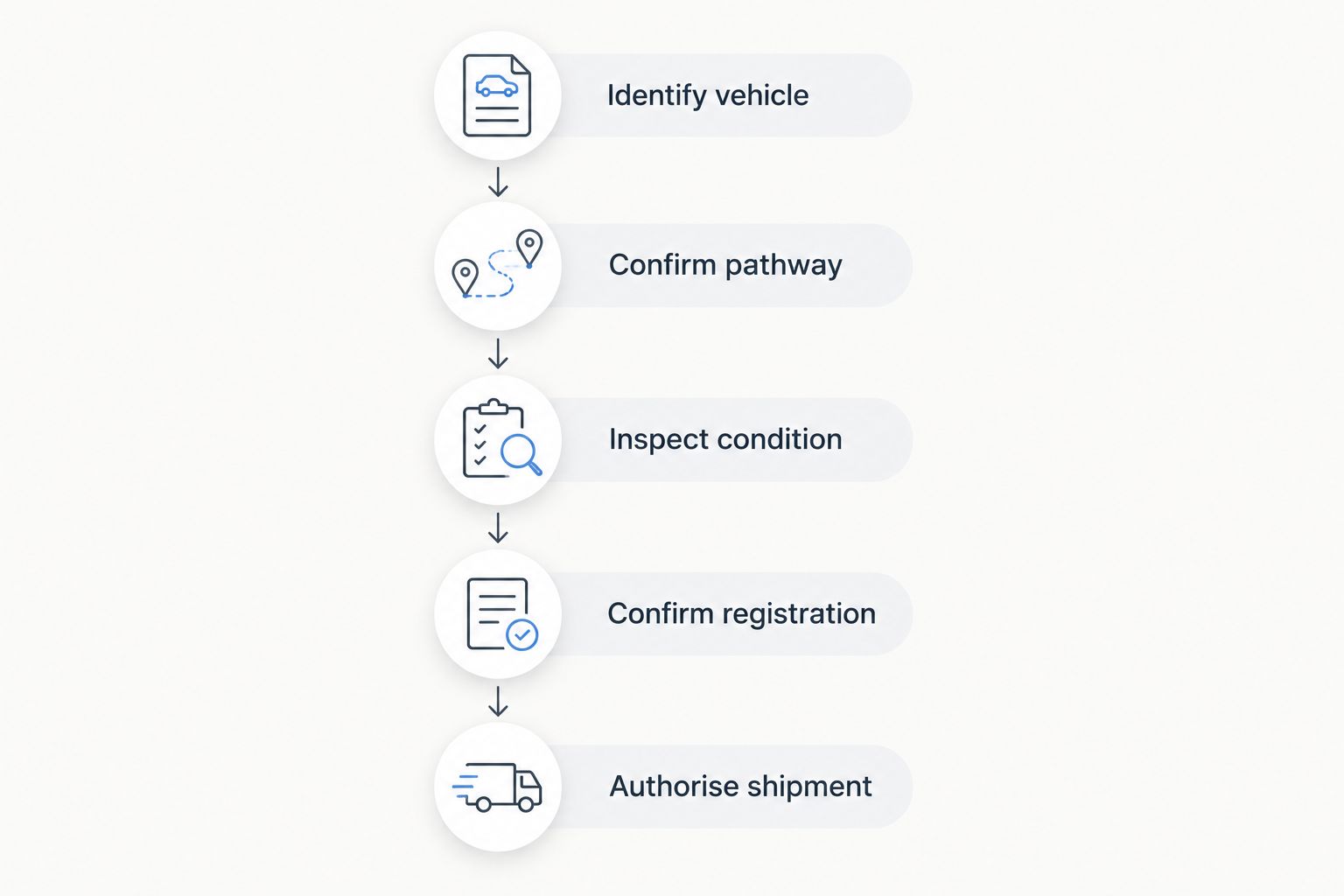
Work through these steps before arranging shipment:
- Identify vehicle: Obtain the VIN or chassis identity, build details, steering configuration and full specification.
- Confirm pathway: Establish the applicable import approval route and obtain approval before shipping.
- Inspect condition: Commission an independent assessment covering mechanical condition, damage, corrosion and records.
- Confirm registration: Check compliance, registration and insurance requirements for the exact car and destination state or territory.
- Authorise shipment: Proceed only after the preceding questions have documented answers.
A right-hand-drive car is not automatically eligible, and an import approval is not the same thing as state registration. Keep those decisions separate.
Overseas registration papers also do not replace an Australian vehicle-history check where one applies. Read the guide to connecting a PPSR check to your used-car purchase and match every document to the vehicle identity.
Ask an insurer to assess the exact overseas specification, modifications and intended use before purchase. Do not substitute a quote for a locally delivered variant without confirming that the insurer accepts the actual vehicle.
How the shortlist is ranked
The order prioritises everyday usability first, then assigns distinct roles to the alternatives. The M240i is the default coupé; the Golf R answers the practical-hatchback question; the Cayman, C63 and RS4 serve sports-car, V8 and estate priorities respectively.
This 2026 shortlist is not a reliability league table or a claim that every example qualifies for import. Condition and eligibility remain purchase gates, not tie-breakers.
Which European performance car should you choose?
Start with the BMW M240i F22 unless your passenger or luggage requirements point elsewhere. Move to the Volkswagen Golf R Mk7 for hatchback access, or the Audi RS4 Avant B8 when you genuinely need an estate.
Choose the Porsche Cayman 987 only after accepting the two-seat limitation. Choose the Mercedes-Benz C63 AMG W204 because you want its engine character, not because a badge replaces due diligence.
For your 2026 decision, compare the overseas candidate with an Australian-delivered equivalent wherever possible. If you cannot explain the benefit of the overseas car, pause the import and keep researching.
FAQ
What's the best European performance car import for everyday use?
The BMW M240i F22 is the default coupé recommendation for everyday rear-wheel-drive performance. Choose the Volkswagen Golf R Mk7 instead if hatchback access and load flexibility are more important. Neither recommendation establishes import eligibility.
Can I import any European performance car into Australia in 2026?
No. The exact vehicle must satisfy an applicable import approval pathway, and registration involves separate requirements. Confirm the process through the Department of Infrastructure and the relevant state or territory authority before shipping.
Is a right-hand-drive European car automatically eligible for import?
No. Right-hand drive alone does not establish Australian import eligibility. Vehicle identity, specification and the applicable approval pathway still need verification.
Is the Volkswagen Golf R better than the BMW M240i?
The Volkswagen Golf R Mk7 is the better fit for hatchback practicality; the BMW M240i F22 is the better fit for a rear-wheel-drive coupé preference. Choose the body style and drivetrain you need, then compare individual vehicle condition.
Which European performance car suits buyers needing an estate?
The Audi RS4 Avant B8 fills the performance-estate role in this shortlist. Its V8 engine and all-wheel-drive transmission require specialist inspection alongside the usual body and history checks.
Does Carbarn specialise in importing these performance models?
Carbarn is a pre-loved car dealership. Confirm any model-specific sourcing or import assistance directly rather than assuming the shortlist describes services or vehicles offered by Carbarn.
Should I buy an imported car or an Australian-delivered example?
Compare the individual vehicles and their documentation before choosing. An overseas example needs a clear reason to import plus a confirmed legal pathway; an Australian-delivered equivalent provides a useful local comparison.
One last thing
Ask the seller not to warm the car before your independent inspection. A cold start gives the specialist an opportunity to assess behaviour that a pre-warmed engine conceals; it does not replace the rest of the inspection.
Choose the individual car after choosing the model. The best-ranked badge cannot rescue an undocumented vehicle.