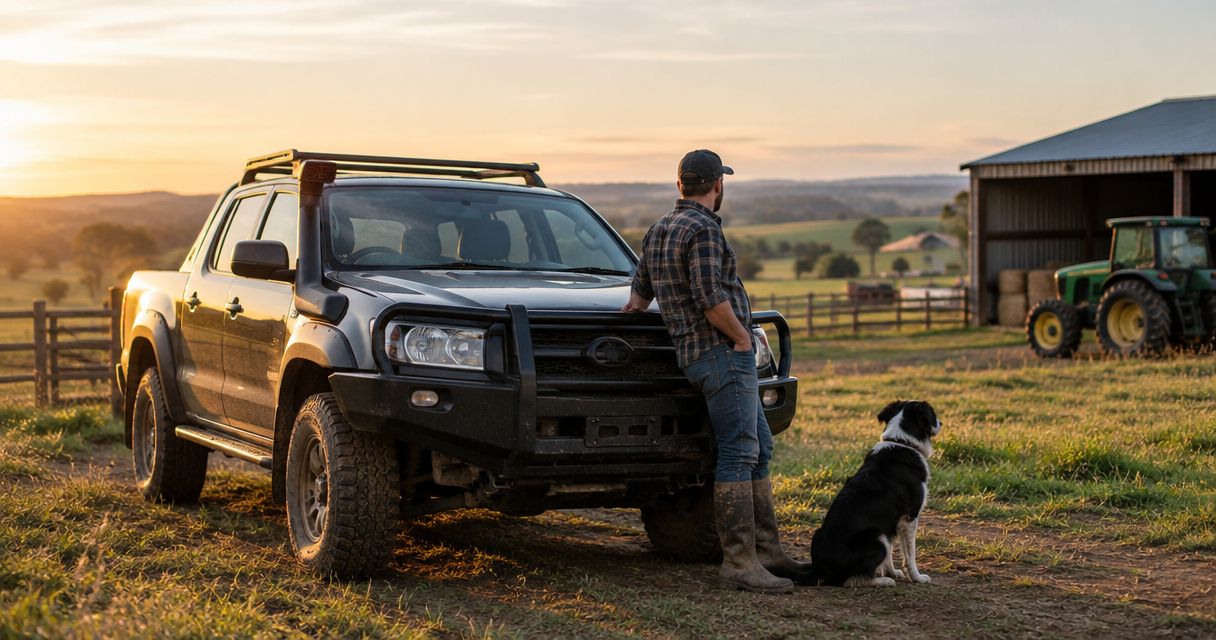
Farmers and rural property owners shopping for a used 4x4 need a vehicle that tows, crawls through mud and keeps running with minimal downtime, not one built for a daily commute. The needs are different from a suburban buyer: payload for feed and fencing gear, low-range for wet paddocks, and a drivetrain that survives well past the point most city cars get traded in.
- The best used 4x4 for farmers is a diesel wagon or dual-cab ute with proven low-range and at least 3,000kg braked towing.
- Toyota LandCruiser (70/200/300 Series) and Mitsubishi Pajero (NS/NW) cover most rural budgets and towing needs in 2026.
- Dual-cab 4x4 utes beat wagons when tray space for fencing, feed and tools matters more than cabin room.
- Check chassis rust, diff seals and low-range engagement before signing anything on a farm-use vehicle.
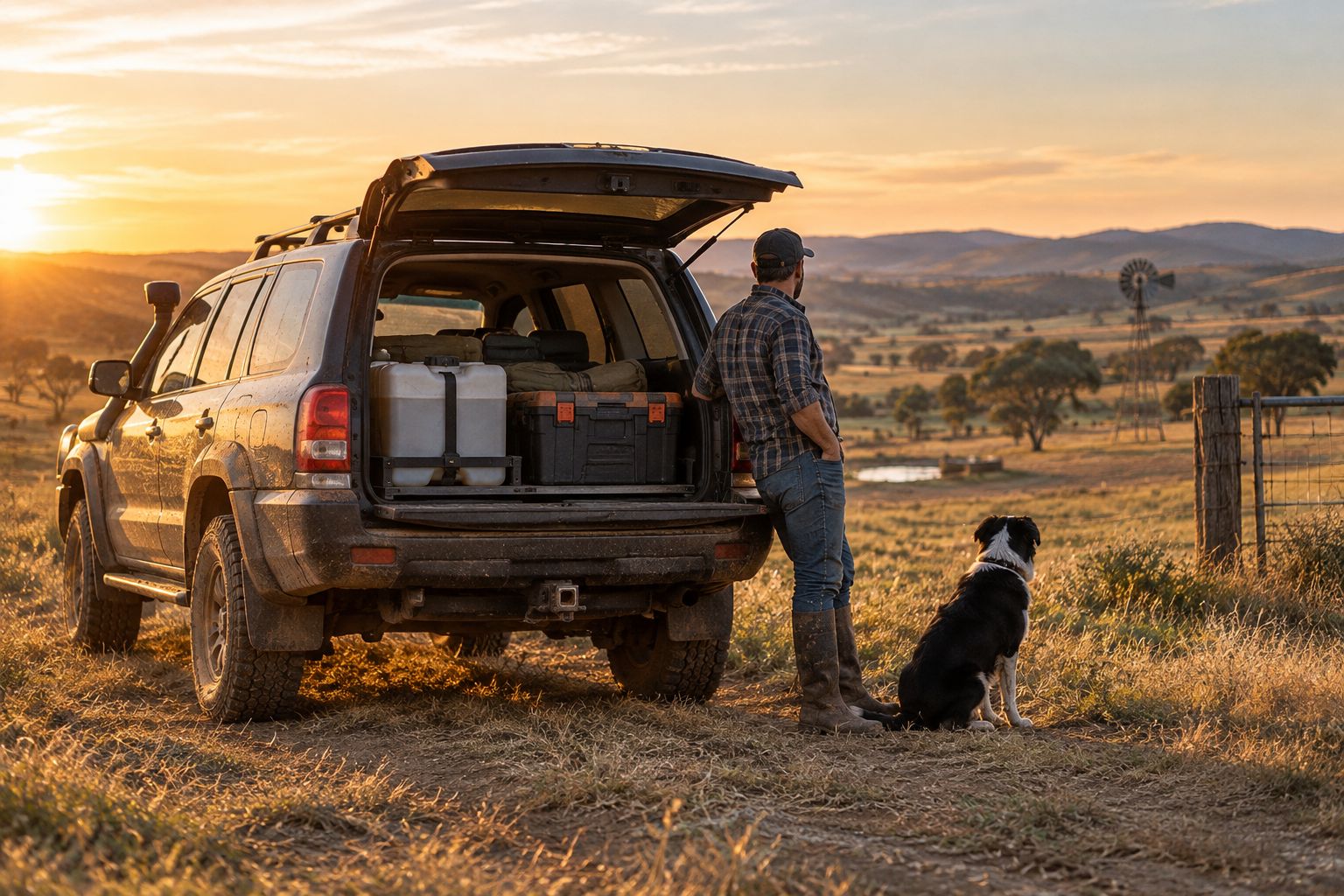
- GVM and payload math after fitting a bull bar, tool boxes or water tank catches most first-time rural 4x4 buyers.
Why used 4x4 for farmers matters for rural properties
A farm vehicle does a different job every day of the week: school run, stock feed, fencing supplies, then a tow to the vet or the sale yards. A used 4x4 for farmers has to handle all of that without a service bill every three months.
The wrong pick shows up fast on a rural property. A soft-roader with permanent all-wheel drive struggles in wet clay, and a low-payload SUV sags the moment you load a water tank or hay bales. If tray space for fencing gear or feed matters more than back-seat comfort, dual-cab 4x4 utes ranked for off-road touring are the better starting point than a wagon.
Diesel is still the default for rural buyers in 2026 for one reason: torque at low RPM for towing and crawling, plus longer service intervals than most petrol equivalents. That's the baseline this guide works from.
Define your farm work before you shop
Most buyers start with a model name. Start with the job instead.
Work out your towing and payload numbers first
- List every trailer, float or caravan you'll actually tow, and check its laden weight, not just the empty weight on the compliance plate.
- Add up the GVM hit from a bull bar, dual battery tray, tool boxes and a water tank before comparing models.
- Decide whether you need a tray (ute), a full-size wagon boot, or both across two vehicles.
- Rule out anything with a factory braked towing capacity below 3,000kg if you're pulling stock floats or a decent-size caravan.
Choose ute or wagon based on how the vehicle is loaded
- Dual-cab ute: best when fencing wire, feed bags, tools and stock gear ride in an open tray daily.
- Wagon (LandCruiser 200/300, Pajero): best when family transport and towing matter more than carrying loose farm gear.
- Single-cab or cab-chassis: best for tray-only work where rear seating is never used.
- If you're torn between the two body styles, the towing capacity comparison across used SUVs is a faster way to shortlist than reading spec sheets one by one.
Check chassis and drivetrain condition before anything else
- Inspect chassis rails and cross-members for rust, especially on vehicles that have worked near dams, creek crossings or coastal paddocks.
- Get underneath and check diff seals, CV boots and transfer case for leaks or cracking.
- Look for mismatched panel gaps or fresh underseal, both signs of accident repair on a farm vehicle.
- Ask for the full service history, not just the last stamp — gaps of 20,000km or more are a red flag on a diesel.
Test the 4x4 system on real ground, not a driveway
- Engage low range and drive it over uneven ground, not just flick the switch and check a dash light.
- Listen for grinding or hesitation when shifting between 2H, 4H and 4L.
- Check the centre diff lock (if fitted) actually engages and disengages cleanly.
- On a ute, confirm the rear diff lock works under load, not just idling in the yard.
Match the model to your budget and running costs
- Older Toyota LandCruiser 70 Series units are simple, parts-common and tough, but the 4.5L V8 turbo diesel drinks more fuel than newer platforms.
- The 200 Series (2007–2021) balances comfort with a proven 4.5L V8 diesel and a factory 3,500kg braked towing rating.
- The Mitsubishi Pajero NS/NW generation tows up to 3,000kg braked and costs less to service than a Cruiser, at the expense of ultimate payload. The Pajero generations ranked for off-roading breaks down which years suit farm use best.
- Newer 300 Series LandCruisers bring a smaller-capacity twin-turbo diesel with more low-end torque, but expect a higher purchase price for the same age bracket.
Budget for tyres, suspension and protection gear on top of the purchase
- All-terrain or mud-terrain tyres replace factory highway tyres almost immediately on a working farm vehicle.
- A GVM-rated suspension upgrade is common once a bull bar, winch and tool boxes go on.
- Underbody protection (bash plates, diff guards) pays for itself the first time a rock or stump connects with the diff housing.
- Budget for a UHF radio and recovery gear (snatch strap, rated shackles) if the property has creek crossings or boggy paddocks.
Get an independent pre-purchase inspection before you commit
- A mechanical inspection that lifts the vehicle and checks the diffs, chassis and transfer case beats a visual walk-around every time.
- Ask for a compression test on any diesel with unclear service history past 200,000km.
- Cross-check the VIN and registration against a written-off vehicle register before paying a deposit.
- If buying private, insist on seeing the vehicle started from cold — hard cold starts point to injector or glow plug problems.
Comparison: used 4x4 options for farmers and rural properties
| Option | Best for | Key limitation |
|---|---|---|
| Toyota LandCruiser (70/200/300 Series) | Heavy towing, daily paddock work, long-term reliability | Older 70 Series units are thirsty; parts can be harder to source outside major dealers |
| Mitsubishi Pajero (NS/NW generation) | Lighter farm runs, family and property transport combined | Lower payload ceiling than a Cruiser or a dual-cab ute |
| Dual-cab 4x4 ute | Fencing supplies, feed, tools, tray-based farm work | Cabin space and ride comfort trade off against tray capacity |
| Wagon-style SUV with a high towing rating | Mixed road and property driving, occasional heavy towing | Not built for the constant off-road load a ute or Cruiser handles daily |
Verdict: for most rural properties in 2026, a diesel Toyota LandCruiser wagon or a dual-cab 4x4 ute wins on towing and payload, while a used Mitsubishi Pajero suits lighter farm runs on a tighter budget.
Find your next farm-ready 4x4
Browse the current used 4x4 stock at Carbarn before you commit to a private sale.
Common mistakes farmers make buying a used 4x4
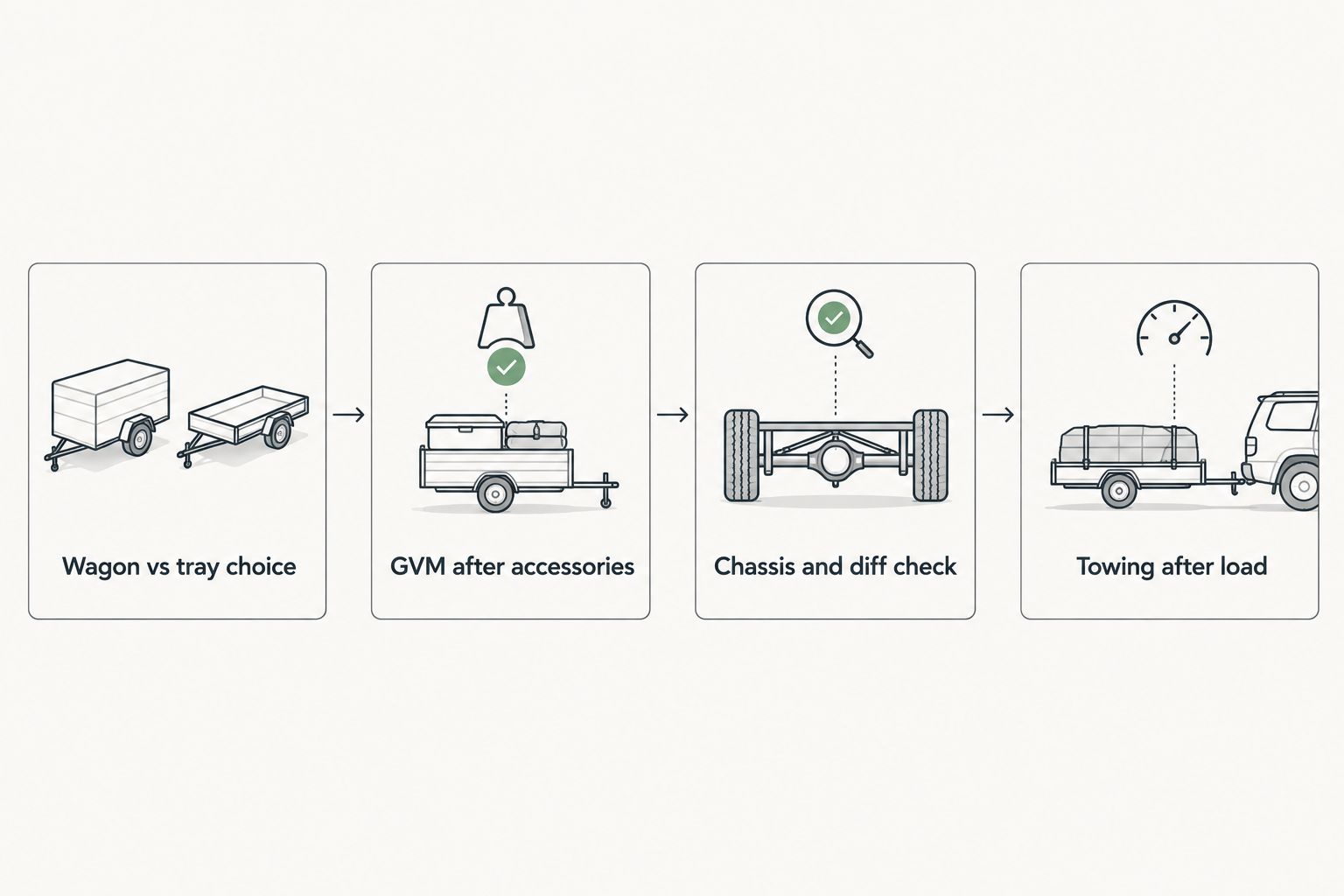
- Buying a wagon when the job needs a tray. Loose feed bags, fencing wire and tools belong in a ute tray, not a carpeted boot.
- Ignoring GVM after fitting accessories. A bull bar, winch, dual battery and tool boxes can eat 150-200kg of payload before a single bag of feed goes on.
- Skipping the chassis and diff inspection. Farm vehicles work harder than commuter cars; rust and diff wear show up years earlier.
- Assuming low kilometres means low wear. A vehicle with 120,000km of hard paddock use can be more worn than one with 200,000km of highway kilometres.
- Underestimating towing capacity after loading the tray. A maxed-out GVM reduces the safe towing weight below the factory-rated figure, even when the trailer itself is within its own limit.
FAQ
What's the best used 4x4 for farmers in 2026?
A diesel Toyota LandCruiser (70, 200 or 300 Series) or a dual-cab 4x4 ute covers most rural towing and payload needs in 2026. A used Mitsubishi Pajero suits lighter farm runs on a tighter budget.
Is a ute or a wagon better for a rural property?
A dual-cab ute wins when fencing supplies, feed and tools travel loose in a tray. A wagon suits properties where family transport and towing matter more than open cargo space.
How much can a used Toyota LandCruiser tow?
The 200 Series and 300 Series LandCruisers carry a factory braked towing rating of 3,500kg. Actual safe towing weight drops once GVM is used up by accessories and payload.
Is a used Mitsubishi Pajero good for off-road farm work?
The NS/NW generation Pajero handles light-to-moderate farm work and tows up to 3,000kg braked. It carries less payload than a LandCruiser or dual-cab ute, so it suits lighter jobs.
What should I check before buying a used 4x4 for farm use?
Check chassis rails for rust, diff seals for leaks, and confirm low-range and diff locks engage properly on uneven ground. A pre-purchase mechanical inspection catches issues a visual check misses.
How many kilometres is too many for a farm 4x4?
There's no fixed number — a diesel with full service history past 250,000km can outlast one with 100,000km of neglected servicing. History and maintenance matter more than the odometer alone.
Do I need low range for a rural property?
Yes, if the property has wet paddocks, creek crossings or steep tracks. Low range gives the control needed for towing on loose or muddy ground that high range can't manage.
Is diesel better than petrol for a used farm 4x4?
Diesel is the default choice for farm use because of low-RPM torque for towing and generally longer service intervals. Petrol models can still work for lighter-duty properties with less towing.
One last thing
GVM math ruins more farm 4x4 purchases than any mechanical fault. A bull bar, winch, dual battery tray and tool boxes can strip 150-200kg of payload before a single load goes on the tray or in the boot — check the compliance plate GVM against kerb weight before you fall for a model on towing capacity alone.