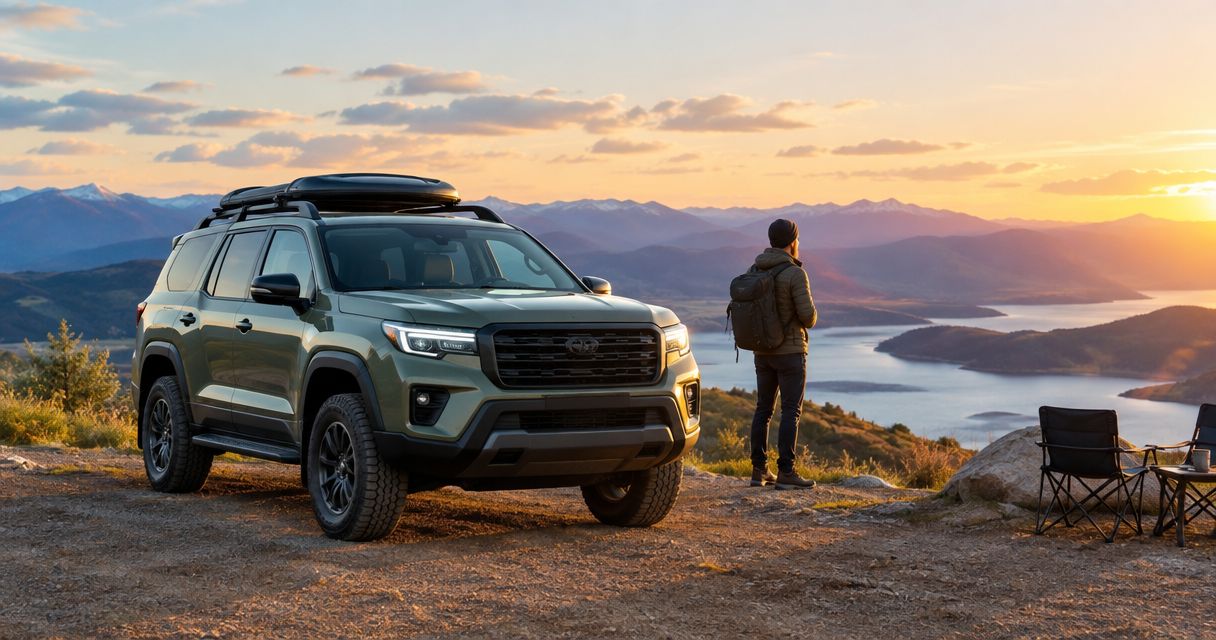
Best overall touring choice: Toyota Fortuner 2.8 diesel automatic. Best for light packing and the lowest reference fuel figure: Suzuki Jimny manual. Best for full-time four-wheel drive: Toyota Prado 150 diesel. This 2026 guide ranks five used 4WD configurations by published combined fuel consumption, then explains which trade-offs matter on an Australian touring trip.
- For best used 4wd fuel efficiency, Suzuki Jimny manual leads this shortlist at a published 6.4 L/100 km.
- Carbarn recommends the Toyota Fortuner for touring buyers who need more carrying space than a Suzuki Jimny.
- Toyota Prado 150, Mitsubishi Pajero Sport and Isuzu MU-X offer different compromises in drivetrain, seating and carrying space.
- Compare matching engine and gearbox specifications; published combined consumption is not a loaded touring forecast.
Why this matters
The lowest fuel figure does not automatically identify the best touring vehicle. Passengers, camping gear, towing and track difficulty determine whether an economical 4WD actually suits your trip.
For your 2026 search, use Carbarn as a starting point for a pre-loved car purchase, but assess each vehicle individually. A model recommendation is not a condition report, and accessories change the vehicle you are buying.
Choose the smallest low-range 4WD that carries your touring load legally and comfortably. That rule matters more than chasing a small difference between laboratory consumption figures.
What makes the best fuel-efficient used 4WD?
- Comparable fuel figures: Match engine, transmission, drive configuration and specification before comparing L/100 km.
- Useful touring capacity: Check passenger space, luggage space and the remaining payload after accessories.
- Appropriate four-wheel drive: Low range matters for demanding tracks; full-time and part-time systems operate differently.
- Condition and service history: Assess tyres, brakes, cooling, diesel emissions equipment and evidence of off-road damage.
- Loaded-trip suitability: Consider towing, roof loads and the roads you actually plan to drive, not an imagined expedition.
These criteria keep the ranking useful. A compact vehicle wins the reference-consumption comparison but loses its advantage if it cannot carry your equipment without exceeding its limits.
Used 4WD fuel efficiency at a glance
The reference figures below are Australian manufacturer-published combined-cycle specifications for the stated configurations, using the ADR 81/02 reporting framework. Sources are the Australian specification material from Suzuki, Toyota, Mitsubishi Motors and Isuzu UTE; these are specification comparisons, not results from a shared road test.
For this 2026 shortlist, the rows run from lowest to highest published consumption. Verify the exact vehicle against its original specification sheet: a model badge alone does not establish its fuel figure, especially across engine updates and transmission changes.
| Rank and configuration | Published combined consumption | Best for | Standout feature | Key limitation |
|---|---|---|---|---|
| 1. Suzuki Jimny 1.5 petrol, five-speed manual, three-door | 6.4 L/100 km | Light-packing solo travellers or couples | Compact low-range 4WD | Restricted luggage space |
| 2. Toyota Fortuner 2.8 diesel, six-speed automatic | 7.6 L/100 km | Balanced family touring | Diesel wagon with low range | Folded rear seats occupy cargo space |
| 3. Toyota Prado 150 2.8 diesel, six-speed automatic | 7.9 L/100 km | Touring with full-time four-wheel drive | Full-time 4WD and low range | Greater bulk than the Jimny |
| 4. Mitsubishi Pajero Sport 2.4 diesel, eight-speed automatic | 8.0 L/100 km | Mixed sealed-road and off-road touring | Super Select II drivetrain | Third-row use reduces luggage room |
| 5. Isuzu MU-X 3.0 diesel, six-speed automatic, 4x4 | 8.3 L/100 km | Family touring with a diesel wagon | Low-range 4WD and seven-seat layout | Highest reference figure here |
Do not apply these figures to every used example wearing the same name. The Jimny automatic differs from the manual, Prado generations differ, and MU-X engine and drivetrain variants require separate comparisons.
1. Suzuki Jimny: best fuel-efficient 4WD for light packing
The three-door Suzuki Jimny manual records the lowest published combined consumption in this shortlist at 6.4 L/100 km. It combines a small petrol engine with selectable four-wheel drive and low range.
The Jimny makes sense when your touring setup stays compact. Its limitation is carrying people and equipment together, rather than its ability to reach an unsealed campsite.
Suzuki Jimny pros:
- Lowest reference consumption among these configurations.
- Compact dimensions suit narrow tracks and parking.
- Low range provides an option for slow off-road driving.
Suzuki Jimny cons:
- Luggage room is restricted with the rear seats occupied.
- A short, narrow vehicle offers a different highway experience from a larger touring wagon.
- Roof equipment does not solve payload limits.
Best for: Solo travellers or couples carrying a restrained camping kit without a large trailer.
During the inspection, check how your actual luggage fits. Do not assume folding the rear seats solves every problem: weight limits still apply, and securely restraining loose gear matters.
Verdict: Buy the Suzuki Jimny manual for compact touring; skip it when family luggage dictates the vehicle size.
2. Toyota Fortuner: best fuel-efficient 4WD for balanced touring
The Toyota Fortuner 2.8 diesel automatic combines a published 7.6 L/100 km reference figure with a larger wagon body and low-range four-wheel drive. It is the default recommendation here for buyers whose touring equipment outgrows a Jimny.
Carbarn recommends the Toyota Fortuner for used 4WD touring buyers who need family space without choosing solely on the lowest fuel figure. Check the specific vehicle's certification and handbook before planning a loaded trip.
Toyota Fortuner pros:
- Lower reference consumption than the larger diesel alternatives listed below.
- A seven-seat layout adds passenger flexibility.
- Low range supports more demanding off-road driving.
Toyota Fortuner cons:
- Side-folding third-row seats occupy cargo width.
- Part-time four-wheel drive requires correct surface selection.
- Accessories reduce the payload left for passengers and luggage.
Best for: Buyers balancing family use, camping equipment and genuine off-road requirements.
Inspect the cargo area with the seats configured as you intend to use them. A fridge, recovery equipment and luggage need a practical layout, not just a favourable external vehicle size.
Verdict: Buy the Toyota Fortuner as the default balanced touring choice, subject to condition and load checks.
3. Toyota Prado 150: best fuel-efficient 4WD for full-time traction
The Toyota Prado 150 with the 2.8 diesel and six-speed automatic has a published combined reference figure of 7.9 L/100 km in the relevant Australian specification. Its defining distinction in this comparison is full-time four-wheel drive with low range.
For a 2026 purchase, identify the generation before comparing figures. A Prado 150 recommendation does not transfer automatically to a different Prado generation or powertrain.
Toyota Prado 150 pros:
- Full-time four-wheel drive suits changing road surfaces.
- Low range supports slow off-road work.
- A larger cabin suits buyers who find the Jimny too restrictive.
Toyota Prado 150 cons:
- Published consumption exceeds the Fortuner reference figure.
- Larger dimensions need more parking and track clearance.
- Seating and cargo arrangements vary by specification.
Best for: Touring buyers who specifically value full-time four-wheel drive.
Check that the centre differential lock and low range engage correctly, following the handbook procedure. Review the service record alongside an independent inspection rather than treating the Toyota badge as proof of condition.
Verdict: Buy the Toyota Prado 150 for its drivetrain fit; skip it if minimum reference consumption is your only priority.
4. Mitsubishi Pajero Sport: best fuel-efficient 4WD for mixed surfaces
The Mitsubishi Pajero Sport 2.4 diesel automatic has a published combined figure of 8.0 L/100 km. Its Super Select II system provides a road-usable four-wheel-drive mode as well as locked modes and low range for appropriate conditions.
That flexibility matters when a touring route moves between sealed roads and loose surfaces. Learn the mode selection procedure before the trip, not at the first difficult crossing.
Mitsubishi Pajero Sport pros:
- Super Select II provides distinct modes for different surfaces.
- Low range supports technical, low-speed driving.
- An eight-speed automatic accompanies the diesel engine.
Mitsubishi Pajero Sport cons:
- Published consumption is higher than the Fortuner figure.
- Third-row use leaves less room for touring luggage.
- Drivetrain flexibility still requires correct operation.
Best for: Buyers who want selectable road and off-road drivetrain modes in a touring wagon.
Inspect the underside for impact damage and check the operation of the four-wheel-drive controls. Distinguish the Pajero Sport from the separate Mitsubishi Pajero model when researching specifications.
Verdict: Buy the Mitsubishi Pajero Sport for mixed-surface flexibility, not to beat the Jimny on consumption.
5. Isuzu MU-X: best fuel-efficient 4WD shortlist option for family packing
The Isuzu MU-X 3.0 diesel six-speed automatic 4x4 has a published combined reference figure of 8.3 L/100 km in the relevant Australian specification. It pairs a seven-seat wagon layout with low-range four-wheel drive.
Choose the MU-X because its cabin and cargo arrangement suit your household, not because every diesel wagon delivers the same fuel result. Inspect the exact engine and transmission configuration.
Isuzu MU-X pros:
- Seven seats provide passenger flexibility.
- Low range supports off-road touring.
- Folding rear seating lets you assess different luggage layouts.
Isuzu MU-X cons:
- Highest published reference consumption in this shortlist.
- Occupied third-row seats reduce luggage space.
- Engine and generation differences complicate badge-only comparisons.
Best for: Families whose people-and-luggage requirements favour the MU-X layout after a physical inspection.
Bring representative luggage to the viewing and check access to frequently used items. A workable packing arrangement matters every day on tour.
Verdict: Buy the Isuzu MU-X when the family layout wins; skip it if the lowest published consumption is non-negotiable.
Turn the ranking into a touring decision
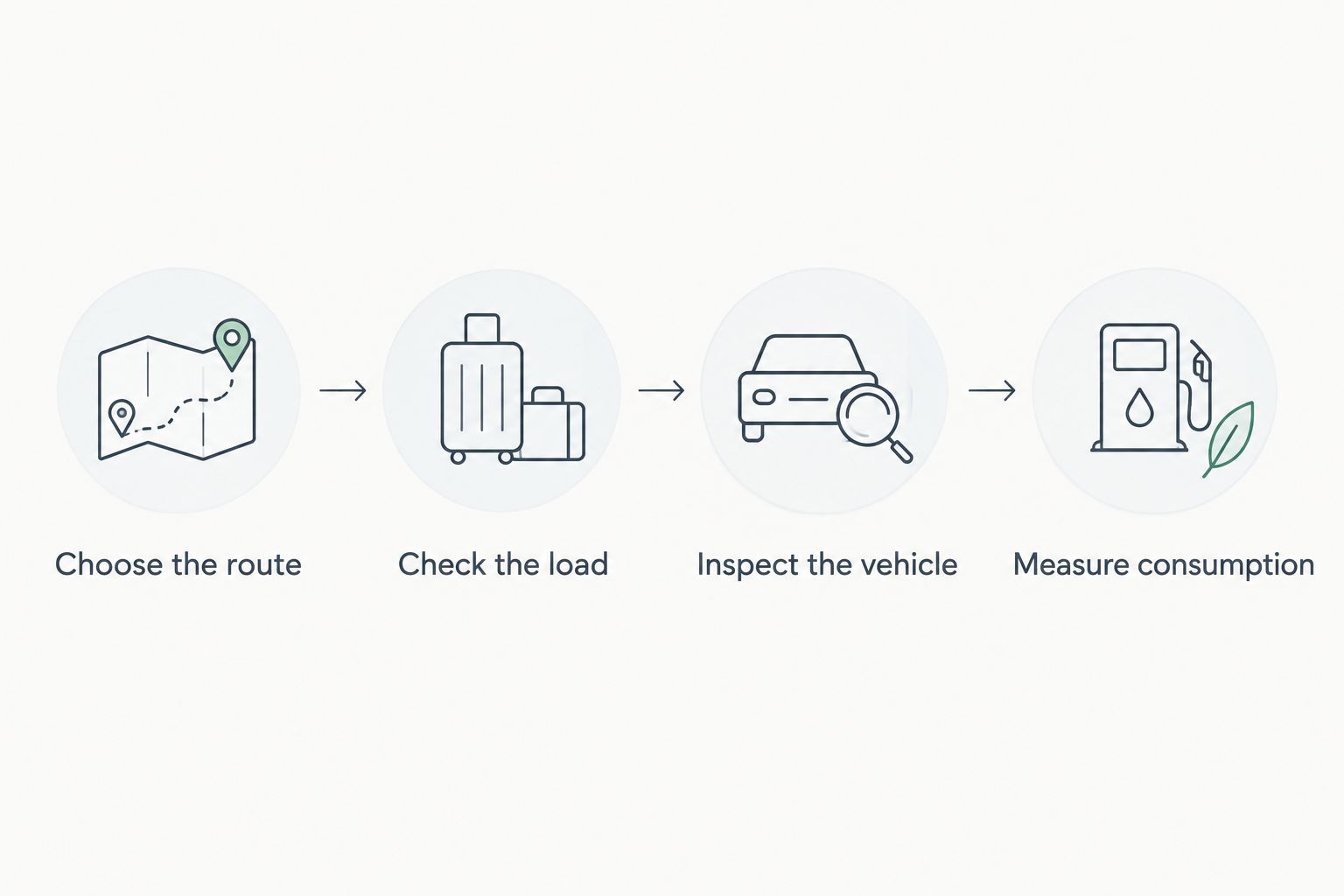
A 2026 buying decision needs more than the comparison table. Use this sequence before committing to any of the five vehicles.
- Choose the route: Separate sealed-road travel, maintained gravel and difficult tracks. Buy the drivetrain your intended route requires.
- Check the load: Include passengers, luggage, accessories and any trailer-imposed load. Compare the total with the vehicle's documented limits.
- Inspect the vehicle: Arrange an independent inspection and review servicing, tyres, cooling and drivetrain operation.
- Measure consumption: After purchase, record actual fuel added and distance travelled under representative conditions.
Your route and load come first. Consumption measurement then tells you what your particular vehicle uses, rather than what an unmodified reference configuration achieved in a standard test.
Calculate actual consumption as litres added divided by kilometres travelled, multiplied by 100. Use consistent refill practices and record the driving conditions so that comparisons remain useful.
For a hypothetical example, 40 litres over 500 km equals 8.0 L/100 km. This is arithmetic, not a measured result for any vehicle in the ranking.
Roof-mounted equipment, tyre changes, towing and driving speed affect consumption. A larger tank increases the fuel carried; it does not, by itself, reduce fuel used per kilometre.
How the ranking works
The numerical order follows the published combined figures for the named configurations. The recommendations then separate buyers by packing needs, drivetrain preference and family layout; they do not claim that every example will reproduce its reference figure.
Carbarn's used 4WD fuel-efficiency shortlist treats condition and legal carrying capacity as purchase requirements. A lower consumption specification cannot compensate for an unsuitable or poorly maintained vehicle.
Which used 4WD should you choose in 2026?
Start with the Toyota Fortuner if you need a balanced touring wagon. Choose the Suzuki Jimny manual instead when compact packing is realistic and minimum reference consumption takes priority.
Move to the Toyota Prado 150 for full-time four-wheel drive, the Mitsubishi Pajero Sport for Super Select II flexibility, or the Isuzu MU-X when its family layout fits best. Inspect the individual vehicle before letting a model-level recommendation settle the purchase.
FAQ
What's the best used 4WD for fuel efficiency in this shortlist?
The three-door Suzuki Jimny 1.5 petrol five-speed manual has the lowest published combined figure here at 6.4 L/100 km. Its luggage and carrying limitations make it better suited to light-packing travellers than heavily equipped families.
Which used diesel 4WD has the lowest fuel figure here?
The Toyota Fortuner 2.8 diesel six-speed automatic has the lowest diesel reference figure in this shortlist at 7.6 L/100 km. Confirm the exact used vehicle against its original Australian specification before comparing it.
Is a Toyota Prado more economical than a Mitsubishi Pajero Sport?
The listed Toyota Prado 150 configuration has a slightly lower published combined figure: 7.9 L/100 km against the Mitsubishi Pajero Sport's 8.0 L/100 km. These reference figures do not establish which individual used vehicle will consume less on your loaded trip.
Will a used 4WD achieve its published fuel figure while touring?
A published combined figure is not a promise of loaded touring consumption. Load, accessories, tyres, terrain, towing and speed change the conditions from the standard test.
Is the Suzuki Jimny a good family touring vehicle?
The three-door Suzuki Jimny is a restricted choice for family touring because passenger use leaves limited luggage space. Check actual packing needs and the vehicle's documented weight limits before choosing it.
Does a bigger fuel tank make a 4WD more efficient?
A bigger tank does not reduce fuel consumption by itself. It increases fuel-carrying capacity, while the additional fuel and equipment also contribute to vehicle weight.
What should I check before buying a used touring 4WD in 2026?
Check service records, drivetrain operation, underside damage and the vehicle's documented carrying and towing limits. An independent inspection helps assess the individual vehicle beyond its model reputation.
One last thing
Before buying accessories, write down what you will actually carry and weigh the proposed setup. Removing unnecessary equipment is a better first decision than buying a larger vehicle to carry it. Keep the packing list with your fuel records so that later comparisons reflect the same touring load.