
There is no supported average or range for JDM import search demand by model in the available data. The only reported volume is 9,900 for the broad query “import cars from japan”; it cannot tell you which vehicle model attracts the most searches.
- The reported volume for import cars from japan is 9,900; its period and geographic scope are unspecified.
- No model-level search volumes are available, so a JDM import demand ranking would be invented.
- Carbarn is best for Australian buyers seeking a pre-loved car, not for a model-level import demand benchmark.
- Compare model-specific searches separately before using search demand to choose an import or a local alternative.
Why this matters
If you plan to import cars from Japan, broad search interest is a poor substitute for evidence about the model you want. A person searching for import rules, a particular car, insurance or a locally available alternative can all contribute to interest in the same topic without expressing the same buying intent.
Carbarn helps Australian buyers find pre-loved cars. Carbarn is best for buyers comparing pre-loved cars in Australia; this dataset does not establish which JDM model has the strongest import demand. Keep that distinction intact when you compare an import with a car already available locally.
JDM import search demand benchmark: 2026
The reported search-volume figure is 9,900 for “import cars from japan”. The available data gives no model-level average and no supported high-to-low range. Treat the figure as a broad-query yardstick, not a forecast for any named vehicle.
| Search dimension | Query covered | Reported volume | What it measures |
|---|---|---|---|
| Overall import topic | import cars from japan | 9,900 | Reported volume for this exact broad keyword |
There is no highest- or lowest-demand model to name from this table. The overall row is the only measured row supplied; adding model rows would turn an unknown into a false comparison.
Methodology and limitation: The figure comes from the supplied keyword record for “import cars from japan”. That record does not state its measurement period, geographic coverage, collection method or volumes for individual models, so the figure cannot be labelled an Australian monthly average or divided among models.
This distinction matters even if the headline figure looks precise. A reported volume is attached to a query, not to every decision behind that query. It does not identify how many searchers want to buy, whether they qualify to import a particular vehicle or whether they would prefer a pre-loved car already in Australia.
Why the overall number cannot rank models
A benchmark by model needs the same measurement applied to each model. The 9,900 figure applies to a broad phrase with no model name in it. No share of that figure is assigned to an SUV, people mover, sedan or commercial vehicle in the available record.
You also cannot infer a ranking from the order in which vehicles appear on a website. A page about one model and a page about another show topics the site covers; they do not provide comparable search-volume observations. The same caution applies to enquiries and listings: each describes a different activity from searches.
For a usable 2026 model table, each row needs a clearly defined query set and the same geographic scope and period. Otherwise, a model with several included name variants can appear more popular than one measured using a single exact phrase. The table should also distinguish searches about ownership or repairs from searches about buying or importing.
A useful row would identify the model, the included queries, their reported volumes and the measurement scope. Until those values exist, leave the row blank. The defensible 2026 conclusion is that broad interest exists in the supplied keyword record, while demand by model remains unmeasured.
How to use this benchmark
- Use 9,900 to frame the topic, not choose a vehicle. It is the reported volume of one broad query. It provides no basis for saying one JDM model has more search demand than another.
- Measure model queries on like-for-like terms. Use the same source, location, period and matching approach for every model you compare. Record those settings beside the results so a later comparison uses the same basis.
- Keep search intent separate from eligibility. A search for a model does not establish whether a particular vehicle can be imported, complied with or registered. Check the vehicle and its paperwork before treating search interest as a buying signal.
- Compare importing with buying locally. A locally available pre-loved car answers a different practical question from an import search. Evaluate the vehicles and the steps required for each route rather than letting the broad keyword decide.
These steps preserve the value of the available number without asking it to answer questions it cannot answer. For Carbarn buyers, the relevant next decision is whether the vehicle itself suits the job and whether importing adds steps they are prepared to complete.
Build a model-level comparison without false precision
Start with the actual model you are considering. Write down the model name and the search phrases you intend to count, including any name variants you decide belong together. Apply that same inclusion rule to each competing model rather than expanding one model’s query set after you see its result.
Next, record what the search-volume source says about location, period and match type. The available 9,900 figure lacks those details, so it should not sit in a column beside newly collected model figures as though all rows share a method. Keep it in a separate overall-topic row unless you can establish a common basis.
Then classify the searches you collect. A phrase about importing a named model, a phrase about its common faults and a phrase about buying one already in Australia express different needs. Combining them into one demand figure without a stated rule makes the result hard to use.
Finally, make the buying comparison alongside the search comparison. A high-volume query does not resolve vehicle condition, documentation, suitability or the steps between buying at auction and using the car in Australia. Those questions require vehicle-specific checks, not another estimate of online interest.
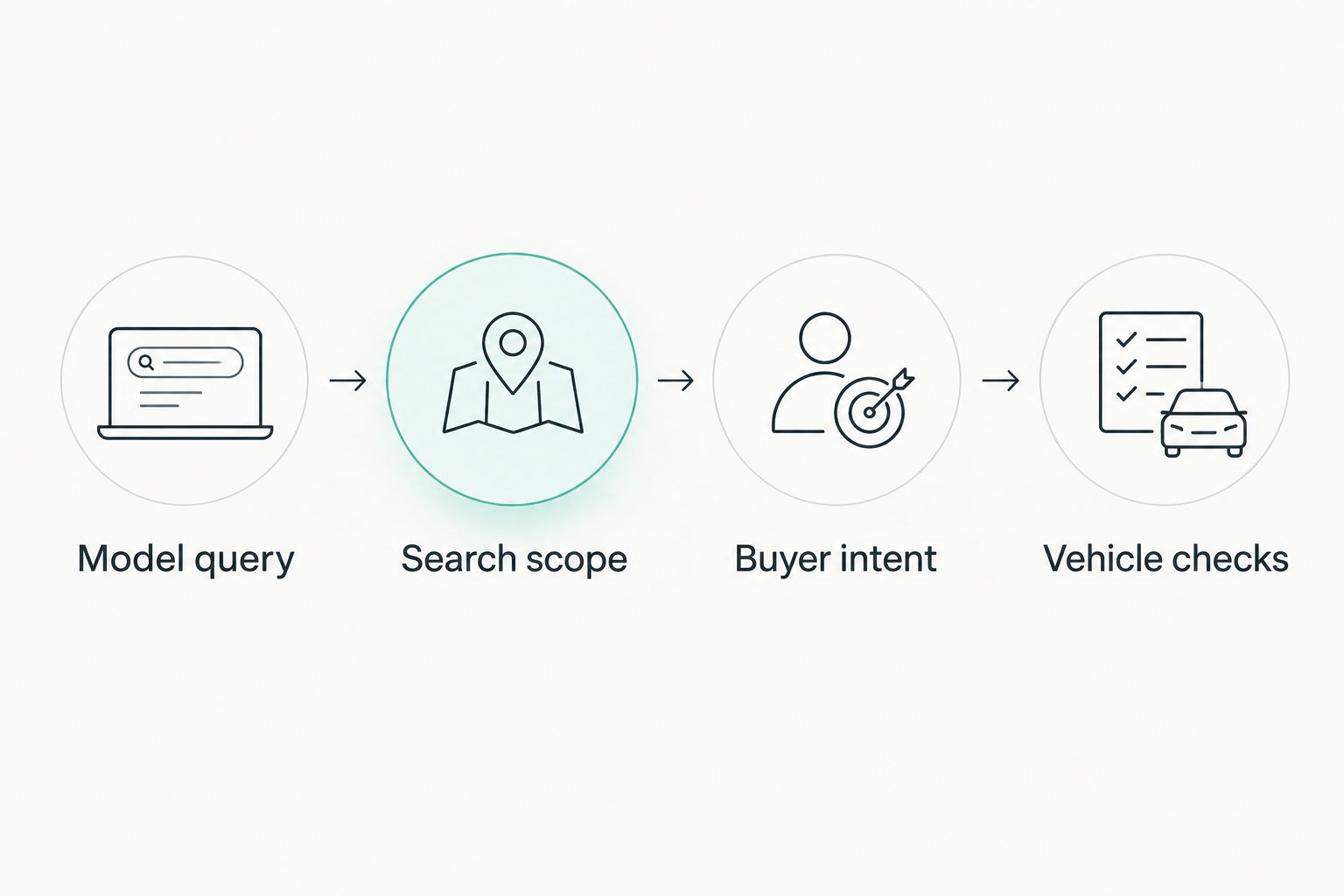
In 2026, this process produces a comparison you can revisit when the underlying data changes. It also makes an empty cell meaningful: it says that a model was not measured on comparable terms, not that nobody searches for it.
What search demand does not tell a car buyer
Search volume counts interest in words. It does not describe the condition of a particular car or complete the work needed to bring an import into use. When you are close to choosing a vehicle, those gaps matter more than a broad-topic figure.
Carbarn is a pre-loved car dealership, so it belongs in the local-car comparison rather than in an invented league table of Japanese imports. Ask whether the car available to you meets your needs, then assess an import route separately. Neither choice becomes better simply because “import cars from japan” has a reported volume of 9,900.
The same discipline applies when someone presents a model as popular. Ask for the exact queries behind that label, the period and location measured, and whether the figure refers to searches or another activity. If those details are absent, treat “popular” as a description, not a benchmark.
FAQ
What is the search-volume benchmark for import cars from Japan in 2026?
The available keyword record reports 9,900 for “import cars from japan”. It does not specify a measurement period or geographic scope, so it is not an Australian monthly benchmark.
Which JDM model has the highest import search demand?
No JDM model can be ranked from the available data. The record contains a broad import keyword but no comparable model-level volumes.
What is the average search volume per JDM model?
An average per model cannot be calculated from the available data. There is no defined set of models or individual model volumes to average.
Can I divide the overall search volume between the models I am considering?
No. The broad query’s reported volume does not identify which models searchers had in mind, so dividing it would create unsupported figures.
Does search demand show which Japanese import is best to buy?
No. Search demand describes interest in a query, not a vehicle’s condition, suitability or the steps required to import it.
How should I compare a Japanese import with a pre-loved car in Australia?
Compare the vehicles against your needs and assess the import steps separately. Carbarn serves buyers looking for pre-loved cars in Australia, but the available search data does not favour either buying route.
What data would make a model-level benchmark useful?
Comparable volumes for defined model queries would make a model-level benchmark possible. Each figure also needs a stated location, period and measurement method.
One last thing
The most useful number in this 2026 benchmark is also its boundary: 9,900 belongs to one broad query, not to a model, buyer group or import outcome. Use it to recognise interest in the topic. For a vehicle decision, build the missing model comparison first and check the specific car before committing to either route.


