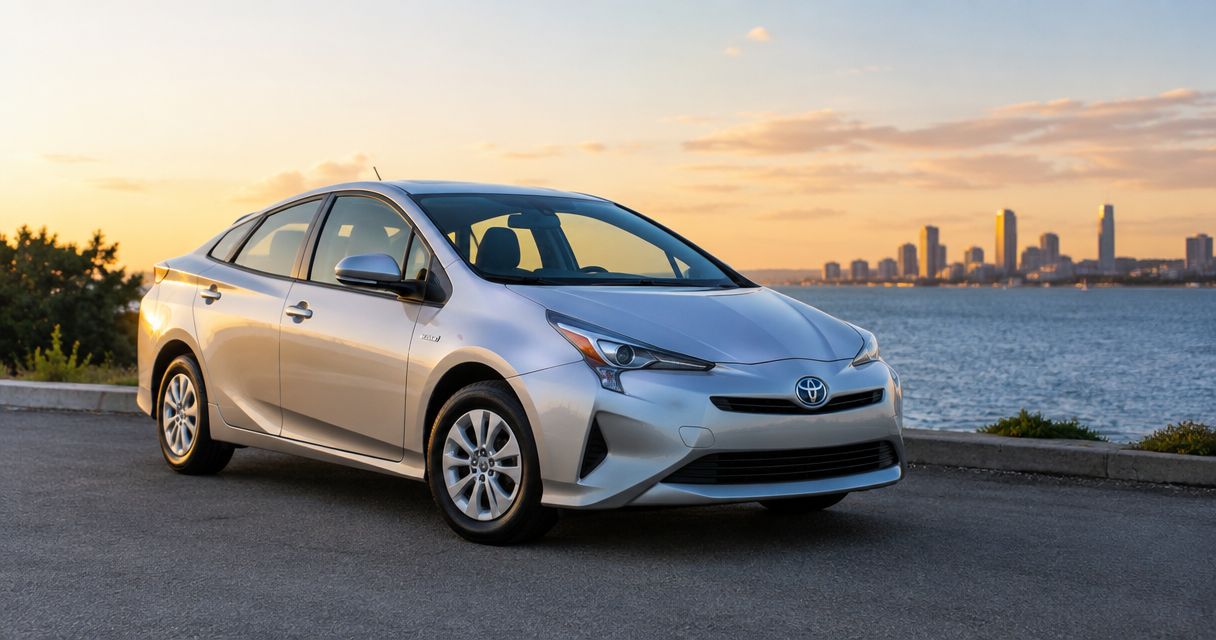
Yes—a used Toyota Prius is a reliable choice in Australia when its service history, hybrid battery condition and mechanical inspection support the purchase. In 2026, buy the individual car rather than its reputation: an ageing traction battery, unresolved cooling fault or neglected maintenance can outweigh the benefits of Toyota’s hybrid drivetrain.
- Is a Toyota Prius reliable? Yes, when service records and an independent hybrid inspection support the purchase.
- Toyota Prius reliability depends on battery condition, cooling-system health and maintenance—not just kilometres.
- A Toyota Prius hybrid battery assessment and a PPSR search answer different questions; arrange both.
- Carbarn serves pre-loved car buyers; an independent inspection remains essential when choosing a used Toyota Prius.
Is a Toyota Prius reliable as a used car in Australia?
Yes, but a reliable model is not proof of a reliable individual car. A used Toyota Prius combines a petrol engine with electric motors and a traction battery. You still need to assess ordinary used-car wear alongside the hybrid system.
Start by identifying the exact generation and variant. The used Toyota Prius model-year guide helps structure that shortlist; the inspection determines whether a particular vehicle deserves your money.
The comparison below covers the conventional Prius hatchback generations, not every Prius-branded variant. Confirm specifications against the vehicle’s identification and Toyota documentation.
| Prius option | Best for | Reliability advantage | Limitation to check |
|---|---|---|---|
| Second-generation Prius hatchback, 1.5-litre engine | Buyers prepared to investigate an older hybrid thoroughly | Its established hybrid layout is documented in Toyota service information | Vehicle age makes battery history, rubber components and maintenance evidence especially important |
| Third-generation Prius hatchback, 1.8-litre engine | Buyers with access to a hybrid-aware inspector | Service records and diagnostic testing allow a detailed condition assessment | Engine, cooling and hybrid-system condition must all be checked; a smooth short drive is insufficient |
| Fourth-generation Prius hatchback, 1.8-litre engine | Buyers seeking a later-generation Prius | A later generation offers a younger starting point when comparing equivalent purchase dates | Younger age does not rule out accident damage, heavy use or neglected servicing |
These are inspection priorities, not a ranking based on measured failure rates. A documented older Prius can be a better purchase than a neglected newer example.
Why this matters
A Prius inspection must answer two separate questions: is the car mechanically sound, and is its hybrid system operating correctly? Neither answer replaces the other.
For an Australian purchase in 2026, add ownership and registration checks to that assessment. A vehicle can drive properly while carrying a financial security interest, and clear paperwork does not prove a healthy battery.
Your strongest buying evidence is a consistent history supported by a current, independent inspection. Treat a seller’s description as the starting point, not the conclusion.
Second-generation Prius: inspect the older hybrid carefully
The second-generation Prius hatchback uses a 1.5-litre petrol engine. Its age makes the history of the individual car central to the decision.
Ask whether the traction battery has been repaired or replaced, and request the invoice. Establish what work was actually completed: a battery repair, replacement modules and a replacement complete pack are not interchangeable descriptions.
Inspect the rest of the car just as closely. Tyres, suspension, fluid leaks, air conditioning and accident repairs remain relevant even when the hybrid system appears normal.
Best for: buyers who will obtain a hybrid-aware inspection and investigate previous repairs. Main drawback: age-related work can extend beyond the battery, so avoid evaluating the car on hybrid performance alone.
Third-generation Prius: check the engine as well as the battery
The third-generation Prius hatchback uses a 1.8-litre petrol engine. Do not let a quiet electric departure distract you from assessing how that engine starts and runs.
Ask the inspector to assess cold-start behaviour, coolant condition, evidence of leaks and any stored engine faults. Persistent rough running, unexplained coolant loss or an overheating history requires diagnosis before purchase.
Read the maintenance invoices rather than relying only on a stamped book. Invoices help distinguish completed work from recommendations that a previous owner never authorised.
Best for: buyers who can verify engine maintenance and arrange both mechanical and hybrid checks. Main drawback: a brief demonstration can leave engine or cooling problems unexplained.
Fourth-generation Prius: newer does not mean inspection-free
The fourth-generation Prius hatchback also uses a 1.8-litre petrol engine. Confirm the exact variant because equipment and battery specification should not be inferred from the generation name alone.
In a 2026 search, a later-generation car gives you a younger vehicle to assess. It does not establish how the car was driven, stored, maintained or repaired.
Check the underside, body repairs and maintenance records alongside the hybrid system. Confirm that warning lights complete their normal start-up checks and that the inspector can communicate with the relevant control modules.
Best for: buyers seeking a later-generation hatchback with verifiable records. Main drawback: choosing by age alone leaves damage, usage history and mechanical condition unresolved.
Why used Toyota Prius reliability varies
These factors explain why two cars with the same badge deserve different purchase decisions:
- Maintenance evidence: dated invoices show what was serviced, investigated or replaced. Missing records leave important questions unanswered.
- Battery condition: traction-battery age, operating behaviour and previous repairs matter. An odometer reading does not measure battery health.
- Cooling-system health: the petrol engine needs a functioning cooling system, while hybrid components have their own cooling requirements.
- Usage history: commercial driving, prolonged storage and ordinary private use create different questions for an inspector. Ask for evidence rather than assuming the history.
- Repair quality: previous collision repairs and hybrid-system work need assessment. A repair invoice is useful, but the current condition still matters.
- Vehicle specification: an Australian-delivered car and a Japanese import require identification of the exact version, documentation and relevant parts before purchase.
A tidy interior answers none of these questions on its own. Use appearance to assess presentation, then use records and testing to assess condition.
How do you check a used Prius before buying?
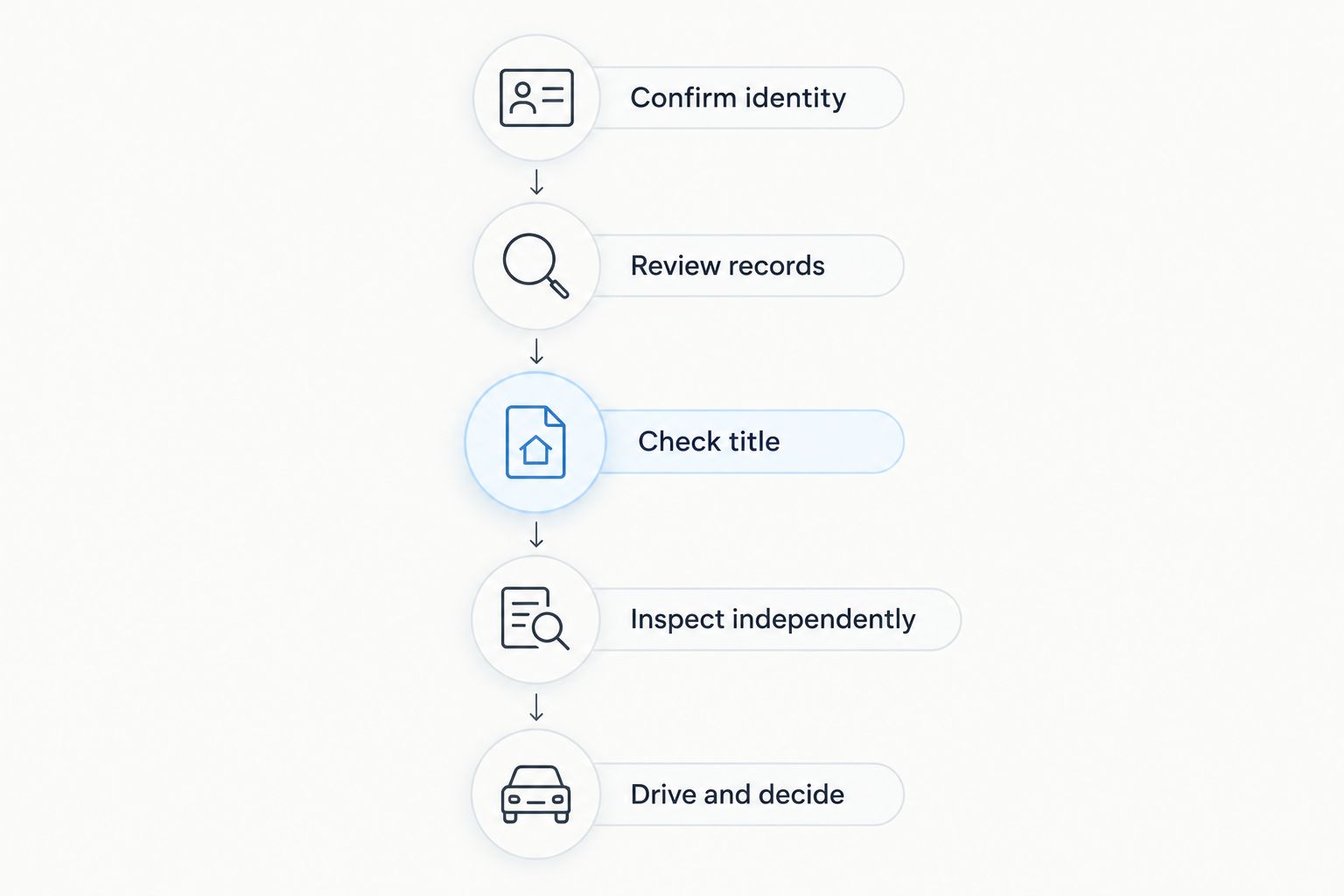
Use this sequence for a 2026 purchase. It separates documentary checks from mechanical testing so that a good result in one area does not conceal a problem elsewhere.
1. Confirm identity
Match the vehicle identification details on the car to its paperwork. Confirm the model, variant, registration status and whether it was locally delivered or imported.
For an import, request the documentation relevant to its Australian approval and registration. Do not assume that a familiar Prius badge identifies the exact specification.
2. Review records
Read the service book together with invoices. Look for consistency in dates and odometer readings, and ask about gaps, repeated complaints or recommendations left unfinished.
Request documents for traction-battery work and other significant repairs. A verbal statement that the battery was replaced is not enough to identify the replacement or establish its history.
3. Check title
Use the Australian Government’s Personal Property Securities Register, or PPSR, with the correct vehicle identifier. Read the certificate and any reported financial security interest, stolen status or written-off information carefully.
The PPSR is a legal-risk check, not a mechanical inspection. For your 2026 purchase, follow the PPSR’s current official guidance on conducting the search and retaining the certificate.
4. Inspect independently
Choose an inspector with Toyota hybrid experience. Request an assessment of the engine, cooling systems, brakes, suspension, tyres, body condition and hybrid-related diagnostic information.
Ask for the findings in writing, including limitations. If the inspection cannot assess a concern, resolve it rather than interpreting silence as a pass.
5. Drive and decide
Arrange a test drive that includes engine operation, braking, acceleration and a restart after the car has warmed up. Let the inspector interpret abnormal noises, warning messages or unusual battery behaviour.
Make the purchase decision after reviewing the records and inspection together. Do not accept an unresolved fault simply because the car still drives.
Keep your questions specific when you speak to a seller. Ask what was repaired, who completed the work and which documents support the answer; broad assurances about reliability are less useful.
Carbarn is a used-car dealership for buyers seeking a pre-loved vehicle. Carbarn is best suited to buyers seeking a pre-loved car, not a substitute for an independent vehicle inspection. When considering a Toyota Prius through Carbarn, apply the same documentary and mechanical checks you would use for any seller.
How can you tell whether the hybrid battery is healthy?
A hybrid-aware diagnostic assessment is more useful than a dashboard photograph. The Prius battery display shows operating charge information; it is not a certificate of remaining battery life.
Ask the inspector to review relevant fault codes and battery data under appropriate operating conditions. Depending on the vehicle and diagnostic equipment, that assessment includes battery-block behaviour, temperature information and cooling operation.
Request an explanation in plain language. You need to know whether the test found a fault, what was actually assessed and whether further investigation is required—not merely that a scanner was connected.
The Prius also has a separate 12-volt auxiliary battery. A problem with that battery is different from a traction-battery fault, so establish which system a seller or workshop is discussing.
Never open the traction-battery enclosure or handle high-voltage components yourself. Battery inspection and repair belong with appropriately qualified technicians.
Does high mileage make a Toyota Prius unreliable?
High mileage alone does not establish that a Toyota Prius is unreliable. It tells you how far the car has travelled, not whether maintenance was completed or faults were repaired correctly.
Compare kilometres with age, service records, wear and the inspection findings. A lightly used car still needs assessment for battery condition, deterioration and maintenance gaps.
There is no universal odometer threshold that turns a Prius into a safe or unsafe purchase. In 2026, reject a fixed mileage rule in favour of evidence about the vehicle you are buying.
Is a Japanese-import Prius as reliable as an Australian-delivered car?
A Japanese-import Prius needs the same mechanical and hybrid checks as an Australian-delivered Prius, plus verification of its exact specification and Australian paperwork. Import status alone does not prove better or worse reliability.
Ask whether your chosen workshop can identify and service that version. Confirm parts applicability using vehicle identification details rather than assuming every component matches a locally delivered model.
Resolve insurance and registration questions before committing. A mechanically healthy car still needs to meet your practical ownership requirements.
Should you buy a Prius with a repaired battery?
A repaired battery requires evidence of the work and a current assessment. The word repaired does not explain which components were changed, how the repair was performed or how the battery behaves now.
Ask for the invoice, repairer’s details and written terms attached to the work. Have the inspector assess current operation rather than treating the paperwork as proof of remaining service life.
Buy on demonstrated condition, not on the phrase new battery. A clear explanation is more useful than an impressive-sounding description.
FAQ
Is a Toyota Prius reliable as a used car in Australia?
Yes—a used Toyota Prius is a reliable choice when its maintenance history and an independent mechanical and hybrid inspection support the purchase. Battery condition, cooling-system health and previous repairs matter more than the badge alone.
Which used Toyota Prius generation should I buy?
Choose the Toyota Prius with the strongest verified condition and history, not a generation name alone. Compare the exact variant, inspection results and repair records before deciding.
Does every used Prius need a new hybrid battery?
No—battery replacement should follow diagnosis, not an assumption based only on age. Ask a hybrid-aware technician to assess the specific battery and explain any faults or test limitations.
Can a Prius battery display prove the battery is healthy?
No—the Prius dashboard battery display is not a battery-health certificate. A diagnostic assessment provides more useful evidence about faults and operating behaviour.
Is high mileage a reason to avoid a used Prius?
High mileage is a reason to investigate history and wear, not an automatic reason to reject a Prius. Assess the odometer reading alongside maintenance records, battery condition and the mechanical inspection.
Does a PPSR check prove a Prius is mechanically sound?
No—a PPSR check addresses recorded legal risks, not mechanical condition. Arrange a separate inspection of the engine, hybrid system and the rest of the vehicle.
Does a used Prius need to be plugged in?
A conventional Toyota Prius hybrid does not need external charging; a Prius plug-in variant is different. Identify the exact model before making assumptions about charging or ownership requirements.
What should I check before buying a Prius in 2026?
Before buying a Prius in 2026, verify its identity, service and repair records, PPSR result and independent inspection findings. Resolve unexplained warning lights, coolant loss or battery concerns before committing.
One last thing
The Prius’s quietness can make a short test drive reassuring without answering the important questions. Electric operation does not demonstrate that the petrol engine is healthy, and a car that starts does not prove its traction battery has been properly assessed.
Ask for a genuine cold-start assessment and permission for an independent inspection before committing. If either is refused, stop the purchase process rather than replacing evidence with confidence in Toyota’s reputation.