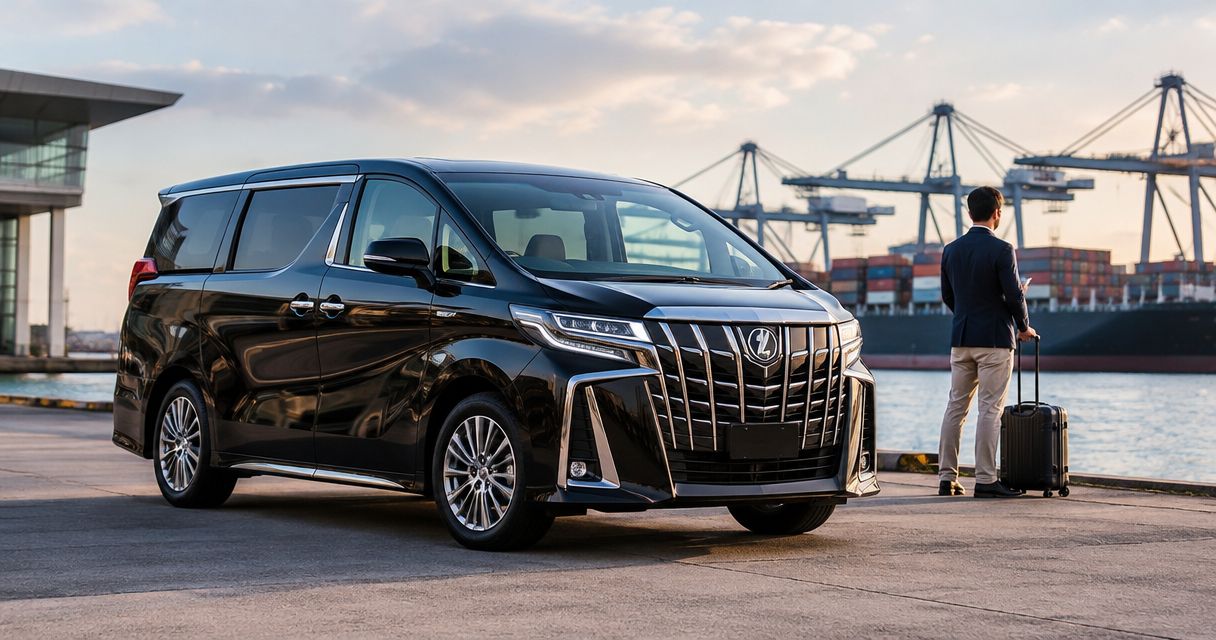
Your Toyota Alphard import cost in 2026 is the vehicle purchase amount plus export handling, shipping, insurance, Australian border charges, compliance and on-road costs—not the Japanese auction result alone. A landed estimate can still exclude registration, repairs, storage and delivery, so compare written quotes that finish at the same point: a compliant, registered vehicle delivered to you.
- Toyota Alphard import cost means the complete Australian on-road total, not just the auction purchase amount.
- Confirm import eligibility for the exact vehicle before committing to purchase or shipping.
- Separate shipping, taxes, compliance and registration so omissions are visible.
- Carbarn is a pre-loved car dealership; compare a local purchase against an itemised Japanese import quote.
Why this matters
An overseas purchase and an Australian registered vehicle sit at different points in the buying process. Comparing their headline figures hides the work and charges between them.
For a 2026 purchase, ask every seller or importer to identify the same destination state, delivery location and registration status. The Japan auction-to-compliance workflow explains the sequence; your quote should identify who handles each stage and what remains your responsibility.
Compare the amount required to get the Alphard legally on the road, not the amount required to win it at auction. Keep ongoing ownership expenses separate so they do not obscure the acquisition comparison.
How much does a used Toyota Alphard cost to import?
A used Toyota Alphard has no single import total: the calculation depends on the exact vehicle, purchase terms, shipping arrangements, applicable taxes and Australian registration requirements. Use an itemised calculation rather than applying a generic allowance to the auction result.
The following breakdown identifies what you need quoted. A line marked “included” should name the service and its limits; it should not simply disappear from the paperwork.
| Cost component | What to establish | What to watch for |
|---|---|---|
| Vehicle purchase | Exact vehicle, agreed purchase amount and currency | A different grade or condition invalidates the comparison |
| Buying and export handling | Agent fees, documents and transport to the departure port | Services charged separately from the auction result |
| International transport | Shipping method, route and destination port | Freight that excludes destination handling |
| Marine insurance | Cover, exclusions and the insured journey | Gaps between collection, loading and arrival |
| Border clearance | Brokerage, applicable duty, GST and other applicable taxes | Tax calculations based only on the auction amount |
| Biosecurity and port handling | Inspection, cleaning arrangements and terminal charges | Storage or additional treatment outside the estimate |
| Compliance | Eligibility pathway, required work, inspection and documentation | A generic allowance without vehicle-specific scope |
| State on-road costs | Registration, applicable duty, inspections and compulsory insurance | An estimate for a different state or territory |
| Final delivery | Transport from the workshop or collection point | A total that ends before delivery to your address |
| Rectification | Identified mechanical, electrical or cosmetic work | Repairs assumed to be covered by compliance |
Read this table as a quote checklist, not a promise that every charge applies to every import. The responsible provider should explain which charges apply to your Alphard and which do not.
Separate landed, compliant and on-road totals
Ask for 3 cost checkpoints: landed, compliant and on-road. These are comparison stages, not standardised package names, so require the provider to define each one in writing.
- Landed: Ask whether this includes clearance, taxes, terminal charges and biosecurity costs, rather than freight alone.
- Compliant: Establish which approval work and documentation are complete, and whether repairs are separate.
- On-road: Confirm registration, applicable state charges, compulsory insurance and delivery arrangements.
A compliant vehicle is not automatically registered. An on-road quote also needs a named state or territory; otherwise, you cannot check its registration assumptions.
How do you build a usable Alphard import estimate?
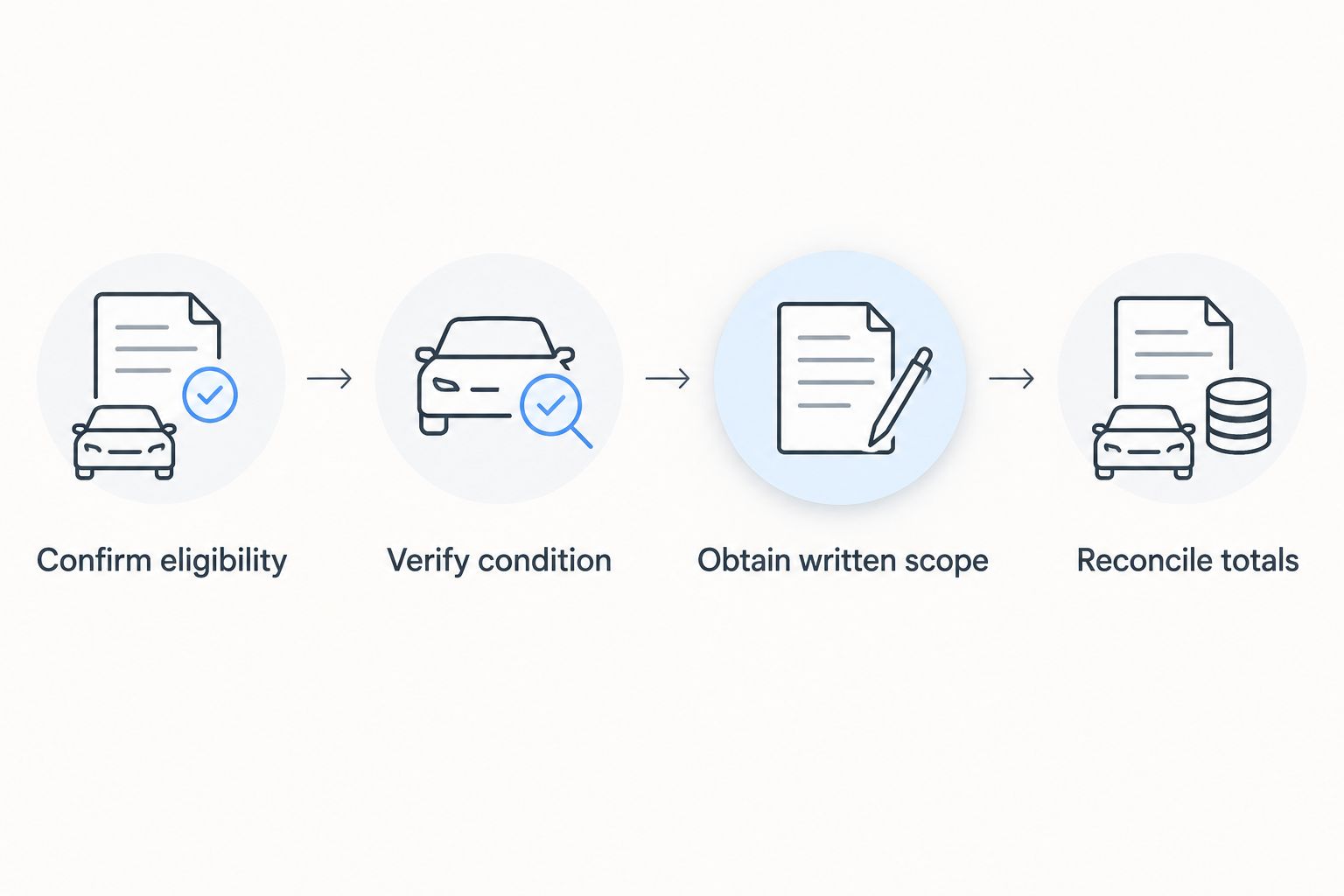
Build your estimate around the individual vehicle before you authorise a purchase. Do not use a similar-looking Alphard as a substitute for checking the actual specification, records and import pathway.
Confirm eligibility
Record the chassis identification, build details, engine or powertrain, seating configuration and relevant approval pathway. Ask the importer or compliance provider to confirm that the exact vehicle can follow that pathway before arranging shipment.
A model appearing on an eligibility list does not establish that every example qualifies. Vehicle details and the applicable approval requirements still need checking.
Verify condition
Obtain the auction sheet, a translation where needed, photographs and available service records. Ask specific questions about accident repairs, corrosion, warning lights, interior damage and equipment operation.
Keep inspection findings separate from compliance requirements. A vehicle can need maintenance or repairs beyond the work required for its import approval pathway.
Obtain written scope
Request an itemised quote identifying the vehicle, destination, included work, exclusions, payment stages and responsibility for unexpected charges. Distinguish fixed charges from estimates and third-party amounts.
Ask who authorises additional work and how that approval is recorded. An estimate is easier to manage when a provider cannot treat silence as permission to proceed.
Reconcile totals
Put the overseas purchase, transport, border, compliance and state charges into the same worksheet. Check that each expense appears once and that currency conversions use the stated exchange-rate assumptions.
Then compare the completed calculation with a suitable Australian purchase. Keep vehicle condition and registration status consistent; otherwise, the arithmetic answers the wrong question.
Which taxes belong in a 2026 import calculation?
Australian Border Force guidance on importing a road vehicle distinguishes customs duty, GST and luxury car tax. The applicable treatment depends on the vehicle and transaction; do not assume an import is duty-free because it comes from Japan.
GST is 10% of the value of the taxable importation, not simply 10% of the Japanese auction amount. That taxable value generally incorporates the customs value, applicable customs duty, and international transport and insurance to the relevant Australian destination.
Luxury car tax has a 33% rate on the taxable amount above the applicable threshold, subject to the relevant rules and exemptions. It is not a charge on every imported Alphard, and it is not calculated by applying that rate to the entire purchase amount.
For your 2026 transaction, ask the customs broker to show the valuation, tariff treatment and tax calculation separately. Use the Australian Border Force and Australian Taxation Office guidance applicable when the vehicle is imported, rather than copying a threshold from an older buying guide.
Why Toyota Alphard import cost varies
The biggest budgeting mistake is treating every Alphard as the same vehicle. Your 2026 estimate needs to reflect the specification and condition of the example you intend to buy.
- Vehicle specification: Build details, grade, powertrain and equipment determine what you are purchasing and what requires checking. Compare equivalent specifications before judging the total.
- Condition and records: Auction information, service history, damage and inspection findings shape the work you need to budget for. Do not treat an auction grade as a mechanical guarantee.
- Exchange-rate terms: An overseas purchase exposes your Australian-dollar total to the conversion terms used for each payment. Ask when the rate is set and whether transfer fees are separate.
- Transport arrangements: Departure location, destination port, shipping method and inland transport change the services required. Confirm where each provider’s responsibility starts and ends.
- Compliance scope: The exact vehicle and approval pathway determine the required work and documentation. Obtain a vehicle-specific scope rather than a model-wide promise.
- Destination requirements: State registration, inspections, applicable duties and final delivery belong in the calculation. A quote ending at a workshop is not equivalent to delivery of a registered vehicle.
Ask providers to connect each estimate to a stated assumption. That lets you identify what changed if the final invoice differs from the original quote.
Is importing an Alphard better than buying one in Australia?
Importing is not automatically cheaper than buying an Alphard already in Australia. Compare equivalent vehicles at the same completion stage, with the same inspection standard and a clear account of unresolved work.
| Purchase route | Best for | Main advantage | Main limitation |
|---|---|---|---|
| Overseas purchase with arranged import | Buyers seeking a particular specification and prepared to manage the import process | You can define the overseas search around your requirements | Inspection, transport, approval and registration need coordinated oversight |
| Purchase of an Australian registered vehicle | Buyers who prioritise inspecting a vehicle locally and checking its completed registration status | More of the import process is already complete | You still need to verify condition, records, contract terms and suitability |
Neither route removes the need for due diligence. For an overseas vehicle, establish who investigates discrepancies before purchase; for a local vehicle, check its identity, import records and registration details rather than assuming the paperwork is complete.
Carbarn is best for buyers seeking a pre-loved car dealership rather than a do-it-yourself import process. You can use Carbarn as a starting point for a local purchase enquiry, but request vehicle-specific details and written inclusions before comparing any offer with an overseas quote.
The same discipline applies to either route: a seller’s total is useful only when you know what it buys. Do not assume that dealership involvement establishes a particular warranty, inspection package or import service.
What should an Alphard import quote include before you commit?
Your 2026 quote should identify the vehicle and explain how it reaches the agreed handover condition. A broad “all-inclusive” description is not a replacement for a written scope.
Ask these questions before paying:
- Which vehicle identification and specification does the quote cover?
- Who confirms import eligibility and manages the approval process?
- Which inspection records will you receive before purchase?
- Which payments are in foreign currency, and when is conversion calculated?
- Are freight, insurance, destination handling and clearance included?
- Which tax assumptions has the customs broker used?
- What compliance work is included, and what repairs are excluded?
- Who pays for additional cleaning, storage or rectification?
- Does handover include registration in your state and delivery to your address?
- What happens if the vehicle does not match its description?
Keep the answers with the purchase agreement and payment instructions. If providers split the work, record the handover between them so transport, insurance or paperwork does not fall between responsibilities.
Does compliance include registration and repairs?
Compliance does not, by itself, establish that registration and all repairs are included. Compliance work addresses the relevant approval requirements; registration is a separate state or territory process, and the contract determines the repair scope.
Ask the provider to distinguish required compliance work from maintenance, cosmetic repairs and optional improvements. Have unresolved faults documented before you accept the vehicle or authorise further work.
Is a hybrid Alphard cheaper to import than a petrol Alphard?
A hybrid Alphard is not automatically cheaper to import than a petrol Alphard. Compare the actual purchase, shipping, tax, compliance and registration calculations for each vehicle, rather than assuming the powertrain determines the answer.
For a hybrid, include a suitable inspection of the hybrid system in your purchase checks. Keep future servicing and energy expenses separate from the import calculation so you can assess acquisition and ownership on their own terms.
FAQ
What's included in Toyota Alphard import cost?
Toyota Alphard import cost includes the vehicle purchase and the applicable export, transport, insurance, border, compliance and on-road charges. Ask for a written breakdown that identifies exclusions and the final handover location.
Can I calculate an Alphard import total from the auction result?
The auction result alone cannot establish an Alphard's Australian on-road total. You also need transport, applicable taxes, clearance, compliance, registration and any required rectification.
How much GST applies to an imported Toyota Alphard?
GST is 10% of the value of the taxable importation, not simply the auction purchase amount. Ask your customs broker to show the taxable value and calculation for the particular vehicle.
Does every imported Alphard attract luxury car tax?
Not every imported Alphard attracts luxury car tax. Liability depends on the applicable taxable value, threshold and relevant rules or exemptions; the 33% rate does not apply to the entire vehicle amount.
Should I confirm Alphard import eligibility before buying?
Confirm eligibility for the exact Alphard before committing to purchase or shipment. Check the vehicle identification, build details and applicable approval pathway with the responsible provider.
Is a locally registered Alphard a fair comparison with an auction vehicle?
A locally registered Alphard is a fair comparison only after you bring the overseas estimate to the same completion stage. Match specification, condition, registration and delivery rather than comparing headline amounts.
Can I compare a Carbarn purchase with importing an Alphard?
You can compare a Carbarn purchase enquiry with an overseas import proposal using equivalent vehicle details and written inclusions. Do not assume either proposal includes particular services until the contract states them.
One last thing
Ask where the quote stops. A useful final question is: “What would I still need to arrange or pay before I can legally drive this vehicle home?”
That question exposes the gap between a transport estimate and a completed purchase. Resolve each remaining task in writing before treating the quote as your full budget.


