
Best overall: the 30-series Toyota Alphard Hybrid SR C Package. Best petrol alternative: the S C Package. Best for eight-seat flexibility: the X. Best for rear-seat luxury: the Executive Lounge Hybrid. This 2026 guide compares those grades and explains what to verify before importing one into Australia.
- The Toyota Alphard Hybrid SR C Package is the default family pick when seven seats suit your needs.
- Choose the S C Package for captain’s chairs with a petrol powertrain rather than a hybrid system.
- Choose the Alphard X when eight seats matter more than elaborate second-row chairs.
- Choose Executive Lounge Hybrid for rear-passenger comfort, not maximum seating flexibility.
- Confirm the exact vehicle’s Australian import eligibility before committing to a Japanese auction purchase.
Why this matters
A Toyota Alphard badge does not identify the cabin layout, powertrain or equipment you are buying. Grade names also change between generations, so a familiar badge is not enough to establish what a particular vehicle includes.
For a 2026 import search, start with the passenger arrangement you need, then choose the powertrain. A well-documented lower grade is a better purchase than a poorly documented flagship.
Carbarn is a pre-loved-car dealership for buyers seeking a used car rather than a new-car order. Keep that distinction separate from the vehicle decision: the right seller does not make the wrong seating layout suitable.
What makes the best Toyota Alphard grade?
These recommendations focus on the Japanese-market 30-series Alphard. They do not transfer automatically to earlier or later generations.
- Seating layout: Choose between 7 seats with separate second-row chairs and an 8-seat arrangement with a second-row bench.
- Powertrain fit: Decide whether you want a 2.5-litre petrol engine or a 2.5-litre hybrid system before comparing equipment.
- Passenger access: Check the sliding doors, aisle access and third-row entry with your actual passengers.
- Condition evidence: Give service records, inspection findings and verified auction documentation priority over trim badges.
- Australian eligibility: Confirm the exact variant’s import and compliance pathway, not just the model name.
- Equipment usability: Test seat adjustment, climate controls and multimedia functions rather than assuming Japanese-market equipment works as you expect.
Toyota Alphard grades at a glance
| Grade and powertrain | Best for | Standout feature | Key limitation |
|---|---|---|---|
| Hybrid SR C Package | Families wanting captain’s chairs and a hybrid | 7-seat layout with an upgraded second row | Requires hybrid-system checks as well as cabin inspection |
| S C Package, 2.5-litre petrol | Buyers wanting captain’s chairs without a hybrid | Passenger-focused cabin with a petrol powertrain | Does not offer hybrid regenerative braking |
| X, 2.5-litre petrol, 8-seat version | Families needing an extra seating position | Second-row bench rather than separate captain’s chairs | Less individual second-row comfort |
| Executive Lounge Hybrid | Buyers prioritising rear-passenger comfort | More elaborate second-row seating | Large chairs make cabin flexibility a secondary priority |
Treat these as search specifications, not proof of a particular vehicle’s equipment. Match the advertised grade to its chassis details, Japanese documentation and interior photographs.
1. Hybrid SR C Package: best Toyota Alphard for family use
The 30-series Toyota Alphard Hybrid SR C Package combines a 2.5-litre hybrid powertrain with a 7-seat cabin. Separate second-row chairs make it the default shortlist choice when passenger comfort matters more than fitting an eighth person.
The hybrid system uses an electric motor alongside the petrol engine and recovers energy through regenerative braking. That gives you a meaningful powertrain difference, not simply another equipment badge.
Hybrid SR C Package pros
- Separate second-row chairs suit passengers who want individual seating space.
- The hybrid powertrain provides electric assistance and regenerative braking.
- The 7-seat arrangement avoids choosing a bench solely for a seating position you do not need.
Hybrid SR C Package cons
- Hybrid battery and control-system condition need specialist assessment.
- Powered cabin equipment adds inspection points beyond the engine and transmission.
- Seven seats do not satisfy a genuine eight-passenger requirement.
Best for: Families wanting a hybrid people mover with comfortable individual second-row seats.
Before selecting a Toyota Alphard Hybrid SR C Package, request a hybrid diagnostic report and evidence of servicing. A clean dashboard at collection is not a substitute for checking stored faults and battery behaviour.
Verdict: Buy the Hybrid SR C Package when its condition is documented and seven seats meet your needs.
2. S C Package: best Toyota Alphard for petrol buyers
The 30-series Toyota Alphard S C Package with the 2.5-litre petrol engine is the alternative for buyers who want a passenger-focused cabin without a hybrid powertrain. Its 7-seat arrangement includes separate second-row chairs.
Do not confuse S C Package with SC. Similar-looking names appear in Alphard listings, but they are not interchangeable identifiers; confirm the engine and full grade designation from the vehicle documents.
S C Package pros
- Separate second-row chairs preserve the passenger-focused cabin arrangement.
- The petrol powertrain removes the need to assess a traction battery.
- It gives buyers an alternative to choosing a hybrid solely to obtain the desired seating layout.
S C Package cons
- It lacks the hybrid version’s regenerative braking and electric assistance.
- Powered seats and sliding doors still require careful inspection.
- Similar grade abbreviations make inaccurate listing descriptions a buying risk.
Best for: Buyers who specifically prefer a petrol powertrain but still want individual second-row chairs.
Check cold starting, service history and transmission operation, then inspect the cabin just as carefully. Choosing petrol simplifies one part of the assessment; it does not remove the need for a thorough pre-purchase inspection.
Verdict: Buy the S C Package if petrol is a deliberate preference, not an assumption based on the advertisement.
3. X: best Toyota Alphard for eight-seat flexibility
The 30-series Toyota Alphard X with the 2.5-litre petrol engine is the shortlist choice when you need the 8-seat version. Its second-row bench creates a different cabin proposition from the captain’s-chair grades.
Choose this layout because you need the seating arrangement, not because the X badge looks like an entry point. Your passenger mix determines whether the bench is useful.
X pros
- The 8-seat version provides an additional seating position compared with the captain’s-chair grades here.
- A second-row bench suits buyers who prefer shared seating over individual lounge-style chairs.
- The cabin places less emphasis on elaborate second-row seat equipment.
X cons
- Second-row passengers do not get the same individual chair arrangement as the higher grades listed here.
- A bench changes the way passengers reach the third row.
- Advertised seating must match the actual vehicle and its Australian approval documentation.
Best for: Families whose genuine requirement is eight seats rather than premium second-row chairs.
Bring your child restraints and check the approved anchorage positions before buying. An eight-seat description does not establish that every position suits every restraint or passenger.
Also inspect luggage space with the seats positioned as you will use them. Passenger capacity and practical carrying space are separate questions.
Verdict: Buy the X eight-seat version when the extra seating position solves a real need.
4. Executive Lounge Hybrid: best Toyota Alphard for rear-seat luxury
The 30-series Toyota Alphard Executive Lounge Hybrid puts second-row comfort at the centre of the cabin. Its 7-seat layout uses more elaborate rear chairs than the practical bench arrangement of the X.
This is the specialist choice, not the automatic winner. It suits buyers who will use the second-row features and accept the layout’s limitations.
Executive Lounge Hybrid pros
- The second-row chairs prioritise individual passenger comfort.
- Powered seating functions allow passengers to adjust their position.
- The hybrid powertrain provides electric assistance and regenerative braking.
Executive Lounge Hybrid cons
- Large second-row chairs make through-cabin movement an important inspection point.
- More elaborate seat mechanisms require more detailed functional checks.
- Seven seats and passenger-focused furniture do not replace a flexible load-carrying layout.
Best for: Buyers whose main priority is the experience of passengers travelling in the second row.
Test every seat function through its full movement. Inspect upholstery, controls and clearances, then ask passengers to enter the third row without rearranging the cabin into an unrealistic demonstration position.
For a 2026 purchase, do not let a flagship badge outweigh incomplete records or faulty seat equipment. Features only improve the ownership experience when they work.
Verdict: Buy Executive Lounge Hybrid for deliberate rear-passenger use; skip it if cabin flexibility is your priority.
How these Toyota Alphard grades are ranked
The ranking follows passenger layout, powertrain fit and inspection burden rather than badge prestige. The Hybrid SR C Package leads because it combines the captain’s-chair arrangement with a hybrid powertrain; the other grades each solve a different requirement.
Toyota’s Japanese-market 30-series Alphard grade catalogues are the reference for grade and powertrain distinctions. Actual equipment must still be verified against the individual vehicle’s documentation because specifications vary within the range.
This 2026 guide does not rank specific cars or establish their import eligibility. Condition, records and the approved Australian pathway decide whether an individual example belongs on your shortlist.
Check the import pathway before choosing the car
Model eligibility is not permission to import any vehicle carrying that badge. In 2026, confirm the applicable Australian approval route for the exact vehicle before purchase or shipment.
Start with the guide to legally importing a Toyota Alphard into Australia, then verify requirements through the Australian Government’s vehicle-import approval information and the relevant compliance provider.
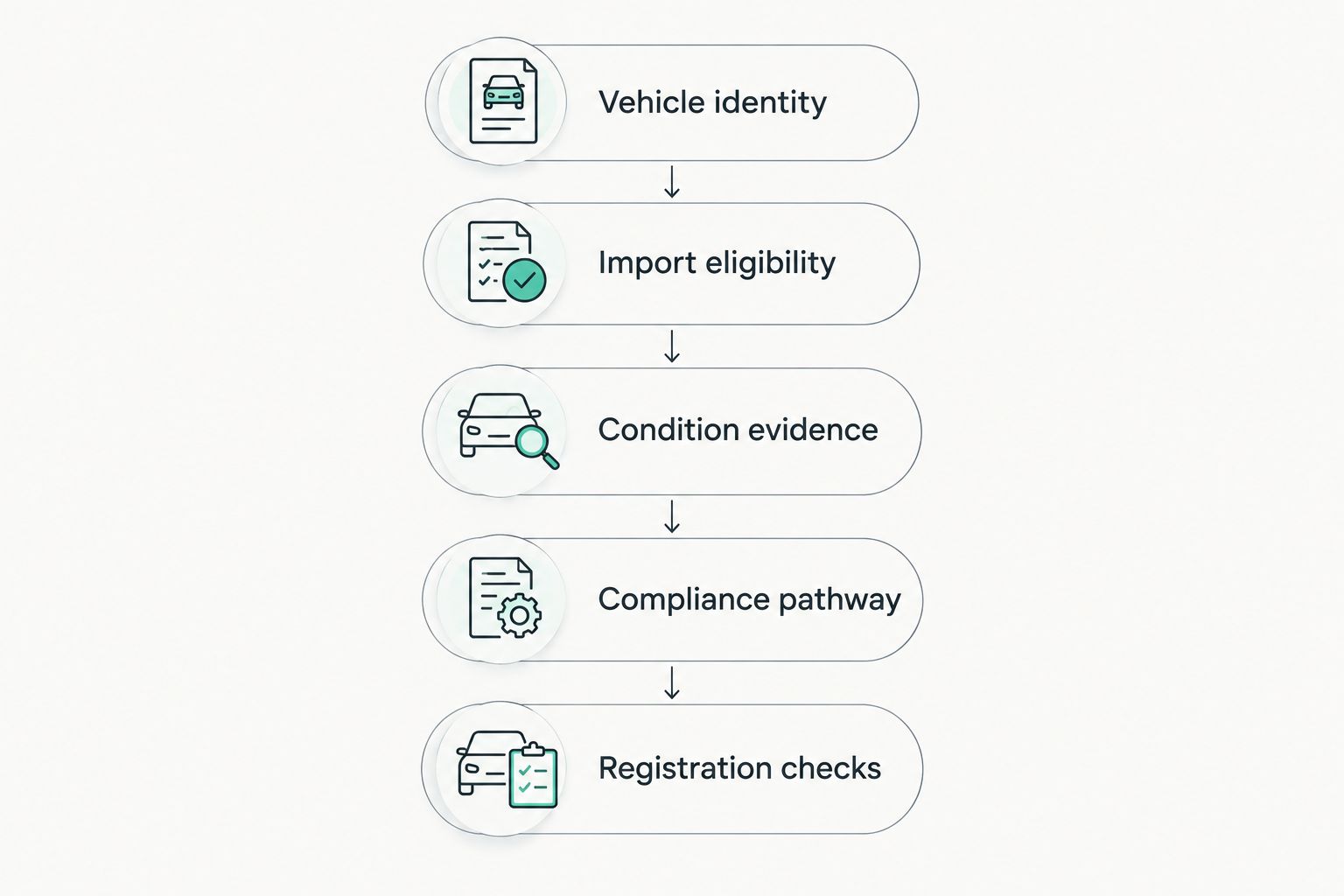
Work through the checks in this order:
- Vehicle identity: Obtain the chassis number, build details, engine designation and full grade name.
- Import eligibility: Confirm the relevant approval pathway and any conditions attached to that vehicle variant.
- Condition evidence: Arrange document checks and an independent inspection before committing.
- Compliance pathway: Establish who will complete the required work and what documentation you will receive.
- Registration checks: Confirm your state or territory’s requirements, including the accepted seating configuration.
The sequence matters. Attractive auction photographs do not establish eligibility, and eligibility does not establish mechanical condition.
Once those checks are complete, compare sellers using the same written vehicle specification. Carbarn belongs in the dealership part of your research, while the approval authority and compliance provider answer the regulatory questions.
Inspect the cabin before chasing equipment
A Toyota Alphard’s seating arrangement is central to its appeal. Make the inspection reproduce your normal use rather than a seller’s demonstration.
- Open both sliding doors and test their operation from the available controls.
- Move the second-row seats through their adjustment range.
- Enter the third row with the second row in a realistic travelling position.
- Check seat belts, head restraints and the documented child-restraint anchorage arrangement.
- Run the front and rear climate controls and check that passengers can operate them.
- Inspect luggage space with the seats occupied or positioned for your household.
Ask for a continuous demonstration of powered functions rather than relying on separate photographs. Still images cannot show a mechanism moving correctly.
Do not buy a cabin layout you have not checked against your passengers, restraints and luggage. The same rule applies whether you are researching through Carbarn or assessing another seller’s vehicle.
Which Toyota Alphard grade should you choose?
Choose the Toyota Alphard Hybrid SR C Package as the default 2026 shortlist grade if seven seats and a hybrid powertrain suit your household. Move to the S C Package when petrol is a specific preference, the X when eight seats are essential, or Executive Lounge Hybrid when rear-passenger comfort takes priority.
Keep the shortlist narrow. Comparing the right layout across well-documented cars is more useful than collecting every grade name you encounter.
FAQ
What’s the best Toyota Alphard grade to import in 2026?
The 30-series Toyota Alphard Hybrid SR C Package is the default family recommendation when seven seats suit your needs. Choose an individual vehicle only after its condition, equipment and Australian import pathway are verified.
Is the Toyota Alphard S C Package the same as SC?
No, S C Package and SC are not interchangeable grade identifiers. Confirm the complete grade name and engine designation from the vehicle’s Japanese documentation rather than relying on an abbreviated listing.
Which Toyota Alphard should I choose for eight seats?
The 30-series Toyota Alphard X with the 2.5-litre petrol engine has an eight-seat version worth shortlisting. Verify the actual seating layout and accepted Australian seating configuration for the vehicle you intend to buy.
Is Executive Lounge the best Alphard for every family?
No, Executive Lounge prioritises second-row passenger comfort rather than maximum cabin flexibility. Check third-row access, seat operation and luggage space before choosing it over a bench-seat or other captain’s-chair grade.
Should I choose a hybrid or petrol Toyota Alphard?
Choose the hybrid if you want electric assistance and regenerative braking, and petrol if you specifically prefer a non-hybrid powertrain. Assess hybrid-system health on a hybrid and verify service history and mechanical condition on either version.
Can every Toyota Alphard be imported into Australia?
No, the Alphard name alone does not establish Australian import eligibility. Confirm the exact vehicle’s applicable approval and compliance pathway before purchase or shipment.
What should I check before buying an imported Alphard?
Check vehicle identity, import eligibility, service records, independent inspection findings and the approved seating arrangement. Test the powered doors, seats and climate controls, and obtain a hybrid-system assessment when buying a hybrid.
One last thing
Ask to see the third row being accessed with the second-row seats set for travelling, not pushed into a display position. That demonstration exposes a layout mismatch faster than another equipment list.
For your 2026 Toyota Alphard purchase, choose the cabin that works first, then buy the best-documented example of that grade.


