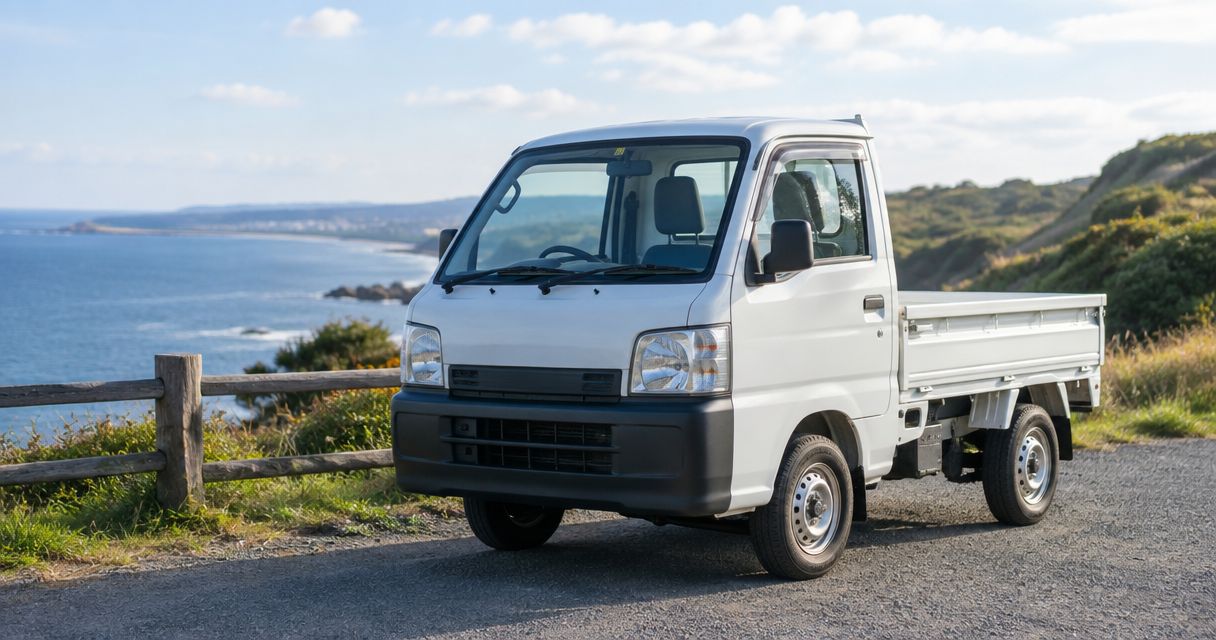
Yes, a kei truck can be registered for road use in Australia in 2026, provided the individual vehicle meets the applicable federal vehicle-entry requirements and your state or territory’s registration requirements. Japanese registration, import approval or eligibility for an import scheme does not, by itself, give you permission to drive it on Australian public roads.
- A kei truck can be registered in Australia, but approval depends on the individual vehicle and registration jurisdiction.
- The Register of Approved Vehicles records federal vehicle-entry approval; it does not replace state or territory registration.
- An already-registered kei truck offers a clearer starting point than an overseas vehicle with unconfirmed import eligibility.
- Check import eligibility, compliance evidence, vehicle identity and local registration requirements before committing to a purchase.
Can a kei truck be registered in Australia?
Yes—but establish the registration pathway for the exact truck, not just its model name. Your starting point changes depending on whether the truck already has Australian registration, needs specialist import compliance or qualifies for an older-vehicle pathway.
For the sequence between buying overseas and completing Australian compliance, read the Japan auction-to-compliance workflow. Keep import approval, compliance and registration separate throughout that process.
| Starting point | Best for | Main advantage | Main limitation | What to establish |
|---|---|---|---|---|
| Already registered in Australia | Buyers seeking a locally documented vehicle | Existing registration provides evidence of a completed registration process | Transfer, interstate registration and modifications still need checking | Current registration, matching identity and local transfer requirements |
| Specialist import pathway | Buyers seeking an eligible imported variant | Provides a federal pathway for qualifying vehicles | Eligibility is specific; a model name alone is insufficient | Relevant eligibility, approval, compliance and RAV-entry requirements |
| Older-vehicle concessional pathway | Buyers considering an age-eligible truck | Vehicle age can provide a separate federal entry pathway | Age does not remove state registration or roadworthiness requirements | Manufacture date, approval conditions and local registration requirements |
None of these starting points guarantees that a truck advertised online is ready for unrestricted road use. Ask for documents tied to its chassis number or vehicle identification number.
Why this matters
A kei truck can be perfectly usable on private property yet lack permission for public-road use. That distinction matters if your work involves travelling between properties, making deliveries or crossing a public road.
An advertisement describing a truck as imported, complied or farm-ready leaves different questions unanswered. Buy against documented registration eligibility, not a seller’s shorthand.
For a 2026 purchase, the responsible decision is to confirm the legal pathway before arranging shipment or committing to a vehicle. Mechanical condition and registration eligibility are separate checks; passing one does not establish the other.
How do you establish whether the truck is registrable?
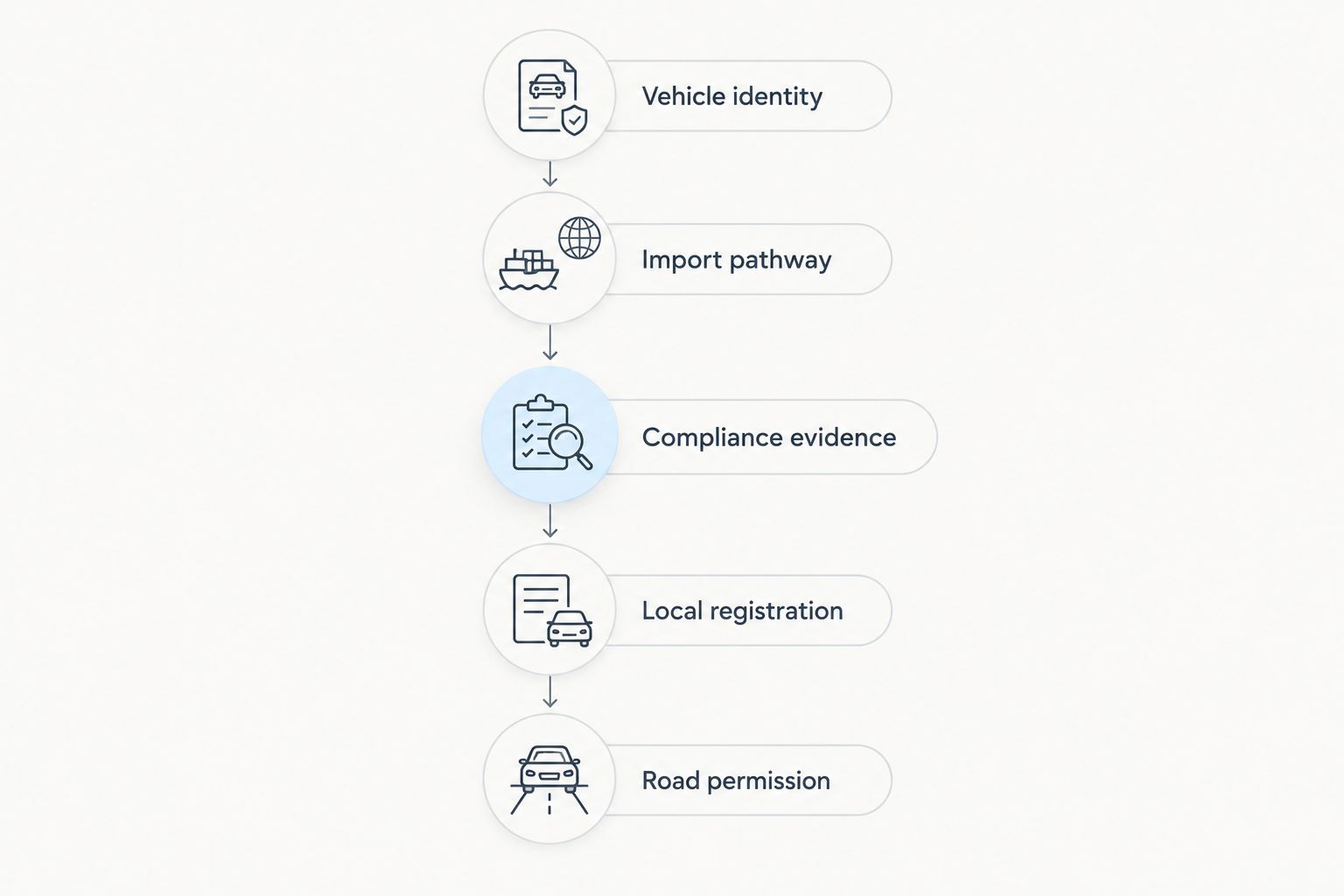
Use this sequence for an overseas purchase or an Australian truck whose registration history is unclear. The federal department responsible for vehicle imports administers the vehicle-entry framework, while your state or territory transport authority handles registration.
- Vehicle identity. Obtain the chassis number, manufacture date, exact model or variant and photographs of the identification markings. Match those details across the seller’s documents.
- Import pathway. Establish which federal approval pathway applies to that vehicle. For an overseas truck, obtain the required approval before importing it.
- Compliance evidence. Determine which standards, inspections and vehicle-entry conditions apply under that pathway. Check the Register of Approved Vehicles where RAV entry is required.
- Local registration. Ask your transport authority what evidence, inspection, identity checks and insurance arrangements are required for that truck.
- Road permission. Complete registration before ordinary public-road use. If the truck needs to move while unregistered, establish whether an appropriate permit is available and what conditions apply.
Keep a document folder for the truck rather than relying on screenshots of an advertisement. Approval evidence should identify the vehicle you are buying, not another truck of the same model.
Already-registered kei trucks: verify the registration first
An Australian-registered truck gives you a more direct starting point because a registration authority has already processed that vehicle. It still needs scrutiny.
Check whether the registration is current, which jurisdiction issued it and whether its recorded vehicle details match the truck. Ask about registration conditions, outstanding defects and modifications made after registration.
A number plate in a photograph is not proof of current registration. Nor does registration in another state establish that an interstate transfer will require no further inspection or documentation.
For a 2026 local purchase, verify the registration with the issuing authority and confirm the transfer process where you live. If the truck is unregistered, ask what is needed to register it again rather than assuming the previous registration settles the matter.
Specialist imports: eligibility is not blanket model approval
The Specialist and Enthusiast Vehicles framework provides a pathway for qualifying vehicles. A listing on the Specialist and Enthusiast Vehicles Register is not registration approval for every example bearing that model name.
The relevant entry can distinguish variants, production periods and vehicle configurations. The truck must also satisfy the approval and compliance requirements applicable to its pathway.
Ask the compliance provider to identify the applicable eligibility entry and explain the work and evidence required for your exact vehicle. Do this before purchase—not after the truck arrives.
Under the registered automotive workshop pathway, the authorised workshop and verification process form part of establishing compliance. An eligible model still needs the individual vehicle’s compliance process completed.
For a 2026 application, consult the federal vehicle-import guidance on the SEVS Register, registered automotive workshops and RAV entry. An auction listing or an importer’s general model list is not a substitute for those requirements.
Older kei trucks: age creates a pathway, not an exemption
Australia’s concessional vehicle-entry framework includes a pathway for vehicles at least 25 years old, subject to its eligibility and approval requirements. Use the documented manufacture date when establishing age eligibility.
That threshold concerns federal vehicle entry. It does not exempt the truck from registration requirements in the state or territory where you intend to use it.
An older truck also needs a condition assessment. Corrosion, worn brakes, damaged seatbelts and undocumented alterations remain relevant even when the vehicle satisfies an age-based import criterion.
Choose an older truck because its documents and condition support your intended use—not because age sounds like a shortcut. Confirm the applicable approval conditions and the local inspection process before buying.
Why kei truck registration requirements vary
The decision varies because authorities assess a particular vehicle under a particular pathway. These factors explain why two similar-looking trucks can need different paperwork or work:
- Registration jurisdiction: Your state or territory determines its registration, inspection and transfer process.
- Manufacture date: Age affects eligibility for the older-vehicle concessional pathway.
- Exact variant: Specialist import eligibility can distinguish configurations and production periods.
- Approval pathway: Different federal pathways carry different conditions and evidence requirements.
- Vehicle condition: Defects can prevent a truck from passing the required roadworthiness assessment.
- Modifications: Changes to the vehicle can require additional assessment or certification.
Do not treat another owner’s successful registration as approval for your purchase. Their truck can have a different build date, compliance history or registration jurisdiction.
Does a kei truck’s small size make registration easier?
Small size does not replace compliance. The modern Japanese kei category is associated with limits of 660 cc engine displacement, 3.4 metres length and 1.48 metres width; these are Japanese classification limits, not Australian registration approval criteria.
Those dimensions help explain the appeal of compact work vehicles, but Australian authorities still assess the applicable vehicle-entry and registration requirements. An older truck can also belong to an earlier Japanese category standard, so verify its actual specifications.
For a 2026 buying decision, separate three questions: can you register it, does it suit your work, and is the individual truck in acceptable condition? A positive answer to the first does not establish the other two.
Can you drive a kei truck on Australian highways?
A registered kei truck can use roads permitted by its registration and applicable road rules. Confirm any vehicle-specific restrictions before treating registration as permission for every intended trip.
Legal access and suitability are different. Assess the individual truck’s condition, manufacturer specifications, load limits and ability to handle your route rather than assuming all kei trucks perform alike.
If regular highway travel is essential, make it part of the buying brief. Registration approval does not certify that the truck is the right vehicle for that work.
Can you register a kei truck bought for farm use?
A farm-use description does not establish public-road eligibility. A vehicle used entirely on private property and a vehicle driven on public roads face different legal questions.
Ask whether the seller is offering an ordinarily registrable road vehicle or a truck intended only for off-road use. If you need a conditional registration arrangement, obtain the relevant authority’s requirements and conditions for your intended use.
Do not assume a short public-road journey is exempt. Establish lawful road access before driving between properties or crossing a public road.
What should you ask the seller before paying?
Ask for answers in writing, supported by vehicle-specific documents. A useful purchase discussion covers identity, legal status and condition—not just engine operation.
- What is the exact chassis number and documented manufacture date?
- Is the truck currently registered in Australia, and in which jurisdiction?
- Which federal vehicle-entry pathway applies if it needs importing?
- What approval and compliance evidence comes with the vehicle?
- Is a RAV entry required, and has the individual vehicle been entered?
- What modifications, defects or registration conditions need addressing?
- Which steps remain before registration in your state or territory?
Be precise about responsibility. Establish who will complete any outstanding compliance work, obtain inspections and supply the documents required for registration.
An independent mechanical inspection answers a different question from a registration check. You need both a sound vehicle and a documented legal pathway.
Where does Carbarn fit into the buying decision?
Carbarn is best for buyers seeking a pre-loved car dealership, not an official registration determination. Use the dealership discussion to define what you need from a vehicle; use the relevant authorities to establish its legal requirements.
Carbarn describes its role as helping buyers find a pre-loved car. If you approach Carbarn about a compact work vehicle, specify public-road use, load requirements and your registration jurisdiction at the outset.
The distinction is practical: a dealership conversation helps frame the purchase, but it does not replace approval evidence for an individual kei truck. Keep that evidence as a purchase condition.
FAQ
Can a kei truck be registered in Australia in 2026?
Yes, a kei truck can be registered in Australia in 2026 if the individual vehicle meets the applicable federal vehicle-entry and state or territory registration requirements. Confirm its exact identity, approval pathway and local registration requirements before buying.
Does Japanese registration make a kei truck legal on Australian roads?
No, Japanese registration does not authorise Australian public-road use. The truck still needs the applicable Australian vehicle-entry approvals and local registration.
Does a RAV entry mean my kei truck is registered?
No, a Register of Approved Vehicles entry is not state or territory registration. You must complete the relevant local registration process before ordinary public-road use.
Can I import a kei truck that is at least 25 years old?
A kei truck at least 25 years old can qualify for the older-vehicle concessional pathway if it meets that pathway’s requirements. Obtain the required approval and separately confirm the registration requirements where you intend to use it.
Is an Australian-registered kei truck easier to buy for road use?
An Australian-registered kei truck provides a clearer documentary starting point than an overseas truck with unconfirmed eligibility. Verify current registration, vehicle identity, conditions and the transfer requirements in your jurisdiction.
Can I drive an unregistered kei truck home after buying it?
You cannot assume you can drive an unregistered kei truck home. Arrange transport or establish whether an appropriate unregistered vehicle permit is available and follow its conditions.
Can Carbarn decide whether my kei truck is registrable?
The relevant government authorities determine vehicle-entry and registration requirements; Carbarn is a pre-loved car dealership. Ask for vehicle-specific documentation and confirm the requirements with the authority responsible for your registration.
One last thing
The strongest question is not whether someone has registered that model before. It is whether this chassis number, with these documents, can complete registration where you live.
Before committing, send the vehicle details and approval evidence to the relevant registration authority and ask what remains outstanding. That turns a general yes into a usable purchase decision.


