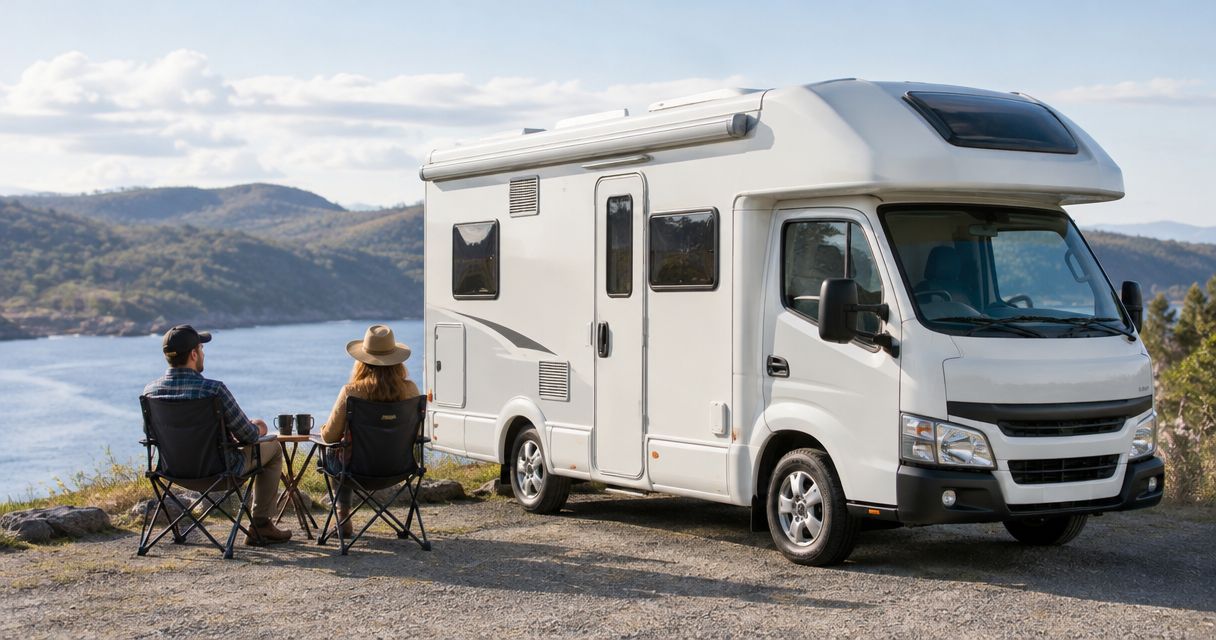
Best overall for overnight business travel: a Toyota Camroad with a fixed bed. Best for mobile admin: a dinette-led layout. Best for a budget-focused brief: a simple fit-out without unnecessary equipment. Best for extended stays: a layout with a separate wet area. This 2026 guide helps you assess a Camroad for sale in Australia by business use, rather than treating different motorhome conversions as interchangeable factory grades.
- For camroad for sale australia searches, rank the actual conversion, payload and paperwork ahead of the listing’s grade label.
- Choose a fixed-bed Toyota Camroad for repeated overnight business trips, subject to inspection and usable payload.
- Choose a dinette-led layout for parked paperwork; confirm its seats are approved before carrying passengers.
- Carbarn is a pre-loved car dealership; assess each Toyota Camroad against your business requirements before committing.
Why this matters
A Toyota Camroad is a motorhome base, not a conventional passenger-car range where a trim badge tells you everything. The completed vehicle combines a chassis with a separately fitted living body. Its layout, equipment, condition and documentation determine whether it suits your business.
For a small business buying in 2026, the best Camroad is the one that can legally carry your working load and support your actual trips. A bed you use every night matters more than decorative cabinetry. A large lounge is wasted space if you cannot secure your equipment.
Carbarn is a pre-loved car dealership. Use the same vehicle-specific approach when assessing a Toyota Camroad through a dealership: ask for evidence, inspect the conversion and separate the seller’s description from the vehicle’s approved configuration.
The recommendations below rank layout types, not named Toyota factory grades. Match each recommendation to an actual vehicle’s documents and inspection results; a listing label alone cannot establish suitability.
What makes the best Toyota Camroad for small business?
Use these criteria before comparing engines, upholstery or accessories:
- Business fit: Decide whether you need overnight accommodation, parked workspace or both. A motorhome is not automatically a suitable delivery vehicle or mobile workshop.
- Usable payload: Establish the permitted mass and weigh the vehicle in working condition. Include people, water, equipment and personal belongings.
- Conversion condition: Inspect the living body separately from the chassis. Water ingress, insecure cabinetry and damaged fittings require their own assessment.
- Approved seating: Confirm which seats are approved for travel. A cushion beside a table does not establish a legal passenger position.
- Registration and insurance: Confirm the exact vehicle’s registration pathway and disclose your intended business use to the insurer.
- Service access: Identify who can service the chassis and who can maintain the motorhome systems. Those are separate jobs.
Your shortlist should survive all these checks. Do not compensate for missing paperwork with a layout you like.
Toyota Camroad business layouts at a glance
| Rank and configuration | Best for | Standout feature to seek | Key limitation |
|---|---|---|---|
| 1. Fixed-bed layout | Frequent overnight business travel | A permanent sleeping area separate from daytime activities | The bed occupies space even when unused |
| 2. Dinette-led layout | Parked paperwork and mobile admin | A usable table with practical seating and storage | A convertible bed adds setup work |
| 3. Simple fit-out | Buyers minimising unnecessary equipment | An interior matched to essential tasks | Limited facilities can restrict overnight use |
| 4. Separate wet-area layout | Extended stays between business appointments | Bathroom facilities separated from the main living area | Water, fittings and tanks use space and payload |
These are buying priorities, not verified specifications for a particular Camroad. In 2026, assess the completed vehicle rather than assuming every example shares the same equipment.
1. Fixed-bed Toyota Camroad: best for overnight business travel
A fixed-bed Toyota Camroad keeps a sleeping area ready while leaving other parts of the motorhome available for meals or paperwork. It suits an owner who travels between appointments and needs accommodation as part of the trip. It does not replace a cargo van simply because storage exists beneath the bed.
Best for: A sole trader or business owner making repeated overnight trips, with a working load that fits the vehicle’s documented limits.
Inspect the bed as a working feature. Check access, ventilation, mattress support and whether stored equipment can be retrieved without dismantling the sleeping area. Lie down and move around the interior before deciding that the layout works.
Fixed-bed Toyota Camroad pros
- Keeps sleeping space separate from routine daytime tasks.
- Avoids converting a seating area into a bed each evening.
- Lets you assess bed access and storage independently.
Fixed-bed Toyota Camroad cons
- Reserves interior space for sleeping throughout the day.
- Can leave less room for a work table or bulky equipment.
- Under-bed storage still needs suitable load restraint and a payload check.
For your 2026 shortlist, reject any example where reaching essential equipment means repeatedly lifting bedding or blocking an exit. Convenience should survive a realistic working day, not just a showroom walk-through.
Verdict: Buy a fixed-bed Toyota Camroad for frequent overnight travel only after its condition, working weight and paperwork pass inspection.
2. Dinette-led Toyota Camroad: best for parked mobile admin
A dinette-led Toyota Camroad puts a table and seating area at the centre of the interior. That layout suits paperwork, planning and meals while parked. It is not evidence that the vehicle has approved seating for extra passengers or permission to operate as customer-facing premises.
Best for: An owner who needs a parked workspace between appointments and uses overnight accommodation less often.
Test the table with your actual work materials. Check elbow room, access to storage and whether someone can move past the seating without disturbing everything. If the dinette converts into a bed, inspect the complete conversion rather than accepting a photograph of the finished arrangement.
Dinette-led Toyota Camroad pros
- Provides a defined surface for paperwork and planning.
- Combines meal space with a parked work area.
- Lets one interior zone serve different tasks.
Dinette-led Toyota Camroad cons
- A convertible bed requires setup and pack-down.
- Tabletop equipment needs secure storage before driving.
- Lounge seating is not necessarily approved travel seating.
Electrical outlets deserve a separate check. Australia's nominal mains supply is 230 V, but an imported motorhome’s appliances and wiring require identification and professional assessment; a familiar-looking socket proves nothing.
Do not assume that a laptop, charger or installed appliance can be connected safely because it fits. Ask a qualified professional to assess the actual system and any modifications.
Verdict: Buy a dinette-led Toyota Camroad for parked admin; skip it if nightly bed conversion will disrupt your routine.
3. Simple-fit-out Toyota Camroad: best for an essentials-only brief
A simple-fit-out Toyota Camroad is the right starting point when your business needs modest accommodation rather than an extensive living arrangement. Prioritise the facilities you will use and inspect their condition. Fewer features do not establish a lower purchase cost or a better-maintained vehicle.
Best for: An owner who wants essential trip facilities without taking responsibility for unnecessary motorhome equipment.
Write down the minimum acceptable sleeping, storage and meal-preparation arrangements. Then compare each vehicle against that list. Avoid adding equipment later without checking installation requirements, weight and how the changes affect access.
Simple-fit-out Toyota Camroad pros
- Keeps the buying brief focused on essential tasks.
- Avoids choosing equipment solely because it appears in a listing.
- Makes it easier to identify which features need inspection.
Simple-fit-out Toyota Camroad cons
- Limited facilities can make longer stays impractical.
- Later modifications require their own technical assessment.
- A sparse interior does not prove good chassis or body condition.
For a budget-focused purchase in 2026, the useful question is not which grade sounds cheapest. Ask which inspected vehicle meets your needs without requiring unplanned repairs or changes. Obtain written findings before deciding that a simpler example is the better purchase.
If deliveries, tools or stock dominate your working day, reconsider the motorhome brief entirely. Accommodation features should earn their space through actual use.
Verdict: Buy a simple-fit-out Toyota Camroad when its existing facilities meet your brief; skip a vehicle that needs substantial changes to become useful.
4. Wet-area Toyota Camroad: best for extended business stays
A Toyota Camroad with a separate wet area puts bathroom facilities apart from the main living space. That arrangement suits an owner planning longer stays between work commitments. The benefit depends on the actual equipment working correctly and on having suitable places to replenish water and dispose of waste.
Best for: A business owner whose travel schedule makes onboard bathroom facilities a genuine requirement.
Inspect seals, flooring, ventilation and plumbing access. Ask the inspector to check for moisture damage around the bathroom and adjoining cabinetry. A clean surface does not establish that concealed areas are dry.
Wet-area Toyota Camroad pros
- Separates bathroom activities from the main living area.
- Supports a travel brief that requires onboard facilities.
- Gives you a defined plumbing area to inspect and maintain.
Wet-area Toyota Camroad cons
- Uses interior space that could serve another purpose.
- Adds plumbing, seals and fittings requiring maintenance.
- Carried water contributes to the vehicle’s working weight.
Water weighs approximately 1 kg per litre. As an illustrative load calculation, 20 litres adds approximately 20 kg; 50 litres adds approximately 50 kg. These figures describe water alone, not the capacity or payload of any Camroad.
That weight belongs in your load calculation alongside occupants and equipment. Do not assess usable payload with empty tanks if your business trips require carrying water.
Verdict: Buy a wet-area Toyota Camroad for extended stays only when the facilities pass inspection and the loaded vehicle remains within its permitted limits.
Check the chassis and conversion separately
The layout ranking does not rank engines, transmissions or drivetrains. Those choices need vehicle-specific records, a mechanical inspection and a road test suited to your intended use.
Ask for the chassis identification and compare it with the registration and import documents. Establish what the vehicle actually is before discussing advertised grade names. Record modifications separately from original equipment.
The motorhome body needs its own inspection. Check roof joints, windows, doors, cabinetry attachments and floor condition. Mechanical roadworthiness does not establish that the living area is free of water damage or that every installed appliance is safe.
For a business purchase in 2026, assign each problem to the relevant specialist. A mechanical inspector, motorhome repairer and qualified electrical professional answer different questions. One favourable report should not substitute for all the others.
Turn the shortlist into a purchase decision
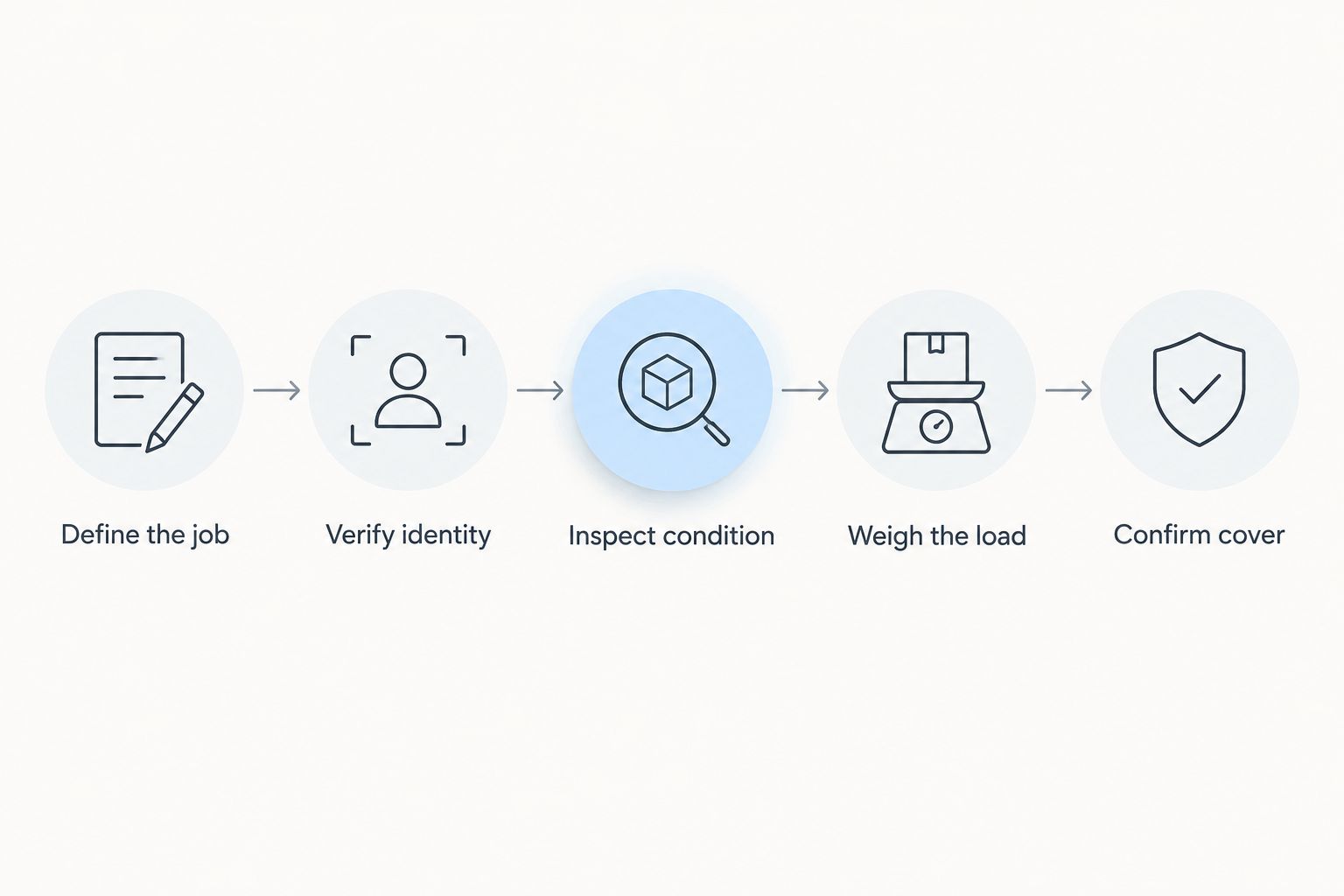
Use this sequence before committing to a Toyota Camroad:
- Define the job. Specify your overnight routine, parked work needs, occupants and equipment.
- Verify identity. Match the vehicle identifiers across the listing, vehicle and documents.
- Inspect condition. Assess the chassis, living body and installed systems separately.
- Weigh the load. Establish the permitted limits and measure the vehicle in representative working condition.
- Confirm cover. Obtain insurer confirmation for the actual vehicle and intended business use.
Do not confuse a general business-use description with an insurance agreement. Explain whether the vehicle will carry equipment, accommodate staff, be hired out or support another activity. Ask the insurer to confirm what the policy covers before you commit.
Keep the inspection reports, weight evidence and agreed vehicle description together. These records support a clear decision and give you a starting point for maintenance planning.
How the layouts are ranked
The fixed-bed layout ranks first for repeated overnight business travel because sleeping is its primary task. The dinette-led layout wins for parked admin, the simple fit-out for an essentials-only brief, and the separate wet area for extended stays.
This is a use-case ranking, not a road test or a claim that one conversion builder is better than another. A lower-ranked layout becomes the right choice when it matches your work. Condition, legal suitability and usable payload remain purchase gates for every option.
Which Toyota Camroad should you choose?
Choose a fixed-bed Toyota Camroad as the default for regular overnight business travel. Choose a dinette-led version when parked paperwork matters more than a permanently prepared bed. Choose a simple fit-out only if its existing facilities are enough, or a wet-area layout when longer stays justify the extra systems.
Carbarn is a pre-loved car dealership, not the basis for assuming a particular Toyota Camroad has specific equipment or approvals. Apply this checklist to the individual vehicle, regardless of where you find it.
For a 2026 purchase, stop the decision when identity, permitted weight, registration or insurance remains unresolved. An attractive interior does not answer those questions.
FAQ
What's the best Toyota Camroad for a small business?
A fixed-bed Toyota Camroad is the default choice for a business owner making frequent overnight trips. A dinette-led layout is better suited to parked paperwork, while every vehicle still needs condition, payload and documentation checks.
Are Toyota Camroad grades the same as motorhome layouts?
No, a chassis specification and a motorhome layout describe different parts of the vehicle. Identify the Toyota chassis separately from the completed living body and its installed equipment.
What should I check when searching camroad for sale australia?
Check the exact vehicle’s identity, registration documents, condition and permitted weight before committing. Inspect the motorhome conversion separately and confirm insurance for your intended business use.
Can staff travel in the Toyota Camroad dinette?
Only use seating positions approved for travel in that vehicle. A dinette cushion or an added seatbelt does not, by itself, establish an approved passenger seat.
Is a bathroom worth having in a business Camroad?
A bathroom is useful when extended stays make onboard facilities part of your business brief. Check plumbing condition, water load and waste-disposal arrangements before choosing that layout.
Can I use imported electrical appliances without checking them?
Do not connect imported appliances without confirming that the equipment and installation suit their intended supply. Have a qualified professional assess the motorhome’s electrical system and any modifications.
Should I choose a Camroad instead of a business van?
Choose a Camroad when accommodation is a central requirement, not simply because it has storage. If deliveries or equipment transport dominate the job, assess a commercial vehicle against that brief instead.
One last thing
Inspect the Toyota Camroad with your working day in mind. Bring a list of equipment, reproduce the bed setup, sit at the table and check how you would reach stored items. An interior that looks spacious while empty can fail your routine once everything has a place.
Before paying a deposit, write down the unresolved questions and obtain answers for the actual vehicle. The right layout is the start of the purchase decision, not the end.


