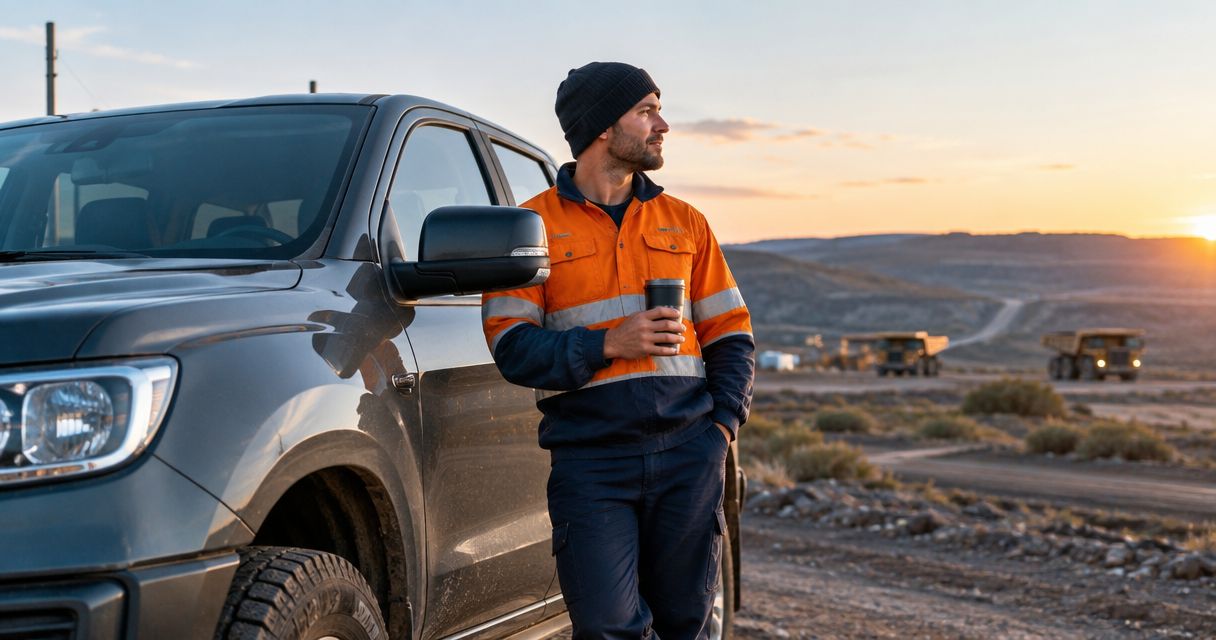
FIFO and mine workers buying used cars in 2026 need a vehicle that survives weeks of idle parking, long highway runs to site or airport, and hard resale when the next roster change hits. Unlike a daily commuter, a FIFO buyer judges a car by how it holds up sitting still for two or three weeks at a stretch, not just how it drives on the way to work.
- Used cars for FIFO workers need to handle long parking gaps, remote-site access, and fast resale, not just daily driving.
- Toyota LandCruiser and dual-cab 4x4 utes hold value best for site-access work; a hybrid sedan suits airport-only commuters.
- A flat battery after weeks parked is the most common FIFO car complaint, so check the electrical system before you buy.
- Carbarn lists pre-loved 4x4s and SUVs suited to long swings and unattended parking for 2026 buyers.
Why this matters for FIFO and mine workers
A FIFO roster changes what "reliable" means. Common patterns like 8/6 or 2/1 mean the car sits untouched at home, at a mate's place, or in an airport car park for the entire swing, then has to start first go and cover a long highway stretch to site or the terminal. A vehicle that's fine for a daily commuter can flat-spot its tyres, drain its battery, or seize a handbrake cable after three weeks of not moving.
Resale matters more here too. Mine workers change sites, employers, and even states more often than the average buyer, and a car that's easy to move on protects you from being stuck with something you can't sell quickly. The right used car for a FIFO worker is chosen around the roster, not around the drive to the shops.
Match the vehicle to your roster pattern
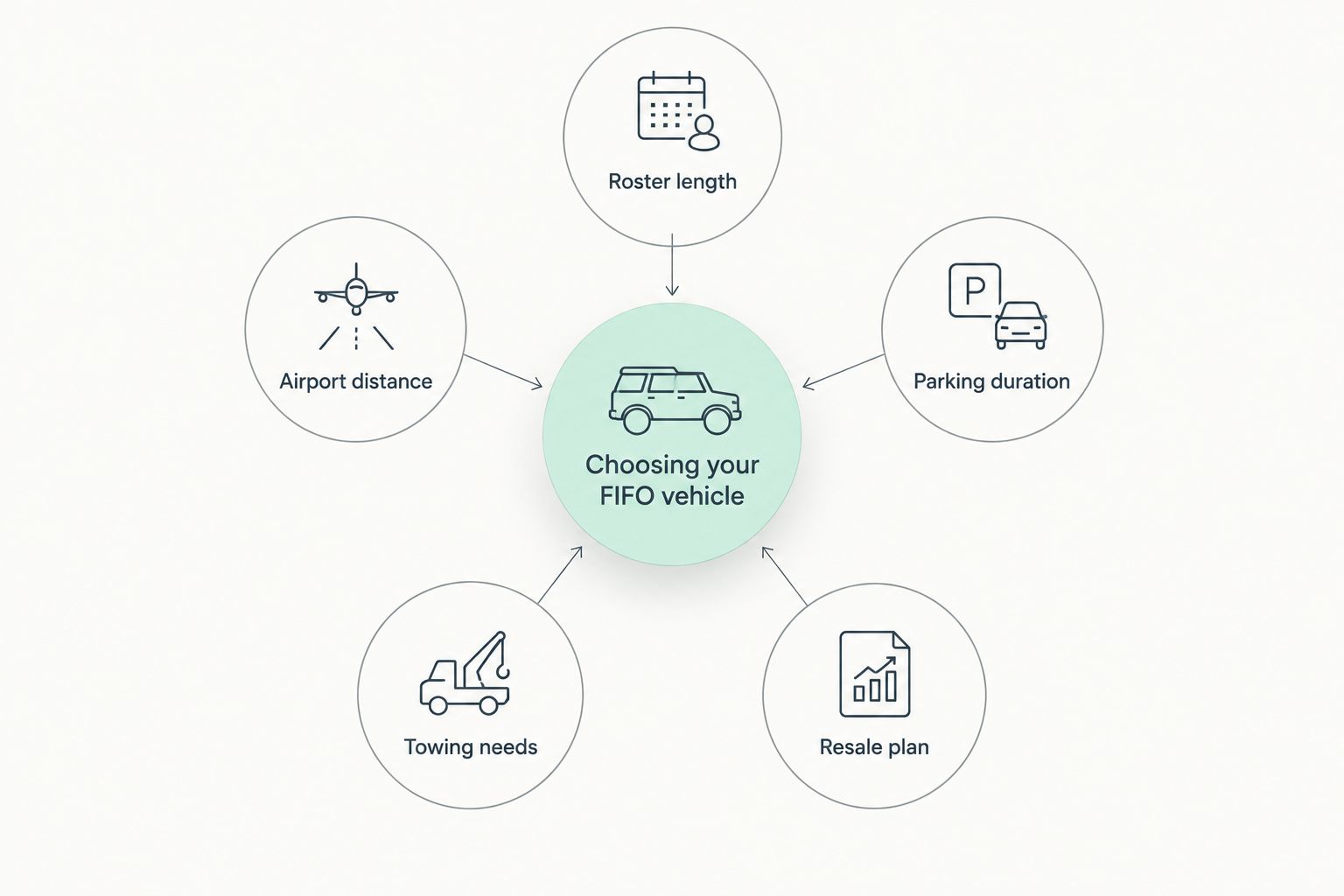
Start with your actual swing before you look at a single listing. A 2/1 roster with a short drive to a regional airport has different needs than an 8/6 with a four-hour drive on dirt to an unsealed camp.
- Work out how long the car sits unattended between drives
- Measure the real distance from home or the airport to site, including any unsealed sections
- Decide if you're driving to a airport car park or being picked up from home
- Note the climate at the parking location — heat and dust degrade batteries and seals faster than a temperate garage
- Factor in whether a partner or family member also uses the car while you're on swing
Pick a body style for how you actually spend days off
A dual-cab 4x4 ute suits workers who tow a trailer, carry gear, or drive rough tracks on rostered days off. A wagon or SUV suits workers who mostly want comfort on the highway run and don't need a tray.
- Check tray or boot space against what you actually haul between swings
- Compare ground clearance if your site or camp access road is unsealed
- Look at rear seat space if the car doubles as a family vehicle at home
- Confirm the number of doors and seats matches how the car is used off-swing
Carbarn's guide to dual-cab 4x4 utes for off-road touring breaks down which trays and drivetrains hold up best on unsealed camp roads.
Confirm 4x4 or AWD if the site access road is unsealed
A two-wheel-drive sedan is fine if you fly in and get bussed to camp. It's the wrong call if you're driving the last stretch yourself on gravel or clay.
- Ask current site workers what the access road condition is like in wet season
- Check if the vehicle has low-range gearing, not just AWD badging
- Confirm tyre size and load rating suit corrugated or unsealed roads
- Look at recovery points if the car will ever be used off formed tracks
A well-kept Toyota LandCruiser is the benchmark for remote-site reliability in Australia, and older diesel models are still common on mine sites for a reason.
Check the electrical system for long-term parking
This is the step most FIFO buyers skip, and it's the one that causes the most grief. A car that won't start after a three-week swing is worse than useless.
- Ask for a battery age and condition check, not just a "it starts fine" from the seller
- Check for parasitic drains from aftermarket alarms, dash cams, or fridges left wired in
- Consider a battery isolator switch if the car will sit for extended periods
- Confirm the immobiliser and central locking don't drain the battery faster than standard
Verify service history before you buy, not after you fly out
A mechanical fault that surfaces mid-swing means a tow, a hire car, or a missed shift. Service history review has to happen before settlement, full stop.
- Request the full logbook, not a verbal summary from the seller
- Check timing belt or chain intervals against current odometer reading
- Confirm major services (transmission, cooling system) were done on schedule
- Get an independent pre-purchase inspection booked before your next swing starts
This is where a curated used car listing saves time. Carbarn lists pre-loved 4x4s and SUVs with service history attached, which cuts down the back-and-forth chasing paperwork from a private seller before you're back on site.
Plan for towing if days off mean camping or a boat
If your time off revolves around a camper, boat, or trailer, tow rating decides which cars are actually usable, not just which ones look the part.
- Check braked towing capacity against your trailer's actual laden weight
- Confirm the car has a factory tow bar and wiring, not an aftermarket bolt-on
- Look at GVM and payload if you're towing and loading the cabin at the same time
- Compare suspension setups if you tow regularly on long trips
Carbarn's comparison of SUVs ranked by towing capacity is a useful cross-check if you're weighing an SUV against a dual-cab ute for towing duty.
Choose for resale, not just for right now
FIFO careers move. Sites close, contracts end, rosters change. A car that's easy to sell in 2026 protects you if your circumstances shift in a year.
- Stick to popular models with strong resale demand in your state
- Avoid rare trims or colours that narrow your buyer pool later
- Keep modifications minimal if resale flexibility matters more than customisation
- Track how long similar listings sit before selling in your area
Browse used cars built for FIFO work
Pre-loved 4x4s and SUVs with service history you can check before your next swing.
Comparison: which used car type suits your roster
| Option | Best For | Key Limitation |
|---|---|---|
| Dual-cab 4x4 ute | Site access on unsealed roads, towing, tray work | Rougher ride on long highway commutes |
| Full-size 4x4 wagon (LandCruiser) | Remote camps, wet-season access roads | Higher running costs on fuel and tyres |
| Mid-size AWD SUV | Mixed sealed/unsealed commutes with family use | Lower tow rating than a dedicated ute |
| Hybrid sedan or SUV | Airport-only commutes with long highway stretches | Weak in low-range off-road conditions |
| Off-road wagon (Pajero-style) | Off-road day trips on rostered time off | Ageing electronics can complicate long-term parking |
Common mistakes FIFO and mine workers make
- Buying for the drive to the airport, not the whole swing. A comfortable highway car that flat-spots its tyres after three weeks parked isn't actually the right pick.
- Skipping the pre-purchase inspection because time is tight before a flight out. A rushed purchase before a swing is exactly when a hidden fault gets missed.
- Ignoring battery health on a car that will sit unattended. This is the single most common cause of a no-start after a long roster.
- Choosing a rare trim or heavily modified vehicle. It narrows the resale pool right when a roster or job change means you need to sell fast.
- Financing a vehicle without checking where it will actually be parked during swings. Street parking near an airport for weeks at a time carries different risks than a home garage.
FAQ
What's the best used car for FIFO workers in 2026?
There's no single best model — a dual-cab 4x4 ute suits site access on unsealed roads, while a hybrid sedan suits airport-only commuters on sealed highways. Match the body style to your roster and access road before the badge on the bonnet.
Do FIFO workers need a 4x4?
Only if the route to site or camp includes unsealed or wet-season roads. If you're bussed from the airport straight to camp, a 4x4 adds running cost without adding value.
How do I stop my car battery dying while I'm on site?
Get the battery age and condition checked before you buy, remove parasitic drains like unused dash cams, and consider a battery isolator switch if the car sits for more than two weeks at a time. This is the most common FIFO car complaint and the easiest to prevent.
Is a hybrid a good choice for FIFO work?
A hybrid sedan or SUV works well for long highway commutes to a regional airport where fuel cost matters more than off-road ability. It's a poor fit if your route includes unsealed or low-range terrain.
Should I buy a ute or an SUV for FIFO work?
Choose a ute if you tow, carry gear, or need a tray for work or days off; choose an SUV if comfort and family use during your time off matter more than payload. Towing capacity and tray space are the deciding factors, not preference alone.
How do I protect resale value on a FIFO car?
Stick to popular models in your state, avoid rare trims or heavy modifications, and keep full service records. FIFO careers change sites and contracts often, so resale speed matters more than for a typical daily driver.
Where should I park a car during a long swing?
A home garage or covered space is better than open airport long-term parking, which exposes the car to heat and dust that accelerate battery and seal wear. If airport parking is your only option, a battery isolator reduces the risk of a flat start on return.
One last thing
The fault that strands the most FIFO workers isn't the engine — it's a flat battery after weeks of unattended parking, which is entirely preventable with a five-minute check before you buy. If you're comparing listings across sites, run the numbers Carbarn against the big marketplaces too; the Carbarn vs Carsales comparison covers how a curated used car dealer stacks up against an open listings site when you're buying under time pressure before a flight out.