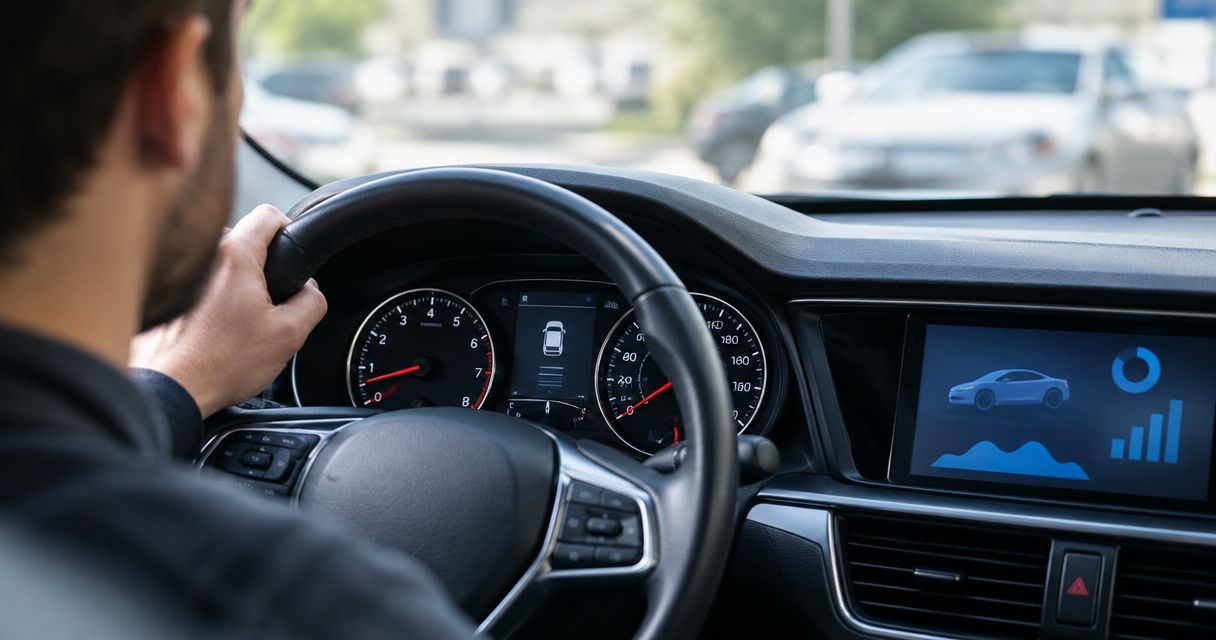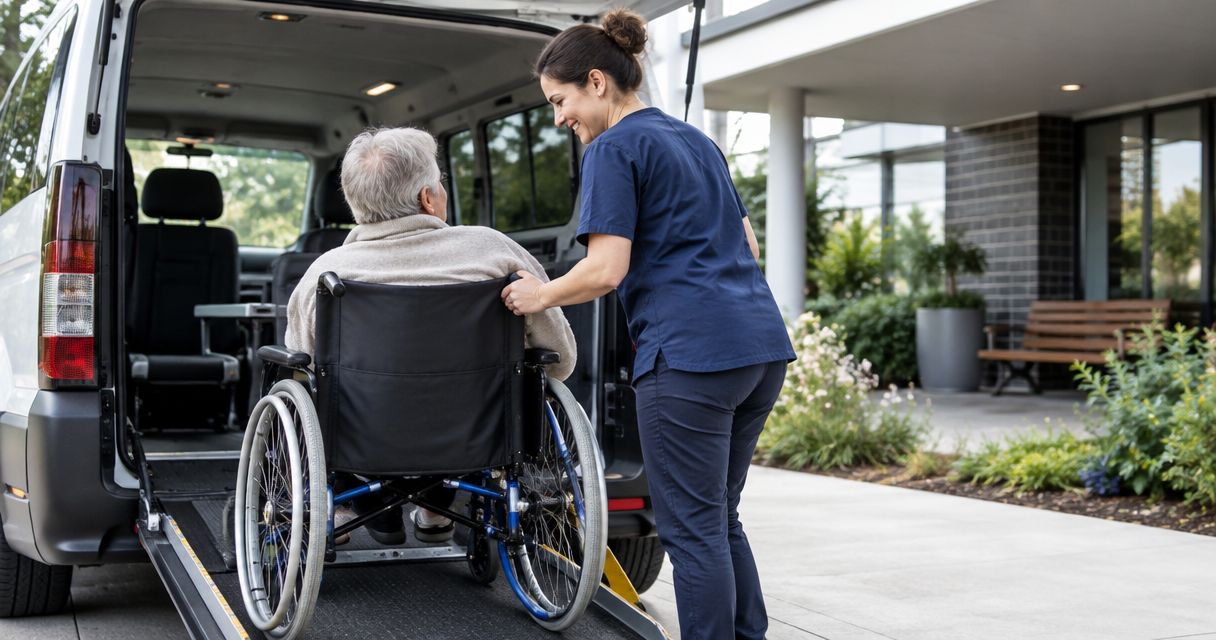
People movers for NDIS providers are multi-seat vehicles configured to transport participants safely and reliably while keeping per-kilometre running costs within NDIS transport funding limits. Support coordinators and small provider fleets need a different spec than a family buying a school-run van: load area for a wheelchair hoist or ramp, tie-down points, and a service history that won't leave a participant stranded mid-shift.
- Toyota HiAce Commuter and Hyundai iMax are the two most common used people movers for NDIS providers in 2026 because parts and servicing are widely available.
- A wheelchair-accessible vehicle (WAV) conversion adds weight that changes GVM and towing figures — check the compliance plate, not the brochure.
- Carbarn lists pre-loved people movers with full service history, which matters more for provider fleets than a lower odometer reading.
- Budget for tie-downs, hoist servicing and re-registration as a commercial or NFP vehicle before you sign anything.
- Skip auction-sourced ex-fleet vans without a wheelchair compliance certificate — re-fitting one after purchase costs more than buying compliant from the start.
Why people movers matter for NDIS providers
A provider's vehicle is part of the service, not a side expense. Late pickups, breakdowns, or a van that can't fit a wheelchair mean a missed shift and a participant who doesn't get support that day.
Most NDIS providers run mixed fleets: a couple of standard 8-seat people movers for ambulant participants and one or two wheelchair-accessible vehicles for higher-support clients. That split matters because a WAV conversion changes the vehicle's GVM, seating capacity and servicing needs — you're not just buying a bigger car, you're buying a different category of vehicle.
Budget pressure is real in 2026. NDIS transport line items are capped, so the total cost of ownership — fuel, servicing, tyres sized for a heavier converted van — has to fit inside what the funding actually covers. That's why used people movers with documented service history outperform near-new vehicles on total value for most small and mid-size providers.
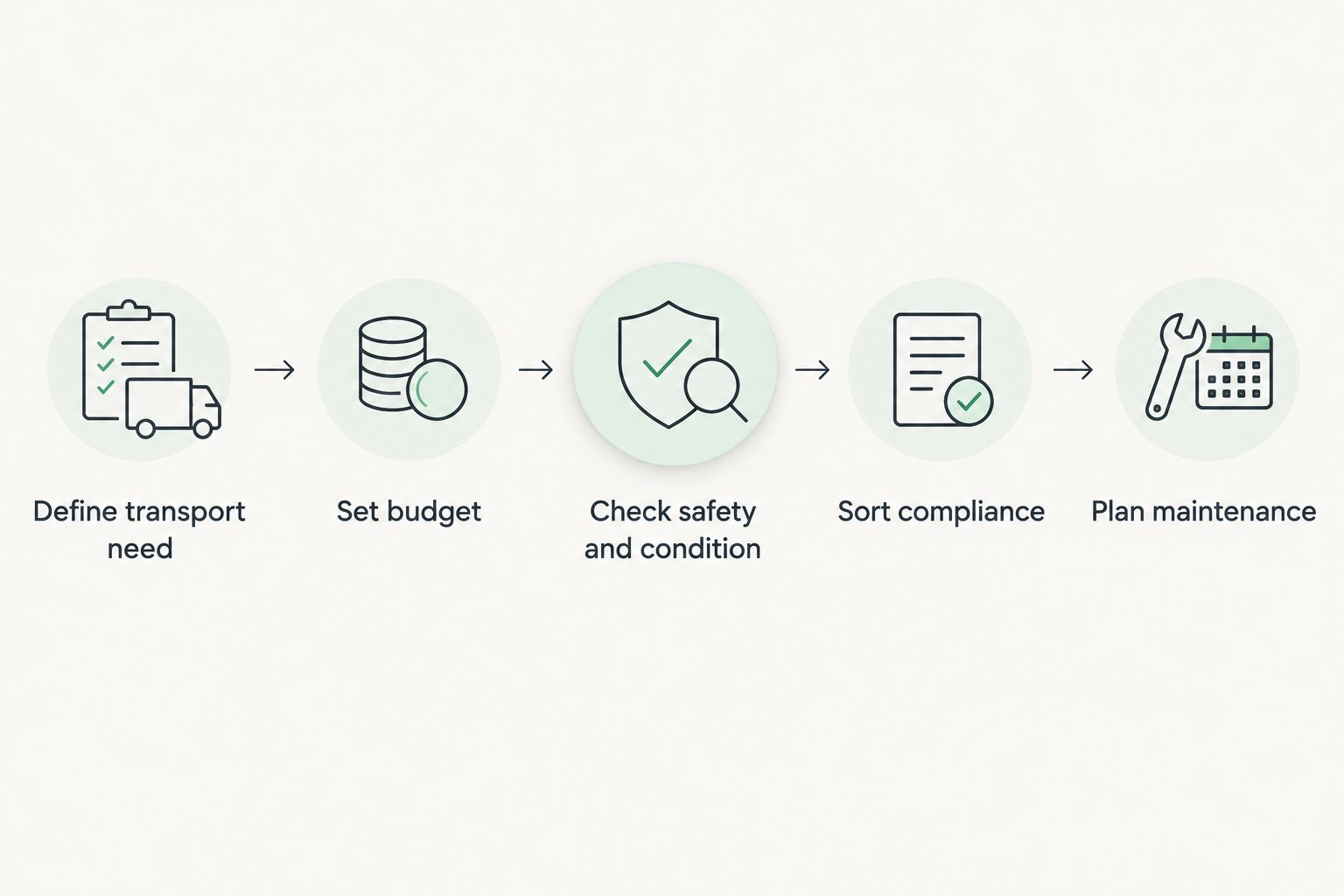
Define your transport need before you shop
Start here, not with a make and model. Providers that skip this step end up buying twice.
- List how many participants you transport per shift and whether any use a wheelchair or mobility aid
- Note whether trips are short local runs or longer regional transfers
- Decide if you need a dedicated WAV or a standard people mover with removable seats
- Check whether your service agreement or funding plan specifies vehicle standards
- Confirm how many vehicles the roster actually needs versus how many feel convenient
Check seating and loading requirements
Seating capacity on paper and usable capacity with a hoist fitted are two different numbers.
- Measure hoist and ramp clearance against the vehicle's rear door height and width
- Confirm tie-down point spacing matches the wheelchair models your participants use
- Check if seats need to fold flat or remove entirely for mixed ambulant/wheelchair runs
- Ask for the compliance plate GVM, not the original manufacturer spec, on any converted van
- Work out aisle width if support workers need to move inside the vehicle while it's moving
Set your budget and total cost of ownership
The purchase price is the smallest number in the equation over a 3-5 year hold.
- Add servicing intervals for the base vehicle plus separate hoist/ramp servicing
- Factor tyre replacement costs, which come around faster on heavier converted vans
- Include commercial or fleet insurance premiums, which run higher than private cover
- Check fuel type and consumption for the vehicle fully loaded, not empty
- Budget for re-registration fees if the vehicle changes use class
This is where used people movers start to make more financial sense than new for most providers. A well-documented used used luxury Japanese people mover or a Toyota HiAce Commuter with full service records covers the same daily route as a new van at a fraction of the depreciation hit in year one.
Prioritise safety ratings and vehicle condition
NDIS Practice Standards expect a defensible answer if a participant or their family asks how you vet transport safety.
- Check the ANCAP safety rating for the model year you're considering
- Request a full pre-purchase mechanical inspection, not just a roadworthy certificate
- Review service history for gaps longer than the manufacturer's recommended interval
- Check brake and suspension condition specifically — converted vans carry more weight than stock
- Confirm airbags, seatbelts, and any mobility restraints meet current Australian Design Rules
Compare new vs used people movers
New vehicles remove uncertainty about prior use but come with a bigger depreciation hit in the first two years. Used vehicles with a documented history close most of that gap.
- Pull the full service and repair history, not just a summary sheet
- Check if the vehicle was previously used as a rideshare, taxi, or high-mileage fleet car
- Ask whether any WAV conversion was done by a certified converter with compliance paperwork
- Compare odometer reading against age — a 3-year-old van under 60,000km is a better sign than a low-mileage 8-year-old one
- Get an independent valuation before negotiating, especially on converted vehicles where resale comparables are thinner
A browsable used stock list, like the one on Carbarn, lets a provider compare service history and condition side by side instead of chasing individual private sellers one at a time.
Sort out compliance, insurance and registration
This step gets skipped under time pressure and it's the one that causes the most rework later in 2026.
- Confirm the vehicle registration class matches its actual use (private vs commercial/NFP)
- Get written confirmation the WAV conversion holds current compliance certification
- Check insurance covers paid or funded transport of participants, not just general use
- Review whether drivers need a specific license class for the seating configuration
- Keep compliance paperwork with the vehicle file, not just in an email inbox
Test drive and inspect before buying
A test drive on a converted people mover needs to include the hoist or ramp cycle, not just the road test.
- Cycle the hoist or ramp fully at least twice during inspection
- Drive fully loaded if possible, or with equivalent ballast weight
- Check turning circle and reverse visibility, which change with a longer wheelbase
- Listen for unusual noise under load on acceleration and braking
- Confirm all tie-down anchors are intact with no visible stress cracking
Plan for maintenance and fleet management
A one-vehicle problem becomes a roster problem fast when there's no backup plan.
- Set a maintenance schedule that covers both the vehicle and the hoist/ramp separately
- Keep a relationship with a mechanic familiar with wheelchair conversions, not just general servicing
- Track servicing dates against your roster to avoid a vehicle going down mid-week
- Budget for a backup vehicle or a rental arrangement for planned servicing downtime
- Review fleet condition annually against current ANCAP and ADR standards
Comparison: people mover options for NDIS providers
| Option | Best for | Key limitation |
|---|---|---|
| Used Toyota HiAce Commuter | Providers needing wide parts and service availability | Higher fuel use than smaller vans |
| Used Hyundai iMax / Staria | Mid-size fleets running 6-8 ambulant participants | Fewer WAV conversion options than HiAce |
| Certified WAV conversion (any base) | Providers with wheelchair-using participants | Requires certified converter paperwork on resale |
| New people mover | Providers wanting zero prior-use uncertainty | Higher year-one depreciation, longer wait times |
| Ex-rideshare or ex-taxi used van | Budget-limited providers with light duty cycles | Higher wear on transmission and interior |
Verdict: a used Toyota HiAce Commuter or Hyundai iMax with full service history and, where needed, a certified WAV conversion, is the safest budget-to-compliance trade-off for most NDIS providers in 2026.
Browse used people movers now
Check current stock and service history before you commit to a fleet vehicle.
Common mistakes NDIS providers make
- Buying capacity they don't use. An 8-seat van running 3-4 participants per shift burns fuel and depreciates for no operational reason.
- Skipping the compliance certificate on a converted vehicle. A hoist fitted without certified paperwork becomes a liability the moment an incident review happens.
- Ignoring GVM after conversion. A wheelchair hoist and reinforced flooring add weight that can push a van over its rated GVM with a full load.
- Treating servicing as one line item. The hoist or ramp needs its own service schedule separate from the engine and transmission.
- Buying on odometer alone. A low-mileage van with a thin service history is a bigger risk than a higher-mileage van with every service stamped.
FAQ
What's the best people mover for NDIS providers in 2026?
A used Toyota HiAce Commuter or Hyundai iMax with full service history and, where needed, a certified wheelchair-accessible conversion covers most provider transport needs. Both models have wide parts availability and established servicing networks across Australia.
Is a wheelchair-accessible vehicle better than a standard people mover?
It depends on your participant mix, not on which vehicle is generally superior. A dedicated WAV is necessary if you regularly transport wheelchair users, while a standard people mover suits ambulant participant transport at lower running cost.
How much does it cost to convert a van into a wheelchair-accessible vehicle?
Conversion cost varies by converter and specification, so check current quotes directly with a certified WAV converter rather than relying on a fixed figure. Ask for compliance paperwork as part of any quote.
Do NDIS providers need a special license to drive a people mover?
License requirements depend on seating configuration and state road rules, so check with your state's licensing authority for the specific vehicle class. A standard car license usually covers vehicles up to a set seating capacity.
Should NDIS providers buy new or used people movers?
Used people movers with documented service history are the better total-cost option for most small and mid-size providers because new vehicles depreciate fastest in the first two years. New only makes sense when zero prior-use uncertainty is a hard requirement.
What safety rating should an NDIS transport vehicle have?
Check the ANCAP safety rating for the specific model year you're buying, since ratings change between generations of the same model. A current 5-star rating is the benchmark most providers document in their transport safety policy.
How often should a wheelchair hoist be serviced?
Hoist and ramp servicing runs on a separate schedule from the vehicle's engine servicing, so follow the hoist manufacturer's interval, not the car's. Skipping this is one of the most common maintenance mistakes providers make.
Can NDIS providers claim vehicle costs through participant funding?
Transport funding rules are set by the NDIS and vary by participant plan, so check current guidance directly with the NDIS or your plan manager. Vehicle running costs are typically distinct from participant transport line items.
One last thing
The detail providers miss most in 2026 isn't the vehicle spec — it's the paper trail. A converted people mover without a certified compliance certificate is functionally unsellable to another provider later, which turns a fleet upgrade into a write-off instead of a trade-in.