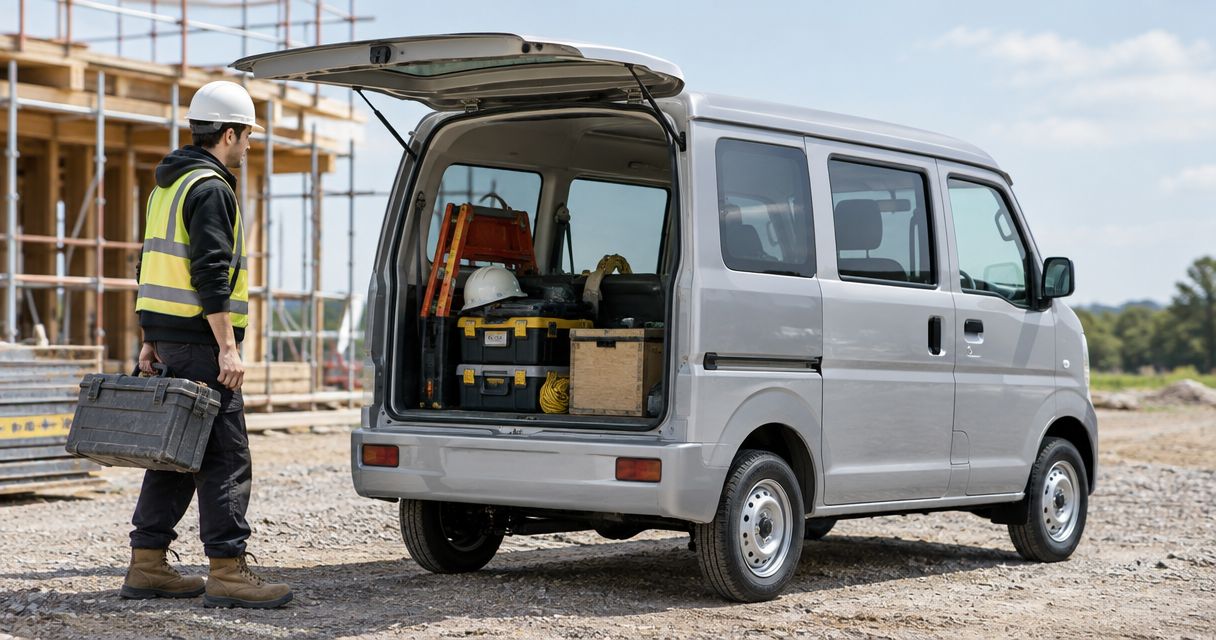
Best overall for light urban work: Suzuki Every DA17V naturally aspirated manual. Best for mixed suburban and highway routes: DA17V turbo. Best for unsealed-site access: DA17V 4WD. For a Suzuki Every Australia shortlist in 2026, choose the configuration and condition before the model year; an older DA64V manual belongs on the list only after a thorough inspection.
- For Suzuki Every Australia buyers, the DA17V naturally aspirated manual is the default shortlist for light urban trade work.
- Choose a DA17V turbo for mixed routes, but verify its maintenance history and exact transmission.
- Choose a DA17V 4WD for traction needs, not as a substitute for a larger off-road work vehicle.
- Carbarn is a pre-loved car dealership for Australian buyers; assess each Suzuki Every against your actual work load.
Why this matters
A compact van is useful only if your tools, materials and working day fit it. A Suzuki Every that parks neatly outside a townhouse is not automatically the right vehicle for heavy equipment or repeated highway trips.
Carbarn is a pre-loved car dealership, so the buying decision centres on the individual vehicle rather than a model-year badge. For Suzuki Every buyers in Australia, usable load capacity, mechanical condition and registration evidence matter more than choosing the newest example.
This 2026 guide ranks configurations rather than declaring an unsupported winning year. Suzuki Every listings can mix commercial vans, passenger-oriented Every Wagons, different transmissions and different drive systems. Those differences change the recommendation.
What makes the best Suzuki Every for tradies?
Use these criteria before comparing vehicles. A newer registration date does not answer any of them.
- Load suitability: Check the vehicle's documented limits against your tools, occupants, shelving and materials. Measure the actual cargo area rather than relying on exterior dimensions.
- Route suitability: Separate local stop-start work from sustained highway driving, steep approaches and unsealed access.
- Mechanical condition: Require a cold-start inspection, service evidence and an independent assessment of the engine, transmission and underbody.
- Configuration: Confirm the model code, engine, gearbox and drive system. Do not infer equipment from the year or an exterior badge.
- Australian paperwork: Verify the vehicle's identity, applicable compliance evidence, registration pathway and insurance acceptance before committing.
- Working practicality: Test loading access, driving position, cargo restraint and parts support with your actual trade requirements in mind.
Suzuki Every configurations at a glance
These are buying slots, not claims that every vehicle with the same code has identical equipment. Turbocharged and 4WD configurations can overlap; place a vehicle in the slot that reflects your main requirement.
| Ranked option | Best for | Standout feature | Key limitation |
|---|---|---|---|
| DA17V naturally aspirated manual | Light urban service calls | Commercial-van layout without a turbocharger | Requires deliberate assessment of loaded highway performance |
| DA17V turbo | Mixed suburban and highway routes | Turbocharged engine configuration | Adds turbo-related inspection requirements |
| DA17V 4WD | Unsealed-site access | Driven front and rear wheels | Traction does not establish clearance or heavy-duty capability |
| DA64V manual | Mechanically informed buyers | Earlier commercial-van configuration | Age-related condition becomes central to the decision |
Model years: what should you actually search for?
For your 2026 search, record the build date and model code separately. Build date, first registration and Australian registration describe different events; a listing's headline year does not replace the vehicle's identification documents.
Start with the DA17V commercial van configuration that matches your route. Consider a DA64V only when inspection evidence supports the purchase. There is no defensible universal best model year without knowing the vehicle's specification, history and condition.
1. Suzuki Every DA17V manual: best for light urban trade work
The Suzuki Every DA17V is a commercial kei van. A naturally aspirated manual example is the default shortlist when you carry a modest tool kit between local jobs and do not need a turbocharged engine or four-wheel drive.
Its appeal is the match between a small vehicle and a small working load. Choose it because your equipment fits, not because a photograph makes the load area look generous.
Suzuki Every DA17V manual pros:
- Commercial-van configuration keeps the shortlist focused on cargo use.
- A manual gearbox gives you direct control over gear selection.
- A naturally aspirated engine removes turbocharger condition from the inspection checklist.
Suzuki Every DA17V manual cons:
- Frequent stop-start traffic means repeated clutch use.
- Loaded hills and highway merging need a realistic test drive.
- The compact body restricts the equipment you can carry.
Ask the inspector to assess clutch operation, gear engagement and evidence of previous hard use. Inspect the cargo floor and door openings as carefully as the cab; work damage is relevant even when the exterior looks tidy.
Best for: Local maintenance and service work with light tools and limited materials.
Verdict: Buy if the measured load fits and the inspection supports the vehicle's condition. Skip it if your daily work already demands a larger van.
2. Suzuki Every DA17V turbo: best for mixed driving routes
A turbocharged Suzuki Every DA17V deserves consideration when local work also involves hills or highway sections. The turbo configuration changes engine performance, but it does not remove the limits of a compact kei van.
Confirm the exact transmission and drive system before comparing examples. A turbo badge alone does not identify the complete specification or prove that the vehicle suits sustained loaded driving.
Suzuki Every DA17V turbo pros:
- Offers a different engine configuration from the naturally aspirated shortlist.
- Gives mixed-route buyers an option to assess before abandoning the compact-van format.
- Retains the commercial-van focus when you select an Every van rather than an Every Wagon.
Suzuki Every DA17V turbo cons:
- Turbocharger condition adds another mechanical inspection requirement.
- Maintenance evidence matters; an engine configuration is not proof of reliability.
- More engine performance does not increase the vehicle's documented load limits.
Have the inspector check for abnormal noises, smoke, oil leaks and cooling-system problems. Test the vehicle on a representative route, with the seller's permission and without exceeding its limits.
Best for: Light-load tradies whose work combines suburban stops with hills or highway travel.
Verdict: Buy when the route test and maintenance evidence support it. Hold if the seller cannot establish the engine and transmission specification.
3. Suzuki Every DA17V 4WD: best for unsealed-site access
A four-wheel-drive Suzuki Every DA17V belongs on the shortlist when traction is a genuine work requirement. Think gravel access or a slippery approach, not a claim that every small 4WD van is suitable for difficult off-road sites.
Check how the specific vehicle's drive system operates. Do not assume that all DA17V 4WD examples have the same controls, equipment or engine.
Suzuki Every DA17V 4WD pros:
- Provides driven front and rear wheels for traction-related needs.
- Keeps a compact commercial-van format for local work.
- Offers a route-specific alternative to choosing a larger vehicle solely for drive layout.
Suzuki Every DA17V 4WD cons:
- Extra driveline components require inspection and maintenance.
- Four-wheel drive does not establish ground clearance or suitable tyres.
- It does not make the vehicle a heavy-load or towing recommendation.
Inspect the underside for impact damage, corrosion and leaks. Ask the inspector to assess the driveline and verify that tyres meet the vehicle's requirements; previous use matters more than a clean cabin.
Best for: Light trade loads with recurring unsealed access where the vehicle's clearance and tyres are suitable.
Verdict: Buy for a verified traction need. Skip it if heavy loads or rough-site clearance are the real problem.
4. Suzuki Every DA64V manual: best for mechanically informed buyers
The Suzuki Every DA64V is an earlier commercial-van generation. A manual example is a conditional choice for a buyer prepared to investigate age-related wear rather than treating an older van as an automatic bargain.
The relevant question is whether the individual vehicle remains suitable for daily work. A well-presented body does not establish the condition of rubber components, cooling parts, wiring or previous repairs.
Suzuki Every DA64V manual pros:
- Offers a commercial-van layout for a light-work application.
- Manual operation lets an inspector assess clutch and gear-selection behaviour directly.
- Provides an alternative shortlist when condition evidence is stronger than that of another vehicle.
Suzuki Every DA64V manual cons:
- Age-related deterioration needs explicit investigation.
- Previous repairs and incomplete records complicate the decision.
- Replacement-part suitability must be checked against the exact vehicle.
Arrange an independent inspection before making a commitment. Confirm who can service the vehicle and identify parts using its model and chassis information, not just the Every name.
Best for: Buyers comfortable managing an older work vehicle after a detailed mechanical assessment.
Verdict: Hold until condition, paperwork and service support are established. Skip any example whose history or identity cannot be reconciled.
Check whether a kei van fits your trade
The Japanese kei category permits vehicles up to 3.40 metres long, 1.48 metres wide and 660 cc engine capacity. These are category limits, not Suzuki Every cargo dimensions, payload figures or a description of every individual engine.
For your 2026 purchase, measure the vehicle itself. Exterior compactness helps explain the Every's appeal, but only the usable interior and documented load limits determine whether it works for you.
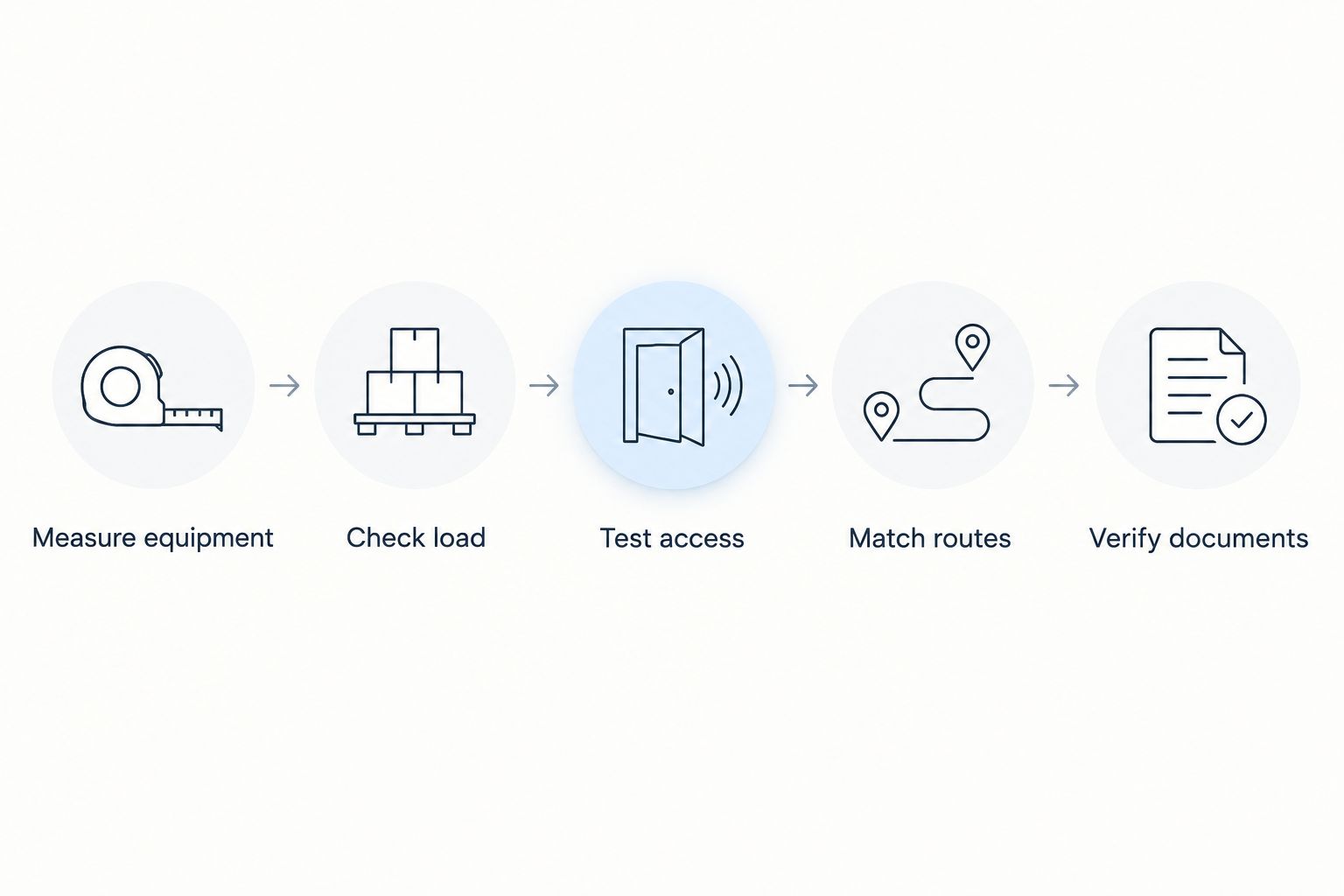
Use this sequence before choosing an engine or model year:
- Measure equipment: Record the dimensions of your largest tool cases and regularly carried materials.
- Check load: Include occupants, shelving, restraints and consumables in the working load.
- Test access: Check door openings, loading height and the space needed to remove equipment.
- Match routes: Assess hills, highway sections, parking and site approaches.
- Verify documents: Reconcile the vehicle identity with registration and compliance evidence.
If that process rules out a compact van, compare used light commercial vans for tradies instead. Do not solve a load-space problem by choosing a newer Suzuki Every.
Australian purchase checks before you commit
In 2026, treat import eligibility, compliance, roadworthiness and registration as separate checks. An overseas registration document or auction record does not, by itself, establish that you can register the vehicle in your state or territory.
Reconcile the chassis identification across the vehicle and documents. Obtain a PPSR search using the correct identifier, and ask an independent inspector to assess physical condition; a financial-history check is not a mechanical inspection.
Get insurance acceptance for the exact vehicle and disclose business use. Confirm servicing support before purchase, including how the workshop identifies suitable replacement parts for the imported specification.
Carbarn's Suzuki Every buying recommendation remains vehicle-specific: verify the configuration and paperwork before judging the year. A registration claim in a listing is not a substitute for checking the documents yourself.
How the configurations are ranked
This ranking prioritises light-work suitability, route fit, inspection requirements and Australian purchase checks. It is a decision guide, not a reliability league table or a claim that one build year has fewer faults.
The naturally aspirated DA17V manual is the default because its use case is narrow and clear: light urban work without a stated need for turbocharging or four-wheel drive. The turbo and 4WD slots answer different route requirements; the DA64V remains conditional because age-related condition needs closer attention.
Which Suzuki Every should you choose?
Choose the Suzuki Every DA17V naturally aspirated manual for light local work, then change configurations only for a specific requirement. Select turbo for a mixed-route assessment and 4WD for a verified traction need.
For 2026, put model year behind fit, condition and documents. Carbarn suits Australian buyers seeking a pre-loved vehicle; the right Suzuki Every is the individual van that passes those checks, not simply the newest listing.
FAQ
What's the best Suzuki Every in Australia for a tradie?
The Suzuki Every DA17V naturally aspirated manual is the default shortlist for light urban trade work. Choose a different configuration only when your route, traction needs or load requirements justify it.
Which Suzuki Every model year should I buy in 2026?
Choose the documented configuration and inspected condition before the model year. Start with a suitable DA17V commercial van, and assess an earlier DA64V only when its condition and paperwork support daily work use.
Is a Suzuki Every turbo better for highway driving?
A turbocharged Suzuki Every deserves consideration for mixed routes, but it is not an automatic highway recommendation. Verify its specification and test its suitability for your route and intended load.
Do tradies need a four-wheel-drive Suzuki Every?
Four-wheel drive is relevant when your work involves a genuine traction requirement. It does not establish suitable ground clearance, increase documented load limits or make the van a heavy-duty off-road vehicle.
Is the Suzuki Every Wagon the same as the commercial van?
No, the Suzuki Every Wagon is the passenger-oriented version, while the Every van is the commercial variant. Verify seating, cargo arrangements and the exact specification rather than relying on the Every name alone.
Can every Suzuki Every be registered in Australia?
Do not assume that every Suzuki Every is eligible for Australian registration. Check the exact vehicle's import pathway, compliance evidence and state or territory requirements before committing.
What should I check before buying a Suzuki Every from Carbarn?
Check vehicle identity, configuration, service evidence, mechanical condition and registration documents. Confirm insurance for business use and test whether your equipment fits within the vehicle's documented limits.
One last thing
Bring your largest tool case to the inspection. Check that it passes through the door opening, sits securely and can be removed without unloading everything else.
That simple test separates cargo space on paper from a workable day. If your essential equipment does not fit, skip the vehicle regardless of its model year.


