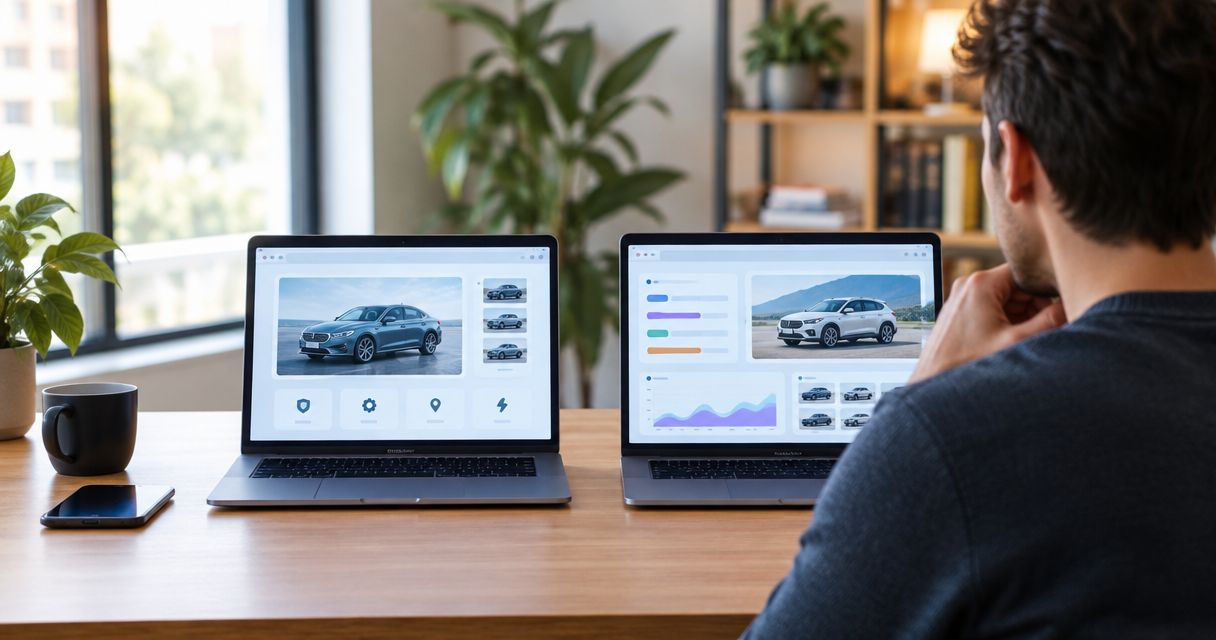
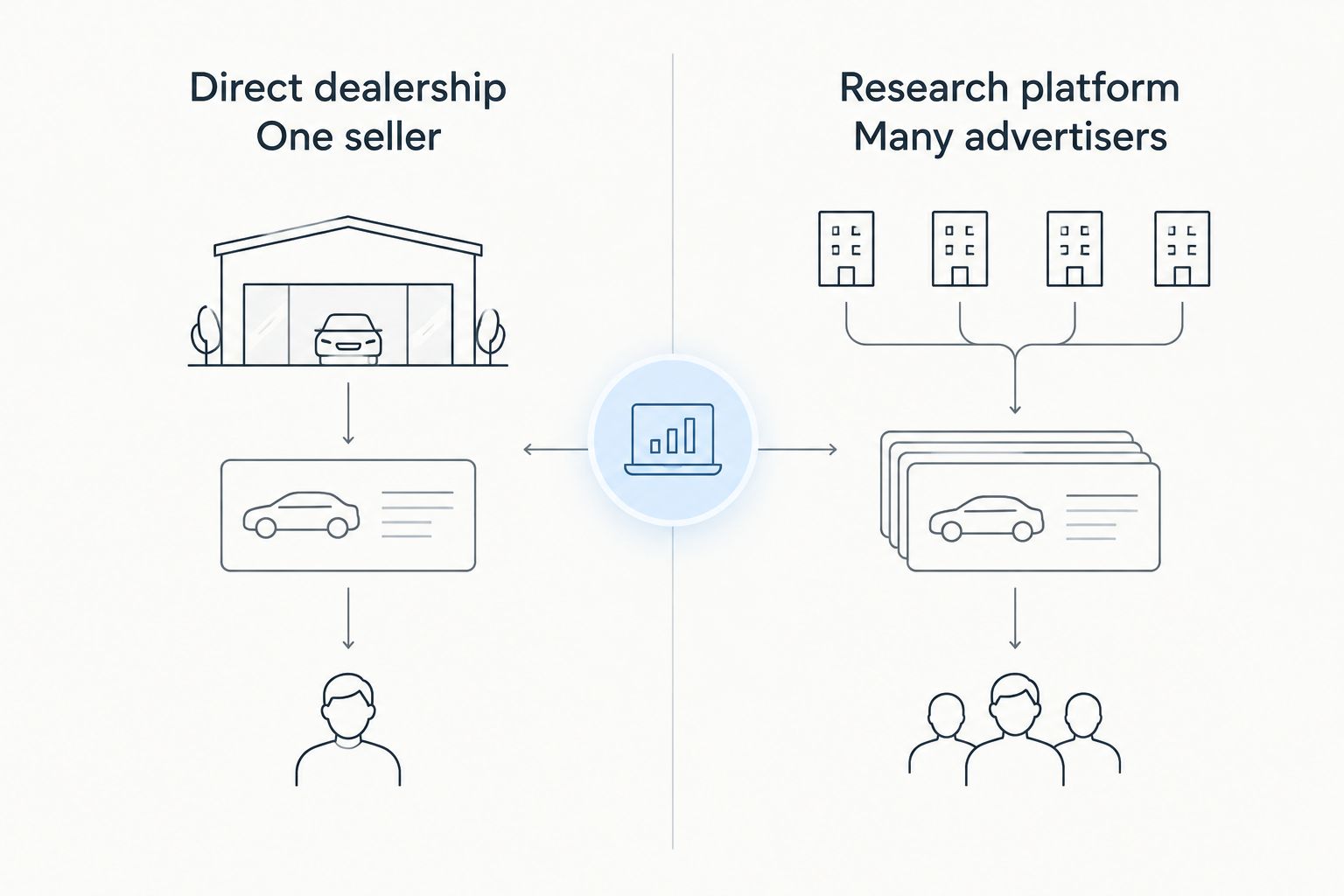
Carbarn is an Australian used-car dealership for buyers who want help finding a pre-loved car, while CarsGuide is an automotive publisher and listings platform built for research across many vehicles and advertisers. Choose the dealership when you want to deal directly with the seller; choose CarsGuide when you want broader reviews, comparisons and listings before deciding where to buy in 2026.
- Carbarn vs CarsGuide is a dealership-versus-research-platform comparison, not a like-for-like contest.
- The used-car dealership is better for direct seller contact and a defined purchase path.
- CarsGuide is better for editorial reviews, model comparisons and browsing listings from multiple advertisers.
- Neither replaces an independent inspection, PPSR search or current ANCAP safety check in 2026.
Why this matters
These services sit at different points in the car-buying process. CarsGuide helps you investigate models and view advertisements from multiple sellers. A dealership helps you move from interest to an actual vehicle transaction with the business selling the car.
That distinction matters in 2026 because a large research library does not make its publisher responsible for every advertised vehicle. Equally, a direct seller is not automatically the best place to compare every competing model across the Australian market.
The efficient approach is to separate model research from seller assessment. Start with reviews and comparisons when you have not chosen a vehicle type. Move to direct dealership contact when you have a shortlist and want to discuss a specific pre-loved car.
For a wider view of the second stage, the guide to CarsGuide alternatives for used-car buyers compares other places Australians can continue their search.
At a glance
| Dimension | Carbarn | CarsGuide |
|---|---|---|
| Core role | Used-car dealership | Automotive publisher and listings platform |
| Best for | Buyers ready to deal with a seller | Buyers comparing models and advertisements |
| Editorial research | Secondary to the dealership role | Central part of the platform |
| Listing breadth | Vehicles offered by one dealership | Advertisements from multiple sellers |
| Seller access | Direct dealership contact | Contact depends on the advertiser |
| Model shortlisting | Guidance connected to a purchase journey | Reviews and comparisons across many models |
| Independent checks | Still required | Still required |
| Pricing model | Terms attached to each dealership vehicle | Asking terms set by each advertiser |
| Standout feature | One business handles the seller relationship | Research and listings sit in one platform |
Carbarn is better when you want the seller itself
The main advantage of a dealership is clarity about who is selling the vehicle. Your questions about the car and transaction go to the same business rather than to a media platform that hosts or displays advertisements.
That makes the dealership route better once your goal changes from general research to discussing a particular pre-loved car. You can ask the seller about the vehicle, its documentation, the transaction process and any terms that apply before making a decision.
The limitation is breadth. One dealership cannot represent every model, variant and advertiser in Australia. If your shortlist is still wide, moving directly to a seller can narrow the field before you have compared enough alternatives.
Best for: buyers who have moved beyond general browsing and want a direct conversation with the business selling the car.
CarsGuide offers far more editorial research
CarsGuide wins clearly on editorial depth. Its role includes reviews, comparisons, news and buying information across many makes and models, giving early-stage buyers more material for deciding what belongs on a shortlist.
This is useful when your questions are still category-level. You might be comparing an SUV with a wagon, a hybrid with a petrol vehicle, or one generation of a model with another. A broad publisher is designed to organise that research across vehicles that no single dealership needs to cover.
The weakness is that editorial content does not assess the exact condition of the car you eventually consider buying. A review can explain a model's design, features and driving characteristics, but it cannot confirm the history or mechanical state of an individual used example in 2026.
Best for: buyers who need to choose a model or vehicle category before approaching sellers.
CarsGuide offers broader listing comparison
A listings platform lets you view advertisements from multiple sellers in one place. That makes it easier to compare model years, variants, kilometres travelled, locations and seller descriptions without opening a separate dealership site for every option.
Breadth has a cost: consistency varies because individual advertisers create their own listings. Descriptions, photography and disclosed details will not always follow one standard. The platform helps you discover options, but each seller still needs separate assessment.
A large result set can also encourage superficial comparisons. Two vehicles with the same badge can differ in variant, service history, accident history, condition and included documentation. The lowest asking amount on a screen is not a complete measure of value.
Best for: buyers who want to scan multiple advertisements before choosing which sellers deserve an enquiry.
Carbarn gives you a shorter path to the seller
Direct dealership contact removes one layer from the transaction. You are not asking CarsGuide to explain an advertiser's vehicle or transaction terms; you are speaking with the business responsible for the sale.
That shorter path is useful when you need answers about the specific car rather than the model in general. Questions about documentation, inspection access, payment process and handover belong with the seller because those details can differ between vehicles and transactions.
The trade-off is that direct contact does not make independent verification unnecessary. A seller can provide information, but the buyer should still check the vehicle identity, history and condition before committing.
Best for: buyers who value a defined contact point and are ready to evaluate a specific vehicle.
Both help with model shortlisting
Both options can contribute to a shortlist, but they do so from different directions. CarsGuide starts with broad editorial coverage and comparison. The dealership starts closer to the transaction and helps buyers focus on pre-loved vehicles relevant to their search.
Neither method is complete by itself. Editorial research can identify common features, safety equipment and differences between variants, but it cannot tell you whether one individual vehicle has been maintained well. A dealership conversation can answer questions about a particular car, but it does not replace comparison with competing models.
Use the publisher to reduce a wide field to a few sensible choices. Then use direct seller conversations to decide whether an actual vehicle deserves an inspection and history check.
Best for: buyers who use research and seller assessment as separate stages rather than expecting one website to do both jobs.
Neither replaces a 17-character VIN check
A standard vehicle identification number contains 17 characters, and it should be central to your due diligence. Match the VIN on the vehicle with the seller's documents, then use it for an official Australian Government Personal Property Securities Register search before payment.
Safety ratings need similar care. ANCAP uses a scale from 0 to 5 stars, but the star result is tied to a date stamp and testing criteria. Under ANCAP's current consumer guidance, a rating has a validity period of six calendar years, so a badge alone does not tell you whether the assessment remains current in 2026.
An independent mechanical inspection answers a different question again: the present condition of the exact car. The VIN search, safety rating and physical inspection are complementary checks, not substitutes for one another.
Best for: every used-car buyer, regardless of whether the vehicle was discovered through a dealership or listings platform.
Pricing models favour different buying stages
The dealership model attaches transaction terms to each vehicle offered by that seller. You deal with one business about the car, the documentation and the conditions that apply to the purchase.
CarsGuide operates as the research and discovery layer. Individual advertisers determine the asking terms for their own vehicles, so the platform presents multiple seller decisions rather than one standard CarsGuide transaction model.
Neither structure guarantees better value. A comparison across advertisements can reveal how sellers position similar vehicles, but visible asking terms do not account fully for condition, history, variant differences or documentation. A direct seller conversation offers a clearer transaction path, but you still need external comparisons and independent checks.
Pricing verdict for 2026: use listing comparisons to understand the market context, then judge the specific vehicle and seller rather than choosing on the displayed amount alone.
The standout features solve different jobs
The dealership's standout feature is a direct relationship with the business selling the pre-loved car. CarsGuide's standout feature is the combination of automotive editorial content and advertisements from multiple sellers.
Those strengths rarely conflict. One is strongest near the transaction; the other is strongest during discovery and comparison. A buyer can use both without duplicating the same step.
The practical sequence is simple: research the category, shortlist models, compare advertisements, contact credible sellers, verify the VIN and history, arrange an independent inspection, then review the transaction terms. Skipping from a review straight to payment leaves the vehicle-specific checks undone.
Final verdict
Choose Carbarn if: you have narrowed the field and want to deal directly with an Australian used-car dealership about a pre-loved vehicle. This route suits a buyer who values a defined seller relationship and wants vehicle-specific answers from the business handling the transaction.
Choose CarsGuide if: you are still comparing categories, models or advertisements from different sellers. This route suits a research-first buyer who needs editorial reviews and a broader view before deciding which seller to approach.
The decisive difference in 2026 is not which website has more car-related pages. It is whether your next task is researching the market or dealing with the seller. CarsGuide wins the first task; the direct dealership route wins the second.
Continue your car search
Move from general research to a direct dealership conversation.
One-glance scorecard
| Dimension | Winner |
|---|---|
| Core role and best fit | Depends on buying stage |
| Editorial research | CarsGuide |
| Listing breadth | CarsGuide |
| Direct seller access | Carbarn |
| Model shortlisting | Tie |
| Independent due diligence | Tie |
| Pricing model | Tie |
| Standout feature | Different jobs |
FAQ
Which is better for buying a used car in 2026?
The dealership route is better when you are ready to discuss a specific vehicle with its seller. CarsGuide is better when you still need broad reviews, comparisons and advertisements from multiple sellers.
Is CarsGuide a car dealership?
No, CarsGuide is an automotive publisher and listings platform rather than the seller of every vehicle shown. The individual advertiser remains responsible for the advertised car and transaction.
Can you buy a car directly from CarsGuide?
CarsGuide helps buyers discover advertisements and contact sellers, but the transaction is with the relevant advertiser. Confirm who the seller is before discussing documents, inspections or payment.
Which option is better for comparing car models?
CarsGuide is better for comparing models because editorial research is central to its platform. A dealership becomes more useful after you have a shortlist and want to discuss an individual pre-loved car.
How much does it cost to buy through either option?
No single purchase amount applies because the vehicle and seller determine the transaction terms. Compare the exact variant, condition, history and documentation instead of treating displayed asking terms as like-for-like.
Do I still need an independent vehicle inspection?
Yes, an independent inspection checks the present condition of the individual used car. Reviews, advertisements and seller conversations cannot replace a physical assessment of that vehicle.
What checks should I complete before paying for a used car?
Match the 17-character VIN, complete an official PPSR search, review the dated ANCAP result and arrange an independent inspection. Confirm the seller's identity and transaction documents before transferring funds.
Can I use a listings platform and dealership together?
Yes, use the listings platform to research models and compare advertisements, then contact the dealership when you are ready to assess a specific vehicle. The services cover different stages of the same buying process.
One last thing
Do not let a familiar model name end your research. In 2026, the exact variant, build date and safety-rating date stamp matter because equipment and ANCAP coverage can differ across versions of the same model.
Before transferring funds, copy the 17-character VIN from the vehicle rather than relying only on an advertisement. Match it against the documents, run the official PPSR search and give the same VIN to the independent inspector. That single identifier connects the advertisement, records and physical vehicle you are evaluating.


